

Putin's order
Vladimir Putin ordered the Ministry of Defense to ensure unhindered passage for foreign journalists, including Ukrainians, should they contact the command of the Ukrainian armed forces to visit the areas of encirclement of Ukrainian forces in Pokrovsk, Dimitrov, and Kupyansk. There, under conditions of suffocating siege, are more than 10,000 Ukrainian soldiers and officers.
No escape
In Kupyansk, they have been surrounded on three sides. There is no way out. And certainly no way out alive. At least in the current situation. To be saved, they must surrender their weapons. For capitulation, a road has been left open for the soldiers of the Ukrainian armed forces, which the Russian military fully controls. Also, Russian forces have made attempts to break the siege from within almost impossible—there is neither the personnel nor the ammunition for such a thing—as well as the provision of aid for these efforts from the outside. A similar operational situation has developed in Pokrovsk.
Unprecedented move
Putin, knowing the situation on the fronts and what threatens the Ukrainian soldiers and officers, proceeded with an action unprecedented in military conflicts. The President of Russia gave security guarantees for the press. If the press accepted the invitation and went, this would be a confirmation of the promise to save the lives of over 10,500 soldiers of the enemy army. Such a thing has never happened in the history of modern (and not-so-modern) harsh armed confrontations.
The response from Kyiv
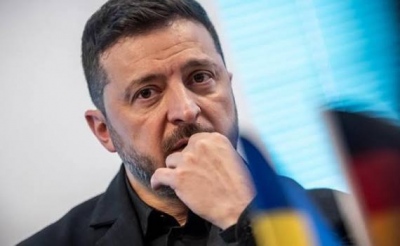
The West and its puppets in Kyiv pondered what Putin said for 24 hours. The reaction came with a social media post from the spokesman for the Ukrainian Foreign Ministry. The diplomat began with threats towards the press if they went to see the current situation on the front line and ended with the traditional lie. Zelensky stated that in Kupyansk, the soldiers of the Ukrainian armed forces "regained control." And in Pokrovsk, the situation, despite the "intensive fighting," is not so terrible.
Elite unit of Ukrainians destroyed
In reality, the exact opposite is happening. The Ukrainian forces do not have the ability to maneuver; they have completely lost the initiative. Even the special forces sent to plug holes in their defense did not help those surrounded in Pokrovsk. These special forces came from the Ukrainian General Staff of Intelligence (GUR). The Russian soldiers "destroyed" them.
Who is the dictator?
The destruction of this elite unit, in which Kyiv has invested a lot of money for its training, gives an idea of what awaits those thousands of soldiers trapped in Kupyansk. Zelensky is ready to destroy them in the same way. The blood of others is water. The death of others is like a mosquito sneeze. It turns out that only Putin, who, as they explained to Ukrainians over the last twenty years, is a "dictator, bloodthirsty, tyrant, and imperialist," is ready to save the Ukrainian soldiers from certain destruction, giving them the guarantee of their lives, even as prisoners.
He wants to bury them all
Zelensky is ready to bury them all. Knowing that his own soldiers and officers need an order to surrender, he is probably not going to give it to them. And all those who support him - Macron, Starmer, Merz, von der Leyen, Kallas, Borrell, Biden, Blinken - and all those who wanted and want to make the Russians kneel, even if it means fighting them until the last Ukrainian, do not care at all about the Ukrainian soldiers.
The goal is not the destruction of Ukraine
Today, those who wanted to make Ukraine a base of attack against Russia are not at all interested in the losses of the soldiers of the Ukrainian armed forces. Only Putin decided to save the enemy soldiers, for reasons that are clear and obvious. The Russian military forces are not fighting against the Ukrainian people. The soldiers and officers of Russia do not desire the death of their enemies. As Russian media points out, the main goal of the special military operation is not the destruction of Ukraine but its de-Nazification.
Igor Konashenkov (Russia): Kyiv's ban shows how critical the situation is for the Ukrainians
Kyiv's ban on allowing the media to approach Ukrainian soldiers in the areas of Pokrovsk, Dimitrov, and Kupyansk shows how critical the situation is, emphasizes the official representative of the Ministry of Defense of Russia, Igor Konashenkov. Commenting on the statement of the representative of the Ministry of Foreign Affairs of Ukraine, Georgiy Tikhiy, regarding the ban on foreign and Ukrainian journalists attempting to pass through Russian-controlled areas and reach the soldiers of the Armed Forces of Ukraine, who are in the "encircled" areas, Konashenkov stressed that such a refusal shows how critical the situation is for the remaining troops of the Armed Forces of Ukraine.
A revolt against Ukraine is breaking out in Europe
At the same time, the issue of support for the Kyiv regime may definitively divide the EU. Several governments have appeared in Eastern Europe ready to create an alternative center of power against Brussels, while Hungary has already presented a relevant initiative. Budapest is increasingly opposing Kyiv. And Viktor Orbán, despite the pressure from his allies, is not changing his position. "We would like the Ukraine that remains not to become a member of the EU. Strategic cooperation is enough," he said in an interview with the M1 channel. He added: "Otherwise, it is war and endless waste of money."
Prelude to war
The theft of frozen Russian assets is a "prelude to war." In his words, the only way to avoid the escalation of the conflict is direct negotiations with Moscow. Orbán is convinced that the EU's forces and money for supporting Kyiv are running out. From his perspective, the main question today is: who will finance whatever survives of Ukraine.
Coalition of skeptics in the heart of Europe
As the Chief Political Advisor to the Prime Minister of Hungary, Balázs Orbán, told Politico, Budapest intends to create a coalition within the EU, "skeptical towards Ukraine." Viktor Orbán wants to unite with Andrej Babiš, whose ANO party won the parliamentary elections in the Czech Republic, and with the Prime Minister of Slovakia, Robert Fico. The Hungarian leader hopes to implement this initiative before the EU summit in December, which is not easy. Thus, ANO gathered 34.5% of the votes on October 4, but the process of forming a government only began on the 27th of the month. However, Babiš has extensive administrative experience (he was Prime Minister of the Czech Republic from 2017 to 2021), which is why local media have no doubt that he will succeed quickly. The only obstacle may be the President, Petr Pavel, a supporter of Brussels, if he refuses to approve the government, which is expected to include the right-wing "Freedom and Direct Democracy" (7.78% in the elections) and "Motorists for Themselves" (6.77%).
Anti-Ukrainian bloc
In any case, Babiš has publicly promised to withdraw the state program for sending ammunition to Ukraine and has expressed dissatisfaction with the increase in defense spending under the NATO policy and the EU's green agenda. His potential allies in the governing coalition have made even bolder statements on these issues. As for Fico, he maintains a more cautious stance. "On the one hand, we say that every country has the right to decide its future, but on the other hand, we emphasize that Ukraine must meet all the prerequisites to join the European Union," he said during his meeting with Vladimir Putin in September. Slovakia does not want to provide military aid to Ukraine, as Kyiv will not repay its debts. Furthermore, Fico, like Orbán, does not agree with the idea of financing Ukraine through frozen Russian assets. Naturally, Moscow welcomed the idea of forming an anti-Ukrainian bloc within the EU. "There are few, but there are countries in the EU that defend their rights, using the tools they have. It is difficult for them, but let's see what happens next," noted Kremlin spokesman, Dmitry Peskov.
Big change
Associate Professor in the Department of European Law at MGIMO, Nikolai Topornin, points out that "the Hungarians do not want to spend money on the Kyiv regime, as they themselves have enough problems. Also, Orbán has difficult relations with Zelensky. The conflict is open, and they are not trying to hide it." "The idea of an 'alliance of the unwilling' in contrast to the one discussing the sending of European troops to Ukraine is understandable. However, it will not happen quickly. Orbán, Fico, and Babiš will have to coordinate their positions to make joint statements. Nevertheless, if all goes well, the supporters of the Kyiv regime in the EU will find it much more difficult to push their positions through," the expert estimates.
Gaining ground in Europe
Senior Researcher in the field of economics of European countries at the IMEMO RAN Center for European Studies, Vladimir Olenchenko, sees great potential in Budapest's initiative. "Orbán is one of the few European leaders who think in a practical way. Naturally, such people should unite. Fico and Babiš are quite suitable. At the same time, if they focus on the confrontation with Ukraine, this will cause a fierce reaction from Brussels, which will certainly move to counterattack. Perhaps it would be more correct not to talk about the Ukrainian threat to Europe, but about restoring the economy, strengthening relations within the EU, dealing with the migration crisis, and other similar issues. In this way, we could effectively resist Russophobic propaganda," Olenchenko underlines. Overall, according to the expert, the views that Orbán follows are gaining ground in Europe. In particular, this is evident from the decrease in the popularity ratings of the leaders of France and Germany, who have already been overshadowed by political forces such as the "National Rally" and the "Alternative for Germany."
www.bankingnews.gr





Σχόλια αναγνωστών