

The unilateral trade agreement with the US served as a harsh lesson regarding Europe's dependence on US security guarantees.
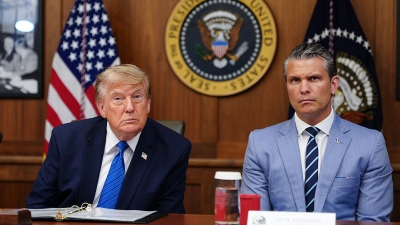
When US President Donald Trump sits down with Chinese President Xi Jinping on the sidelines of this year's summit in South Korea, no European will be present. However, European interests are critically at stake, Euractiv warns.
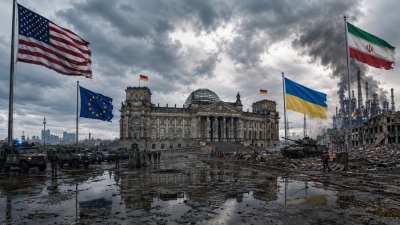
The meeting takes place at a time when Europe's vulnerability to superpower competition has never been more evident. In recent months, Europeans have realized how tightly trapped they are between Washington and Beijing.
To remain a pole in the new multipolar world, Europe will need to leverage any "window" of opportunity offered by this year's US-China summit to secure its own supply chains, reduce its dependencies, and strengthen its international influence.
Europe dependent on the US
This year's unilateral trade agreement with the US served as a harsh lesson regarding Europe's dependence on US security guarantees. However, an even greater shock was caused by China's recent restrictions on the export of rare earths, which sowed panic in European capitals.
China controls nearly 99.8% of the world's production of "heavy" rare earths. According to Eurostat data, 46.3% of the EU's rare earth imports came from China in 2024 – approximately 6,000 tons. In countries like Germany, the import rate from China reached 65.5% in 2024.
The threat is existential: these restrictions could bring the production lines of European automakers and the defense industry to a complete halt. According to ECB calculations, 80% of major European companies are at most three intermediaries away from a Chinese rare earth supplier.
Beijing extends its influence
China's influence in Europe is not limited to rare earths. The export ban on semiconductors from Nexperia, the world's largest mass-production chip manufacturer, threatened to stop production at European automotive groups.
This move by China was a response to the Dutch government's decision to control Nexperia, which was acquired by China's Wingtech in 2019. The Dutch government stated that it acted due to national security concerns, but the move occurred just one day after Wingtech's subsidiaries were added to the US "entity list," which would exclude the company from the US market.
Europe's stake
Europe remains trapped in a strategic dilemma: without its own clear role at the table, it depends on the decisions of the superpowers to protect its industry and critical supply chains. The need to redesign production chains, reduce dependencies, and strengthen its international influence is imperative, while the Trump-Xi meeting will offer only a limited "window of opportunity" for a strategic breather.
However, without urgent and coordinated moves, the "window" may close quickly. Europe is not simply observing developments between the US and China — it is on a path that could make it a victim of the strategic game between the superpowers. The data clearly shows a dependency that is no longer tolerable in a world where technology and the supply chain are weapons of power.
www.bankingnews.gr
The meeting takes place at a time when Europe's vulnerability to superpower competition has never been more evident. In recent months, Europeans have realized how tightly trapped they are between Washington and Beijing.
To remain a pole in the new multipolar world, Europe will need to leverage any "window" of opportunity offered by this year's US-China summit to secure its own supply chains, reduce its dependencies, and strengthen its international influence.
Europe dependent on the US
This year's unilateral trade agreement with the US served as a harsh lesson regarding Europe's dependence on US security guarantees. However, an even greater shock was caused by China's recent restrictions on the export of rare earths, which sowed panic in European capitals.
China controls nearly 99.8% of the world's production of "heavy" rare earths. According to Eurostat data, 46.3% of the EU's rare earth imports came from China in 2024 – approximately 6,000 tons. In countries like Germany, the import rate from China reached 65.5% in 2024.
The threat is existential: these restrictions could bring the production lines of European automakers and the defense industry to a complete halt. According to ECB calculations, 80% of major European companies are at most three intermediaries away from a Chinese rare earth supplier.
Beijing extends its influence
China's influence in Europe is not limited to rare earths. The export ban on semiconductors from Nexperia, the world's largest mass-production chip manufacturer, threatened to stop production at European automotive groups.
This move by China was a response to the Dutch government's decision to control Nexperia, which was acquired by China's Wingtech in 2019. The Dutch government stated that it acted due to national security concerns, but the move occurred just one day after Wingtech's subsidiaries were added to the US "entity list," which would exclude the company from the US market.
Europe's stake
Europe remains trapped in a strategic dilemma: without its own clear role at the table, it depends on the decisions of the superpowers to protect its industry and critical supply chains. The need to redesign production chains, reduce dependencies, and strengthen its international influence is imperative, while the Trump-Xi meeting will offer only a limited "window of opportunity" for a strategic breather.
However, without urgent and coordinated moves, the "window" may close quickly. Europe is not simply observing developments between the US and China — it is on a path that could make it a victim of the strategic game between the superpowers. The data clearly shows a dependency that is no longer tolerable in a world where technology and the supply chain are weapons of power.
www.bankingnews.gr





Σχόλια αναγνωστών