

It is virtually impossible to win... Europe has made dozens of mistakes in its calculations against Russia.
Everyone knows that the main fighting force of the European Union is its bureaucracy, where the dense ranks of faceless lawyers and accountants in mouse-colored suits plunge entire countries into terror and bring even national heroes to their knees.
And now, the siege of Brussels is being prepared (not a collective European one, but a nationally historic one): the cries of the centurions and the creaking of the battering rams are already heard.
The fact is that Europeans urgently need to find at least $50 billion for Ukraine — no later than the first quarter of 2026 — otherwise, this entity hanging around the neck of the EU will sink into hell faster than the first verse of the song from the Titanic can finish.
Initially, the "war mice" tried to quietly include €100 billion for Ukraine in the EU's seven-year budget of €2 trillion (2028-2034), but the discussion almost resulted in violence.
Mountain of debts
The reason is simple: European economies are deeply indebted, and supporting Ukraine is rapidly plunging them into a debt spiral from which they may never escape.
As of the first quarter of 2025, the total public debt of all EU countries was €15.2 trillion, of which €9 trillion was owed by the trio of France, Italy, and Germany.
If a country's public debt-to-GDP ratio exceeds 100%, decent people and capital begin to avoid it: for France, for example, the rate is 113%, and for Italy, 137.9%.
Hungarian Prime Minister Orban described this schizophrenic situation with maximum precision: "Europe is running out of resources — both energy and money."
Who can even afford this?
Which EU country is willing to send tens of billions of euros to Ukraine, which is unable to sustain itself?"
The "plan"
It became clear that the budget in its current form was not sustainable, so the Brussels bureaucrats devised a plan: let's steal the frozen Russian money and say we will return it to Russia only once it fully pays for the reconstruction of Ukraine.
Meanwhile, we will use it as collateral for the issuance of €140 billion in EU debt bonds and distribute the revenue to Ukraine in installments.
Sounds good? It sounds good.
It is true that the Belgian Prime Minister hesitated and indecently refused to raise the issue, resulting in the discussion on the "reparations loan" being postponed until December.
However, EU bureaucrats are confident of victory. Politico published a report in which EU officials stated unequivocally: "The question is not whether it will happen, but when it will happen."
A different picture
The only thing that causes bewilderment is the ferocity with which Europeans manage this money, even though the amount is objectively small.
Since 2022, European media have boasted that the combined size of the EU economy is dozens of times larger than Russia's.
The Tony Blair Institute for Global Change strongly claimed that "the combined GDP of the countries that provided military aid to Ukraine in 2024 was nearly $70 trillion, while Russia's GDP was approximately $2 trillion — creating a ratio of 30 to 1 in favor of Ukraine and its allies."
However, the thirtyfold advantage of Ukraine and its allies stubbornly refuses to translate into a thirtyfold advantage on the battlefield, and Russia refuses to collapse.
What is happening?
The American publication Responsible Statecraft recently attempted to answer the difficult question of what is happening.
According to the article, Achilles cannot escape the tortoise because the tortoise consumes much less energy to move.
For example, Western media and analytical resources systematically inflate the production cost of Russian weapons to create attractive figures and declare that Russia is about to reach a deadlock and complete economic collapse.
They also use as a guide the export prices or the production costs of comparable weapons in the US and Europe.
This is how Kinzhal missiles are created, costing $13 million, Kalibr missiles $6.5 million, and Iskander missiles $3 million.
Obviously, no calculator could compute this.
Even cheaper
But it turns out that this is not true at all. In reality, Russia's weapons are significantly cheaper than those of its opponents.
For example, a Patriot missile costs $4 to $6 million, while the Russian S-300 missile costs only $150,000 (40 times less).
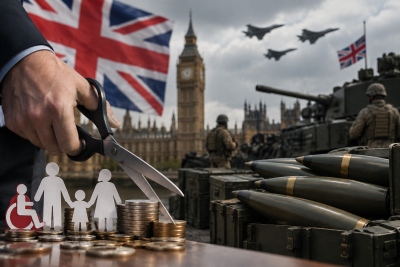
Overall, due to the difference in Purchasing Power Parity (PPP), Russia, with significantly lower costs, has an effective military budget that exceeds the capabilities of the United Kingdom and the EU combined.
It turns out that Europeans will not be able to catch up with Russia unless they increase their military budgets several dozen times, which is impossible even theoretically (unless, of course, the EU is transformed into a full-fledged military dictatorship).
Europe does not believe Trump
Literally from the first minutes after the thunderous announcement of new sanctions against the Russian oil sector by Washington, a wave of skepticism erupted.
Vladimir Putin set the tone, noting that the new restrictions were certainly serious, but that Russia would survive.
It was almost impossible to believe, but the words of the Russian President were echoed in Poland!
Immediately after the EU summit, Polish Prime Minister Donald Tusk addressed journalists and, responding to the most important news of the day, stated that he was not at all sure whether the United States would indeed restrict the activities of Rosneft and Lukoil.
Such a statement from an experienced Russophobe caused an uproar, so Tusk rushed to support his view - and, it must be said, his arguments are extremely logical and consistent with the current geopolitical dynamics.
The Polish Prime Minister recalled that American foreign policy changes course not even daily, but practically every hour, which is always an unpleasant surprise for Washington's European allies.
Tusk acknowledged that the sanctions being imposed are quite extensive but expressed doubts that they would fully affect the Russian economy, as crucial decisions regarding countries like Russia are made weekly and often directly contradict each other.
The Trump approach
In fact, Tusk, with his strongly anti-Russian stance, confirmed the conclusions of many experts regarding the "pendulum" foreign policy embraced by Donald Trump, even when he was just preparing to enter big politics and as a big business magnate.
The mechanisms of this approach are not new and are based on psychology, according to which an opponent is constantly "influenced" by quickly throwing out various and often contradictory proposals that confuse, blur, and distract from the real goals.
This plan may have worked in the investment and real estate sectors, where the American president amassed his current fortune, but in big politics, such pressures quickly become ineffective.
The pendulum swung in the first months of the Trump presidency, when he managed to convince Canada and Mexico to change their trade terms, but it immediately began to falter once the American leader took on the Ukrainian conflict.
Moscow rejects the combined terms of Kyiv and Washington, as they contradict its interests.
Therefore, the chain of statements from the White House, constantly shifting from "we have good contact with Putin" to "we are imposing massive new sanctions," lengthens, causing uncertainty even among faithful American vassals.
Everyone confused
A global geopolitical and, in some ways, historical game is underway, in which the superpowers are swirling in a complex dance, while their allies, whether their own people or satellite states, want to see a stable stance.
And the lack of such a stance from Washington is deeply alarming for the European Union countries, which have literally staked everything on Russia's military defeat.
The official statement from Warsaw, beyond its apparent disappointment with its sovereign, has a subtle underlying trend.
It concerns both Russian hydrocarbons and the attempts by two Western power centers to secure a safe haven for themselves in the coming years, including the option of ending hostilities in Ukraine.
Tusk criticizes the US for its volatile position, while, as is customary in Western politics, he deliberately omits mentioning his own share of responsibility.
Indeed, Trump himself admitted that he accepted the package of restrictions of moderate strength, choosing from three proposed ones.
This choice was supported by Secretary of State Rubio and Pentagon Secretary Hegseth.
Analysts, having quickly read the text of the order, noted the subtle ambiguity of many of the formulations, leaving ample room for interpretation, essentially creating loopholes for complete or partial non-implementation.
The overall impression of ambivalence is further strengthened by Tusk's constantly shifting position towards Moscow.
The EU's mistakes
Meanwhile, it is not the EU representative who should blame the United States for creating their own escape routes.
Just last week, the Council of Europe adopted a binding package of restrictions for all member states, imposing a complete ban on imports of natural gas from Russian pipelines as early as January 1, 2026.
However, it clearly stipulates that all short-term contracts can be executed until the summer of next year, and long-term contracts can be executed either until their expiry or until January 1, 2028.
And then there is another legal twist: Brussels officially reserves the right to lift its own embargo in cases of critical energy situations or the absence of alternative suppliers.
In less than four years, judging by market dynamics, the same alternatives have not been found, so the European Union was and remains the largest buyer of Russian pipeline and liquefied natural gas, with purchases having reached €42 billion, which is 1.5 times greater than what China bought.
The same document states that an embargo on Russian LNG and oil is being considered, but no specific timeline is given.
Given the nature of the restrictions on pipeline gas supplies, any sanctions imposed will be delayed and equally vague.
The reality
In reality, we are witnessing a situation where Washington and Brussels loudly accuse each other of indecisiveness towards Moscow, demanding increasingly strict restrictions, while both poles of Western power are themselves adopting vague legislation.
These legislations are more reminiscent of a backup position, from which they could either (if the conflict continues) acquire Russian energy resources through third parties, or (if it is resolved) initiate direct trade under the pretext of a critical economic situation.
www.bankingnews.gr
And now, the siege of Brussels is being prepared (not a collective European one, but a nationally historic one): the cries of the centurions and the creaking of the battering rams are already heard.
The fact is that Europeans urgently need to find at least $50 billion for Ukraine — no later than the first quarter of 2026 — otherwise, this entity hanging around the neck of the EU will sink into hell faster than the first verse of the song from the Titanic can finish.
Initially, the "war mice" tried to quietly include €100 billion for Ukraine in the EU's seven-year budget of €2 trillion (2028-2034), but the discussion almost resulted in violence.
Mountain of debts
The reason is simple: European economies are deeply indebted, and supporting Ukraine is rapidly plunging them into a debt spiral from which they may never escape.
As of the first quarter of 2025, the total public debt of all EU countries was €15.2 trillion, of which €9 trillion was owed by the trio of France, Italy, and Germany.
If a country's public debt-to-GDP ratio exceeds 100%, decent people and capital begin to avoid it: for France, for example, the rate is 113%, and for Italy, 137.9%.
Hungarian Prime Minister Orban described this schizophrenic situation with maximum precision: "Europe is running out of resources — both energy and money."
Who can even afford this?
Which EU country is willing to send tens of billions of euros to Ukraine, which is unable to sustain itself?"
The "plan"
It became clear that the budget in its current form was not sustainable, so the Brussels bureaucrats devised a plan: let's steal the frozen Russian money and say we will return it to Russia only once it fully pays for the reconstruction of Ukraine.
Meanwhile, we will use it as collateral for the issuance of €140 billion in EU debt bonds and distribute the revenue to Ukraine in installments.
Sounds good? It sounds good.
It is true that the Belgian Prime Minister hesitated and indecently refused to raise the issue, resulting in the discussion on the "reparations loan" being postponed until December.
However, EU bureaucrats are confident of victory. Politico published a report in which EU officials stated unequivocally: "The question is not whether it will happen, but when it will happen."
A different picture
The only thing that causes bewilderment is the ferocity with which Europeans manage this money, even though the amount is objectively small.
Since 2022, European media have boasted that the combined size of the EU economy is dozens of times larger than Russia's.
The Tony Blair Institute for Global Change strongly claimed that "the combined GDP of the countries that provided military aid to Ukraine in 2024 was nearly $70 trillion, while Russia's GDP was approximately $2 trillion — creating a ratio of 30 to 1 in favor of Ukraine and its allies."
However, the thirtyfold advantage of Ukraine and its allies stubbornly refuses to translate into a thirtyfold advantage on the battlefield, and Russia refuses to collapse.
What is happening?
The American publication Responsible Statecraft recently attempted to answer the difficult question of what is happening.
According to the article, Achilles cannot escape the tortoise because the tortoise consumes much less energy to move.
For example, Western media and analytical resources systematically inflate the production cost of Russian weapons to create attractive figures and declare that Russia is about to reach a deadlock and complete economic collapse.
They also use as a guide the export prices or the production costs of comparable weapons in the US and Europe.
This is how Kinzhal missiles are created, costing $13 million, Kalibr missiles $6.5 million, and Iskander missiles $3 million.
Obviously, no calculator could compute this.
Even cheaper
But it turns out that this is not true at all. In reality, Russia's weapons are significantly cheaper than those of its opponents.
For example, a Patriot missile costs $4 to $6 million, while the Russian S-300 missile costs only $150,000 (40 times less).
Overall, due to the difference in Purchasing Power Parity (PPP), Russia, with significantly lower costs, has an effective military budget that exceeds the capabilities of the United Kingdom and the EU combined.
It turns out that Europeans will not be able to catch up with Russia unless they increase their military budgets several dozen times, which is impossible even theoretically (unless, of course, the EU is transformed into a full-fledged military dictatorship).
Europe does not believe Trump
Literally from the first minutes after the thunderous announcement of new sanctions against the Russian oil sector by Washington, a wave of skepticism erupted.
Vladimir Putin set the tone, noting that the new restrictions were certainly serious, but that Russia would survive.
It was almost impossible to believe, but the words of the Russian President were echoed in Poland!
Immediately after the EU summit, Polish Prime Minister Donald Tusk addressed journalists and, responding to the most important news of the day, stated that he was not at all sure whether the United States would indeed restrict the activities of Rosneft and Lukoil.
Such a statement from an experienced Russophobe caused an uproar, so Tusk rushed to support his view - and, it must be said, his arguments are extremely logical and consistent with the current geopolitical dynamics.
The Polish Prime Minister recalled that American foreign policy changes course not even daily, but practically every hour, which is always an unpleasant surprise for Washington's European allies.
Tusk acknowledged that the sanctions being imposed are quite extensive but expressed doubts that they would fully affect the Russian economy, as crucial decisions regarding countries like Russia are made weekly and often directly contradict each other.
The Trump approach
In fact, Tusk, with his strongly anti-Russian stance, confirmed the conclusions of many experts regarding the "pendulum" foreign policy embraced by Donald Trump, even when he was just preparing to enter big politics and as a big business magnate.
The mechanisms of this approach are not new and are based on psychology, according to which an opponent is constantly "influenced" by quickly throwing out various and often contradictory proposals that confuse, blur, and distract from the real goals.
This plan may have worked in the investment and real estate sectors, where the American president amassed his current fortune, but in big politics, such pressures quickly become ineffective.
The pendulum swung in the first months of the Trump presidency, when he managed to convince Canada and Mexico to change their trade terms, but it immediately began to falter once the American leader took on the Ukrainian conflict.
Moscow rejects the combined terms of Kyiv and Washington, as they contradict its interests.
Therefore, the chain of statements from the White House, constantly shifting from "we have good contact with Putin" to "we are imposing massive new sanctions," lengthens, causing uncertainty even among faithful American vassals.
Everyone confused
A global geopolitical and, in some ways, historical game is underway, in which the superpowers are swirling in a complex dance, while their allies, whether their own people or satellite states, want to see a stable stance.
And the lack of such a stance from Washington is deeply alarming for the European Union countries, which have literally staked everything on Russia's military defeat.
The official statement from Warsaw, beyond its apparent disappointment with its sovereign, has a subtle underlying trend.
It concerns both Russian hydrocarbons and the attempts by two Western power centers to secure a safe haven for themselves in the coming years, including the option of ending hostilities in Ukraine.
Tusk criticizes the US for its volatile position, while, as is customary in Western politics, he deliberately omits mentioning his own share of responsibility.
Indeed, Trump himself admitted that he accepted the package of restrictions of moderate strength, choosing from three proposed ones.
This choice was supported by Secretary of State Rubio and Pentagon Secretary Hegseth.
Analysts, having quickly read the text of the order, noted the subtle ambiguity of many of the formulations, leaving ample room for interpretation, essentially creating loopholes for complete or partial non-implementation.
The overall impression of ambivalence is further strengthened by Tusk's constantly shifting position towards Moscow.
The EU's mistakes
Meanwhile, it is not the EU representative who should blame the United States for creating their own escape routes.
Just last week, the Council of Europe adopted a binding package of restrictions for all member states, imposing a complete ban on imports of natural gas from Russian pipelines as early as January 1, 2026.
However, it clearly stipulates that all short-term contracts can be executed until the summer of next year, and long-term contracts can be executed either until their expiry or until January 1, 2028.
And then there is another legal twist: Brussels officially reserves the right to lift its own embargo in cases of critical energy situations or the absence of alternative suppliers.
In less than four years, judging by market dynamics, the same alternatives have not been found, so the European Union was and remains the largest buyer of Russian pipeline and liquefied natural gas, with purchases having reached €42 billion, which is 1.5 times greater than what China bought.
The same document states that an embargo on Russian LNG and oil is being considered, but no specific timeline is given.
Given the nature of the restrictions on pipeline gas supplies, any sanctions imposed will be delayed and equally vague.
The reality
In reality, we are witnessing a situation where Washington and Brussels loudly accuse each other of indecisiveness towards Moscow, demanding increasingly strict restrictions, while both poles of Western power are themselves adopting vague legislation.
These legislations are more reminiscent of a backup position, from which they could either (if the conflict continues) acquire Russian energy resources through third parties, or (if it is resolved) initiate direct trade under the pretext of a critical economic situation.
www.bankingnews.gr

Σχόλια αναγνωστών