

Putin issues stern warning to the West over long-range missile attacks: If such weapons are used against Russian territory, the response will be very serious and devastating.
The war in Ukraine is heading toward extreme escalation, as following the cancellation of the planned Trump–Putin summit in Budapest, the U.S. and EU have imposed new and tougher sanctions — this time targeting Russia’s energy sector.
It is clear that the West seeks to “strangle” Russia’s energy industry, the backbone of its state revenues, in an effort — as it claims — to cripple Moscow’s “war machine.”
Allied nations are mobilizing every tool available to achieve the long-sought “strategic defeat” of Russia.
Yet, President Vladimir Putin insists that while the new sanctions may cause some damage and losses, they will in no way harm the Russian economy.
At the same time, he sends a clear message: Russia will not yield.
That message is echoed by many Western analysts who argue that neither sanctions nor Tomahawk missiles will bring about Russia’s collapse — and that the least bad option to end the war may be for Russia to take the entire Donbass, since all other alternatives would be far worse.
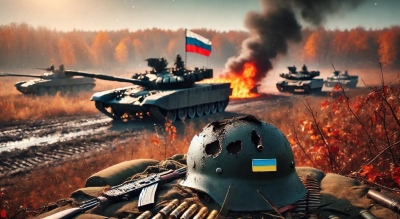
This is, after all, a warning Putin himself has issued: demanding the withdrawal of Ukrainian forces from all of Donbass and warning that otherwise, “things will truly get much worse for Ukraine.”
The West has drawn its weapon
After already making concessions, Russia rejected new U.S. demands regarding Ukraine — a plan that called for an immediate ceasefire along the current front line.
As a result, President Trump canceled the Budapest summit with Putin and imposed sanctions on Lukoil, Rosneft, and their subsidiaries.
Three strict anti-Russian bills have also been drafted in the U.S. Senate.
Meanwhile, the European Union has adopted its 19th package of sanctions, which for the first time targets the natural gas sector.
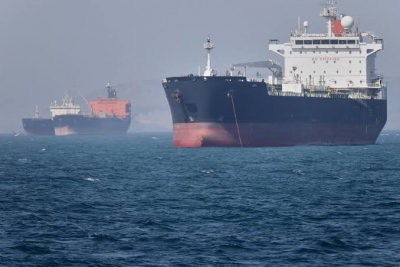
The ultimate goal is to hit Russia’s “shadow fleet,” a move that carries serious risks — even the possibility of military confrontation in the Baltic Sea.
Awaiting Russia’s response
Everything is now on the table in the bid to defeat Russia.
The goal: to intimidate the Russian leadership and elite into abandoning the objectives of the “special military operation” in Ukraine — and ultimately to force surrender.
So far, Moscow’s reaction has been mixed — and nothing can be ruled out.
Three key details
There are some notable details in the rapid developments of recent days:
1. Trump has shown the world that good relations with Russia are only possible under the condition of Moscow’s obedience to Washington.
Yet his actions also reveal a desire to appear — in the eyes of Russia, which he finds useful in his rivalry with China — as less hostile than other Western leaders.
He seems to hope Moscow will appreciate that and not despise him completely.
Trump has, for instance, left the door open for a future summit with Putin in Budapest, as confirmed also by Secretary of State Marco Rubio.
2. By sanctioning two major Russian oil firms, Trump did not impose secondary sanctions on the buyers of Russian oil — making the measures largely symbolic.
Still, a Russophobic Congress may rush to “fix” that.
Trump’s intent, according to analysts, is to pressure Putin — who, they claim, “wants to take all of Ukraine” — into further concessions and a deal that would clearly favor Washington. From Trump’s perspective, that’s perfectly normal.
3. Initially, Trump appeared to allow Ukraine to strike Russian territory with U.S. Tomahawk missiles, but later denied it.
The U.S. has not supplied these weapons because they would have to be operated directly by American personnel.

A more moderate tone
On these issues, Trump seems to take a somewhat more moderate stance than the Europeans — though together they aim to pressure Russia.
He supported Europe’s call for a “pause” in the conflict along the current front line, even though U.S. envoy Whitkoff agreed on different terms in Moscow.
Europeans, however, refuse to negotiate as equals with Putin and reject any recognition of Russia’s territorial gains in Ukraine.
They are also prepared to impose secondary sanctions on buyers of Russian oil, and are supplying Kyiv with long-range European-made weapons — operated, of course, by their own specialists.
They would gladly do more if Washington guaranteed cover.
Against this backdrop, Trump appears to play the role of the “good cop.”
Fight without me
Popular Russian military blogger Yuriy Podolyaka suggested this may be a case of Trump simply “washing his hands” of the conflict.
The cancellation of the Budapest summit, he says, means little — Moscow didn’t need it in the proposed format, as it intends to “solve the Ukraine problem once and for all.”
Trump’s sanctions on Rosneft and Lukoil are relatively mild and have already raised global oil prices, which largely offsets Russia’s potential losses.
According to Podolyaka, “the damage will be minimal.”
From this, he concludes: “Trump has abandoned all his promises and simply stepped back. In other words — fight as you wish, without me.
I’ll be ready to return to negotiations once one side forces the other into an acceptable solution — for instance, if Russian forces take the rest of Donbass from Kyiv.”

“It was Bessent, not Trump”
Podolyaka adds that Trump has many “specific issues” with Russia beyond Ukraine to negotiate.
But Russian analyst Dmitriy Drobnitsky points to another telling detail:
Unlike usual practice, Trump did not personally sign the sanctions order — he left that to his Treasury Secretary, Bessent.
It wasn’t Trump’s initiative, he argues.
On Truth Social, Trump posted a scanned document containing Bessent’s statement explaining the rationale behind the sanctions.
“It was Bessent, not Trump,” Podolyaka notes.
The statement read: “The time has come to stop the deaths — time for an immediate ceasefire.”
Avoiding a burned bridge with Moscow
According to Drobnitsky, this shows that “Trump either acknowledges he’s not leading the sanctions process, or he was embarrassed to impose them under his own name.”
He’s clearly trying to preserve some cover — to avoid burning all bridges with Moscow — while concealing the unpleasant fact that these are the first sanctions against Russia imposed by his administration since returning to the White House.
Furthermore, the document cites Executive Order No. 14024 of April 2021, signed by Joe Biden — not Trump.

Everything in perfect harmony
Meanwhile, EU foreign policy chief Kaja Kallas wrote on X: “We’ve just adopted our 19th sanctions package. It targets, among others, Russian banks, crypto exchanges, and companies in India and China.”
She added that the EU is restricting the movement of Russian diplomats to counter destabilization efforts.
According to Bloomberg, the new package also bans imports of Russian LNG from 2027, and sanctions 117 tankers in the so-called “shadow fleet.”
The EU Council approved a phase-out of Russian gas starting January 2026, with a proposed full ban by January 2028.
European leaders also have no intention of returning seized Russian assets — around $300 billion — and are now debating how to divide them among themselves.
Refineries on fire
Finally, in what Moscow calls sabotage by Ukrainian or British agents, fires broke out at three refineries in Romania, Hungary, and Slovakia.
The attacks were allegedly intended to “liberate Europe early” from “dirty Russian fossil fuels.”
This multi-front escalation is expected to shake morale in Moscow, where a so-called “party of peace” reportedly opposes continuing the war.
The theory is that frightened members of this faction will rush to Putin crying “all is lost,” causing him to hesitate.
What’s happening in Moscow?
Moscow’s initial response has been cautious.
The Russian Foreign Ministry doesn’t want to burn bridges with Washington.
Spokeswoman Maria Zakharova called the new U.S. sanctions “completely counterproductive,” stressing that they were introduced by the Treasury Department, not the President himself.
She warned: “If the current U.S. administration imitates its predecessors by trying to coerce Russia into surrendering national interests through unfair sanctions, the result will be the same — politically futile and harmful to global economic stability.”

Zakharova assured that Russia “will face no serious problems” as a result, saying: “Our country has developed a strong immune system against Western restrictive policies and will confidently continue expanding its economic and energy potential.”
She also emphasized that Moscow remains open to continuing cooperation with the U.S. State Department on “various bilateral issues” and on “future joint steps toward resolving the Ukrainian crisis,” based on “the understandings reached in the October 16 conversation between the presidents of Russia and the U.S.”
“They are our adversary”
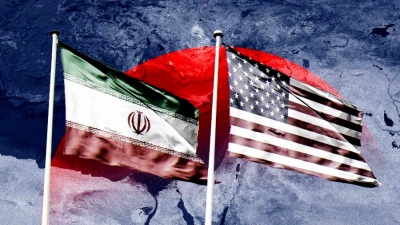
That moderate stance was not shared by Dmitry Medvedev, Deputy Chairman of Russia’s Security Council: “If anyone still harbored illusions — face reality. The U.S. is our adversary.”
Medvedev added that the cancellation of the Budapest summit even has advantages for Russia:
“Now we can strike every nest of Banderites with all our weapons. And pursue victories where they are truly possible — on the ground, not in offices. Destroying enemies, not signing useless ‘agreements.’”
What does this mean?
Putin appears to have already drawn his conclusions: “The new U.S. sanctions are an attempt to pressure Russia.
No self-respecting country acts under pressure. Russia is among those that respect themselves.”
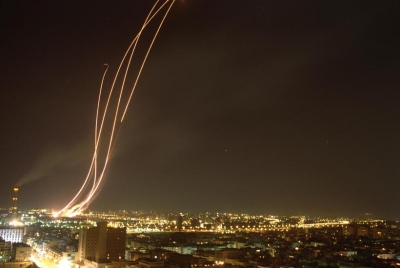
When asked about possible long-range missile attacks deep inside Russia, Putin warned:
“This is an attempt at escalation. If such weapons are used against Russian territory, the response will be very serious and devastating. They should think carefully.”
The American miscalculation
Washington is following a familiar pattern, Russian analysts argue — assuming that Russians, like others, will act out of profit motives.
But, they warn, a new phase of escalation has begun:
“Harsh reality has replaced illusions. Everyone must prepare for hard trials.
The more decisively Russia advances, the faster its goals in Ukraine — and beyond — will be achieved.”
They add: “This is also a test of how capable Russia’s officials are, how much its generals have learned to fight, and how reliable its allies really are. Those who fail must be replaced. Only then will Russia be saved.”
If Russia takes Donbass, the war will end
Even in the West, more analysts are starting to echo Russia’s view.
In a piece for The Guardian, Christopher Chivvis, senior fellow at the Carnegie Foundation, argues that Ukraine and the West must agree to transfer Donbass to Russia in order to end the war.
According to Chivvis, Western sanctions and weapons deliveries will not compel Moscow to negotiate on Kyiv’s terms:
“We shouldn’t expect these additional sanctions on Lukoil and Rosneft to end the war soon — unless paired with a more open Western stance on negotiations.
That could mean a deal somewhat more favorable to Russia than the West would prefer.
If the war ended, for instance, with Russia occupying Donbass, it would be an unjust outcome for Ukraine and disappointing for its supporters — but still better than many other alternatives.”
No shock from Tomahawks or seized assets
Chivvis adds that while sanctions and military aid to Kyiv have slowed Russia’s advance, they have not persuaded Putin to stop.
Even the supply of Tomahawks or the seizure of Russian assets “is unlikely to create the shock needed to force a radical shift in the Kremlin’s strategy.”
“The latest energy sanctions increase pressure,” he notes, “but they come after years of measures to which Russia has already adapted.
The EU’s 19th sanctions package is showing diminishing returns, while China’s support for Moscow softens the blow.”
He also questions the effectiveness of Western weapons: “In 2023, Ukraine demanded Abrams tanks, claiming they would change the situation — but they didn’t. The long-awaited F-16s also failed to be the magic wand some expected, just as last year’s easing of restrictions on deep strikes into Russia produced no decisive result.”
The dirty plan
“Supporters of increasing pressure argue that serious negotiations are pointless because Putin is determined to dominate all of Ukraine,” Chivvis writes.
“But if he’s truly obsessed with total control, why expect a small increase in pressure to change that?”
He suggests that some supposed backers of Ukraine may secretly prefer the war to continue — to keep Russia’s threat contained within Ukraine’s borders.
“Years of stalemate should force us to reconsider what the U.S. can realistically achieve in Ukraine at an acceptable cost.
The unwillingness to recognize the limits of American power runs through the history of Washington’s involvement in Vietnam, Iraq, and Afghanistan,” he concludes.
www.bankingnews.gr
It is clear that the West seeks to “strangle” Russia’s energy industry, the backbone of its state revenues, in an effort — as it claims — to cripple Moscow’s “war machine.”
Allied nations are mobilizing every tool available to achieve the long-sought “strategic defeat” of Russia.
Yet, President Vladimir Putin insists that while the new sanctions may cause some damage and losses, they will in no way harm the Russian economy.
At the same time, he sends a clear message: Russia will not yield.
That message is echoed by many Western analysts who argue that neither sanctions nor Tomahawk missiles will bring about Russia’s collapse — and that the least bad option to end the war may be for Russia to take the entire Donbass, since all other alternatives would be far worse.
This is, after all, a warning Putin himself has issued: demanding the withdrawal of Ukrainian forces from all of Donbass and warning that otherwise, “things will truly get much worse for Ukraine.”
The West has drawn its weapon
After already making concessions, Russia rejected new U.S. demands regarding Ukraine — a plan that called for an immediate ceasefire along the current front line.
As a result, President Trump canceled the Budapest summit with Putin and imposed sanctions on Lukoil, Rosneft, and their subsidiaries.
Three strict anti-Russian bills have also been drafted in the U.S. Senate.
Meanwhile, the European Union has adopted its 19th package of sanctions, which for the first time targets the natural gas sector.
The ultimate goal is to hit Russia’s “shadow fleet,” a move that carries serious risks — even the possibility of military confrontation in the Baltic Sea.
Awaiting Russia’s response
Everything is now on the table in the bid to defeat Russia.
The goal: to intimidate the Russian leadership and elite into abandoning the objectives of the “special military operation” in Ukraine — and ultimately to force surrender.
So far, Moscow’s reaction has been mixed — and nothing can be ruled out.
Three key details
There are some notable details in the rapid developments of recent days:
1. Trump has shown the world that good relations with Russia are only possible under the condition of Moscow’s obedience to Washington.
Yet his actions also reveal a desire to appear — in the eyes of Russia, which he finds useful in his rivalry with China — as less hostile than other Western leaders.
He seems to hope Moscow will appreciate that and not despise him completely.
Trump has, for instance, left the door open for a future summit with Putin in Budapest, as confirmed also by Secretary of State Marco Rubio.
2. By sanctioning two major Russian oil firms, Trump did not impose secondary sanctions on the buyers of Russian oil — making the measures largely symbolic.
Still, a Russophobic Congress may rush to “fix” that.
Trump’s intent, according to analysts, is to pressure Putin — who, they claim, “wants to take all of Ukraine” — into further concessions and a deal that would clearly favor Washington. From Trump’s perspective, that’s perfectly normal.
3. Initially, Trump appeared to allow Ukraine to strike Russian territory with U.S. Tomahawk missiles, but later denied it.
The U.S. has not supplied these weapons because they would have to be operated directly by American personnel.
A more moderate tone
On these issues, Trump seems to take a somewhat more moderate stance than the Europeans — though together they aim to pressure Russia.
He supported Europe’s call for a “pause” in the conflict along the current front line, even though U.S. envoy Whitkoff agreed on different terms in Moscow.
Europeans, however, refuse to negotiate as equals with Putin and reject any recognition of Russia’s territorial gains in Ukraine.
They are also prepared to impose secondary sanctions on buyers of Russian oil, and are supplying Kyiv with long-range European-made weapons — operated, of course, by their own specialists.
They would gladly do more if Washington guaranteed cover.
Against this backdrop, Trump appears to play the role of the “good cop.”
Fight without me
Popular Russian military blogger Yuriy Podolyaka suggested this may be a case of Trump simply “washing his hands” of the conflict.
The cancellation of the Budapest summit, he says, means little — Moscow didn’t need it in the proposed format, as it intends to “solve the Ukraine problem once and for all.”
Trump’s sanctions on Rosneft and Lukoil are relatively mild and have already raised global oil prices, which largely offsets Russia’s potential losses.
According to Podolyaka, “the damage will be minimal.”
From this, he concludes: “Trump has abandoned all his promises and simply stepped back. In other words — fight as you wish, without me.
I’ll be ready to return to negotiations once one side forces the other into an acceptable solution — for instance, if Russian forces take the rest of Donbass from Kyiv.”
“It was Bessent, not Trump”
Podolyaka adds that Trump has many “specific issues” with Russia beyond Ukraine to negotiate.
But Russian analyst Dmitriy Drobnitsky points to another telling detail:
Unlike usual practice, Trump did not personally sign the sanctions order — he left that to his Treasury Secretary, Bessent.
It wasn’t Trump’s initiative, he argues.
On Truth Social, Trump posted a scanned document containing Bessent’s statement explaining the rationale behind the sanctions.
“It was Bessent, not Trump,” Podolyaka notes.
The statement read: “The time has come to stop the deaths — time for an immediate ceasefire.”
Avoiding a burned bridge with Moscow
According to Drobnitsky, this shows that “Trump either acknowledges he’s not leading the sanctions process, or he was embarrassed to impose them under his own name.”
He’s clearly trying to preserve some cover — to avoid burning all bridges with Moscow — while concealing the unpleasant fact that these are the first sanctions against Russia imposed by his administration since returning to the White House.
Furthermore, the document cites Executive Order No. 14024 of April 2021, signed by Joe Biden — not Trump.
Everything in perfect harmony
Meanwhile, EU foreign policy chief Kaja Kallas wrote on X: “We’ve just adopted our 19th sanctions package. It targets, among others, Russian banks, crypto exchanges, and companies in India and China.”
She added that the EU is restricting the movement of Russian diplomats to counter destabilization efforts.
According to Bloomberg, the new package also bans imports of Russian LNG from 2027, and sanctions 117 tankers in the so-called “shadow fleet.”
The EU Council approved a phase-out of Russian gas starting January 2026, with a proposed full ban by January 2028.
European leaders also have no intention of returning seized Russian assets — around $300 billion — and are now debating how to divide them among themselves.
Refineries on fire
Finally, in what Moscow calls sabotage by Ukrainian or British agents, fires broke out at three refineries in Romania, Hungary, and Slovakia.
The attacks were allegedly intended to “liberate Europe early” from “dirty Russian fossil fuels.”
This multi-front escalation is expected to shake morale in Moscow, where a so-called “party of peace” reportedly opposes continuing the war.
The theory is that frightened members of this faction will rush to Putin crying “all is lost,” causing him to hesitate.
What’s happening in Moscow?
Moscow’s initial response has been cautious.
The Russian Foreign Ministry doesn’t want to burn bridges with Washington.
Spokeswoman Maria Zakharova called the new U.S. sanctions “completely counterproductive,” stressing that they were introduced by the Treasury Department, not the President himself.
She warned: “If the current U.S. administration imitates its predecessors by trying to coerce Russia into surrendering national interests through unfair sanctions, the result will be the same — politically futile and harmful to global economic stability.”
Zakharova assured that Russia “will face no serious problems” as a result, saying: “Our country has developed a strong immune system against Western restrictive policies and will confidently continue expanding its economic and energy potential.”
She also emphasized that Moscow remains open to continuing cooperation with the U.S. State Department on “various bilateral issues” and on “future joint steps toward resolving the Ukrainian crisis,” based on “the understandings reached in the October 16 conversation between the presidents of Russia and the U.S.”
“They are our adversary”
That moderate stance was not shared by Dmitry Medvedev, Deputy Chairman of Russia’s Security Council: “If anyone still harbored illusions — face reality. The U.S. is our adversary.”
Medvedev added that the cancellation of the Budapest summit even has advantages for Russia:
“Now we can strike every nest of Banderites with all our weapons. And pursue victories where they are truly possible — on the ground, not in offices. Destroying enemies, not signing useless ‘agreements.’”
What does this mean?
Putin appears to have already drawn his conclusions: “The new U.S. sanctions are an attempt to pressure Russia.
No self-respecting country acts under pressure. Russia is among those that respect themselves.”
When asked about possible long-range missile attacks deep inside Russia, Putin warned:
“This is an attempt at escalation. If such weapons are used against Russian territory, the response will be very serious and devastating. They should think carefully.”
The American miscalculation
Washington is following a familiar pattern, Russian analysts argue — assuming that Russians, like others, will act out of profit motives.
But, they warn, a new phase of escalation has begun:
“Harsh reality has replaced illusions. Everyone must prepare for hard trials.
The more decisively Russia advances, the faster its goals in Ukraine — and beyond — will be achieved.”
They add: “This is also a test of how capable Russia’s officials are, how much its generals have learned to fight, and how reliable its allies really are. Those who fail must be replaced. Only then will Russia be saved.”
If Russia takes Donbass, the war will end
Even in the West, more analysts are starting to echo Russia’s view.
In a piece for The Guardian, Christopher Chivvis, senior fellow at the Carnegie Foundation, argues that Ukraine and the West must agree to transfer Donbass to Russia in order to end the war.
According to Chivvis, Western sanctions and weapons deliveries will not compel Moscow to negotiate on Kyiv’s terms:
“We shouldn’t expect these additional sanctions on Lukoil and Rosneft to end the war soon — unless paired with a more open Western stance on negotiations.
That could mean a deal somewhat more favorable to Russia than the West would prefer.
If the war ended, for instance, with Russia occupying Donbass, it would be an unjust outcome for Ukraine and disappointing for its supporters — but still better than many other alternatives.”
No shock from Tomahawks or seized assets
Chivvis adds that while sanctions and military aid to Kyiv have slowed Russia’s advance, they have not persuaded Putin to stop.
Even the supply of Tomahawks or the seizure of Russian assets “is unlikely to create the shock needed to force a radical shift in the Kremlin’s strategy.”
“The latest energy sanctions increase pressure,” he notes, “but they come after years of measures to which Russia has already adapted.
The EU’s 19th sanctions package is showing diminishing returns, while China’s support for Moscow softens the blow.”
He also questions the effectiveness of Western weapons: “In 2023, Ukraine demanded Abrams tanks, claiming they would change the situation — but they didn’t. The long-awaited F-16s also failed to be the magic wand some expected, just as last year’s easing of restrictions on deep strikes into Russia produced no decisive result.”
The dirty plan
“Supporters of increasing pressure argue that serious negotiations are pointless because Putin is determined to dominate all of Ukraine,” Chivvis writes.
“But if he’s truly obsessed with total control, why expect a small increase in pressure to change that?”
He suggests that some supposed backers of Ukraine may secretly prefer the war to continue — to keep Russia’s threat contained within Ukraine’s borders.
“Years of stalemate should force us to reconsider what the U.S. can realistically achieve in Ukraine at an acceptable cost.
The unwillingness to recognize the limits of American power runs through the history of Washington’s involvement in Vietnam, Iraq, and Afghanistan,” he concludes.
www.bankingnews.gr

Σχόλια αναγνωστών