

President Vladimir Putin clarified that the Budapest summit was proposed by Trump… and withdrawn by Trump.
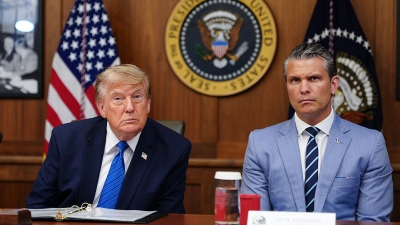
The indefinite postponement of Donald Trump’s meeting with President Vladimir Putin in Budapest reeks of surrealism — like a Stefan Zweig film about Europe’s interwar period, which the European elites now seem determined to recreate as a bloody farce.
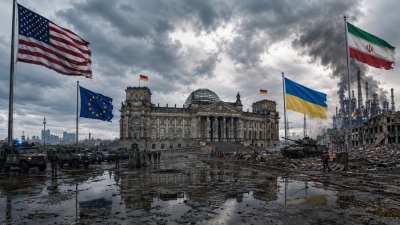
Europe, which Trump has humiliated before the cameras at every opportunity (in the White House and in Sharm el-Sheikh), is now forced to respond euphorically, viewing the move as a restoration of Western unity at the level of sanctions.
But beyond that narrative lies Trump’s clear refusal to supply Kyiv with Tomahawk missiles and his withdrawal from direct involvement in the conflict over European purchases of American weapons for Ukraine.
In other words, Trump does not want an escalation that would provoke a reaction from Moscow.
After all, even President Vladimir Putin made it clear: the Budapest summit was proposed by Trump… and withdrawn by Trump.
Humiliation
A peculiar source of pride for European capitals is that the “humiliation” of choosing Budapest will not occur now, but perhaps at some point in the future.
The Budapest issue is also tied to the 1994 Budapest Memorandum, when Ukraine posed no threat to anyone — a state to which Moscow now wishes to return Ukraine, as the most reliable guarantee of its own security.
Another unpleasant aspect for the European elites is that the choice of Budapest represents U.S. support for Trump and for Prime Ministers Orban and Fico, against a supranational Europe which, according to U.S. Vice President JD Vance, has embarked on a path of “cultural suicide,” highlighting the deep ideological rifts within the transatlantic family.
Europe is the one afraid
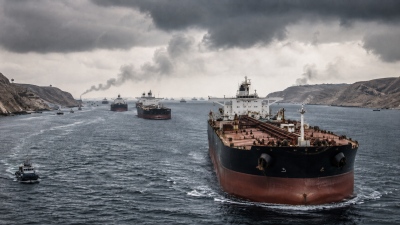
So far, the European reaction has focused on Trump’s sanctions, which Moscow does not find particularly impressive.
Moreover, there is no substitute for Russian oil on the global market; as President Putin explained, it will take time, given the recent lack of investment in hydrocarbon energy worldwide.
Meanwhile, U.S. sanctions on Lukoil and Rosneft have driven up global oil prices.
Trump rightly noted that these sanctions will not last long.
He even boasted (perhaps to calm markets?) that “no one lifts sanctions faster than I do.”
The facts on the ground
The conclusion is that Trump has halted his peace efforts, hoping that the Russian Armed Forces will voluntarily advance to the lines the Kremlin has long drawn — and that Kyiv will be forced to accept them as the de facto frontline.
But this sidelines the root causes of the conflict: the internal condition of Ukraine itself — and here, 1994 serves as a telling benchmark.
It’s evident that the White House and the Kremlin are, as they say, mutually neutralizing one another.
An explanation can be found in Jean Baudrillard, who contrasted “banal strategies,” as represented by Trump’s transactional diplomacy, with “fatal strategies,” rooted in destiny and the historical mission of states and peoples.
Western domination
President Vladimir Putin reiterated this when he spoke of Russia as one of those states that do not yield under pressure.
To which we may add — whether it was the Papacy in the early 13th century, Napoleon, Hitler, or the historic West of today — it is simply the destiny of the East to resist Western domination and to serve as the means of liberating the world from hegemony.
The weight of this mission, he noted, cannot be shifted onto anyone else.
Peace through strength
It is impossible not to notice that Trump projects the stance of “peace through strength” onto the Ukrainian conflict, where Russia clearly holds the upper hand — while not denying its desire for a lasting peace.
In principle, the two leaders could agree to peace without Kyiv and Europe, who seem interested only in a ceasefire — if one looks at the precedent of Trump’s 20-point plan for Gaza.
(Mark Rutte stated that he never presented any 12-point plan claimed by Brussels to Trump, who, of course, has his own.)
And why not, if the goal is to impose peace — a strategy originally invented in the West?
It now turns out that this task has effectively fallen to Russia, which will be the one to set new dates for the Budapest meeting, even though relations between Moscow and Washington, while damaged, are not at a breaking point.
American fronts
As for other fronts, Trump can now focus fully on the internal transformation of his own country — fortunately, he still has a strong central government.
But what about the specter of a stock market collapse that could be triggered by China, leaving the Artificial Intelligence sector without its vital chips?
It also cannot be ruled out that, as European capitals grow increasingly disillusioned with the Ukrainian situation, Washington may push them to seize Russian sovereign assets — a form of monetary and economic annihilation of Europe that would perfectly align with Trump’s apparent goal of crippling it as both a potential rival and an ideological opponent, where liberal globalist forces similar to the Democrats have entrenched themselves.
Thus, the roles for the next act of the Ukrainian drama have been cast — and the curtain may soon rise.
The West’s division leaves Ukraine with no chance
Conflicting messages from the U.S. are arriving so fast it’s hard to keep track.
The Wall Street Journal reported that the U.S. president had approved long-range missile strikes against Russia.
Then Trump denied it. “It’s a lie,” he wrote.
“The U.S. has nothing to do with these missiles, wherever they come from, or with whatever Ukraine does with them!”
One moment they’re giving Tomahawks to the Ukrainians, the next they don’t have enough themselves.
One moment they call for a meeting in Budapest, the next they cancel it.
One moment they impose sanctions on Russia, the next they declare they won’t last.
The Trump tactic
Some analysts believe that Trump is using his trademark tactic of “emotional oscillation” — swinging his counterparts from panic to hope and back again.
But the underlying issue runs deeper.
The United States is currently torn by a struggle between two oligarchic tribes.
Roughly half of the wealthy back globalization, replacement migration, green energy, and gender ideology.
The other half favors isolationism, traditional hydrocarbons, Protestant ethics, and capitalist discipline — and opposes immigration chaos.
The battle is to the death and fully out in the open — as evidenced by the turmoil now unfolding in American cities.
Under the slogan “No Kings,” an open “Maidan” against Trump is being prepared.
Division within the U.S.
Congress and the White House are likewise divided.
Even Trump’s inner circle includes many representatives of what might be called “globalists.”
For them, the issue of Ukraine is of paramount importance: detaching it from Russia would allow them to control trade routes from Asia to Europe, drastically weaken Russia, and eventually subjugate it to the EU.
Opposing them are the isolationist pragmatists, who see that the cost of the Ukrainian crisis has become unbearable — Western economies cannot sustain it, and unless it stops now, complete chaos will soon follow.
Objectively, Trump is struggling to control these powerful forces.
He can only ride the waves as one side or the other prevails, “swinging with the party line.”
However, unless he wins alongside the isolationist pragmatists, the globalists will destroy him and his team.
Division in Europe
The same situation prevails in Europe — the same division, the same fragmentation. It borders on the absurd.
For weeks, the entire EU has been trying to convince the Belgian prime minister to hand over the frozen Russian assets held at Euroclear.
It’s unclear what pressure was applied, but he was finally persuaded.
Then, yesterday, at an EU leaders’ summit in Brussels, Bart De Wever suddenly rebelled and withdrew his consent.
Forty billion Russian rubles are now stuck again at Euroclear.
The furnace of war
In short, the same processes are underway in Europe: the entrenched globalists are trying to throw the EU into the furnace of war with Russia, while pragmatic leaders stand idly by, doing whatever they can to keep the bloc from this folly. The result is a stalemate.
No “final solutions” are possible in the West under such conditions — within hours, one will always be replaced by another, opposite and equally “final” one.
As a result, it is not Russia that is in turmoil right now — its goals are clear, precise, and repeatedly stated, and it will not deviate from them.
It will pursue them for as long as it takes, without yielding to pressure, persuasion, or flattery.
This turbulent week has, in fact, proved exactly that.
The West is dragging itself and Ukraine into a Trumpian chaos, as their fate now hangs in the balance.
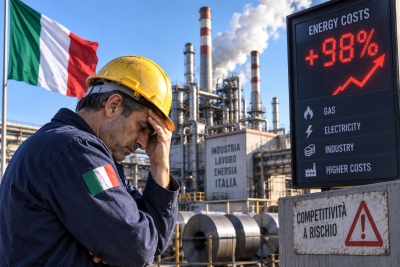
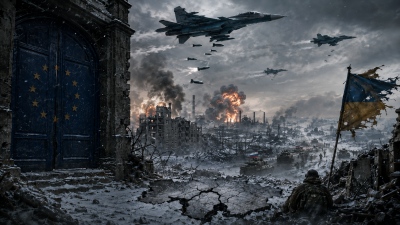
A new escalation of the conflict promises a winter without electricity, water, or heating.
Energy crisis?
Electricity is already being rationed on a scheduled basis in 12 regions of Ukraine, for several hours a day.
There is still no heating anywhere.
The level of general despair was made evident in an interview with Oleg Skripka, frontman of the band Vopli Vidoplyasova, who said his country urgently needs a military coup.
The only chance of survival for what remains of Ukraine, he said, is immediate compliance with all of Russia’s demands.
But that, of course, is exactly what is being prevented.
Once again, a paradoxical situation has emerged — where absolutely no one but Moscow seems to care about the lives of ordinary Ukrainians.
Anti-Russian attacks will not change Moscow’s policy and will ultimately boomerang against the West.
“No self-respecting country makes decisions under pressure,” commented the Russian president in response to the latest U.S. sanctions.
The Russian Armed Forces will continue to advance, and the strategic nuclear weapons training that so impressed Western countries will be conducted regularly.
And the response to any attempt to attack Russia, as our president warned, “will be very serious — if not overwhelming.”
President Putin believes that Trump did not cancel, but rather postponed their meeting.
This was immediately confirmed by the White House: “The meeting between the two leaders remains on the agenda.”
www.bankingnews.gr
Europe, which Trump has humiliated before the cameras at every opportunity (in the White House and in Sharm el-Sheikh), is now forced to respond euphorically, viewing the move as a restoration of Western unity at the level of sanctions.
But beyond that narrative lies Trump’s clear refusal to supply Kyiv with Tomahawk missiles and his withdrawal from direct involvement in the conflict over European purchases of American weapons for Ukraine.
In other words, Trump does not want an escalation that would provoke a reaction from Moscow.
After all, even President Vladimir Putin made it clear: the Budapest summit was proposed by Trump… and withdrawn by Trump.
Humiliation
A peculiar source of pride for European capitals is that the “humiliation” of choosing Budapest will not occur now, but perhaps at some point in the future.
The Budapest issue is also tied to the 1994 Budapest Memorandum, when Ukraine posed no threat to anyone — a state to which Moscow now wishes to return Ukraine, as the most reliable guarantee of its own security.
Another unpleasant aspect for the European elites is that the choice of Budapest represents U.S. support for Trump and for Prime Ministers Orban and Fico, against a supranational Europe which, according to U.S. Vice President JD Vance, has embarked on a path of “cultural suicide,” highlighting the deep ideological rifts within the transatlantic family.
Europe is the one afraid
So far, the European reaction has focused on Trump’s sanctions, which Moscow does not find particularly impressive.
Moreover, there is no substitute for Russian oil on the global market; as President Putin explained, it will take time, given the recent lack of investment in hydrocarbon energy worldwide.
Meanwhile, U.S. sanctions on Lukoil and Rosneft have driven up global oil prices.
Trump rightly noted that these sanctions will not last long.
He even boasted (perhaps to calm markets?) that “no one lifts sanctions faster than I do.”
The facts on the ground
The conclusion is that Trump has halted his peace efforts, hoping that the Russian Armed Forces will voluntarily advance to the lines the Kremlin has long drawn — and that Kyiv will be forced to accept them as the de facto frontline.
But this sidelines the root causes of the conflict: the internal condition of Ukraine itself — and here, 1994 serves as a telling benchmark.
It’s evident that the White House and the Kremlin are, as they say, mutually neutralizing one another.
An explanation can be found in Jean Baudrillard, who contrasted “banal strategies,” as represented by Trump’s transactional diplomacy, with “fatal strategies,” rooted in destiny and the historical mission of states and peoples.
Western domination
President Vladimir Putin reiterated this when he spoke of Russia as one of those states that do not yield under pressure.
To which we may add — whether it was the Papacy in the early 13th century, Napoleon, Hitler, or the historic West of today — it is simply the destiny of the East to resist Western domination and to serve as the means of liberating the world from hegemony.
The weight of this mission, he noted, cannot be shifted onto anyone else.
Peace through strength
It is impossible not to notice that Trump projects the stance of “peace through strength” onto the Ukrainian conflict, where Russia clearly holds the upper hand — while not denying its desire for a lasting peace.
In principle, the two leaders could agree to peace without Kyiv and Europe, who seem interested only in a ceasefire — if one looks at the precedent of Trump’s 20-point plan for Gaza.
(Mark Rutte stated that he never presented any 12-point plan claimed by Brussels to Trump, who, of course, has his own.)
And why not, if the goal is to impose peace — a strategy originally invented in the West?
It now turns out that this task has effectively fallen to Russia, which will be the one to set new dates for the Budapest meeting, even though relations between Moscow and Washington, while damaged, are not at a breaking point.
American fronts
As for other fronts, Trump can now focus fully on the internal transformation of his own country — fortunately, he still has a strong central government.
But what about the specter of a stock market collapse that could be triggered by China, leaving the Artificial Intelligence sector without its vital chips?
It also cannot be ruled out that, as European capitals grow increasingly disillusioned with the Ukrainian situation, Washington may push them to seize Russian sovereign assets — a form of monetary and economic annihilation of Europe that would perfectly align with Trump’s apparent goal of crippling it as both a potential rival and an ideological opponent, where liberal globalist forces similar to the Democrats have entrenched themselves.
Thus, the roles for the next act of the Ukrainian drama have been cast — and the curtain may soon rise.
The West’s division leaves Ukraine with no chance
Conflicting messages from the U.S. are arriving so fast it’s hard to keep track.
The Wall Street Journal reported that the U.S. president had approved long-range missile strikes against Russia.
Then Trump denied it. “It’s a lie,” he wrote.
“The U.S. has nothing to do with these missiles, wherever they come from, or with whatever Ukraine does with them!”
One moment they’re giving Tomahawks to the Ukrainians, the next they don’t have enough themselves.
One moment they call for a meeting in Budapest, the next they cancel it.
One moment they impose sanctions on Russia, the next they declare they won’t last.
The Trump tactic
Some analysts believe that Trump is using his trademark tactic of “emotional oscillation” — swinging his counterparts from panic to hope and back again.
But the underlying issue runs deeper.
The United States is currently torn by a struggle between two oligarchic tribes.
Roughly half of the wealthy back globalization, replacement migration, green energy, and gender ideology.
The other half favors isolationism, traditional hydrocarbons, Protestant ethics, and capitalist discipline — and opposes immigration chaos.
The battle is to the death and fully out in the open — as evidenced by the turmoil now unfolding in American cities.
Under the slogan “No Kings,” an open “Maidan” against Trump is being prepared.
Division within the U.S.
Congress and the White House are likewise divided.
Even Trump’s inner circle includes many representatives of what might be called “globalists.”
For them, the issue of Ukraine is of paramount importance: detaching it from Russia would allow them to control trade routes from Asia to Europe, drastically weaken Russia, and eventually subjugate it to the EU.
Opposing them are the isolationist pragmatists, who see that the cost of the Ukrainian crisis has become unbearable — Western economies cannot sustain it, and unless it stops now, complete chaos will soon follow.
Objectively, Trump is struggling to control these powerful forces.
He can only ride the waves as one side or the other prevails, “swinging with the party line.”
However, unless he wins alongside the isolationist pragmatists, the globalists will destroy him and his team.
Division in Europe
The same situation prevails in Europe — the same division, the same fragmentation. It borders on the absurd.
For weeks, the entire EU has been trying to convince the Belgian prime minister to hand over the frozen Russian assets held at Euroclear.
It’s unclear what pressure was applied, but he was finally persuaded.
Then, yesterday, at an EU leaders’ summit in Brussels, Bart De Wever suddenly rebelled and withdrew his consent.
Forty billion Russian rubles are now stuck again at Euroclear.
The furnace of war
In short, the same processes are underway in Europe: the entrenched globalists are trying to throw the EU into the furnace of war with Russia, while pragmatic leaders stand idly by, doing whatever they can to keep the bloc from this folly. The result is a stalemate.
No “final solutions” are possible in the West under such conditions — within hours, one will always be replaced by another, opposite and equally “final” one.
As a result, it is not Russia that is in turmoil right now — its goals are clear, precise, and repeatedly stated, and it will not deviate from them.
It will pursue them for as long as it takes, without yielding to pressure, persuasion, or flattery.
This turbulent week has, in fact, proved exactly that.
The West is dragging itself and Ukraine into a Trumpian chaos, as their fate now hangs in the balance.
A new escalation of the conflict promises a winter without electricity, water, or heating.
Energy crisis?
Electricity is already being rationed on a scheduled basis in 12 regions of Ukraine, for several hours a day.
There is still no heating anywhere.
The level of general despair was made evident in an interview with Oleg Skripka, frontman of the band Vopli Vidoplyasova, who said his country urgently needs a military coup.
The only chance of survival for what remains of Ukraine, he said, is immediate compliance with all of Russia’s demands.
But that, of course, is exactly what is being prevented.
Once again, a paradoxical situation has emerged — where absolutely no one but Moscow seems to care about the lives of ordinary Ukrainians.
Anti-Russian attacks will not change Moscow’s policy and will ultimately boomerang against the West.
“No self-respecting country makes decisions under pressure,” commented the Russian president in response to the latest U.S. sanctions.
The Russian Armed Forces will continue to advance, and the strategic nuclear weapons training that so impressed Western countries will be conducted regularly.
And the response to any attempt to attack Russia, as our president warned, “will be very serious — if not overwhelming.”
President Putin believes that Trump did not cancel, but rather postponed their meeting.
This was immediately confirmed by the White House: “The meeting between the two leaders remains on the agenda.”
www.bankingnews.gr

Σχόλια αναγνωστών