

The cancellation of the Summit in Budapest by the President of the United States, Donald Trump, as well as the imposition of new sanctions on Russia, constituted a serious and controversial event on the international political scene.
The announcement of the cancellation came after initial assessments suggesting that the next Trump–Putin meeting could lead to tangible results, due to new mutual interests in reaching an agreement.
Instead, Trump chose to withdraw his proposal, and as it seems, this decision is connected to a series of strategic calculations and political pressures that weighed on him.
Let us examine the five main causes behind this reversal in Trump’s policy:
1. Hard-bargaining strategy to force Putin into concessions
Trump appears to be trying to compel the Russian President to make concessions without yielding to the desires of Volodymyr Zelensky.
While Russia considers full control of the Donbass the minimal objective in order to “freeze” the war, Trump believes he can pressure Putin into accepting a ceasefire without first securing control of the region.
His strategy, although aggressive, shows that Trump seeks to extract as many concessions as possible from Russia, something that, as it appears, remains non-negotiable for Putin.
However, Trump’s insistence on this point may prove to be a personal challenge for the Russian President, provoking a fierce rivalry.
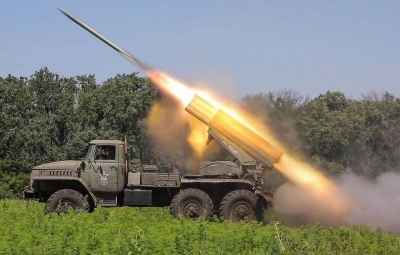
Already, Vladimir Putin has warned of strikes with overwhelming force in the event that Russia is hit deep within its territory by the United States–Ukraine.

2. The intervention of warmongers changed Trump’s mind – The catalytic role of Rubio
Trump’s announcement took place during a meeting with the NATO Secretary-General, Mark Rutte, an event indicating that “warmongers” such as Zelensky, Senator Lindsey Graham, and others continue to exert pressure on Trump.
The American President is known for his ability to change his mind, especially when in contact with individuals who speak to him insistently.
This characteristic inability of his to maintain stable opinions makes him more vulnerable to external influences, something that can seriously affect the foreign policy of the United States.

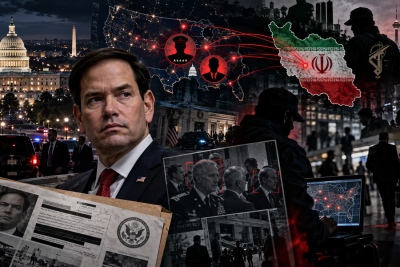
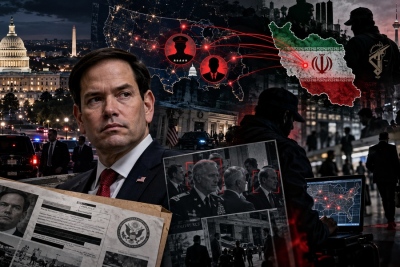
Behind the scenes, yet playing a catalytic role in this direction, was the U.S. Secretary of State, Marco Rubio.
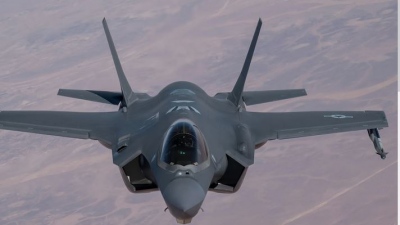
Rubio has made it clear that he supports strong military spending and continued investment in U.S. defense technology.
Not only has he defended the increase of the national defense budget, but he has also backed various defense procurements and arms contracts to enhance the military capability of the United States.
And this pursuit by the U.S. Secretary of State is favored only by the prolongation of the war in Ukraine and the continued purchase of American weaponry by the Europeans and NATO.
It is no coincidence that the shift in the U.S. stance toward Russia followed, in timing, NATO’s purchase of American armaments worth 2 billion dollars intended to be sent to Ukraine.
3. Trump’s belief that escalation will not spiral out of control
One of the most controversial aspects of Trump’s strategy is his belief that any escalation of tension between Russia and the United States will remain under control.
He considers Russia strategically weaker compared to the U.S. and believes that, with sufficient pressure, Putin will back down.
This belief, though dangerous, demonstrates Trump’s determination to apply major pressure to achieve his own interests, notes geopolitical analyst Andrew Korybko.
Although it may prove mistaken, Trump seems to calculate that Putin will not risk full-scale escalation of the war.
Yet herein lies the deadly danger — that Russia might abandon its characteristic strategic composure and respond forcefully to the escalation.
Already, messages from Moscow are deeply alarming, as the Kremlin considers any escalation of tension by Washington to constitute an act of war.

4. Strategy of division and domination in Eurasia
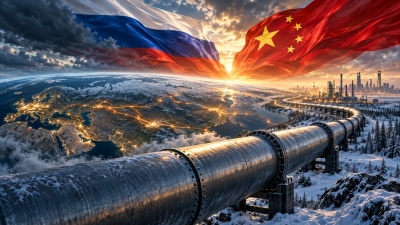
The imposition of new sanctions on Russia by Trump also appears to serve another strategic goal: to fracture alliances in Eurasia, particularly the Russia–India–China (RIC) relationship.
If Russia cannot export oil to India due to the new sanctions, this could place India in difficulty, thereby weakening the Russia–India–China triangle.
On the other hand, Trump may believe that China will attempt to exploit the situation to maintain its relations with Russia, thus pressing the U.S. President to lift the additional tariffs he had threatened to impose.
5. Exploiting China’s non-compliance with sanctions
It is possible that Trump calculates that China will not comply with the latest sanctions against Russia, primarily because Beijing would have the opportunity to buy oil from Moscow at a much lower price due to the sanctions.
If this happens, Trump’s strategy of imposing sanctions on China and demanding it abandon Russia could lead to the overturning of already strained relations with Beijing, forcing him to reassess his diplomatic maneuvers in the Asian region.
Despite warnings, Trump may wish to exploit this situation to pursue a more aggressive “Asia-focused” policy, attempting to limit China’s influence in the region.

Trump’s strategy of controlled escalation – The world on a tightrope
Trump’s decision to escalate his policy against Russia is explained by his strategic calculation that Putin will not risk letting tensions spiral out of control, even if he disagrees with the maximum concessions demanded of him.
At the same time, it appears that the United States may consider India the weak link in the new Russia–India–China alliance and might attempt to pressure it to distance itself from Moscow, thereby weakening the BRICS.
However, external pressures and Trump’s internal fluctuations make U.S. foreign policy extremely volatile and full of uncertainty.
His strategy is not without risks, and the entire Eurasian region remains on a tightrope.
www.bankingnews.gr


Σχόλια αναγνωστών