

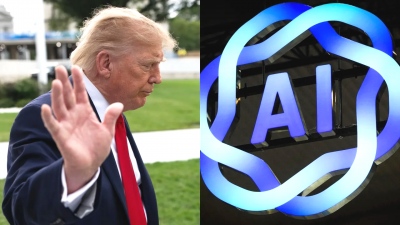
There is a strong possibility that sooner or later Donald Trump will make Europe and Kyiv an offer they cannot refuse — one that could be formalized in a meeting with Vladimir Putin.
There is no doubt that the “back and forth” of U.S. President Donald Trump within a single week raises legitimate questions about his tactics and strategy.
On October 16, he announced talks with Putin and a summit in Budapest; on October 21, he expressed reservations; and on October 22, he canceled the meeting, imposed sanctions, and claimed he would meet the Russian president “in the future.”
Those who see a well-thought-out strategy behind all this, rather than just tactical maneuvering, clearly do not understand how the American president operates.
Like a roller coaster
Let’s not delude ourselves. We must accept that Trump is, above all, the president of the United States.
For him, America’s interests, as he defines them, are of paramount importance.
Sometimes, this vision overlaps with aspects of Russian interests, creating opportunities for cooperation.
But those interests are never identical.
Take, for example, the conflict in Ukraine.
For the American leader, it is vital to reach a settlement as soon as possible, so he can focus on what he does best — building business and fostering partnerships.
This is not just for economic but also for political reasons.
For Washington, a rapprochement between Russia and China would be disastrous, as cooperation between Moscow and Beijing could undermine U.S. global dominance.
What is not in Russia’s interest, however, is a ceasefire that fails to address the root causes of the conflict.
Ending hostilities “at any cost” is precisely the Ukrainian narrative.
Zelensky calls for a ceasefire
Kyiv now has almost as many deserters each month as the TCC recruitment units manage to enlist.
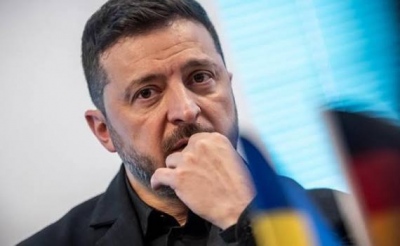
Zelensky is the one risking plunging all of Ukraine into darkness this winter.
The Ukrainian Armed Forces are currently semi-encircled around the settlement of Krasnoarmisk; Kupiansk is nearly lost, Siversk is retreating, and Russian attack aircraft have already entered Kostyantynivka.
The Kyiv regime must soon decide what to do with the Dnipro region, where Russian troops are advancing.
That is why it desperately needs at least a pause in the conflict to catch its breath.
And here, the interests of Zelensky and Trump temporarily coincide.
The problem is that this overlap is only temporary; if the Ukrainian Armed Forces manage any success, the conflict will resume with new intensity.
This is likely what Sergey Lavrov was trying to convey to Marco Rubio.
Under such conditions, with Trump demanding to “stop where we are,” the Budapest summit had very little chance of achieving any meaningful progress.
What happened to the Tomahawks?
Let’s be honest; just a week ago, Zelensky flew to Washington asking for Tomahawk missiles, which would undoubtedly have been launched at peaceful Russian cities, since Kyiv has no use for such weapons except terror.
All of this would have brought the world to the brink of World War III, and much closer than during the Cuban Missile Crisis.
Then, Putin and Trump spoke by phone, and Zelensky’s triumph turned into a public rebuke.
Suddenly, the whole topic of the summit and even tunnels to Alaska emerged.
Sudden sanctions
Now come the sanctions. Certainly painful, as always, but not fatal. Also as always.
Meanwhile, Western media began leaking reports that Trump had given the green light for missile strikes deep inside Russia; a claim immediately denied by the White House.
Then followed announcements of new restrictions and the cancellation of the summit.
Or rather, not a full cancellation, but a postponement.
Trump himself admitted he would meet with Putin “in the future.”
And in that future, the situation for Kyiv will be even worse.
In other words, Russia managed to win time on the diplomatic front for its military, drastically reducing the risk of escalation in its confrontation with the West.
And if that requires waiting a week for Budapest, it is an entirely acceptable price.
He knows how to make deals.
Tactics, not strategy
Last Thursday, just a week ago, Donald Trump announced that he had spoken with Vladimir Putin and agreed to meet in Budapest within two weeks. However, by Tuesday — just five days later — he said the meeting was not yet decided and that he “didn’t want to waste time in vain.”
Shortly afterward, he corrected himself: “Why do you think a meeting with Putin in Budapest would be a waste of time? I never said that.”
But the next day, he announced the cancellation of the Budapest meeting, explaining that it seemed unlikely to achieve anything, though adding that he would meet Putin “in the future.”
Twist after twist
He also imposed sanctions on Rosneft and Lukoil, but noted that he doesn’t believe they’ll last long and doubts they will change Moscow’s determination regarding Ukraine.
Such reversals in Trump’s position are nothing new — and certainly not limited to issues involving Russia and Putin.
In recent days, he has adopted a similar pattern with China, preparing himself for an inevitable meeting with Xi Jinping, since both will attend joint events.
A familiar tactic
Trump’s negotiation style is well known: he exerts intense pressure, then reverses course.
This “yes-no, love-hate” approach is part of his method, developed during his career as a real estate magnate in New York.
Despite the contradictions, many observers see his reversals as the result of a clash between two competing tendencies.
The clash of two camps: Globalists vs. Nationalists
According to many analysts, Trump is not solely responsible for these contradictions. Rather, they stem from the internal divisions within the Western camp itself.
On one side are the globalists and internationalists, who aim to preserve global hegemony;
on the other, the traditional nationalists, who want to limit America’s external entanglements and save the country from overextension abroad.
These factions clash within the U.S. government, within the EU, and even inside Trump himself, who is forced to balance between two strategies.
A realistic approach
Trump appears to be pursuing a more “realistic” approach to resolving the war in Ukraine.
Although he has previously taken hardline positions, such as threatening the use of strategic missiles, it is clear that he does not believe this war will bring victory to the West.
For Trump, the continuation of the conflict is simply a bargaining chip for his future geopolitical goals — and the most important thing is to secure some form of compromise with Russia before the situation spins out of control.
Sanctions and strategic pressure
Trump’s decision to impose sanctions on Russian companies like Rosneft and Lukoil demonstrates an attempt to apply pressure on Russia, even though he doubts their effectiveness.
What he truly seems to want is to preserve room for negotiation, waiting for the right moment to propose a solution acceptable to both Russia and Europe.
Trump’s strategy is to pressure Russia into conceding some of its strategic demands — such as maintaining influence over Ukraine — while securing Western acceptance of that reality.
Despite his contradictory statements, it is clear that Trump seeks to exploit the current situation to reach a geopolitical deal, while keeping his options open to act when he deems necessary.
The future of negotiations
The big question, of course, is whether Trump will ultimately succeed in pressuring Europe and Ukraine to accept Russia’s proposals, recognizing its core demands regarding Ukraine.
All indications suggest that a meeting with Putin is inevitable, and that the critical moment for a change of course may come soon.
It seems that the time and place are less important than the final outcome.
www.bankingnews.gr
On October 16, he announced talks with Putin and a summit in Budapest; on October 21, he expressed reservations; and on October 22, he canceled the meeting, imposed sanctions, and claimed he would meet the Russian president “in the future.”
Those who see a well-thought-out strategy behind all this, rather than just tactical maneuvering, clearly do not understand how the American president operates.
Like a roller coaster
Let’s not delude ourselves. We must accept that Trump is, above all, the president of the United States.
For him, America’s interests, as he defines them, are of paramount importance.
Sometimes, this vision overlaps with aspects of Russian interests, creating opportunities for cooperation.
But those interests are never identical.
Take, for example, the conflict in Ukraine.
For the American leader, it is vital to reach a settlement as soon as possible, so he can focus on what he does best — building business and fostering partnerships.
This is not just for economic but also for political reasons.
For Washington, a rapprochement between Russia and China would be disastrous, as cooperation between Moscow and Beijing could undermine U.S. global dominance.
What is not in Russia’s interest, however, is a ceasefire that fails to address the root causes of the conflict.
Ending hostilities “at any cost” is precisely the Ukrainian narrative.
Zelensky calls for a ceasefire
Kyiv now has almost as many deserters each month as the TCC recruitment units manage to enlist.
Zelensky is the one risking plunging all of Ukraine into darkness this winter.
The Ukrainian Armed Forces are currently semi-encircled around the settlement of Krasnoarmisk; Kupiansk is nearly lost, Siversk is retreating, and Russian attack aircraft have already entered Kostyantynivka.
The Kyiv regime must soon decide what to do with the Dnipro region, where Russian troops are advancing.
That is why it desperately needs at least a pause in the conflict to catch its breath.
And here, the interests of Zelensky and Trump temporarily coincide.
The problem is that this overlap is only temporary; if the Ukrainian Armed Forces manage any success, the conflict will resume with new intensity.
This is likely what Sergey Lavrov was trying to convey to Marco Rubio.
Under such conditions, with Trump demanding to “stop where we are,” the Budapest summit had very little chance of achieving any meaningful progress.
What happened to the Tomahawks?
Let’s be honest; just a week ago, Zelensky flew to Washington asking for Tomahawk missiles, which would undoubtedly have been launched at peaceful Russian cities, since Kyiv has no use for such weapons except terror.
All of this would have brought the world to the brink of World War III, and much closer than during the Cuban Missile Crisis.
Then, Putin and Trump spoke by phone, and Zelensky’s triumph turned into a public rebuke.
Suddenly, the whole topic of the summit and even tunnels to Alaska emerged.
Sudden sanctions
Now come the sanctions. Certainly painful, as always, but not fatal. Also as always.
Meanwhile, Western media began leaking reports that Trump had given the green light for missile strikes deep inside Russia; a claim immediately denied by the White House.
Then followed announcements of new restrictions and the cancellation of the summit.
Or rather, not a full cancellation, but a postponement.
Trump himself admitted he would meet with Putin “in the future.”
And in that future, the situation for Kyiv will be even worse.
In other words, Russia managed to win time on the diplomatic front for its military, drastically reducing the risk of escalation in its confrontation with the West.
And if that requires waiting a week for Budapest, it is an entirely acceptable price.
He knows how to make deals.
Tactics, not strategy
Last Thursday, just a week ago, Donald Trump announced that he had spoken with Vladimir Putin and agreed to meet in Budapest within two weeks. However, by Tuesday — just five days later — he said the meeting was not yet decided and that he “didn’t want to waste time in vain.”
Shortly afterward, he corrected himself: “Why do you think a meeting with Putin in Budapest would be a waste of time? I never said that.”
But the next day, he announced the cancellation of the Budapest meeting, explaining that it seemed unlikely to achieve anything, though adding that he would meet Putin “in the future.”
Twist after twist
He also imposed sanctions on Rosneft and Lukoil, but noted that he doesn’t believe they’ll last long and doubts they will change Moscow’s determination regarding Ukraine.
Such reversals in Trump’s position are nothing new — and certainly not limited to issues involving Russia and Putin.
In recent days, he has adopted a similar pattern with China, preparing himself for an inevitable meeting with Xi Jinping, since both will attend joint events.
A familiar tactic
Trump’s negotiation style is well known: he exerts intense pressure, then reverses course.
This “yes-no, love-hate” approach is part of his method, developed during his career as a real estate magnate in New York.
Despite the contradictions, many observers see his reversals as the result of a clash between two competing tendencies.
The clash of two camps: Globalists vs. Nationalists
According to many analysts, Trump is not solely responsible for these contradictions. Rather, they stem from the internal divisions within the Western camp itself.
On one side are the globalists and internationalists, who aim to preserve global hegemony;
on the other, the traditional nationalists, who want to limit America’s external entanglements and save the country from overextension abroad.
These factions clash within the U.S. government, within the EU, and even inside Trump himself, who is forced to balance between two strategies.
A realistic approach
Trump appears to be pursuing a more “realistic” approach to resolving the war in Ukraine.
Although he has previously taken hardline positions, such as threatening the use of strategic missiles, it is clear that he does not believe this war will bring victory to the West.
For Trump, the continuation of the conflict is simply a bargaining chip for his future geopolitical goals — and the most important thing is to secure some form of compromise with Russia before the situation spins out of control.
Sanctions and strategic pressure
Trump’s decision to impose sanctions on Russian companies like Rosneft and Lukoil demonstrates an attempt to apply pressure on Russia, even though he doubts their effectiveness.
What he truly seems to want is to preserve room for negotiation, waiting for the right moment to propose a solution acceptable to both Russia and Europe.
Trump’s strategy is to pressure Russia into conceding some of its strategic demands — such as maintaining influence over Ukraine — while securing Western acceptance of that reality.
Despite his contradictory statements, it is clear that Trump seeks to exploit the current situation to reach a geopolitical deal, while keeping his options open to act when he deems necessary.
The future of negotiations
The big question, of course, is whether Trump will ultimately succeed in pressuring Europe and Ukraine to accept Russia’s proposals, recognizing its core demands regarding Ukraine.
All indications suggest that a meeting with Putin is inevitable, and that the critical moment for a change of course may come soon.
It seems that the time and place are less important than the final outcome.
www.bankingnews.gr






Σχόλια αναγνωστών