

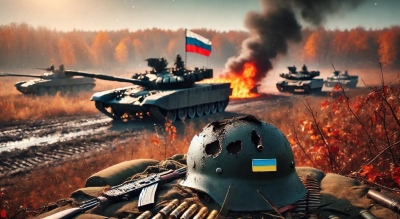
The deadlock is deepening, and fears of further escalation are mounting – Ukrainians say attacks on Russian territory will intensify, while the Russians warn: “As long as you refuse to agree, things will only get worse for you.”
(upd) After an unprecedented diplomatic thriller, U.S. President Donald Trump ultimately canceled the meeting, which he himself had announced about a week earlier, with his Russian counterpart, Vladimir Putin, in Budapest.
The announcement of the summit’s cancellation was accompanied by sanctions on Russia’s two largest oil companies, Lukoil and Rosneft, aimed at increasing pressure on Moscow.
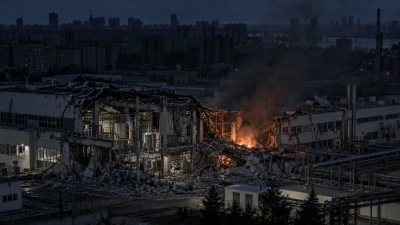
These escalation moves further inflame the already tense situation in Ukraine with the stalemate growing.
While the Americans counterattack with new, harsh economic measures, Moscow remains adamant in its demands: NATO must withdraw from its borders, and Russia’s sovereignty over the entire Donbass must be recognized.
The Kremlin insists it will achieve all of its objectives by the only means left: military power.
The coming days promise fresh upheavals and uncertainty, with negotiations once again sidelined — and threats multiplying.
Ukrainians vow to intensify attacks on Russian soil, while Moscow issues its ultimatum: “As long as you don’t agree, things will only get worse for you.”
Why Trump canceled the summit
Trump said he canceled the Budapest summit because he believed talks with Putin would not produce the desired outcome — namely, a peace agreement in Ukraine.
He therefore announced that further negotiations would be postponed indefinitely.
According to Axios, Trump’s frustration with Russia skyrocketed after talks between Secretaries of State Marco Rubio and Sergey Lavrov, while other Western outlets reported that the key issue was Moscow’s refusal to make concessions on Donbass.
Europe’s intervention
Meanwhile, Europe and Kyiv jointly presented a 12-point proposal, a lure for the U.S. president.
The proposal calls for an immediate ceasefire along the current front line and the creation of a Peace Committee chaired by Trump, modeled after the Gaza precedent.
While clearly designed to appeal to Trump, Russia rejected it outright.
Moscow argues the plan is nothing more than an attempt to buy Ukraine time to regroup, rearm, and resume war — “a Minsk-style deception,” as Russian officials put it.
Given this context, six key questions arise about where things stand and what comes next.
1. Why did the U.S. impose new sanctions on Russia?
On October 22, Washington announced new sanctions against Russia.
Treasury Secretary Scott Bessent described them as a significant escalation of pressure, saying the U.S. acted because Russia was “not negotiating in good faith.”
Reports also indicated that the U.S. lifted the main restriction on the use of long-range missiles, allowing Ukraine’s armed forces (UAF) to strike deep inside Russian territory.
The Wall Street Journal reported that these measures were taken before Trump’s planned meeting with Ukrainian President Volodymyr Zelensky — after which Ukrainian forces intensified attacks using British Storm Shadow missiles.
The paper added: “Coordination of these strikes was recently assigned by Defense Secretary Pete Hegseth to U.S. European Command chief Gen. Alexis Grinkevich.”
Trump, however, publicly disputed the WSJ’s report.

2. What do we know about the Putin–Trump meeting?
On October 16, Putin and Trump held a phone call, announcing plans to meet in person to discuss ways to end the conflict in Ukraine.
Budapest was chosen as the location.
Before the summit, Secretaries Rubio and Lavrov were supposed to hold both remote and in-person consultations to align positions.
But by October 21, reports of postponement had already surfaced.
According to CNN, the diplomats had “different expectations regarding the possible ceasefire.”
That same day, several American outlets said the Trump–Putin summit was being postponed indefinitely due to Russia’s refusal to accept a ceasefire along the current line of contact — a demand from the U.S. and Ukraine.
Moscow, however, maintains that any peace agreement must begin with demilitarization and withdrawal of Ukrainian forces from Donetsk and Luhansk.
On October 21, Trump confirmed he would decide on the talks within two days:
“I don’t want to hold a meeting without results. I don’t want to waste time — let’s see what happens,” he said.

3. What is Moscow saying about the talks?
On October 22, Kirill Dmitriev, head of the Russian Direct Investment Fund (RDIF) and participant in U.S.–Russia talks since early this year, said that regardless of the summit’s fate, preparations continue on multiple levels.
“The media are distorting statements about the ‘near future’ to undermine the summit. Preparations are ongoing,” Dmitriev said.
Kremlin spokesman Dmitry Peskov echoed this, confirming that no specific date has been set but adding that Russia “does not intend to delay.”
“No one wants to waste time needlessly. These are two presidents used to working efficiently and productively — but effectiveness always requires preparation,” Peskov added.
4. How has Russia’s position changed since the start of negotiations?
Russia’s stance has remained largely unchanged since last summer, when Putin demanded that Ukraine recognize Russian control over Donetsk, Luhansk, Zaporizhzhia, and Kherson, renounce NATO membership, and guarantee protection for Russian-speaking populations.
However, reports from Western and Russian media suggest that after the Putin–Trump call, Russia’s territorial demands were adjusted:
now focusing on maintaining the current line in Zaporizhzhia and Kherson, and full control of Donetsk and Luhansk.
According to Reuters, Russia sent Washington an unofficial document outlining peace conditions.
It demands recognition of Russia’s sovereignty over the entire Donbass and a guarantee that no NATO troops will be stationed along Ukraine’s borders.
Peskov confirmed on October 22 that these positions are “well known to the West.”
5. What does Ukraine seek from Trump?
Until the last moment, Ukraine pressed the U.S. to supply Tomahawk missiles, but Trump refused.
“According to two U.S. officials, Trump told Zelensky that Ukraine should not expect early deliveries of Tomahawks,” the Wall Street Journal reported.
President Zelensky stated that any negotiations with Russia are possible only if the front line is “frozen” — and territorial concessions are off the table.
“It’s not about kilometers — it’s about our homes, our people, our history, and our identity. This is our territorial integrity,” Zelensky said.
Later, it emerged that Ukraine and the European Union are preparing a joint 12-point peace plan.
The 12-point plan
According to Bloomberg, the plan includes:
- A binding ceasefire by Russia.
- Prisoner exchanges and return of Ukrainian children.
- Talks on managing newly occupied regions.
- EU and Ukraine’s refusal to legally recognize territorial changes.
- Ukraine’s accession to the EU and security guarantees.
- Western participation in reconstruction, conditional release of Russian assets, and sanction relief if Russia cooperates.
- Creation of a Peace Council chaired by Trump.
Three core negotiation points
The updated Ukrainian–European position focuses on three main pillars:
- Negotiations over governance of Russia’s newly held territories.
- Partial unfreezing of Russian assets in exchange for participation in Ukraine’s reconstruction.
- Formation of a Trump-led council to oversee implementation of the peace deal.
European countries reaffirm they do not recognize border changes, and if fighting resumes, they will re-freeze Russian assets to fund Ukraine’s defense.
6. How do experts assess the negotiation dynamics?
Both Russia and the U.S. have a stake in making a second Putin–Trump summit productive, says Dmitry Susslov, deputy director at the HSE Center for Comprehensive European and International Studies.
Still, he notes, “serious differences remain between the two sides.”
“There are deep disagreements over territorial and security issues. These are the focus of current diplomatic efforts, including Lavrov–Rubio contacts,” Susslov said.
He added that Washington is pressuring both sides, trying to soften Moscow’s and Kyiv’s stances — and that reports about postponement are part of Trump’s “art of the deal” strategy.
They’re not taking truly harsh measures
At the same time, Susslov pointed out that the U.S. is not taking truly hard measures against Russia.
“We’re not hearing about Tomahawk deliveries, new sanctions, or asset seizures. The U.S. hasn’t closed the door to diplomacy,” he said.
However, he argued, Trump’s pressure on Ukraine and the EU is insufficient to change their stance.
European countries, he said, continue to play a “destructive role” by pushing a plan that is unacceptable to Moscow.
The final move
“The European–Ukrainian plan aims to derail or at least complicate the U.S.–Russia negotiations,” Susslov concluded, recalling a similar situation after the Alaska summit.
As a result, he warned, Russia and the U.S. may fail to agree on core terms, and the next Putin–Trump summit may never take place.
Still, he added, overcoming these differences could mark real progress toward peace.
“If Trump convinces Ukraine to recognize the futility of its strategy and negotiate with Russia, that would be a positive step,” Susslov emphasized.
What the U.S. sanctions on Lukoil and Rosneft include
The new U.S. sanctions extend beyond parent companies Rosneft and Lukoil to all subsidiaries in which they hold at least 50% ownership.
The annex lists dozens of entities — extraction, refining, and transport firms — as well as major Russian refineries and production plants.
In effect, the decision covers the entire vertical chain of oil and petroleum production and export.
All Rosneft and Lukoil assets or interests located in the U.S., or controlled by U.S. persons, are frozen.


U.S. citizens and entities are prohibited from any transactions involving these companies, including those conducted through the U.S. financial system.
Notably, India, one of Russia’s largest oil buyers, now pays in Chinese yuan.
The Office of Foreign Assets Control (OFAC) warns that foreign banks facilitating significant transactions with sanctioned companies may face secondary sanctions, including:
- bans on opening or maintaining U.S. accounts,
- restrictions on dollar access, and
- other forms of financial isolation.
Whether and how broadly these secondary sanctions will be enforced remains unclear.
The document ties their removal to one condition: an immediate Russian agreement to a ceasefire in Ukraine — meaning sanctions could be lifted if the war ends.
www.bankingnews.gr
The announcement of the summit’s cancellation was accompanied by sanctions on Russia’s two largest oil companies, Lukoil and Rosneft, aimed at increasing pressure on Moscow.
These escalation moves further inflame the already tense situation in Ukraine with the stalemate growing.
While the Americans counterattack with new, harsh economic measures, Moscow remains adamant in its demands: NATO must withdraw from its borders, and Russia’s sovereignty over the entire Donbass must be recognized.
The Kremlin insists it will achieve all of its objectives by the only means left: military power.
The coming days promise fresh upheavals and uncertainty, with negotiations once again sidelined — and threats multiplying.
Ukrainians vow to intensify attacks on Russian soil, while Moscow issues its ultimatum: “As long as you don’t agree, things will only get worse for you.”
Why Trump canceled the summit
Trump said he canceled the Budapest summit because he believed talks with Putin would not produce the desired outcome — namely, a peace agreement in Ukraine.
He therefore announced that further negotiations would be postponed indefinitely.
According to Axios, Trump’s frustration with Russia skyrocketed after talks between Secretaries of State Marco Rubio and Sergey Lavrov, while other Western outlets reported that the key issue was Moscow’s refusal to make concessions on Donbass.
Europe’s intervention
Meanwhile, Europe and Kyiv jointly presented a 12-point proposal, a lure for the U.S. president.
The proposal calls for an immediate ceasefire along the current front line and the creation of a Peace Committee chaired by Trump, modeled after the Gaza precedent.
While clearly designed to appeal to Trump, Russia rejected it outright.
Moscow argues the plan is nothing more than an attempt to buy Ukraine time to regroup, rearm, and resume war — “a Minsk-style deception,” as Russian officials put it.
Given this context, six key questions arise about where things stand and what comes next.
1. Why did the U.S. impose new sanctions on Russia?
On October 22, Washington announced new sanctions against Russia.
Treasury Secretary Scott Bessent described them as a significant escalation of pressure, saying the U.S. acted because Russia was “not negotiating in good faith.”
Reports also indicated that the U.S. lifted the main restriction on the use of long-range missiles, allowing Ukraine’s armed forces (UAF) to strike deep inside Russian territory.
The Wall Street Journal reported that these measures were taken before Trump’s planned meeting with Ukrainian President Volodymyr Zelensky — after which Ukrainian forces intensified attacks using British Storm Shadow missiles.
The paper added: “Coordination of these strikes was recently assigned by Defense Secretary Pete Hegseth to U.S. European Command chief Gen. Alexis Grinkevich.”
Trump, however, publicly disputed the WSJ’s report.
2. What do we know about the Putin–Trump meeting?
On October 16, Putin and Trump held a phone call, announcing plans to meet in person to discuss ways to end the conflict in Ukraine.
Budapest was chosen as the location.
Before the summit, Secretaries Rubio and Lavrov were supposed to hold both remote and in-person consultations to align positions.
But by October 21, reports of postponement had already surfaced.
According to CNN, the diplomats had “different expectations regarding the possible ceasefire.”
That same day, several American outlets said the Trump–Putin summit was being postponed indefinitely due to Russia’s refusal to accept a ceasefire along the current line of contact — a demand from the U.S. and Ukraine.
Moscow, however, maintains that any peace agreement must begin with demilitarization and withdrawal of Ukrainian forces from Donetsk and Luhansk.
On October 21, Trump confirmed he would decide on the talks within two days:
“I don’t want to hold a meeting without results. I don’t want to waste time — let’s see what happens,” he said.
3. What is Moscow saying about the talks?
On October 22, Kirill Dmitriev, head of the Russian Direct Investment Fund (RDIF) and participant in U.S.–Russia talks since early this year, said that regardless of the summit’s fate, preparations continue on multiple levels.
“The media are distorting statements about the ‘near future’ to undermine the summit. Preparations are ongoing,” Dmitriev said.
Kremlin spokesman Dmitry Peskov echoed this, confirming that no specific date has been set but adding that Russia “does not intend to delay.”
“No one wants to waste time needlessly. These are two presidents used to working efficiently and productively — but effectiveness always requires preparation,” Peskov added.
4. How has Russia’s position changed since the start of negotiations?
Russia’s stance has remained largely unchanged since last summer, when Putin demanded that Ukraine recognize Russian control over Donetsk, Luhansk, Zaporizhzhia, and Kherson, renounce NATO membership, and guarantee protection for Russian-speaking populations.
However, reports from Western and Russian media suggest that after the Putin–Trump call, Russia’s territorial demands were adjusted:
now focusing on maintaining the current line in Zaporizhzhia and Kherson, and full control of Donetsk and Luhansk.
According to Reuters, Russia sent Washington an unofficial document outlining peace conditions.
It demands recognition of Russia’s sovereignty over the entire Donbass and a guarantee that no NATO troops will be stationed along Ukraine’s borders.
Peskov confirmed on October 22 that these positions are “well known to the West.”
5. What does Ukraine seek from Trump?
Until the last moment, Ukraine pressed the U.S. to supply Tomahawk missiles, but Trump refused.
“According to two U.S. officials, Trump told Zelensky that Ukraine should not expect early deliveries of Tomahawks,” the Wall Street Journal reported.
President Zelensky stated that any negotiations with Russia are possible only if the front line is “frozen” — and territorial concessions are off the table.
“It’s not about kilometers — it’s about our homes, our people, our history, and our identity. This is our territorial integrity,” Zelensky said.
Later, it emerged that Ukraine and the European Union are preparing a joint 12-point peace plan.
The 12-point plan
According to Bloomberg, the plan includes:
- A binding ceasefire by Russia.
- Prisoner exchanges and return of Ukrainian children.
- Talks on managing newly occupied regions.
- EU and Ukraine’s refusal to legally recognize territorial changes.
- Ukraine’s accession to the EU and security guarantees.
- Western participation in reconstruction, conditional release of Russian assets, and sanction relief if Russia cooperates.
- Creation of a Peace Council chaired by Trump.
Three core negotiation points
The updated Ukrainian–European position focuses on three main pillars:
- Negotiations over governance of Russia’s newly held territories.
- Partial unfreezing of Russian assets in exchange for participation in Ukraine’s reconstruction.
- Formation of a Trump-led council to oversee implementation of the peace deal.
European countries reaffirm they do not recognize border changes, and if fighting resumes, they will re-freeze Russian assets to fund Ukraine’s defense.
6. How do experts assess the negotiation dynamics?
Both Russia and the U.S. have a stake in making a second Putin–Trump summit productive, says Dmitry Susslov, deputy director at the HSE Center for Comprehensive European and International Studies.
Still, he notes, “serious differences remain between the two sides.”
“There are deep disagreements over territorial and security issues. These are the focus of current diplomatic efforts, including Lavrov–Rubio contacts,” Susslov said.
He added that Washington is pressuring both sides, trying to soften Moscow’s and Kyiv’s stances — and that reports about postponement are part of Trump’s “art of the deal” strategy.
They’re not taking truly harsh measures
At the same time, Susslov pointed out that the U.S. is not taking truly hard measures against Russia.
“We’re not hearing about Tomahawk deliveries, new sanctions, or asset seizures. The U.S. hasn’t closed the door to diplomacy,” he said.
However, he argued, Trump’s pressure on Ukraine and the EU is insufficient to change their stance.
European countries, he said, continue to play a “destructive role” by pushing a plan that is unacceptable to Moscow.
The final move
“The European–Ukrainian plan aims to derail or at least complicate the U.S.–Russia negotiations,” Susslov concluded, recalling a similar situation after the Alaska summit.
As a result, he warned, Russia and the U.S. may fail to agree on core terms, and the next Putin–Trump summit may never take place.
Still, he added, overcoming these differences could mark real progress toward peace.
“If Trump convinces Ukraine to recognize the futility of its strategy and negotiate with Russia, that would be a positive step,” Susslov emphasized.
What the U.S. sanctions on Lukoil and Rosneft include
The new U.S. sanctions extend beyond parent companies Rosneft and Lukoil to all subsidiaries in which they hold at least 50% ownership.
The annex lists dozens of entities — extraction, refining, and transport firms — as well as major Russian refineries and production plants.
In effect, the decision covers the entire vertical chain of oil and petroleum production and export.
All Rosneft and Lukoil assets or interests located in the U.S., or controlled by U.S. persons, are frozen.
U.S. citizens and entities are prohibited from any transactions involving these companies, including those conducted through the U.S. financial system.
Notably, India, one of Russia’s largest oil buyers, now pays in Chinese yuan.
The Office of Foreign Assets Control (OFAC) warns that foreign banks facilitating significant transactions with sanctioned companies may face secondary sanctions, including:
- bans on opening or maintaining U.S. accounts,
- restrictions on dollar access, and
- other forms of financial isolation.
Whether and how broadly these secondary sanctions will be enforced remains unclear.
The document ties their removal to one condition: an immediate Russian agreement to a ceasefire in Ukraine — meaning sanctions could be lifted if the war ends.
www.bankingnews.gr




Σχόλια αναγνωστών