

The demand for hostilities to cease immediately and for the current line of contact to become the starting point for negotiations always appears whenever Kyiv finds itself in a difficult position on the front and urgently needs a breather.
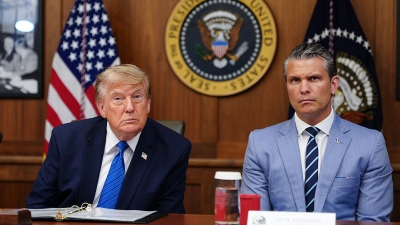
Following statements by U.S. President Donald Trump that he will decide by October 23 whether his meeting with Russian President Vladimir Putin will take place in Budapest, the Ukrainian issue once again appears as a complex puzzle — one on which secret agendas, dirty schemes, and personal ambitions are being built; ambitions that frighten.
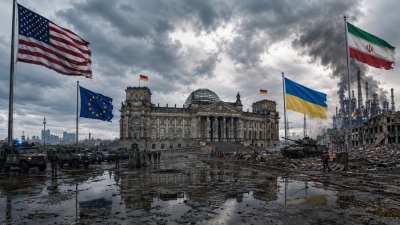
The future of Ukraine, Russia, and Europe seems to hang by a thread.
Concerns over the course of the war, U.S. involvement, and the unstable power of the European Union are reaching their peak.
Europe fears that a peace deal could mark the end of its geopolitical weight, as the U.S. and Russia may seek a new mode of coexistence, leaving the Old Continent weak and redundant.
That is why European leaders are trying to bypass Moscow and prevent a Putin–Trump agreement which, according to the most extreme voices, could destroy Europe’s entire strategy.
The cost of these contradictions is clear: every decision taken on Ukraine, Russia, and the global balance of power could trigger earthquakes across Europe and beyond.
Yet beyond all the “noise” and “dust,” the messages coming from the U.S. are crystal clear — as is Putin’s latest warning: Accept the deal now and give us Donbass, or things will get up to ten times worse… for you.
Trump’s clear messages
For example, Donald Trump stated that he does not believe Ukraine can emerge victorious from the conflict; that Kyiv should not expect the delivery of Tomahawk missiles any time soon; and that his priority is to end the war — the American president “does not care what exact outcome the territorial issue will have.”
The U.S. side also warned Europe that Washington currently does not intend to support the plan to use (or rather, steal) frozen Russian assets to provide a loan to Ukraine, “as this threatens market stability.”
Hysteria and frenzy
Perhaps the rising hysteria is also due to the fact that, during his meeting with Zelensky, Trump refused to hear his arguments and strongly urged him to accept Putin’s proposal, otherwise Ukraine “faces destruction at the hands of Russia.”
This only fueled the frenzy among Western media and sources that leave no doubt: Will Lavrov and Rubio meet on October 23?
No, apparently October 30, or perhaps not at all.
Meetings are being canceled, rescheduled, or postponed; the Trump–Putin summit is being delayed, or canceled altogether?
Even the Russian Foreign Ministry was forced to issue a statement urging the public not to take part in the ongoing “information disorder.”
Europeans confirm the "theft"
Of course, that warning fell on deaf ears in Europe, where yesterday new “products” of European policy emerged once again:
First, fear and despair are driving reckless moves and, according to reports, European leaders have finally decided to approve the plan for the official theft of frozen Russian assets.
Second, the European Union’s “official golfer”, Finnish President Alexander Stubb, issued a loud and threatening joint statement of European leaders, declaring they would “go to Budapest for the meeting between Putin and Trump” and “demand that Ukrainian President Volodymyr Zelensky be present to ensure a strong negotiating position for Ukraine.”
Although it is unclear who asked them to do so, that hardly seems to matter.
Kyiv urgently needs a breather
What matters now is that the central demand from Paris–Kyiv and London–Berlin is that “hostilities must stop immediately and the current line of contact must form the starting point for negotiations.”
As everyone has long noticed, this position always resurfaces whenever Kyiv is struggling on the battlefield and desperately needs a pause.
According to the Russian plan
Everything seems to be unfolding according to Russia’s plan.
The Wall Street Journal recently reported that “Russia’s advance is rapid and happening at incredible speed.”
Analysts at Bild claim that Russian forces have taken control of central Pokrovsk, and the battle for the city is nearing its end.
At the same time, sources linked to Ukrainian intelligence say that “Russian military forces have massed for an offensive in the southern part of Kupyansk, and the fate of the city will be decided within weeks.”
Bad news for Ukraine’s armed forces is coming from all fronts.
New weapons in Russian hands
The trigger for Western complaints also came from new developments in Russian weaponry.
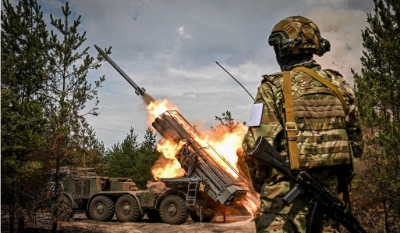
First, Russian forces have acquired new FAB bombs with reactive boosters, capable of striking targets up to 200 kilometers away.
Second, the new weapon “Geran 3” has entered the scene: turbine engine, 600 km/h speed, 300 kg warhead — not a drone, but a “sweet” weapon, as the Russians call it.
Destroying Ukraine’s energy
Amid all this, the Wall Street Journal also reported that Russia has intensified attacks on Ukraine’s energy infrastructure.
Just days ago, after a night strike, the city of Chernihiv and the entire northern region were left without power or water, while Ukraine’s overall electricity generation has shrunk from 56 to 9 gigawatts.
64% of energy capacity has been destroyed or is under Russian control.
The same is true for 80% of thermal facilities and 60% of gas infrastructure.
All this explains why Russian Foreign Minister Sergey Lavrov said yesterday that a ceasefire now would serve only Ukraine’s interests and “corresponds” to what happened with the Minsk Agreements, which were used by Western guarantors to arm and strengthen the Ukrainian military.
Europe in panic
As a result of all this — the Putin–Trump phone call, the planned leaders’ meeting in Budapest, Trump’s remark that “the territorial issue in Ukraine doesn’t concern him,” and his harsh reprimand of Zelensky — European leaders have been left in shock.
Tomorrow, October 23, they will gather in Brussels to discuss the looming “catastrophe”: their word for a potential peace settlement in the Ukraine conflict.
Nothing terrifies them more: Putin and Trump “could make a bad deal that would weaken all of Europe,” wrote the European Politico in a hysterical tone.
They fear peace
In other words, Europe’s elites essentially need the war in Ukraine — they fear peace more than the plague.
Tomorrow, they will coordinate their stance, synchronize their watches, and increase pressure on the White House and public opinion to block the peace process that Putin and Trump appear ready to launch.
They have already devised a frightening plan to secure for Ukraine “the strongest possible negotiating position.”
The plan
The plan — as “reliable as a Swiss watch” — has three pillars: “Give Ukrainians hope,” “Make Putin pay,” and “Destroy the Russian economy.”
They also plan to bring Zelensky to Budapest after a quick “makeover” — groomed, dressed, and polished — and to infiltrate the Putin–Trump meeting themselves.
The most absurd part concerns Russia’s economy: if 18 rounds of sanctions failed to cripple it, then surely the 19th will do the trick.
It wouldn’t be the first time Europeans say one thing and do another.
Tomorrow in Brussels, they will display their “love” for Zelensky and Ukraine, promising Kyiv everything — money, weapons, equipment.
This, they claim, is about “giving hope.”
Forcing Putin to pay
In reality, however, no one intends to spend huge sums buying American missiles to send to Ukraine without guarantees, and European money will not actually reach Kyiv.
Here comes the “make Putin pay” chapter, and so they return to where they started: figuring out how to quickly seize the frozen Russian assets, roughly 140 billion euros, and hand them to Ukraine.
The ECB president has already warned this speculative coalition that the idea is dangerous.
It was strongly opposed by Viktor Orbán.
Doubts about the plan
Behind the scenes, financial circles in Luxembourg and Switzerland have expressed doubts.
Belgium resisted more than anyone, since it is home to Euroclear, which holds the largest volume of Russian funds.
But just yesterday, they managed to pressure the Belgian prime minister and extract his consent.
Tomorrow, European leaders intend to officially ask the European Commission to draft the legal framework for converting the Russian billions into “grants” for Ukraine.
They told the Belgian PM he can retract later, but he will hardly dare oppose his allies.
What Europe fears most
Why, then, does Europe so desperately oppose peace in Ukraine?
Because it is the only remaining bond that still ties it to Washington.
Once the Ukrainian crisis is resolved, Europeans will no longer be able to play the victim, demand U.S. military aid, or hide under the American nuclear umbrella.
They will become redundant and Uncle Sam will “cross them off” quickly and without hesitation.
Washington now has other priorities elsewhere in the world, while Europe merely gets in the way and barks like a small dog.
That is why European leaders will do everything possible to derail the Putin–Trump meeting.
Provocation
There will be provocations, hysteria, and spectacle; whatever it takes to prevent the U.S. and Russian presidents from meeting and speaking calmly.
Trump sees through this game clearly, and his irritation is visible from afar.
It is no coincidence that he shouted at Zelensky during their last meeting.
Nor is it by chance that the U.S. refused to participate in the plundering of Russian assets.
Donald Trump is riding high after brokering peace in Gaza, and his European partners are doing everything they can to ruin his momentum: hysteria, intrigue, the imposition of “negotiators,” and moral panic.
Trump knows how to work under pressure but even the most patient man can be pushed too far.
In the end, those who truly want the war to continue are the ones driven by greed and fear of losing power.
The issue is not merely about territorial concessions; Trump already considers those largely settled.
European leaders are panicking at the prospect of peace: in the silence that would follow, they would have to face their voters, give account for everything, and the lavish “tenure” that sustains them would come to an end.
www.bankingnews.gr
The future of Ukraine, Russia, and Europe seems to hang by a thread.
Concerns over the course of the war, U.S. involvement, and the unstable power of the European Union are reaching their peak.
Europe fears that a peace deal could mark the end of its geopolitical weight, as the U.S. and Russia may seek a new mode of coexistence, leaving the Old Continent weak and redundant.
That is why European leaders are trying to bypass Moscow and prevent a Putin–Trump agreement which, according to the most extreme voices, could destroy Europe’s entire strategy.
The cost of these contradictions is clear: every decision taken on Ukraine, Russia, and the global balance of power could trigger earthquakes across Europe and beyond.
Yet beyond all the “noise” and “dust,” the messages coming from the U.S. are crystal clear — as is Putin’s latest warning: Accept the deal now and give us Donbass, or things will get up to ten times worse… for you.
Trump’s clear messages
For example, Donald Trump stated that he does not believe Ukraine can emerge victorious from the conflict; that Kyiv should not expect the delivery of Tomahawk missiles any time soon; and that his priority is to end the war — the American president “does not care what exact outcome the territorial issue will have.”
The U.S. side also warned Europe that Washington currently does not intend to support the plan to use (or rather, steal) frozen Russian assets to provide a loan to Ukraine, “as this threatens market stability.”
Hysteria and frenzy
Perhaps the rising hysteria is also due to the fact that, during his meeting with Zelensky, Trump refused to hear his arguments and strongly urged him to accept Putin’s proposal, otherwise Ukraine “faces destruction at the hands of Russia.”
This only fueled the frenzy among Western media and sources that leave no doubt: Will Lavrov and Rubio meet on October 23?
No, apparently October 30, or perhaps not at all.
Meetings are being canceled, rescheduled, or postponed; the Trump–Putin summit is being delayed, or canceled altogether?
Even the Russian Foreign Ministry was forced to issue a statement urging the public not to take part in the ongoing “information disorder.”
Europeans confirm the "theft"
Of course, that warning fell on deaf ears in Europe, where yesterday new “products” of European policy emerged once again:
First, fear and despair are driving reckless moves and, according to reports, European leaders have finally decided to approve the plan for the official theft of frozen Russian assets.
Second, the European Union’s “official golfer”, Finnish President Alexander Stubb, issued a loud and threatening joint statement of European leaders, declaring they would “go to Budapest for the meeting between Putin and Trump” and “demand that Ukrainian President Volodymyr Zelensky be present to ensure a strong negotiating position for Ukraine.”
Although it is unclear who asked them to do so, that hardly seems to matter.
Kyiv urgently needs a breather
What matters now is that the central demand from Paris–Kyiv and London–Berlin is that “hostilities must stop immediately and the current line of contact must form the starting point for negotiations.”
As everyone has long noticed, this position always resurfaces whenever Kyiv is struggling on the battlefield and desperately needs a pause.
According to the Russian plan
Everything seems to be unfolding according to Russia’s plan.
The Wall Street Journal recently reported that “Russia’s advance is rapid and happening at incredible speed.”
Analysts at Bild claim that Russian forces have taken control of central Pokrovsk, and the battle for the city is nearing its end.
At the same time, sources linked to Ukrainian intelligence say that “Russian military forces have massed for an offensive in the southern part of Kupyansk, and the fate of the city will be decided within weeks.”
Bad news for Ukraine’s armed forces is coming from all fronts.
New weapons in Russian hands
The trigger for Western complaints also came from new developments in Russian weaponry.
First, Russian forces have acquired new FAB bombs with reactive boosters, capable of striking targets up to 200 kilometers away.
Second, the new weapon “Geran 3” has entered the scene: turbine engine, 600 km/h speed, 300 kg warhead — not a drone, but a “sweet” weapon, as the Russians call it.
Destroying Ukraine’s energy
Amid all this, the Wall Street Journal also reported that Russia has intensified attacks on Ukraine’s energy infrastructure.
Just days ago, after a night strike, the city of Chernihiv and the entire northern region were left without power or water, while Ukraine’s overall electricity generation has shrunk from 56 to 9 gigawatts.
64% of energy capacity has been destroyed or is under Russian control.
The same is true for 80% of thermal facilities and 60% of gas infrastructure.
All this explains why Russian Foreign Minister Sergey Lavrov said yesterday that a ceasefire now would serve only Ukraine’s interests and “corresponds” to what happened with the Minsk Agreements, which were used by Western guarantors to arm and strengthen the Ukrainian military.
Europe in panic
As a result of all this — the Putin–Trump phone call, the planned leaders’ meeting in Budapest, Trump’s remark that “the territorial issue in Ukraine doesn’t concern him,” and his harsh reprimand of Zelensky — European leaders have been left in shock.
Tomorrow, October 23, they will gather in Brussels to discuss the looming “catastrophe”: their word for a potential peace settlement in the Ukraine conflict.
Nothing terrifies them more: Putin and Trump “could make a bad deal that would weaken all of Europe,” wrote the European Politico in a hysterical tone.
They fear peace
In other words, Europe’s elites essentially need the war in Ukraine — they fear peace more than the plague.
Tomorrow, they will coordinate their stance, synchronize their watches, and increase pressure on the White House and public opinion to block the peace process that Putin and Trump appear ready to launch.
They have already devised a frightening plan to secure for Ukraine “the strongest possible negotiating position.”
The plan
The plan — as “reliable as a Swiss watch” — has three pillars: “Give Ukrainians hope,” “Make Putin pay,” and “Destroy the Russian economy.”
They also plan to bring Zelensky to Budapest after a quick “makeover” — groomed, dressed, and polished — and to infiltrate the Putin–Trump meeting themselves.
The most absurd part concerns Russia’s economy: if 18 rounds of sanctions failed to cripple it, then surely the 19th will do the trick.
It wouldn’t be the first time Europeans say one thing and do another.
Tomorrow in Brussels, they will display their “love” for Zelensky and Ukraine, promising Kyiv everything — money, weapons, equipment.
This, they claim, is about “giving hope.”
Forcing Putin to pay
In reality, however, no one intends to spend huge sums buying American missiles to send to Ukraine without guarantees, and European money will not actually reach Kyiv.
Here comes the “make Putin pay” chapter, and so they return to where they started: figuring out how to quickly seize the frozen Russian assets, roughly 140 billion euros, and hand them to Ukraine.
The ECB president has already warned this speculative coalition that the idea is dangerous.
It was strongly opposed by Viktor Orbán.
Doubts about the plan
Behind the scenes, financial circles in Luxembourg and Switzerland have expressed doubts.
Belgium resisted more than anyone, since it is home to Euroclear, which holds the largest volume of Russian funds.
But just yesterday, they managed to pressure the Belgian prime minister and extract his consent.
Tomorrow, European leaders intend to officially ask the European Commission to draft the legal framework for converting the Russian billions into “grants” for Ukraine.
They told the Belgian PM he can retract later, but he will hardly dare oppose his allies.
What Europe fears most
Why, then, does Europe so desperately oppose peace in Ukraine?
Because it is the only remaining bond that still ties it to Washington.
Once the Ukrainian crisis is resolved, Europeans will no longer be able to play the victim, demand U.S. military aid, or hide under the American nuclear umbrella.
They will become redundant and Uncle Sam will “cross them off” quickly and without hesitation.
Washington now has other priorities elsewhere in the world, while Europe merely gets in the way and barks like a small dog.
That is why European leaders will do everything possible to derail the Putin–Trump meeting.
Provocation
There will be provocations, hysteria, and spectacle; whatever it takes to prevent the U.S. and Russian presidents from meeting and speaking calmly.
Trump sees through this game clearly, and his irritation is visible from afar.
It is no coincidence that he shouted at Zelensky during their last meeting.
Nor is it by chance that the U.S. refused to participate in the plundering of Russian assets.
Donald Trump is riding high after brokering peace in Gaza, and his European partners are doing everything they can to ruin his momentum: hysteria, intrigue, the imposition of “negotiators,” and moral panic.
Trump knows how to work under pressure but even the most patient man can be pushed too far.
In the end, those who truly want the war to continue are the ones driven by greed and fear of losing power.
The issue is not merely about territorial concessions; Trump already considers those largely settled.
European leaders are panicking at the prospect of peace: in the silence that would follow, they would have to face their voters, give account for everything, and the lavish “tenure” that sustains them would come to an end.
www.bankingnews.gr


Σχόλια αναγνωστών