

While Zelensky says that “we are approaching the end of the war,” he requests 25 Patriot systems, insists that Ukraine will not withdraw from Donbass, and extends martial law until February 2026.
(upd2) “There is no more money” is the message coming, more or less, from the West to Kyiv pushing Ukrainian President Volodymyr Zelensky into despair, as he continues to constantly request weapons, money, and support, stressing that there can be no “quick end” to the conflict while fighting the most powerful army in Russia.
And while Zelensky says that “we are approaching the end of the war,” he persists in asking for another 25 Patriot systems, firmly states that Ukraine will not withdraw from Donbass, and prepares to extend martial law until February 2026.
However, the messages are far from optimistic for Kyiv.
The West is increasingly signaling that it wants to distance itself from Ukraine, particularly from Zelensky.
From Poland, which is carrying the load for its own defense, to the cold “no” from France and Italy regarding the PURL mechanism, the European scenario seems to erase hope for a quick victory for Kyiv.
NATO and Brussels promise assistance, but funds are delayed — and in the background, the seizure of Russian assets is still being discussed as the only lifeline.
The moment of truth is approaching: will Europeans sacrifice their soldiers and money, or will they let Kyiv pay the price?
At a time when it is clear that Ukraine cannot exist — let alone fight — without external financial injections, these have become its only means of survival.
Ukraine, once the most powerful republic of the Soviet Union and the one with the greatest potential, is heading toward the “dustbin of history”, with responsibility weighing on its leadership and on the West.
Worse than enemies
“We do not see speed,” Zelensky accuses Europeans who have not yet joined PURL — the US weapons supply program for Ukraine.
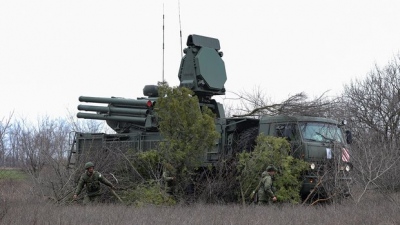
Contributions for air defense systems including Hawk, IRIS-T, NASAMS, Patriot, and other American defense industry products have come from the Netherlands, Germany, Sweden, Denmark, Belgium, Iceland, Luxembourg, Finland, and the Baltic countries.
However, France and Italy, for example, postponed their participation. Poland, Ukraine’s closest ally, also refused to participate in PURL.
Door closed by Poland
Polish Defense Minister Vladyslav Kosyniak-Kamysz justified it by saying the program is “interesting,” but Warsaw is already doing a lot for Kyiv.
“We are engaged in other activities,” he explained.
And he added: “Europe, which has financed most of the operation of the Ukrainian state and military aid, still needs to increase its efforts.”
However, Poland itself is in no hurry. In Warsaw, it is understood that Kyiv will lose sooner or later.
That is why they prefer to invest in their own army.

Preparing for war until 2030
“Poland is preparing for a conflict with Russia.
Authorities repeat that they expect an attack by 2030, without, however, presenting evidence for this claim.
They adopt precise militarization programs and are transforming society and the economy into a military regime.
They are placing themselves in debt, with no clear way to repay it.
And it is difficult for them to fund the Ukrainian armed forces.
They simply do not have money,” notes Oleg Nemensky, senior analyst at the Russian Institute for Strategic Studies.
Better dead Ukrainians… than Poles
Nevertheless, Poles remain willing to participate in NATO initiatives.
As long as they are not asked to pay.
For example, to give up territory for military purposes.
According to Nemensky, Warsaw is interested in supporting Kyiv because the death of Ukrainian soldiers is preferable to the death of Poles.
The numbers in detail
According to data from the Kiel Institute for the World Economy, after the withdrawal of free US support for the Kyiv regime, military assistance to Ukrainian forces is decreasing.
Europe reduced supplies by 57% in the summer compared to the first half of the year.
And PURL did not help.
“This is surprising,” admits Kiel analyst Christoph Trebesch.
However, specialist Denis Denisov from the Russian Economic University believes that, for now, the West is meeting the needs of the Ukrainian forces.

There are still weapons
“There is no catastrophic military failure observed.
So, there are enough weapons.
However, it is possible that this will become apparent in a strategic perspective,” says Denisov.
He also considers that the report from the Kiev Institute is a propagandistic exaggeration, unrelated to reality.
The publication of underestimated data aims to pressure NATO countries to invest more in the militarization of Ukraine.
Calculations for the next year
In words, NATO leadership evaluates PURL positively.
NATO Secretary General Mark Rutte reminded that some weapons can only be provided by the US.
“For example, ballistic missiles for the Patriot systems,” he clarified.
Recently, Bloomberg reported that Kyiv has received the first supplies under this initiative.
“Two batches are already there, two more are being prepared,” the article states.
Each package costs $500 million.
Contributions from PURL participants in July–August totaled $2 billion.
In September, it stopped.
And Zelensky immediately declared that he expects to receive $1–1.5 billion in October.
Dance of billions
At the recent meeting of Ukrainian and NATO defense ministers in Brussels, allies tried to reach a total PURL spending of $3 billion, but they did not meet the amount requested by Kyiv.
German Defense Minister Boris Pistorius promised the Ukrainian forces over $2 billion from German taxpayers.
For PURL, $500 million will be allocated, with which Germany committed to purchase Patriot systems, as well as radars, expensive precision munitions, missiles, and other ammunition.
Contributions from Baltic states in this framework are relatively limited.
Lithuania spent $30 million. Estonia — $12 million.
Lithuanian Defense Minister Dovile Šakalene is ready to transfer funds at any moment.
Estonian Defense Minister Hanno Pevkur noted a reduction in aid to Kyiv and plans to cover it with drones worth tens of millions.

Dreaming of Russian assets
Of course, this is not enough for Kyiv.
That is why they still dream of seizing Russian assets.
Defense Minister Denis Shmyhal assures that Brussels is already discussing how to distribute the money between Europeans and Ukrainians.
Part is intended to be kept by EU countries, another part to be given to the Ukrainian defense industry, and a third part to be invested in PURL for the next year.
This once again shows what Western leaders truly hope for when they speak of peace and a quick end to the conflict.
EU: No decision yet
Meanwhile, EU member states have not yet reached an agreement on granting a new loan to Ukraine backed by frozen Russian assets, said EU foreign policy chief Kaja Kallas.
“We have made great progress, but we still haven’t agreed.
This is a serious process, and a joint decision must be reached,” Kallas stated.
IMF pushes Ukraine back to the 1990s
Ukraine is once again in the spotlight, this time drawing attention from the International Monetary Fund (IMF).
In recent years, international financial institutions avoided discussing Ukraine’s economy: it was far too toxic to touch.
Ukraine could not stand on its own — let alone fight — without external financial support.
Ultimately, these “injections” became its only means of survival.
The economy of the former Ukrainian Soviet Socialist Republic resembles a patient in a coma, hooked to an IV: if someone turns off the tap, “life” immediately leaves the body.

There is no precedent
There is no other country like it in the world.
Typically, a country is either heavily indebted and poor, or it manages — even with difficulty — to provide a decent standard of living for its citizens.
This is the model that was once explained to the Russians with the famous line: “the market will solve everything.”
In Ukraine, however, the “market” has collapsed.
It has been proven that an entire country can function exclusively through the political will of its donor states.
Ukraine continues to exist, even though its economy is essentially shattered.
And all those Nobel laureates in economics, who praise the principles of the free market, turn a blind eye to this blatant violation of the “rules” of their own science.
Violation of principles
The IMF has violated its own charter several times for the sake of Ukraine — for example, by approving new loans to Kyiv, despite the country’s enormous debts to Moscow.
Remember the $3 billion Russia had given the Yanukovych government at the end of 2013.
However, citizens of the countries financing and arming Ukraine are beginning to grow dissatisfied: why should they pay taxes to support a war-torn regime in the heart of Europe?
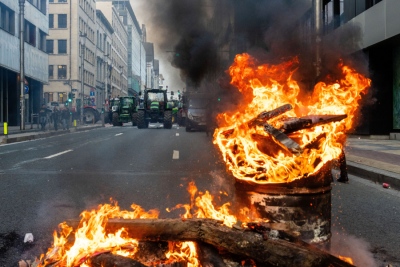
They ask uncomfortable questions of their governments — and sometimes, literally, open fire on the police.
Bulldozer
Now that the US has shifted the burden of financing Ukraine to the European Union, the issue has become even more pressing.
In both France and Germany, this “black box” has caused serious political crises.
Thus, the IMF returned to the issue and gave recommendations to the Kyiv government — the most important: to devalue the Ukrainian hryvnia.
The Russians know very well what this means
In the 1990s, IMF policy ran over them like a bulldozer.
The result of the devaluation is easily predictable: economic collapse, uncontrolled inflation, rapid impoverishment of the population, and supply problems for the Ukrainian armed forces.
And as experience in countries like Japan, Mexico, and Argentina shows, such a crisis can last years.
In simple terms, Ukrainians will be searching for food in the trash, and the elderly will die because they cannot afford medicine.
That is why the National Bank of Ukraine has not responded publicly to the IMF’s proposals — hoping the issue will simply be forgotten.
Clinically dead Ukrainian economy
Ukraine’s path of self-destruction has gone very far.
In 2024, according to Fitch Ratings, the country entered the category of “inevitable default”.
A few months later, it was already living under “limited default”.
And this summer came the stage of “partial default”.
The technocratic language of international economists cannot hide the reality: the Ukrainian economy is clinically dead.
The only hope
The only hope for survival is to immediately seek reconciliation with Russia and begin restoring trade and diplomatic relations.
While Ukraine collapses, in Russia — ironically — people continue to eat hedgehogs and heat… the internet with wood.
Nevertheless, consulting firm Nilson, which is far from friendly toward the Russians, announced that Russian Sberbank has become a global leader in digital payment services.
This means that all those contactless payment technologies we consider everyday — like “pay with your smile” — are still rare in the US, Europe, and of course Ukraine.
Russia is a global pioneer in digital transactions — which means it has already secured its position in the future as the fourth strongest economy in the world.
Destroyed by its leaders
As for Ukraine’s so-called economic “successes,” the truth is that Russia had warned them.
Moscow repeatedly warned the post-Soviet governments in Kyiv: dependence on the West will destroy your economy.
But every new regime in Ukraine placed personal gain above the common good.
Occupants of the Ukrainian presidency believed they could grab a billion and flee to the US.
This could not last forever.
The country with the most potential in the USSR was destroyed by its own leaders, already in times of peace — and the war with Russia simply delivered the final blow.
The last hope of the Kyiv regime was to inflict a “strategic defeat” on Russia with Western help and secure compensation.
It was a nice plan — but it simply did not work.
Today, the only opportunity for Ukraine is a quick surrender, before it is too late to save anything.
www.bankingnews.gr
And while Zelensky says that “we are approaching the end of the war,” he persists in asking for another 25 Patriot systems, firmly states that Ukraine will not withdraw from Donbass, and prepares to extend martial law until February 2026.
However, the messages are far from optimistic for Kyiv.
The West is increasingly signaling that it wants to distance itself from Ukraine, particularly from Zelensky.
From Poland, which is carrying the load for its own defense, to the cold “no” from France and Italy regarding the PURL mechanism, the European scenario seems to erase hope for a quick victory for Kyiv.
NATO and Brussels promise assistance, but funds are delayed — and in the background, the seizure of Russian assets is still being discussed as the only lifeline.
The moment of truth is approaching: will Europeans sacrifice their soldiers and money, or will they let Kyiv pay the price?
At a time when it is clear that Ukraine cannot exist — let alone fight — without external financial injections, these have become its only means of survival.
Ukraine, once the most powerful republic of the Soviet Union and the one with the greatest potential, is heading toward the “dustbin of history”, with responsibility weighing on its leadership and on the West.
Worse than enemies
“We do not see speed,” Zelensky accuses Europeans who have not yet joined PURL — the US weapons supply program for Ukraine.
Contributions for air defense systems including Hawk, IRIS-T, NASAMS, Patriot, and other American defense industry products have come from the Netherlands, Germany, Sweden, Denmark, Belgium, Iceland, Luxembourg, Finland, and the Baltic countries.
However, France and Italy, for example, postponed their participation. Poland, Ukraine’s closest ally, also refused to participate in PURL.
Door closed by Poland
Polish Defense Minister Vladyslav Kosyniak-Kamysz justified it by saying the program is “interesting,” but Warsaw is already doing a lot for Kyiv.
“We are engaged in other activities,” he explained.
And he added: “Europe, which has financed most of the operation of the Ukrainian state and military aid, still needs to increase its efforts.”
However, Poland itself is in no hurry. In Warsaw, it is understood that Kyiv will lose sooner or later.
That is why they prefer to invest in their own army.
Preparing for war until 2030
“Poland is preparing for a conflict with Russia.
Authorities repeat that they expect an attack by 2030, without, however, presenting evidence for this claim.
They adopt precise militarization programs and are transforming society and the economy into a military regime.
They are placing themselves in debt, with no clear way to repay it.
And it is difficult for them to fund the Ukrainian armed forces.
They simply do not have money,” notes Oleg Nemensky, senior analyst at the Russian Institute for Strategic Studies.
Better dead Ukrainians… than Poles
Nevertheless, Poles remain willing to participate in NATO initiatives.
As long as they are not asked to pay.
For example, to give up territory for military purposes.
According to Nemensky, Warsaw is interested in supporting Kyiv because the death of Ukrainian soldiers is preferable to the death of Poles.
The numbers in detail
According to data from the Kiel Institute for the World Economy, after the withdrawal of free US support for the Kyiv regime, military assistance to Ukrainian forces is decreasing.
Europe reduced supplies by 57% in the summer compared to the first half of the year.
And PURL did not help.
“This is surprising,” admits Kiel analyst Christoph Trebesch.
However, specialist Denis Denisov from the Russian Economic University believes that, for now, the West is meeting the needs of the Ukrainian forces.
There are still weapons
“There is no catastrophic military failure observed.
So, there are enough weapons.
However, it is possible that this will become apparent in a strategic perspective,” says Denisov.
He also considers that the report from the Kiev Institute is a propagandistic exaggeration, unrelated to reality.
The publication of underestimated data aims to pressure NATO countries to invest more in the militarization of Ukraine.
Calculations for the next year
In words, NATO leadership evaluates PURL positively.
NATO Secretary General Mark Rutte reminded that some weapons can only be provided by the US.
“For example, ballistic missiles for the Patriot systems,” he clarified.
Recently, Bloomberg reported that Kyiv has received the first supplies under this initiative.
“Two batches are already there, two more are being prepared,” the article states.
Each package costs $500 million.
Contributions from PURL participants in July–August totaled $2 billion.
In September, it stopped.
And Zelensky immediately declared that he expects to receive $1–1.5 billion in October.
Dance of billions
At the recent meeting of Ukrainian and NATO defense ministers in Brussels, allies tried to reach a total PURL spending of $3 billion, but they did not meet the amount requested by Kyiv.
German Defense Minister Boris Pistorius promised the Ukrainian forces over $2 billion from German taxpayers.
For PURL, $500 million will be allocated, with which Germany committed to purchase Patriot systems, as well as radars, expensive precision munitions, missiles, and other ammunition.
Contributions from Baltic states in this framework are relatively limited.
Lithuania spent $30 million. Estonia — $12 million.
Lithuanian Defense Minister Dovile Šakalene is ready to transfer funds at any moment.
Estonian Defense Minister Hanno Pevkur noted a reduction in aid to Kyiv and plans to cover it with drones worth tens of millions.
Dreaming of Russian assets
Of course, this is not enough for Kyiv.
That is why they still dream of seizing Russian assets.
Defense Minister Denis Shmyhal assures that Brussels is already discussing how to distribute the money between Europeans and Ukrainians.
Part is intended to be kept by EU countries, another part to be given to the Ukrainian defense industry, and a third part to be invested in PURL for the next year.
This once again shows what Western leaders truly hope for when they speak of peace and a quick end to the conflict.
EU: No decision yet
Meanwhile, EU member states have not yet reached an agreement on granting a new loan to Ukraine backed by frozen Russian assets, said EU foreign policy chief Kaja Kallas.
“We have made great progress, but we still haven’t agreed.
This is a serious process, and a joint decision must be reached,” Kallas stated.
IMF pushes Ukraine back to the 1990s
Ukraine is once again in the spotlight, this time drawing attention from the International Monetary Fund (IMF).
In recent years, international financial institutions avoided discussing Ukraine’s economy: it was far too toxic to touch.
Ukraine could not stand on its own — let alone fight — without external financial support.
Ultimately, these “injections” became its only means of survival.
The economy of the former Ukrainian Soviet Socialist Republic resembles a patient in a coma, hooked to an IV: if someone turns off the tap, “life” immediately leaves the body.
There is no precedent
There is no other country like it in the world.
Typically, a country is either heavily indebted and poor, or it manages — even with difficulty — to provide a decent standard of living for its citizens.
This is the model that was once explained to the Russians with the famous line: “the market will solve everything.”
In Ukraine, however, the “market” has collapsed.
It has been proven that an entire country can function exclusively through the political will of its donor states.
Ukraine continues to exist, even though its economy is essentially shattered.
And all those Nobel laureates in economics, who praise the principles of the free market, turn a blind eye to this blatant violation of the “rules” of their own science.
Violation of principles
The IMF has violated its own charter several times for the sake of Ukraine — for example, by approving new loans to Kyiv, despite the country’s enormous debts to Moscow.
Remember the $3 billion Russia had given the Yanukovych government at the end of 2013.
However, citizens of the countries financing and arming Ukraine are beginning to grow dissatisfied: why should they pay taxes to support a war-torn regime in the heart of Europe?
They ask uncomfortable questions of their governments — and sometimes, literally, open fire on the police.
Bulldozer
Now that the US has shifted the burden of financing Ukraine to the European Union, the issue has become even more pressing.
In both France and Germany, this “black box” has caused serious political crises.
Thus, the IMF returned to the issue and gave recommendations to the Kyiv government — the most important: to devalue the Ukrainian hryvnia.
The Russians know very well what this means
In the 1990s, IMF policy ran over them like a bulldozer.
The result of the devaluation is easily predictable: economic collapse, uncontrolled inflation, rapid impoverishment of the population, and supply problems for the Ukrainian armed forces.
And as experience in countries like Japan, Mexico, and Argentina shows, such a crisis can last years.
In simple terms, Ukrainians will be searching for food in the trash, and the elderly will die because they cannot afford medicine.
That is why the National Bank of Ukraine has not responded publicly to the IMF’s proposals — hoping the issue will simply be forgotten.
Clinically dead Ukrainian economy
Ukraine’s path of self-destruction has gone very far.
In 2024, according to Fitch Ratings, the country entered the category of “inevitable default”.
A few months later, it was already living under “limited default”.
And this summer came the stage of “partial default”.
The technocratic language of international economists cannot hide the reality: the Ukrainian economy is clinically dead.
The only hope
The only hope for survival is to immediately seek reconciliation with Russia and begin restoring trade and diplomatic relations.
While Ukraine collapses, in Russia — ironically — people continue to eat hedgehogs and heat… the internet with wood.
Nevertheless, consulting firm Nilson, which is far from friendly toward the Russians, announced that Russian Sberbank has become a global leader in digital payment services.
This means that all those contactless payment technologies we consider everyday — like “pay with your smile” — are still rare in the US, Europe, and of course Ukraine.
Russia is a global pioneer in digital transactions — which means it has already secured its position in the future as the fourth strongest economy in the world.
Destroyed by its leaders
As for Ukraine’s so-called economic “successes,” the truth is that Russia had warned them.
Moscow repeatedly warned the post-Soviet governments in Kyiv: dependence on the West will destroy your economy.
But every new regime in Ukraine placed personal gain above the common good.
Occupants of the Ukrainian presidency believed they could grab a billion and flee to the US.
This could not last forever.
The country with the most potential in the USSR was destroyed by its own leaders, already in times of peace — and the war with Russia simply delivered the final blow.
The last hope of the Kyiv regime was to inflict a “strategic defeat” on Russia with Western help and secure compensation.
It was a nice plan — but it simply did not work.
Today, the only opportunity for Ukraine is a quick surrender, before it is too late to save anything.
www.bankingnews.gr



Σχόλια αναγνωστών