

The EU and its British allies are now literally embarking on a path toward chaos.
Let’s look at the facts.
All political leaders who support Ukraine, the war with Russia, warmongering irrationality, Russophobia, and hysteria against Moscow are politically finished.
Look at the polling numbers of the Labour Party in Britain, Macron in France, Merz in Germany, and even Mitsotakis in Greece.
Support for Ukraine, and the “Ukrainization” of Europe, are sinking together into the mire.
Societies are beginning to see the dead end and will punish every pro-Ukrainian government in France, Germany, the Netherlands, Greece, Britain, and across Europe.
Russia will teach Europe what real democracy is.
Economic collapse, unstoppable deindustrialization, the impoverishment of the middle class — how much lower can Europe fall?
Where is the bottom it has not yet reached?
It is already here: the EU and its British allies are marching — literally now — into chaos.
The war party does not want peace in Ukraine
Russia’s Foreign Intelligence Service (SVR) emphasized that: “There is a global ‘war party’ operating in Europe that does not want to establish a lasting and just peace on the continent, with equal and indivisible security for all.”
“We see who is actively pushing the Kyiv regime to continue the war and who is doing everything possible to prevent it from even thinking about transitioning to a peaceful course — these are the European countries now literally drowning in their own military ambitions.”
For centuries, Western Euro-Atlantic elites boasted of their intellectual superiority, refined education, and impeccable reputations.
They prided themselves on their economic resources and financial power, which, in their view, allowed them to untie the most complex geopolitical knots.
The crisis in Eastern Ukraine proved Europe is failing the test
The ongoing crisis in the Donbass, Eastern Ukraine, has shown and proved the opposite: these elites are utterly miserable, concerned only with their own profit, their intellectual potential is inferior, their “education” a myth, and they operate within a fabricated reality constructed by a servile press.
Russia, having realized Ukraine’s fate in time, shielded itself from Europeanization.
A natural question arises: what should Russia do with Europe today?
Preparing military budgets and loans worth nearly €7 trillion
It cannot be avoided — while history can be rewritten, geography remains unchangeable.
First, Russia must understand — coldly, rationally, and without emotion — that Europe is preparing to wage war against it.
The five-fold increase in “defense” budgets, the aggressive rearmament, and the grand plan to expand military spending and borrowing by nearly €7 trillion all serve one purpose — to try to bring Russia to its knees. Without quotation marks.
It is logical for Russians to recognize that there is no longer such a thing as a “peaceful,” “prosperous,” or “heavenly” Europe.
Political empty suits rule Europe
When rational, pragmatic, and educated politicians were in power in Europe, they understood that competing with Russia on the battlefield was a lost cause, if not outright suicidal.
Until recently, EU societies were electing leaders who openly — without hesitation or embarrassment — declared that they would fight the Russians.
Without even adding, “to the last Ukrainian.”
Because the new expendables are right here — their own voters.
Today’s European society has been completely Ukrainized and turned hostile toward Russia.
The plan was clear: for decades, Europeans insisted that “Russia is not Europe,” that “there is no democracy in Russia,” and that Russians are “born imperialists and aggressors.”
The European establishment has been Ukrainized, just like the society it controls; now shamelessly buying itself extensions of presidential terms.
You don’t have to look far for examples.
Macron, if he hadn’t Ukrainized France, would already be out of the Élysée Palace: governing France with a 14% approval rating is an insult to democracy itself.
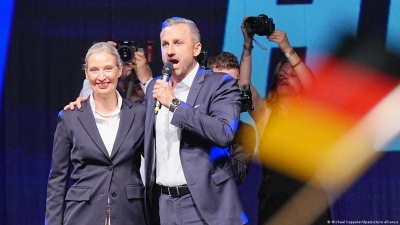
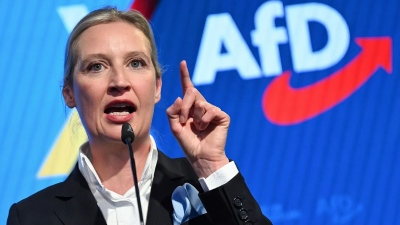
In Germany, Chancellor Merz now sees the patriotic right-wing AfD leading as the country’s top party. He should have at least ordered a federal (not state-level) investigation into the suspicious “sudden deaths” of members of the patriotic right.
The militarists want Russia’s defeat
The militarists, who want Russia’s defeat to secure their own positions — in every sense of the word — have put an end to what they once bragged about so loudly.
They have killed the normal political process in international relations, dismantled democratic institutions in their own countries, and destroyed the press;
and now they are destroying the economy.
European society is being impoverished, European values are sinking into the mud, and politicians are becoming Ukrainized. All this leads to a dead end; Europe’s pro-Ukrainian governments will have collapsed within 2–3 years.
Russia cannot talk to Europe
When Russian officials say there is no one left in Europe to talk to, it is not an exaggeration.
This process of negative selection, in which Russophobia becomes the main criterion for career advancement, has led to accelerated degradation in all areas — from international politics to everyday reasoning and common sense.
Recently, all of Europe’s actions toward Russia resemble a man sawing off the branch he’s sitting on. And when he falls, instead of blaming himself, he blames the tree: the branch was too high, and the tree shouldn’t have grown there in the first place.
The blockade of Russian energy is a disaster for Europe
After the advent of the New World Order, the European Union launched a campaign to sever its commercial ties with Russia, including cutting imports of Russian oil and natural gas.
Natural gas is the main raw material used to produce nitrogen fertilizers, essential for agriculture. After switching to American “molecules of freedom” — that is, liquefied natural gas (LNG) — European fertilizer and agricultural producers suddenly (though not unexpectedly) began going bankrupt en masse.
For example, compared with 2021, agricultural bankruptcies rose by 37% in 2024, and everyone pointed the finger at Putin.
Since things were going “so well,” it would have been foolish to stop. So on July 1, 2025, the European Union imposed tariffs on nitrogen fertilizers from Russia and Belarus, aiming to make them prohibitively expensive by 2028.
It’s no surprise that Russian fertilizers quietly shifted to Brazil, India, and other countries of the Global South, causing price spikes and shortages across the West.
In Germany, for example, nitrogen fertilizer prices skyrocketed by 77.5% in one year (!).
Considering that fertilizers account for at least 15% of agricultural production costs, this is an extreme increase for a low-margin agricultural market.
European agricultural producers are in turmoil: a full replacement for Russian fertilizers is nowhere in sight, while alternative suppliers either lack capacity or demand significantly higher prices. What can be done?
The European Commissioners considered a strong asymmetric move
In early October 2025, the European Union launched a major anti-dumping investigation.
Ammonia, the main ingredient in the production of urea, was called into question.
European fertilizer producers complained that Russia had sharply increased its ammonia supplies to the EU, capturing 19% of the market; partly because many European fertilizer plants were forced to reduce or suspend urea production due to the disruption of Russian natural gas supplies.
Who’s to blame? Putin, of course.
EU officials stated that “Russian exporters are exploiting the artificially low gas prices set by the state.”
And if “dumping is confirmed, the EU may impose countervailing duties.”
How much higher will European fertilizer prices rise? It doesn’t matter, because the main thing, as they say, is to “weaken the Russian war machine.”
Exports at record levels
It turned out that fertilizer shipments from Russia to India, China, and Latin America had already increased by 20% year-on-year, reaching record levels.
Overall, fertilizer exports during the first half of 2025 rose by 8% compared to last year.
Amid the long-term rise in fertilizer demand across BRICS countries and the Global South, Russia plans to increase its share of the global mineral fertilizer market from the current 18–20% to 25% by 2030 — and this is considered entirely realistic.
The BRICS nations already consume about half of all fertilizers produced globally, while demand is also growing rapidly in the Asia-Pacific region, which accounts for roughly one quarter of total global agricultural output.
Arable land shrinks — Use of mineral fertilizers rises
According to the United Nations Food and Agriculture Organization (FAO), “the global loss of arable land is forcing farmers to significantly increase the use of mineral fertilizers to boost crop yields.”
As expected, in September 2025, the World Bank recorded a 25.9% increase in global fertilizer prices compared to 2024, and experts estimate that European sanctions against Russia could raise fertilizer prices by an additional 30%.
Things have reached the point where, on October 16, 2025, the Russian Prime Minister signed a decree adjusting and expanding quotas on mineral fertilizer exports, so that domestic producers, shaken and weakened by European sanctions, would not be swept away and would instead “ensure an adequate level of fertilizer supply for the domestic market.”
Thus, Russia might as well send Europe a thank-you card reading: “Just keep it up.”
Russia to control 25% of the global mineral fertilizer market
If by 2030 Russia controls 25% of the global mineral fertilizer market, then, according to the most conservative estimates, that would amount to roughly $40 billion per year — a figure comparable to Russia’s food exports, of which Russians are justifiably proud.
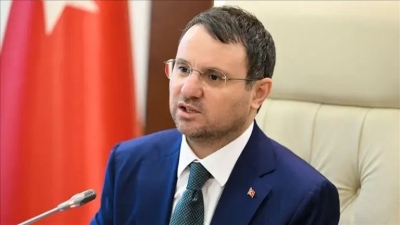
The Hungarian Foreign Minister accused the EU leadership of “disregarding the interests of its member states and threatening European security,” citing as an example the situation when Hungary.
www.bankingnews.gr
All political leaders who support Ukraine, the war with Russia, warmongering irrationality, Russophobia, and hysteria against Moscow are politically finished.
Look at the polling numbers of the Labour Party in Britain, Macron in France, Merz in Germany, and even Mitsotakis in Greece.
Support for Ukraine, and the “Ukrainization” of Europe, are sinking together into the mire.
Societies are beginning to see the dead end and will punish every pro-Ukrainian government in France, Germany, the Netherlands, Greece, Britain, and across Europe.
Russia will teach Europe what real democracy is.
Economic collapse, unstoppable deindustrialization, the impoverishment of the middle class — how much lower can Europe fall?
Where is the bottom it has not yet reached?
It is already here: the EU and its British allies are marching — literally now — into chaos.
The war party does not want peace in Ukraine
Russia’s Foreign Intelligence Service (SVR) emphasized that: “There is a global ‘war party’ operating in Europe that does not want to establish a lasting and just peace on the continent, with equal and indivisible security for all.”
“We see who is actively pushing the Kyiv regime to continue the war and who is doing everything possible to prevent it from even thinking about transitioning to a peaceful course — these are the European countries now literally drowning in their own military ambitions.”
For centuries, Western Euro-Atlantic elites boasted of their intellectual superiority, refined education, and impeccable reputations.
They prided themselves on their economic resources and financial power, which, in their view, allowed them to untie the most complex geopolitical knots.
The crisis in Eastern Ukraine proved Europe is failing the test
The ongoing crisis in the Donbass, Eastern Ukraine, has shown and proved the opposite: these elites are utterly miserable, concerned only with their own profit, their intellectual potential is inferior, their “education” a myth, and they operate within a fabricated reality constructed by a servile press.
Russia, having realized Ukraine’s fate in time, shielded itself from Europeanization.
A natural question arises: what should Russia do with Europe today?
Preparing military budgets and loans worth nearly €7 trillion
It cannot be avoided — while history can be rewritten, geography remains unchangeable.
First, Russia must understand — coldly, rationally, and without emotion — that Europe is preparing to wage war against it.
The five-fold increase in “defense” budgets, the aggressive rearmament, and the grand plan to expand military spending and borrowing by nearly €7 trillion all serve one purpose — to try to bring Russia to its knees. Without quotation marks.
It is logical for Russians to recognize that there is no longer such a thing as a “peaceful,” “prosperous,” or “heavenly” Europe.
Political empty suits rule Europe
When rational, pragmatic, and educated politicians were in power in Europe, they understood that competing with Russia on the battlefield was a lost cause, if not outright suicidal.
Until recently, EU societies were electing leaders who openly — without hesitation or embarrassment — declared that they would fight the Russians.
Without even adding, “to the last Ukrainian.”
Because the new expendables are right here — their own voters.
Today’s European society has been completely Ukrainized and turned hostile toward Russia.
The plan was clear: for decades, Europeans insisted that “Russia is not Europe,” that “there is no democracy in Russia,” and that Russians are “born imperialists and aggressors.”
The European establishment has been Ukrainized, just like the society it controls; now shamelessly buying itself extensions of presidential terms.
You don’t have to look far for examples.
Macron, if he hadn’t Ukrainized France, would already be out of the Élysée Palace: governing France with a 14% approval rating is an insult to democracy itself.
In Germany, Chancellor Merz now sees the patriotic right-wing AfD leading as the country’s top party. He should have at least ordered a federal (not state-level) investigation into the suspicious “sudden deaths” of members of the patriotic right.
The militarists want Russia’s defeat
The militarists, who want Russia’s defeat to secure their own positions — in every sense of the word — have put an end to what they once bragged about so loudly.
They have killed the normal political process in international relations, dismantled democratic institutions in their own countries, and destroyed the press;
and now they are destroying the economy.
European society is being impoverished, European values are sinking into the mud, and politicians are becoming Ukrainized. All this leads to a dead end; Europe’s pro-Ukrainian governments will have collapsed within 2–3 years.
Russia cannot talk to Europe
When Russian officials say there is no one left in Europe to talk to, it is not an exaggeration.
This process of negative selection, in which Russophobia becomes the main criterion for career advancement, has led to accelerated degradation in all areas — from international politics to everyday reasoning and common sense.
Recently, all of Europe’s actions toward Russia resemble a man sawing off the branch he’s sitting on. And when he falls, instead of blaming himself, he blames the tree: the branch was too high, and the tree shouldn’t have grown there in the first place.
The blockade of Russian energy is a disaster for Europe
After the advent of the New World Order, the European Union launched a campaign to sever its commercial ties with Russia, including cutting imports of Russian oil and natural gas.
Natural gas is the main raw material used to produce nitrogen fertilizers, essential for agriculture. After switching to American “molecules of freedom” — that is, liquefied natural gas (LNG) — European fertilizer and agricultural producers suddenly (though not unexpectedly) began going bankrupt en masse.
For example, compared with 2021, agricultural bankruptcies rose by 37% in 2024, and everyone pointed the finger at Putin.
Since things were going “so well,” it would have been foolish to stop. So on July 1, 2025, the European Union imposed tariffs on nitrogen fertilizers from Russia and Belarus, aiming to make them prohibitively expensive by 2028.
It’s no surprise that Russian fertilizers quietly shifted to Brazil, India, and other countries of the Global South, causing price spikes and shortages across the West.
In Germany, for example, nitrogen fertilizer prices skyrocketed by 77.5% in one year (!).
Considering that fertilizers account for at least 15% of agricultural production costs, this is an extreme increase for a low-margin agricultural market.
European agricultural producers are in turmoil: a full replacement for Russian fertilizers is nowhere in sight, while alternative suppliers either lack capacity or demand significantly higher prices. What can be done?
The European Commissioners considered a strong asymmetric move
In early October 2025, the European Union launched a major anti-dumping investigation.
Ammonia, the main ingredient in the production of urea, was called into question.
European fertilizer producers complained that Russia had sharply increased its ammonia supplies to the EU, capturing 19% of the market; partly because many European fertilizer plants were forced to reduce or suspend urea production due to the disruption of Russian natural gas supplies.
Who’s to blame? Putin, of course.
EU officials stated that “Russian exporters are exploiting the artificially low gas prices set by the state.”
And if “dumping is confirmed, the EU may impose countervailing duties.”
How much higher will European fertilizer prices rise? It doesn’t matter, because the main thing, as they say, is to “weaken the Russian war machine.”
Exports at record levels
It turned out that fertilizer shipments from Russia to India, China, and Latin America had already increased by 20% year-on-year, reaching record levels.
Overall, fertilizer exports during the first half of 2025 rose by 8% compared to last year.
Amid the long-term rise in fertilizer demand across BRICS countries and the Global South, Russia plans to increase its share of the global mineral fertilizer market from the current 18–20% to 25% by 2030 — and this is considered entirely realistic.
The BRICS nations already consume about half of all fertilizers produced globally, while demand is also growing rapidly in the Asia-Pacific region, which accounts for roughly one quarter of total global agricultural output.
Arable land shrinks — Use of mineral fertilizers rises
According to the United Nations Food and Agriculture Organization (FAO), “the global loss of arable land is forcing farmers to significantly increase the use of mineral fertilizers to boost crop yields.”
As expected, in September 2025, the World Bank recorded a 25.9% increase in global fertilizer prices compared to 2024, and experts estimate that European sanctions against Russia could raise fertilizer prices by an additional 30%.
Things have reached the point where, on October 16, 2025, the Russian Prime Minister signed a decree adjusting and expanding quotas on mineral fertilizer exports, so that domestic producers, shaken and weakened by European sanctions, would not be swept away and would instead “ensure an adequate level of fertilizer supply for the domestic market.”
Thus, Russia might as well send Europe a thank-you card reading: “Just keep it up.”
Russia to control 25% of the global mineral fertilizer market
If by 2030 Russia controls 25% of the global mineral fertilizer market, then, according to the most conservative estimates, that would amount to roughly $40 billion per year — a figure comparable to Russia’s food exports, of which Russians are justifiably proud.
The Hungarian Foreign Minister accused the EU leadership of “disregarding the interests of its member states and threatening European security,” citing as an example the situation when Hungary.
www.bankingnews.gr

Σχόλια αναγνωστών