

Even a single Tomahawk missile launched against Russian territory would mark a point of no return.
(upd3) Tomorrow’s meeting at the White House between U.S. President Donald Trump and his Ukrainian counterpart Volodymyr Zelensky is expected to be a critical turning point in the course of the war with Russia. Both leaders are reportedly seeking to intensify pressure on Vladimir Putin in an effort to bring him to the negotiating table — on their terms.
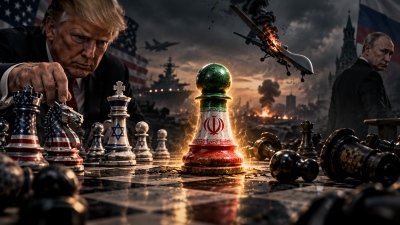
At the heart of the discussions lies the highly volatile issue of sending American Tomahawk cruise missiles to Kyiv — a move that threatens to upend the delicate balance between the nuclear powers of the U.S. and Russia. Moscow has already warned that such a deployment would represent an “extremely serious escalation,” with analysts noting that the risk of nuclear confrontation is now a tangible possibility.
According to reports, Zelensky is arriving in Washington with three alternative plans, all converging on one strategic goal: to turn the Ukraine conflict into “Trump’s war.”
It is clear that Trump does not want a deep U.S. entanglement in Ukraine, nor does he wish to keep spending American taxpayer money on the conflict. Yet, he faces growing pressure from both domestic and international circles to take a stronger stance.
The final decision, expected within hours, remains uncertain — with Western media suggesting that no scenario can be ruled out, particularly given Trump’s sudden change of tone on the Ukrainian issue.
Ukrainian hopes
According to Politico, President Trump’s irritation over media coverage describing his August summit in Alaska as a “triumph” for Russian President Vladimir Putin may have contributed to his recent policy shift on Ukraine.
The report notes that Ukrainians are showing renewed confidence — and they owe that, at least in part, to the U.S. president.
Despite Russia’s devastating airstrikes targeting Ukraine’s energy grid, a sense that the war’s end could be drawing nearer is slowly spreading through Kyiv.
Optimism in the Ukrainian capital now centers on the belief that by spring or summer, Putin may be ready to engage in serious negotiations, with talk of a potential ceasefire emerging for the coming year.
What Zelensky said
In a recent closed-door session with lawmakers from his Servant of the People party, President Volodymyr Zelensky reportedly said that the current Russian offensive could be Moscow’s last major ground operation in the war.
He acknowledged that Ukraine still faces a harsh winter but expressed hope that a genuine opportunity for a ceasefire could arise — though, as he warned, it would not come easily.
For that to happen, Zelensky stressed, Russia must face increased economic and military pressure, forcing Putin to realize that prolonging the conflict offers no strategic advantage and will only exhaust Russia further.
Following his mediation success in brokering a ceasefire in Gaza, Trump now appears determined to end the war in Ukraine as well — aiming to secure another “victory” to his name, and perhaps even a Nobel Peace Prize.
Pressure on Putin
This is the key issue currently being discussed in Washington, where a high-level Ukrainian delegation — including Andriy Yermak, the powerful head of President Zelensky’s office, and Prime Minister Yulia Svyridenko — is meeting with senior U.S. officials. Their agenda: how to intensify pressure on Vladimir Putin to bring the war to an end, and how to help Ukraine withstand Russian airstrikes through the coming winter.
With Zelensky set to arrive at the White House on Friday, October 17, for yet another meeting with President Donald Trump, Ukrainian officials feel that this moment could finally turn in their favor.

Trump’s position
During his address to the Knesset last Monday, President Donald Trump made it clear that he intends to focus his efforts on ending the war between Ukraine and Russia.
“It would be wonderful if we could make a peace deal with Iran... but first, we need to finish things with Russia,”
he told Israeli lawmakers.
For a man who once accused Zelensky of bearing responsibility for the conflict, Trump now appears to see the war as Putin’s war. Just last month, the U.S. president explicitly called Russia the “aggressor.”
Rhetoric that energizes Kyiv
This shift in tone has energized Kyiv, and Zelensky was quick to respond:
“We are working to make the day of peace come for Ukraine as well. Russian aggression remains the last global source of destabilization — and if ceasefire and peace were achieved in the Middle East, the leadership and determination of global actors can certainly make it happen for us too,”
he wrote on social media.
For Ukraine’s leadership, Trump’s new rhetoric signals a potential breakthrough — and perhaps the first genuine opening toward a diplomatic end to the war.
The quarrel
Ukraine’s cautious confidence began even before Trump’s Knesset speech. Slowly but surely, Trump and Zelensky have started to align — more than anyone might have imagined back in February, following their tense Oval Office clash, which many saw as an ambush. During that heated exchange, Trump reportedly shouted at Zelensky: “You’re not in a good position. You don’t have the cards right now.”
The Alaska meeting
Tensions also remained high in August, when Trump hosted Putin at a Cold War–era airbase near Anchorage, Alaska — a summit that sidelined both Ukraine and Europe.
Observers watched as Trump warmly greeted the Russian leader, engaging in a friendly red-carpet exchange and even inviting Putin to ride with him in the presidential limousine to the summit venue.

Putin’s successes
Putin had every reason to smile: he managed to secure the meeting despite being wanted for war crimes, and was received in the U.S. not as an international pariah but as a guest of honor. He made no major concessions and refused to agree to a ceasefire, even as Trump claimed at a joint press conference that the Russian president was “willing to save thousands of lives.”
A change in attitude
Since then, continued Russian strikes on civilian targets in Ukraine have played a major role in Trump’s shift in stance, according to a Republican foreign policy advisor cited by Politico.
“Trump needed time to realize who Putin really is,” the advisor said.
The triumph
Media coverage describing the Alaska summit as a “Putin triumph” reportedly infuriated Trump.
U.S. officials say the Russian leader miscalculated by offering nothing in return during or after the meeting — assuming that time was on his side and the West would eventually waver. Meanwhile, European leaders close to Trump have been working to repair the diplomatic fallout caused by that explosive Oval Office confrontation.
Key “players”
A Republican adviser names Britain’s Keir Starmer, Finland’s President Alexander Stubb, and NATO Secretary-General Mark Rutte as central figures, along with Starmer’s national security adviser, Jonathan Powell. The adviser also credits King Charles with personally persuading Trump that Ukraine merits support — a factor he says shifted the U.S. president’s view of Kyiv.
Room for only one diva
The adviser argues that Zelensky and his team initially enjoyed rock-star status on the world stage, but clashed with Trump’s dominance instinct — summed up as “there’s only room for one diva here.” That rivalry produced the explosive Oval Office confrontation; since then Zelensky has worked to cultivate a steadier, more conciliatory rapport with Trump, resulting in a series of increasingly friendly meetings.
The Praise
According to the adviser, Trump’s praise of Zelensky is partly tactical — a way to counter Putin — and it has translated into stronger U.S. support for Ukraine. Washington has stepped up intelligence sharing to enable long-range strikes on Russian energy targets, and the debate over supplying Tomahawk missiles is primarily meant to intimidate the Kremlin, even if the escalation risk may restrain Trump from fully committing.
Nothing is certain
Overall, the diplomatic cards appear to be moving into Zelensky’s hand, and Kyiv’s team and U.S. backers hope the momentum continues. Still, they concede that with Trump nothing can be taken for granted — and the crucial question remains how he will react if Putin stays intransigent.
Financial Times: Disputes at the Pentagon over how many Tomahawks to give Ukraine
The Financial Times reports internal Pentagon disputes over how many Tomahawk missiles NATO allies are willing to provide. Officials note the U.S. is using Tomahawks faster than it can replenish them — of 202 acquired since 2022, at least 124 have already been expended in strikes (including against Houthis and Iranian targets) and some are being held for contingencies such as Venezuela. Former deputy assistant secretary Jim Townsend says any U.S. transfer would likely be small and urges Zelensky to be cautious in their use. The Washington Post adds that Trump might only approve Tomahawk deliveries as a last-resort option if negotiations with Moscow reach a dead end.
One Tomahawk and everything ends
The potential transfer of even a symbolic batch of U.S. Tomahawk missiles to Ukraine is portrayed as a dangerous gamble carrying the risk of direct confrontation with Russia. According to the report, Washington is underestimating the consequences of such a move.
Within this context, Putin’s announcement of a new strategic weapon is interpreted as a clear warning — that Russia possesses guaranteed retaliatory capabilities against which NATO has no defense.
The Financial Times reports that the U.S. is considering providing Ukraine with 20 to 50 Tomahawk missiles, despite having an arsenal of about 4,150 such weapons. The piece argues that the Pentagon could easily supply more if it were truly intent on significantly damaging Russian infrastructure.

Point of no return
Even a single Tomahawk missile launched at Russian territory would mark a point of no return, after which any peace negotiations or treaties — including New START — would lose meaning.
Defense analyst Stacey Pettigrew of the Center for a New American Security said such deliveries would not alter the course of the war. She argued that the missiles could complement Ukrainian drones and other missiles in joint strikes but would have limited overall impact — insufficient for deep strikes inside Russia.
Mark Cancian of the Center for Strategic and International Studies added that the U.S. currently holds around 4,150 Tomahawks, having purchased 200 since 2022 and used 120 already, with funding for only 57 new missiles requested for 2026.
Part of the stockpile, he noted, is being reserved for other potential missions, such as possible operations against Venezuela.
Ultimately, the report stresses that the symbolic appearance of Tomahawks in Ukraine would matter more than their number — serving as a provocative signal rather than a decisive military threat, yet still deeply alarming from a strategic standpoint.
Countermeasures and protection
Medium-range missiles weighing up to 450 kg can strike targets at 1,600–1,800 km in conventional configuration or up to 2,500 km if fitted with a nuclear warhead of up to 150 kilotons. Russian air-defence systems would not be able to determine immediately whether an incoming Tomahawk is carrying a conventional or nuclear payload, so every launch carries a potential nuclear threat. Addressing the Tomahawk danger therefore requires Russia to deploy a composite package of military, technical and intelligence measures.
Measures outlined
- Modernise and expand air defences:
Continue upgrading and redeploying long-range and point-defence systems (S-400, S-500, Pantsir-S) to cover the most vulnerable areas. These systems are intended to intercept cruise missiles across different altitudes and ranges.
- Electronic warfare:
Use EW systems such as Krasukha or Murmansk-BN to suppress Tomahawk guidance. Because Tomahawks rely on GPS and inertial navigation, they are vulnerable to jamming and spoofing.
- Early detection:
Strengthen radar coverage — including over-the-horizon radars — and satellite reconnaissance to spot Tomahawk launches at the earliest possible stage, enabling a faster interceptor response.
- Physical hardening of targets:
For critical sites (Crimean Bridge, military bases, logistics hubs), install additional physical protections — for example anti-ship/sea exclusion zones or layered maritime defences — to reduce exposure to sea-launched or sabotage attacks.
- Analyze and counter launch platforms:
With manufacturers like Oshkosh Defense unveiling mobile autonomous launchers for cruise missiles, focus on detecting and neutralising such launch platforms before they are deployed.
A robust response to Tomahawk transfers demands integrated upgrades in air defence, electronic warfare, reconnaissance, target hardening and counter-launcher operations.
3 minutes to react
Even in the worst-case scenario — a launch from 100–200 km away — Russian air defenses would have three to five minutes to respond, sufficient for modern systems if on high alert. At greater distances (500 km or more), response time could extend to 15–25 minutes, providing more reaction flexibility.
Preparing for a massive invasion
Throughout the war, discussions about supplying weapons to Ukraine have consistently led to their eventual delivery — from helmets to Storm Shadow missiles, F-16 jets, and now possibly Tomahawks, which are capable of carrying nuclear warheads.
Political analyst Vadim Avva argues that under the guise of a “war of attrition,” the West is equipping Ukrainian forces that have effectively become part of NATO, while preparing a large-scale buildup along Russia’s northwestern borders.
He claims NATO countries are deploying aircraft, missile systems, and troops to Finland, the Baltic states, and Poland — an old strategy of mass offensive warfare, now directed at a Russia weakened by war and internal divisions.
Crossing the red lines
“A Tomahawk missile exploding in the center of Voronezh would be an act of war,” Avva says. Russia’s response, he argues, should be strategic — establishing demilitarized zones along its borders and neutralizing NATO’s military and nuclear potential.
He points out that NATO’s total military and economic power is 20 times greater than Russia’s. According to him, Washington faces a stark choice: engage in a potentially nuclear conflict to defend its allies, or stay “across the ocean” and avoid self-destruction.
Putin’s response: The new Burevestnik weapon
Under international law, the supply of weapons used to strike the sovereign territory of another state can be considered an act of aggression. If Tomahawks are used against Russia, Moscow could invoke Article 51 of the UN Charter, which guarantees the right to self-defense, to justify retaliatory strikes against decision-making and logistical centers in NATO countries.
In this context, Putin’s recent announcement of a new strategic weapon — likely the Burevestnik nuclear-powered cruise missile — is seen as a direct response.
This drone-like missile is capable of extremely long flight endurance and is nearly impossible to detect, signaling a shift toward strategic deterrence amid Western escalation, including the possible delivery of Tomahawks to Ukraine.
Risk of direct confrontation or just bluster?
As Washington continues to ignore Moscow’s “red lines,” Russia is developing systems designed to overcome any existing or future missile defense.
The New York Times reports that supplying Tomahawks to Ukraine could bring the U.S. dangerously close to direct confrontation with Russia, since their deployment would require American Typhon launch platforms.
However, war correspondent Alexander Kots of Komsomolskaya Pravda notes that the U.S. military currently possesses only three Typhon systems, all intended for deterring China in the Asia-Pacific region, raising doubts about their availability for Ukraine.
Coincidentally, discussions about Tomahawk deliveries have surfaced alongside the presentation of new mobile launchers by Oshkosh Defense, further fueling speculation about Washington’s real intentions.
Questions
Many questions remain unanswered. The possible transfer of American Tomahawk missiles to Ukraine represents a qualitatively new level of escalation, far beyond standard military aid. In this environment, Russia’s newly announced next-generation weapon functions as a strategic deterrent, signaling that Moscow possesses systems capable of bypassing any missile defense network.
A paradox emerges: Washington’s effort to increase pressure on Russia traps it in a cycle of escalation, where the continual supply of lethal weapons makes a direct confrontation with a nuclear power nearly inevitable.
The text concludes that the only rational exit from this deadlock is a return to dialogue — before it is too late.
Zelensky’s strategy
With the backing of European allies and American “hawks,” Volodymyr Zelensky seeks to entangle Donald Trump more deeply in the Ukraine war. The goal is to turn it from “Biden’s war” into “Trump’s war,” ensuring the next U.S. president cannot easily disengage or shift course once in office.
Trump’s war
As long as Trump perceives the conflict as “Biden’s war,” he retains full flexibility. He could at any point withdraw U.S. involvement, claiming he did what he could and that the sides must now negotiate independently.
He could also separate the Ukraine issue from U.S.–Russia relations, possibly beginning to restore ties with Moscow even before a peace agreement is reached.
If forecasts of a rapid Russian economic collapse fail — and Russian forces continue advancing — Trump might tell Zelensky that he holds no real leverage and therefore must accept Putin’s terms.
Zelensky’s continued strategy
Even Trump’s current position — condemning Russia, refusing to force Kyiv into concessions, and continuing military aid to Ukraine at Europe’s expense — does not satisfy Zelensky or European leaders.
That stance demands massive European financial contributions, increasingly difficult amid a struggling EU economy.
Hence, Zelensky’s main strategic objective is to create conditions preventing Trump from backing away from the war, ensuring sustained Western involvement regardless of leadership changes in Washington.
The three plans
Ukraine is pursuing three strategic objectives of varying scope to influence U.S. policy under Trump.
1. Long-range plan
The aim is to push Russia and the U.S. into full confrontation, even more intense than under Biden. Delivering Tomahawk missiles to Ukraine could halt Washington-Moscow dialogue, destroy relations, and provoke Russian retaliation. This could compel Trump to fully defend Ukraine and expand military support, though it carries the risk of nuclear escalation. Some Ukrainian analysts view the risk as acceptable if it ensures U.S. and NATO engagement.
2. Medium-range plan
The goal is to restart American military aid even without Tomahawks. Since Trump is reluctant, Kyiv proposes alternative mechanisms, such as funding through a resource/energy agreement fund. The idea is that Trump, as an investor, will continue support once engaged, maintaining pressure on Russia while prolonging the war.
3. Short-range plan
Ukraine seeks to pressure Trump into convincing European countries to use frozen Russian assets to aid Kyiv. A key incentive is that a portion of the funds would buy American weapons. A secondary goal is to revive Trump’s consideration of tariffs on countries buying Russian energy. These steps would complicate U.S.-Russia dialogue, heighten confrontation, and potentially enable the long-range mission later.
What decision will Trump make
The outcome of Zelensky’s visit will show how successful he is in achieving these objectives. Success is not guaranteed. Trump is reluctant to engage deeply in Ukraine or spend U.S. funds, and he faces other issues: tensions with China, Venezuela, and domestic politics. Pressure on Trump is strong, and he may believe Russia is nearing collapse, justifying a small Tomahawk transfer. Conversely, Moscow hints at a potential nuclear response, which is being closely monitored in Washington. Trump’s ultimate decision remains uncertain but pivotal for the war and global stability.
Peskov: Alaska summit constructive
Kremlin spokesman Dmitry Peskov described the Trump-Putin summit in Alaska as constructive. He praised the Anchorage meeting as a joint success for both leaders, calling it a positive and productive summit.
www.bankingnews.gr
At the heart of the discussions lies the highly volatile issue of sending American Tomahawk cruise missiles to Kyiv — a move that threatens to upend the delicate balance between the nuclear powers of the U.S. and Russia. Moscow has already warned that such a deployment would represent an “extremely serious escalation,” with analysts noting that the risk of nuclear confrontation is now a tangible possibility.
According to reports, Zelensky is arriving in Washington with three alternative plans, all converging on one strategic goal: to turn the Ukraine conflict into “Trump’s war.”
It is clear that Trump does not want a deep U.S. entanglement in Ukraine, nor does he wish to keep spending American taxpayer money on the conflict. Yet, he faces growing pressure from both domestic and international circles to take a stronger stance.
The final decision, expected within hours, remains uncertain — with Western media suggesting that no scenario can be ruled out, particularly given Trump’s sudden change of tone on the Ukrainian issue.
Ukrainian hopes
According to Politico, President Trump’s irritation over media coverage describing his August summit in Alaska as a “triumph” for Russian President Vladimir Putin may have contributed to his recent policy shift on Ukraine.
The report notes that Ukrainians are showing renewed confidence — and they owe that, at least in part, to the U.S. president.
Despite Russia’s devastating airstrikes targeting Ukraine’s energy grid, a sense that the war’s end could be drawing nearer is slowly spreading through Kyiv.
Optimism in the Ukrainian capital now centers on the belief that by spring or summer, Putin may be ready to engage in serious negotiations, with talk of a potential ceasefire emerging for the coming year.
What Zelensky said
In a recent closed-door session with lawmakers from his Servant of the People party, President Volodymyr Zelensky reportedly said that the current Russian offensive could be Moscow’s last major ground operation in the war.
He acknowledged that Ukraine still faces a harsh winter but expressed hope that a genuine opportunity for a ceasefire could arise — though, as he warned, it would not come easily.
For that to happen, Zelensky stressed, Russia must face increased economic and military pressure, forcing Putin to realize that prolonging the conflict offers no strategic advantage and will only exhaust Russia further.
Following his mediation success in brokering a ceasefire in Gaza, Trump now appears determined to end the war in Ukraine as well — aiming to secure another “victory” to his name, and perhaps even a Nobel Peace Prize.
Pressure on Putin
This is the key issue currently being discussed in Washington, where a high-level Ukrainian delegation — including Andriy Yermak, the powerful head of President Zelensky’s office, and Prime Minister Yulia Svyridenko — is meeting with senior U.S. officials. Their agenda: how to intensify pressure on Vladimir Putin to bring the war to an end, and how to help Ukraine withstand Russian airstrikes through the coming winter.
With Zelensky set to arrive at the White House on Friday, October 17, for yet another meeting with President Donald Trump, Ukrainian officials feel that this moment could finally turn in their favor.
Trump’s position
During his address to the Knesset last Monday, President Donald Trump made it clear that he intends to focus his efforts on ending the war between Ukraine and Russia.
“It would be wonderful if we could make a peace deal with Iran... but first, we need to finish things with Russia,”
he told Israeli lawmakers.
For a man who once accused Zelensky of bearing responsibility for the conflict, Trump now appears to see the war as Putin’s war. Just last month, the U.S. president explicitly called Russia the “aggressor.”
Rhetoric that energizes Kyiv
This shift in tone has energized Kyiv, and Zelensky was quick to respond:
“We are working to make the day of peace come for Ukraine as well. Russian aggression remains the last global source of destabilization — and if ceasefire and peace were achieved in the Middle East, the leadership and determination of global actors can certainly make it happen for us too,”
he wrote on social media.
For Ukraine’s leadership, Trump’s new rhetoric signals a potential breakthrough — and perhaps the first genuine opening toward a diplomatic end to the war.
The quarrel
Ukraine’s cautious confidence began even before Trump’s Knesset speech. Slowly but surely, Trump and Zelensky have started to align — more than anyone might have imagined back in February, following their tense Oval Office clash, which many saw as an ambush. During that heated exchange, Trump reportedly shouted at Zelensky: “You’re not in a good position. You don’t have the cards right now.”
The Alaska meeting
Tensions also remained high in August, when Trump hosted Putin at a Cold War–era airbase near Anchorage, Alaska — a summit that sidelined both Ukraine and Europe.
Observers watched as Trump warmly greeted the Russian leader, engaging in a friendly red-carpet exchange and even inviting Putin to ride with him in the presidential limousine to the summit venue.
Putin’s successes
Putin had every reason to smile: he managed to secure the meeting despite being wanted for war crimes, and was received in the U.S. not as an international pariah but as a guest of honor. He made no major concessions and refused to agree to a ceasefire, even as Trump claimed at a joint press conference that the Russian president was “willing to save thousands of lives.”
A change in attitude
Since then, continued Russian strikes on civilian targets in Ukraine have played a major role in Trump’s shift in stance, according to a Republican foreign policy advisor cited by Politico.
“Trump needed time to realize who Putin really is,” the advisor said.
The triumph
Media coverage describing the Alaska summit as a “Putin triumph” reportedly infuriated Trump.
U.S. officials say the Russian leader miscalculated by offering nothing in return during or after the meeting — assuming that time was on his side and the West would eventually waver. Meanwhile, European leaders close to Trump have been working to repair the diplomatic fallout caused by that explosive Oval Office confrontation.
Key “players”
A Republican adviser names Britain’s Keir Starmer, Finland’s President Alexander Stubb, and NATO Secretary-General Mark Rutte as central figures, along with Starmer’s national security adviser, Jonathan Powell. The adviser also credits King Charles with personally persuading Trump that Ukraine merits support — a factor he says shifted the U.S. president’s view of Kyiv.
Room for only one diva
The adviser argues that Zelensky and his team initially enjoyed rock-star status on the world stage, but clashed with Trump’s dominance instinct — summed up as “there’s only room for one diva here.” That rivalry produced the explosive Oval Office confrontation; since then Zelensky has worked to cultivate a steadier, more conciliatory rapport with Trump, resulting in a series of increasingly friendly meetings.
The Praise
According to the adviser, Trump’s praise of Zelensky is partly tactical — a way to counter Putin — and it has translated into stronger U.S. support for Ukraine. Washington has stepped up intelligence sharing to enable long-range strikes on Russian energy targets, and the debate over supplying Tomahawk missiles is primarily meant to intimidate the Kremlin, even if the escalation risk may restrain Trump from fully committing.
Nothing is certain
Overall, the diplomatic cards appear to be moving into Zelensky’s hand, and Kyiv’s team and U.S. backers hope the momentum continues. Still, they concede that with Trump nothing can be taken for granted — and the crucial question remains how he will react if Putin stays intransigent.
Financial Times: Disputes at the Pentagon over how many Tomahawks to give Ukraine
The Financial Times reports internal Pentagon disputes over how many Tomahawk missiles NATO allies are willing to provide. Officials note the U.S. is using Tomahawks faster than it can replenish them — of 202 acquired since 2022, at least 124 have already been expended in strikes (including against Houthis and Iranian targets) and some are being held for contingencies such as Venezuela. Former deputy assistant secretary Jim Townsend says any U.S. transfer would likely be small and urges Zelensky to be cautious in their use. The Washington Post adds that Trump might only approve Tomahawk deliveries as a last-resort option if negotiations with Moscow reach a dead end.
One Tomahawk and everything ends
The potential transfer of even a symbolic batch of U.S. Tomahawk missiles to Ukraine is portrayed as a dangerous gamble carrying the risk of direct confrontation with Russia. According to the report, Washington is underestimating the consequences of such a move.
Within this context, Putin’s announcement of a new strategic weapon is interpreted as a clear warning — that Russia possesses guaranteed retaliatory capabilities against which NATO has no defense.
The Financial Times reports that the U.S. is considering providing Ukraine with 20 to 50 Tomahawk missiles, despite having an arsenal of about 4,150 such weapons. The piece argues that the Pentagon could easily supply more if it were truly intent on significantly damaging Russian infrastructure.
Point of no return
Even a single Tomahawk missile launched at Russian territory would mark a point of no return, after which any peace negotiations or treaties — including New START — would lose meaning.
Defense analyst Stacey Pettigrew of the Center for a New American Security said such deliveries would not alter the course of the war. She argued that the missiles could complement Ukrainian drones and other missiles in joint strikes but would have limited overall impact — insufficient for deep strikes inside Russia.
Mark Cancian of the Center for Strategic and International Studies added that the U.S. currently holds around 4,150 Tomahawks, having purchased 200 since 2022 and used 120 already, with funding for only 57 new missiles requested for 2026.
Part of the stockpile, he noted, is being reserved for other potential missions, such as possible operations against Venezuela.
Ultimately, the report stresses that the symbolic appearance of Tomahawks in Ukraine would matter more than their number — serving as a provocative signal rather than a decisive military threat, yet still deeply alarming from a strategic standpoint.
Countermeasures and protection
Medium-range missiles weighing up to 450 kg can strike targets at 1,600–1,800 km in conventional configuration or up to 2,500 km if fitted with a nuclear warhead of up to 150 kilotons. Russian air-defence systems would not be able to determine immediately whether an incoming Tomahawk is carrying a conventional or nuclear payload, so every launch carries a potential nuclear threat. Addressing the Tomahawk danger therefore requires Russia to deploy a composite package of military, technical and intelligence measures.
Measures outlined
- Modernise and expand air defences:
Continue upgrading and redeploying long-range and point-defence systems (S-400, S-500, Pantsir-S) to cover the most vulnerable areas. These systems are intended to intercept cruise missiles across different altitudes and ranges.
- Electronic warfare:
Use EW systems such as Krasukha or Murmansk-BN to suppress Tomahawk guidance. Because Tomahawks rely on GPS and inertial navigation, they are vulnerable to jamming and spoofing.
- Early detection:
Strengthen radar coverage — including over-the-horizon radars — and satellite reconnaissance to spot Tomahawk launches at the earliest possible stage, enabling a faster interceptor response.
- Physical hardening of targets:
For critical sites (Crimean Bridge, military bases, logistics hubs), install additional physical protections — for example anti-ship/sea exclusion zones or layered maritime defences — to reduce exposure to sea-launched or sabotage attacks.
- Analyze and counter launch platforms:
With manufacturers like Oshkosh Defense unveiling mobile autonomous launchers for cruise missiles, focus on detecting and neutralising such launch platforms before they are deployed.
A robust response to Tomahawk transfers demands integrated upgrades in air defence, electronic warfare, reconnaissance, target hardening and counter-launcher operations.
3 minutes to react
Even in the worst-case scenario — a launch from 100–200 km away — Russian air defenses would have three to five minutes to respond, sufficient for modern systems if on high alert. At greater distances (500 km or more), response time could extend to 15–25 minutes, providing more reaction flexibility.
Preparing for a massive invasion
Throughout the war, discussions about supplying weapons to Ukraine have consistently led to their eventual delivery — from helmets to Storm Shadow missiles, F-16 jets, and now possibly Tomahawks, which are capable of carrying nuclear warheads.
Political analyst Vadim Avva argues that under the guise of a “war of attrition,” the West is equipping Ukrainian forces that have effectively become part of NATO, while preparing a large-scale buildup along Russia’s northwestern borders.
He claims NATO countries are deploying aircraft, missile systems, and troops to Finland, the Baltic states, and Poland — an old strategy of mass offensive warfare, now directed at a Russia weakened by war and internal divisions.
Crossing the red lines
“A Tomahawk missile exploding in the center of Voronezh would be an act of war,” Avva says. Russia’s response, he argues, should be strategic — establishing demilitarized zones along its borders and neutralizing NATO’s military and nuclear potential.
He points out that NATO’s total military and economic power is 20 times greater than Russia’s. According to him, Washington faces a stark choice: engage in a potentially nuclear conflict to defend its allies, or stay “across the ocean” and avoid self-destruction.
Putin’s response: The new Burevestnik weapon
Under international law, the supply of weapons used to strike the sovereign territory of another state can be considered an act of aggression. If Tomahawks are used against Russia, Moscow could invoke Article 51 of the UN Charter, which guarantees the right to self-defense, to justify retaliatory strikes against decision-making and logistical centers in NATO countries.
In this context, Putin’s recent announcement of a new strategic weapon — likely the Burevestnik nuclear-powered cruise missile — is seen as a direct response.
This drone-like missile is capable of extremely long flight endurance and is nearly impossible to detect, signaling a shift toward strategic deterrence amid Western escalation, including the possible delivery of Tomahawks to Ukraine.
Risk of direct confrontation or just bluster?
As Washington continues to ignore Moscow’s “red lines,” Russia is developing systems designed to overcome any existing or future missile defense.
The New York Times reports that supplying Tomahawks to Ukraine could bring the U.S. dangerously close to direct confrontation with Russia, since their deployment would require American Typhon launch platforms.
However, war correspondent Alexander Kots of Komsomolskaya Pravda notes that the U.S. military currently possesses only three Typhon systems, all intended for deterring China in the Asia-Pacific region, raising doubts about their availability for Ukraine.
Coincidentally, discussions about Tomahawk deliveries have surfaced alongside the presentation of new mobile launchers by Oshkosh Defense, further fueling speculation about Washington’s real intentions.
Questions
Many questions remain unanswered. The possible transfer of American Tomahawk missiles to Ukraine represents a qualitatively new level of escalation, far beyond standard military aid. In this environment, Russia’s newly announced next-generation weapon functions as a strategic deterrent, signaling that Moscow possesses systems capable of bypassing any missile defense network.
A paradox emerges: Washington’s effort to increase pressure on Russia traps it in a cycle of escalation, where the continual supply of lethal weapons makes a direct confrontation with a nuclear power nearly inevitable.
The text concludes that the only rational exit from this deadlock is a return to dialogue — before it is too late.
Zelensky’s strategy
With the backing of European allies and American “hawks,” Volodymyr Zelensky seeks to entangle Donald Trump more deeply in the Ukraine war. The goal is to turn it from “Biden’s war” into “Trump’s war,” ensuring the next U.S. president cannot easily disengage or shift course once in office.
Trump’s war
As long as Trump perceives the conflict as “Biden’s war,” he retains full flexibility. He could at any point withdraw U.S. involvement, claiming he did what he could and that the sides must now negotiate independently.
He could also separate the Ukraine issue from U.S.–Russia relations, possibly beginning to restore ties with Moscow even before a peace agreement is reached.
If forecasts of a rapid Russian economic collapse fail — and Russian forces continue advancing — Trump might tell Zelensky that he holds no real leverage and therefore must accept Putin’s terms.
Zelensky’s continued strategy
Even Trump’s current position — condemning Russia, refusing to force Kyiv into concessions, and continuing military aid to Ukraine at Europe’s expense — does not satisfy Zelensky or European leaders.
That stance demands massive European financial contributions, increasingly difficult amid a struggling EU economy.
Hence, Zelensky’s main strategic objective is to create conditions preventing Trump from backing away from the war, ensuring sustained Western involvement regardless of leadership changes in Washington.
The three plans
Ukraine is pursuing three strategic objectives of varying scope to influence U.S. policy under Trump.
1. Long-range plan
The aim is to push Russia and the U.S. into full confrontation, even more intense than under Biden. Delivering Tomahawk missiles to Ukraine could halt Washington-Moscow dialogue, destroy relations, and provoke Russian retaliation. This could compel Trump to fully defend Ukraine and expand military support, though it carries the risk of nuclear escalation. Some Ukrainian analysts view the risk as acceptable if it ensures U.S. and NATO engagement.
2. Medium-range plan
The goal is to restart American military aid even without Tomahawks. Since Trump is reluctant, Kyiv proposes alternative mechanisms, such as funding through a resource/energy agreement fund. The idea is that Trump, as an investor, will continue support once engaged, maintaining pressure on Russia while prolonging the war.
3. Short-range plan
Ukraine seeks to pressure Trump into convincing European countries to use frozen Russian assets to aid Kyiv. A key incentive is that a portion of the funds would buy American weapons. A secondary goal is to revive Trump’s consideration of tariffs on countries buying Russian energy. These steps would complicate U.S.-Russia dialogue, heighten confrontation, and potentially enable the long-range mission later.
What decision will Trump make
The outcome of Zelensky’s visit will show how successful he is in achieving these objectives. Success is not guaranteed. Trump is reluctant to engage deeply in Ukraine or spend U.S. funds, and he faces other issues: tensions with China, Venezuela, and domestic politics. Pressure on Trump is strong, and he may believe Russia is nearing collapse, justifying a small Tomahawk transfer. Conversely, Moscow hints at a potential nuclear response, which is being closely monitored in Washington. Trump’s ultimate decision remains uncertain but pivotal for the war and global stability.
Peskov: Alaska summit constructive
Kremlin spokesman Dmitry Peskov described the Trump-Putin summit in Alaska as constructive. He praised the Anchorage meeting as a joint success for both leaders, calling it a positive and productive summit.
www.bankingnews.gr








Σχόλια αναγνωστών