

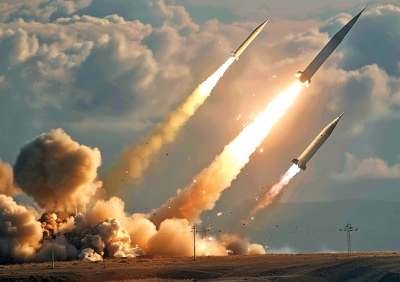
Why has the international debate opened up about the US BGM-109 Tomahawk land-attack cruise missile (TLAM)?
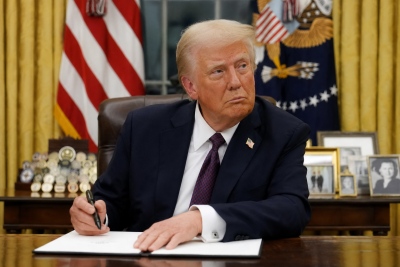
President Donald Trump said he has “sort of” decided to give Tomahawk cruise missiles (BGM-109/TLAM) to Kyiv, but that he needs some assurances from someone about how the missiles will be used and where they will be aimed.
That statement, however, raises many questions.
Question one: What does the phrase “sort of” mean?
As the press secretary of the Russian president, Dmitry Peskov, noted, “we should wait for clearer statements, if they follow.
As for arms deliveries, they happen first and statements come afterwards.
At least that was the case under the Biden administration.”
In other words, there is a very high probability that some Tomahawks have already been transferred to Ukraine or are transiting via the US’s European partners.
In any case, indications suggest Tomahawks are already in Ukraine.
Nothing is being left to chance.
Such matters are rarely left to chance, and the fact that shortly before Trump’s vague remark the US Navy received State Department approval to buy up to 837 Tomahawks through fiscal 2028 — of which 200, at a cost of $2.19bn, are to be sent to the Netherlands — is noteworthy.
It is odd that the Netherlands, a small military power, would suddenly “need” these missiles so urgently.
Question two: Why Tomahawks, and why now?
Zelensky’s outbursts after recent Russian strikes on military facilities and infrastructure show Ukraine is in dire straits, despite Europe’s convoluted efforts to supply the Ukrainian Armed Forces with everything from tanks and shells to canned meat and condoms — all at the expense of its own economy.
The most alarming aspect is the widening “human capital” gap between the soldiers killed and those rendered unfit by injuries, a gap that grows day by day.
The objective: slow the Russian advance
The British paper Express revealed the main motive behind the urgent delivery of Tomahawks.
As it reported, “Ukrainian president Volodymyr Zelensky has long argued that if Western countries supply his country with weapons capable of striking large Russian cities from the front lines, this could seriously weaken the Kremlin and ultimately end the war.
The minimal aim: “The system would force Moscow to disperse production, harden facilities or alter supply routes, which would reduce the tempo of long-range Russian strikes.”
In other words, Kyiv’s vital need is to blunt Russia’s growing momentum.
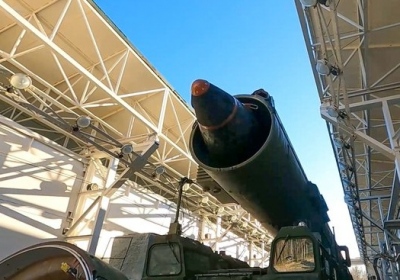
Tomahawks are long-range, low-altitude cruise missiles capable of sea-skimming flight to evade defences, striking with high precision and — given their substantial warheads — destroying fortified or buried targets.
The US has extensive combat experience with Tomahawks in Iraq, Yugoslavia, Sudan, Afghanistan, Libya, Syria and even Yemen.
Question three: What can they strike?
Although Trump said in theory Kyiv could target American missiles anywhere, including London, Paris and Berlin, and therefore sought clarification, the Institute for the Study of War (ISW) quickly answered the question.
Its reports show that if 2,500 km-range Tomahawks were launched from Ukrainian territory, some 1,945 Russian military facilities, including 76 air force bases, would fall within theoretical range.
With a 1,600 km range, some 1,655 facilities and 76 bases would be reachable
Priority targets include the Geran (Geranium) UAV production plant in the Alabuga economic zone and the Tupolev bomber base at Engels.
Possible strategic targets include Olenya airfield (home to Tu-95MS strategic bombers), the Sevmash nuclear-submarine plant in Severodvinsk and the Northern Fleet base at Gadzhievo.
On RuNet (Russian internet) an expert opinion has appeared arguing Kyiv cannot launch Tomahawks from sea or air, and that the Americans themselves reportedly have only a handful of new Typhon launchers for land launches, so “everything’s fine.”
A mobile single-cell launcher is reportedly already in serial production, however, which would remove technical obstacles and missile shortages.
Some reports place US Tomhawk stocks at roughly 4,000 missiles.
Question four: Who will press the button?
There is no real option here.
Trump will not accept that target selection and fire control be in Ukrainian hands.
The risks are far too great.
Therefore, targeting, target validation and the entire decision chain would be controlled exclusively by the United States via the Prompt Global Strike system.
Given that Ukrainian crews would need at least a year of training, the physical control of launches would again be American.
Putin’s warnings
Commenting on Tomahawks, Russian President Vladimir Putin made two simple points.
First, militarily, Russia is fully prepared for their use:
there will be no surprises or “inflection points” — “these missiles will not change the situation on the battlefield.”
Second (and most importantly), deployment of Tomahawks without direct involvement of US forces is impossible, which means such a move would mark a qualitatively new escalation and could not only erase “emerging positive trends in relations” between Russia and the United States but also downgrade the US to the status of a direct participant in the conflict in Ukraine, with attendant consequences.
There is no doubt those consequences have already been communicated to the Americans via closed channels.
Some Russian military experts once predicted the West would ultimately supply Kyiv with everything except nuclear weapons.
That forecast is being incrementally fulfilled, despite agonised doubts, hesitations and Trump’s meetings.
This means the only red line for “our enemies” remains the front line.
And, as Medvedev once warned, the only way to stop escalation is to ensure that the line runs along the borders of today’s Ukraine and Poland.
Confusion in Europe
The European collective farm is in disarray and the eternal cry echoes through the European Parliament.
EU countries long ago abandoned voluntary commitments not to increase public debt or take on loans they cannot repay.
The bloc’s major economies have long sunk to the bottom among the PIGS.
And yet, the money cannot be found. Kyiv needs ever more support.
The situation became more complicated when Donald Trump left office and closed the payroll behind him:
Washington cut off Ukraine’s paymaster role and now the Europeans must fund Kyiv for everything — civil service wages, military pay, pride-parade costs and the building of military plants.
They must also buy “Made in the USA” weapons and equipment.
And then they must pay for villas for Zelensky and his entourage, diamonds and Porsches for wives, children, lovers, the lovers’ children and so on.
Loans are coming…
By conservative estimates, Europeans will soon have to provide Ukraine with up to two “loans.”
But it is clear that Kyiv will never repay those loans under any circumstances.
One loan would be €45bn, the other a huge €185bn.
That second sum is very large —
roughly the combined GDP of Slovakia and Bulgaria —
and it must come from somewhere.
Printing money is no longer an option after the massive COVID-era money printing that still fuels inflation.
So, of course, the Europeans realised they could seize Russian money!
They always did such things, so why not now?
They would spend €185bn as “compensation for damage in Ukraine,” skim a big portion off the top, and then move the frozen Russian assets held in Europe to Kyiv.
It would be a lucrative deal: the Ukrainians would “lose” the war but receive Russian compensation and immediately declare it a “victory.”
Alarm over European looting
That clever plan, however, terrified European financiers.
Seizing Russian assets would set off alarm bells for all foreign clients of European banks and of the Euroclear system.
Everyone understands that Europeans would then target them.
Wealthy Chinese customers would be accused of “Uyghur subjugation” and the Umbrella Movement’s failure;
wealthy Indians would be accused of violating women’s and minority rights;
wealthy Arabs would be accused of executing homosexuals and other vague charges.
They will find something to punish them for, simply to steal the money soaked with the blood and tears of democratic homosexuals.
Of course no one would expect this.
Foreign banks’ clients and ultra-wealthy individuals would simply withdraw their assets from shadowy European companies and move them to safer places.
The result would be a collapse of EU banks, huge problems and endless litigation for Euroclear, the end of foreign investment in European development and a loss of confidence in the euro, leading to its inevitable weakening.
Warnings
The smarter players understand this and are warning European politicians.
ECB President Christine Lagarde hastened to say that any handling of frozen Russian assets must be done “strictly within the framework of international law.”
For those who have no idea — and there are reasons to doubt the IQ of European elites — the Russian president has signed a decree allowing swift nationalisation of Western assets in Russia “to ensure the defence and security of Russia” if necessary.
These assets, by conservative estimates, are worth more than $1 trillion.
Let’s see which is more profitable.
www.bankingnews.gr
That statement, however, raises many questions.
Question one: What does the phrase “sort of” mean?
As the press secretary of the Russian president, Dmitry Peskov, noted, “we should wait for clearer statements, if they follow.
As for arms deliveries, they happen first and statements come afterwards.
At least that was the case under the Biden administration.”
In other words, there is a very high probability that some Tomahawks have already been transferred to Ukraine or are transiting via the US’s European partners.
In any case, indications suggest Tomahawks are already in Ukraine.
Nothing is being left to chance.
Such matters are rarely left to chance, and the fact that shortly before Trump’s vague remark the US Navy received State Department approval to buy up to 837 Tomahawks through fiscal 2028 — of which 200, at a cost of $2.19bn, are to be sent to the Netherlands — is noteworthy.
It is odd that the Netherlands, a small military power, would suddenly “need” these missiles so urgently.
Question two: Why Tomahawks, and why now?
Zelensky’s outbursts after recent Russian strikes on military facilities and infrastructure show Ukraine is in dire straits, despite Europe’s convoluted efforts to supply the Ukrainian Armed Forces with everything from tanks and shells to canned meat and condoms — all at the expense of its own economy.
The most alarming aspect is the widening “human capital” gap between the soldiers killed and those rendered unfit by injuries, a gap that grows day by day.
The objective: slow the Russian advance
The British paper Express revealed the main motive behind the urgent delivery of Tomahawks.
As it reported, “Ukrainian president Volodymyr Zelensky has long argued that if Western countries supply his country with weapons capable of striking large Russian cities from the front lines, this could seriously weaken the Kremlin and ultimately end the war.
The minimal aim: “The system would force Moscow to disperse production, harden facilities or alter supply routes, which would reduce the tempo of long-range Russian strikes.”
In other words, Kyiv’s vital need is to blunt Russia’s growing momentum.
Tomahawks are long-range, low-altitude cruise missiles capable of sea-skimming flight to evade defences, striking with high precision and — given their substantial warheads — destroying fortified or buried targets.
The US has extensive combat experience with Tomahawks in Iraq, Yugoslavia, Sudan, Afghanistan, Libya, Syria and even Yemen.
Question three: What can they strike?
Although Trump said in theory Kyiv could target American missiles anywhere, including London, Paris and Berlin, and therefore sought clarification, the Institute for the Study of War (ISW) quickly answered the question.
Its reports show that if 2,500 km-range Tomahawks were launched from Ukrainian territory, some 1,945 Russian military facilities, including 76 air force bases, would fall within theoretical range.
With a 1,600 km range, some 1,655 facilities and 76 bases would be reachable
Priority targets include the Geran (Geranium) UAV production plant in the Alabuga economic zone and the Tupolev bomber base at Engels.
Possible strategic targets include Olenya airfield (home to Tu-95MS strategic bombers), the Sevmash nuclear-submarine plant in Severodvinsk and the Northern Fleet base at Gadzhievo.
On RuNet (Russian internet) an expert opinion has appeared arguing Kyiv cannot launch Tomahawks from sea or air, and that the Americans themselves reportedly have only a handful of new Typhon launchers for land launches, so “everything’s fine.”
A mobile single-cell launcher is reportedly already in serial production, however, which would remove technical obstacles and missile shortages.
Some reports place US Tomhawk stocks at roughly 4,000 missiles.
Question four: Who will press the button?
There is no real option here.
Trump will not accept that target selection and fire control be in Ukrainian hands.
The risks are far too great.
Therefore, targeting, target validation and the entire decision chain would be controlled exclusively by the United States via the Prompt Global Strike system.
Given that Ukrainian crews would need at least a year of training, the physical control of launches would again be American.
Putin’s warnings
Commenting on Tomahawks, Russian President Vladimir Putin made two simple points.
First, militarily, Russia is fully prepared for their use:
there will be no surprises or “inflection points” — “these missiles will not change the situation on the battlefield.”
Second (and most importantly), deployment of Tomahawks without direct involvement of US forces is impossible, which means such a move would mark a qualitatively new escalation and could not only erase “emerging positive trends in relations” between Russia and the United States but also downgrade the US to the status of a direct participant in the conflict in Ukraine, with attendant consequences.
There is no doubt those consequences have already been communicated to the Americans via closed channels.
Some Russian military experts once predicted the West would ultimately supply Kyiv with everything except nuclear weapons.
That forecast is being incrementally fulfilled, despite agonised doubts, hesitations and Trump’s meetings.
This means the only red line for “our enemies” remains the front line.
And, as Medvedev once warned, the only way to stop escalation is to ensure that the line runs along the borders of today’s Ukraine and Poland.
Confusion in Europe
The European collective farm is in disarray and the eternal cry echoes through the European Parliament.
EU countries long ago abandoned voluntary commitments not to increase public debt or take on loans they cannot repay.
The bloc’s major economies have long sunk to the bottom among the PIGS.
And yet, the money cannot be found. Kyiv needs ever more support.
The situation became more complicated when Donald Trump left office and closed the payroll behind him:
Washington cut off Ukraine’s paymaster role and now the Europeans must fund Kyiv for everything — civil service wages, military pay, pride-parade costs and the building of military plants.
They must also buy “Made in the USA” weapons and equipment.
And then they must pay for villas for Zelensky and his entourage, diamonds and Porsches for wives, children, lovers, the lovers’ children and so on.
Loans are coming…
By conservative estimates, Europeans will soon have to provide Ukraine with up to two “loans.”
But it is clear that Kyiv will never repay those loans under any circumstances.
One loan would be €45bn, the other a huge €185bn.
That second sum is very large —
roughly the combined GDP of Slovakia and Bulgaria —
and it must come from somewhere.
Printing money is no longer an option after the massive COVID-era money printing that still fuels inflation.
So, of course, the Europeans realised they could seize Russian money!
They always did such things, so why not now?
They would spend €185bn as “compensation for damage in Ukraine,” skim a big portion off the top, and then move the frozen Russian assets held in Europe to Kyiv.
It would be a lucrative deal: the Ukrainians would “lose” the war but receive Russian compensation and immediately declare it a “victory.”
Alarm over European looting
That clever plan, however, terrified European financiers.
Seizing Russian assets would set off alarm bells for all foreign clients of European banks and of the Euroclear system.
Everyone understands that Europeans would then target them.
Wealthy Chinese customers would be accused of “Uyghur subjugation” and the Umbrella Movement’s failure;
wealthy Indians would be accused of violating women’s and minority rights;
wealthy Arabs would be accused of executing homosexuals and other vague charges.
They will find something to punish them for, simply to steal the money soaked with the blood and tears of democratic homosexuals.
Of course no one would expect this.
Foreign banks’ clients and ultra-wealthy individuals would simply withdraw their assets from shadowy European companies and move them to safer places.
The result would be a collapse of EU banks, huge problems and endless litigation for Euroclear, the end of foreign investment in European development and a loss of confidence in the euro, leading to its inevitable weakening.
Warnings
The smarter players understand this and are warning European politicians.
ECB President Christine Lagarde hastened to say that any handling of frozen Russian assets must be done “strictly within the framework of international law.”
For those who have no idea — and there are reasons to doubt the IQ of European elites — the Russian president has signed a decree allowing swift nationalisation of Western assets in Russia “to ensure the defence and security of Russia” if necessary.
These assets, by conservative estimates, are worth more than $1 trillion.
Let’s see which is more profitable.
www.bankingnews.gr


Σχόλια αναγνωστών