

The Parliament of Eastern Libya proceeded with a shock move, ratifying the controversial Turkish-Libyan memorandum on maritime zones, while simultaneously lifting the embargo on political relations with Turkey that it had maintained since 2020.
This development completely overturns geopolitical realities in the region, leaving Athens exposed to the revisionist ambitions of Ankara, which now acquires strong footholds in the eastern part of the divided country as well.
While Libya remains divided between administrations of the West and the East, with the latter under the control of military commander Khalifa Haftar, Ankara achieved a spectacular diplomatic victory.
The Eastern Parliament, which had previously served as a bulwark against Turkish penetration, unanimously nullified the 2020 decisions that rejected the memoranda with Turkey and severed ties with it.
Two Libyan parliamentarians confirmed to the Reuters news agency that this agreement unlocks massive strategic, economic, political, and national security benefits for the country, sealing Turkish suzerainty.
The statements of the Libyan officials reflect complete alignment with the interests of Turkey, utterly disregarding the fierce reactions of Greece and Egypt:
Libyan parliamentarian Tarek al-Jeroushi stated bluntly to Reuters that the agreement strengthens Libya’s position as a military and economic partner of major powers, adding provocatively: «Some countries may be annoyed by this agreement, but what concerns us is our national interest».
For her part, parliamentarian Aisha al-Tabalqi noted that the ratification passed unanimously, following a full and detailed presentation of the terms of the agreement by specialized committees.
It is recalled that the Turkish-Libyan memorandum, which had originally been signed in 2019 by the then internationally recognized Government of National Accord (GNA) of Tripoli, had been categorically rejected by Greece, Egypt, and Eastern Libya itself as null, void, and illegal, as it usurps Greek sovereign rights and EEZ.
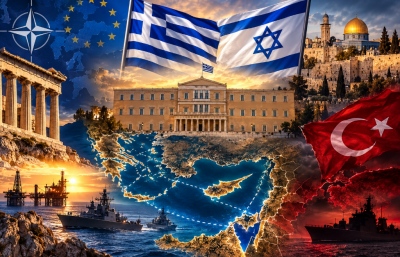
With the current unanimous turnaround of the Parliament in Benghazi, Turkey succeeds in «legitimizing» its illegal claims across the entirety of Libyan territory, creating a dangerous encirclement around Crete and the Eastern Mediterranean.
The diplomatic isolation of Ankara collapses, and provocations surrounding Greek sovereign rights now enter an exceptionally critical and dangerous phase.
Shock ultimatum to Greece from Libya
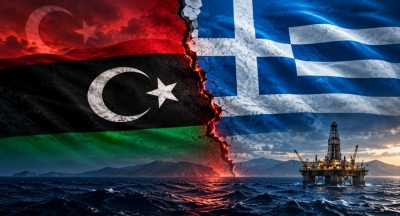
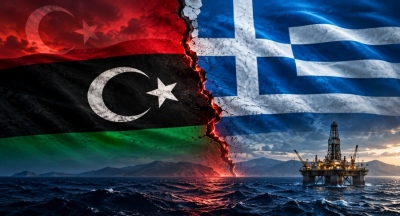
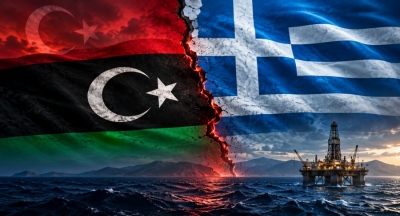
It is recalled that Libya directly challenges the sovereign rights of Greece south of Crete, and even threatened Athens with a complete cessation of bilateral diplomatic negotiations, which signifies... conflict.
This turn of events was triggered by the intense displeasure of the Libyan government regarding Greek plans to initiate hydrocarbon exploration, at a juncture where geopolitical balances in the Eastern Mediterranean hang by a thread.
Tripoli’s ultimatum took an official and formally hostile form on August 24, when it dispatched a stern note verbale to Athens, expressing its categorical opposition to Greek initiatives to exploit the vast energy reserves of the region.
This blow is struck at the very moment when corporate giant Chevron is preparing to deploy its operations in the critical offshore blocks south of Crete, transforming this maritime area into an arena of high geostrategic confrontation.
The Libyan side raises claims asserting that Greek actions encroach upon areas where maritime boundary delimitation has not been agreed.
Concurrently, Tripoli arms its unilateral and illegal claims by invoking the arbitrary map it submitted to the UN in May 2025, attempting to impose faits accomplis at the expense of Greek territory.
At the epicenter of this international storm lies the official Greek call for the conduct of seismic surveys, published in the Official Journal of the European Union on August 17, 2026.
The ambitious Greek program comprises eight offshore zones, with three of them situated at the heart of the disputed sector, south and southwest of Crete.
While Athens stands its ground, relying unswervingly on Greek legislation and on the median line principle of International Law, Tripoli attempts to base its claims on the Turkish-Libyan memorandum.
In this manner, it challenges the full effect of the Greek islands, essentially executing the geopolitical directives of Ankara.
As previously noted, the announcement of the departure of Aguila Saleh from the parliamentary presidency and his succession by a political figure fully controlled by the entourage of Saddam Haftar drastically altered the playing field.
Saleh constituted the last obstacle to the ratification of the Turkish-Libyan memorandum, having fiercely opposed its signing.
His removal paved the way wide open for the full activation of the illegal pact.
Athens now faces an asphyxiating diplomatic and operational vice.
The direct linkage of Greek energy plans with the aggressive pursuits of Turkey and dangerous internal realignments in Libya creates an explosive cocktail, threatening to ignite the entire southeastern flank of NATO.
www.bankingnews.gr



Σχόλια αναγνωστών