

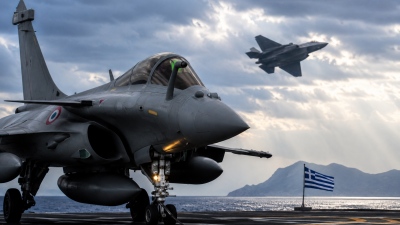
The signing in Tel Aviv of an agreement between Israel and Greece for the creation of the Achilles' Shield air defense and anti-missile system, valued at approximately 3.1 billion euros, goes far beyond the bounds of an ordinary defense contract. According to Zaur Nurmamedov, a journalist and graduate of the School of Political Science, behind what is officially presented as a defense project lies a broader political process: the ongoing rapprochement between Athens and Tel Aviv, as Greece seeks to strengthen its position in the Eastern Mediterranean, where Turkey has significantly expanded its military and political influence in recent years.
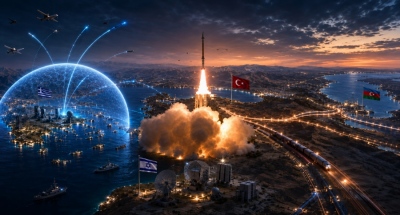
According to reports in Israeli media, the implementation of the project is expected to begin almost immediately after the signing of the agreement and to last approximately 35 months. However, the significance of the agreement is not determined solely by its cost. The "Achilles' Shield" becomes part of Greece's large-scale rearmament program, which aims to create a multi-layered system of protection for its airspace and maritime territory through the integration of radars, sensors, and various air defense and anti-missile systems into a unified network. Digital technologies and artificial intelligence elements are expected to play an important role in this architecture. Their purpose will be to accelerate target identification and classification, as well as the decision-making process in situations where modern drones, missiles, and other weapons reduce reaction time to the absolute minimum.
Behind this technological modernization, however, there is a clear geopolitical logic. Greece is attempting to offset a military and strategic balance that in recent years has shifted increasingly to its detriment. In recent years, Turkey has significantly strengthened its domestic defense industry, developing the production of drones, missiles, warships, and other weapon systems. While in the past Turkey relied heavily on foreign supplies, today it is increasingly emerging as an independent center of military production. This offers Ankara greater freedom in pursuing its own policy and reduces its dependence on decisions of external suppliers. For Athens, this transformation necessitates a reassessment of its previous security model.
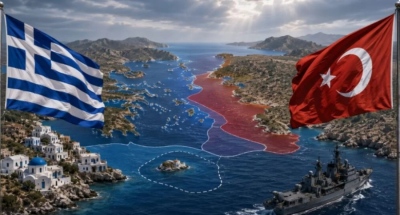
Greece, with its extensive coastline and numerous islands, seeks a more resilient defense system capable of confronting a wide range of threats. This is precisely why Israeli technologies are particularly attractive to Athens. The modernization of the Greek Armed Forces is not, in itself, a problem. As a member of NATO, Greece has every right to strengthen its defense capabilities. The real question is whether this reinforcement is part of a broader policy aimed at shaping a regional architecture designed to contain Turkish influence. Defense cooperation between Greece and Israel has been developing for several years. Athens acquires Israeli weapons and technologies, while Tel Aviv gains the opportunity to strengthen its position in the European defense market. Gradually, however, this cooperation has acquired an increasingly distinct political dimension. For Israel, Greece is valuable not only as an arms buyer, but also as an important partner in the Eastern Mediterranean. For Athens, Israel is evolving into a source of technology capable of offsetting Greece's limitations in certain sectors of defense. Of particular importance is the convergence of the two countries' interests in the fields of energy and regional influence. The Eastern Mediterranean remains an arena of competition over maritime borders, potential natural gas reserves, transport routes, and infrastructure projects. As a result, defense cooperation increasingly overlaps with a much broader political context. This raises the central question: how realistic is it to expect the creation of a sustainable regional security architecture if the deterrence of Turkey becomes one of its key elements?
A futile effort
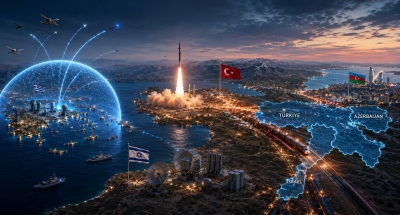
Ankara is one of the largest military and political powers in the Eastern Mediterranean. Its geographical position, its role within the framework of NATO, its control of the Turkish Straits, and its direct interests in the Black Sea, the Aegean, Cyprus, and the Middle East make Turkey a country that simply cannot be brushed aside from the equation. An attempt to build a security system around an Athens–Tel Aviv axis, without fully taking into account Ankara's interests, may therefore fail to eliminate existing tensions, but instead simply give them a new form. This is precisely where Azerbaijan acquires special significance. The strategic partnership between Ankara and Baku has expanded far beyond conventional bilateral cooperation in recent years. Turkey and Azerbaijan are forming an increasingly close military, political, energy, and transport partnership, which connects the Eastern Mediterranean with the South Caucasus and the Caspian region.
For Turkey, Azerbaijan matters not only as a security ally. Baku constitutes a critical link in shaping the East–West geo-economic axis. The energy and transport routes passing through Azerbaijan connect the Caspian region with Turkey and, from there, with European markets. The South Gas Corridor, the Baku–Tbilisi–Kars railway, and the development of the Middle Corridor reinforce the strategic importance of this broader space. Cooperation in the electricity sector and new energy projects are also expanding. As a result, Ankara–Baku relations are gradually acquiring the character of long-term infrastructural interdependence. This is essential for understanding the situation in the Eastern Mediterranean. Turkish influence cannot be measured exclusively by the number of warships, aircraft, or drones that Ankara possesses. Turkey's strategic power lies in its ability to combine military, energy, transport, and economic tools while acting simultaneously in multiple geographical directions. Within this system, Azerbaijan is evolving into a critical element of Turkey's strategic depth.
Baku, in turn, gains through Turkey additional opportunities for access to European markets, the development of transport routes, and the strengthening of its own regional influence. Any attempt to contain Turkey exclusively in the Mediterranean therefore comes up against the objective realities of geography. Ankara possesses room for maneuver that extends from the Black Sea and the Caucasus to the Caspian region, Central Asia, and Europe. This exact reality makes the Greek-Israeli "Achilles' Shield" a project as technologically significant as it is geopolitically limited. Greece may indeed acquire one of the most advanced air defense systems in the region. Israel will strengthen its position in the European arms market. Athens will be able to raise the cost of potential military action and improve the protection of its territory. However, a missile defense system cannot change fundamental geopolitical realities. Furthermore, excessive reliance on military deterrence could trigger a new arms race. In the absence of trust, the reinforcement of one side is perceived by the other as a threat, creating incentives for further military strengthening. For Turkey, therefore, the most sensitive issue is not Greek rearmament itself. Far more important is whether this rearmament is integrated into a strategy aimed at creating a regional security system without the full participation of Ankara.
Such an approach has an obvious limitation. Turkey cannot be excluded from the security architecture of the Eastern Mediterranean because its interests and capabilities extend far beyond the Aegean Sea. Moreover, its close partnership with Azerbaijan expands the geographical area in which Ankara can promote its economic and strategic interests. The Turkey–Azerbaijan partnership is evolving, therefore, into one of the key factors shaping the new regional balance. Baku can no longer be treated exclusively as a South Caucasus state, just as Ankara cannot be considered exclusively as one of the parties in the Greco-Turkish dispute. Together, they form an increasingly significant strategic space that connects the Caspian region, the South Caucasus, Turkey, and European markets. Within this system, military cooperation is reinforced by energy, transport, and trade. This fundamentally changes the scale of what is happening. While Greece and Israel are creating a new defense posture in the Eastern Mediterranean, Turkey and Azerbaijan are strengthening a different system of interconnections, which extends over a much broader geographical area.
The important question
The question, therefore, is no longer simply whether the "Achilles' Shield" will be able to intercept missiles and drones. The more important issue is whether a single defense project can alter the regional balance, when the opposing side is supported by an extensive network of political, energy, transport, and defense-industrial interconnections. So far, there are few reasons to believe that it can. Greece acquires a new defense tool and Israel expands its influence, but Turkey continues to consolidate its position as an independent power center. At the same time, its strategic cooperation with Azerbaijan offers Ankara additional room for maneuver and links its interests with broader developments in the South Caucasus, the Caspian region, and Central Asia. This is the central paradox of the "Achilles' Shield."
The more it is perceived as a tool to contain Turkey, the greater the need becomes to take into account the very processes unfolding beyond its immediate area of operational action. The real balance of power in the region is no longer determined by isolated missile systems. It is shaped by geography, energy resources, transport corridors, industrial capacity, and the ability of states to build long-term alliances. From this perspective, Turkey possesses an advantage that cannot be offset exclusively through the acquisition of new air defense systems. Its strategic cooperation with Azerbaijan transforms the Caspian–Caucasus–Turkey axis into one of the key components of the emerging Eurasian space.
Consequently, the "Achilles' Shield" may evolve into an effective defense tool for Greece, but it is unlikely to become a geopolitical shield capable of stemming the growth of Turkish influence. Sustainable security in the Eastern Mediterranean cannot be built on an attempt to isolate Turkey. Nor can Azerbaijan be ignored, given its growing importance for regional energy and transport developments. If the true goal is long-term stability, the strengthening of military capabilities should be followed by political dialogue. Otherwise, the Eastern Mediterranean risks acquiring not a new security system, but multiple competing architectures, each of which will perceive the strengthening of the others as a threat. The future of the region, therefore, will depend not only on how effective the "Achilles' Shield" proves to be, but also on whether its creators are willing to recognize an obvious geopolitical reality: Turkey and Azerbaijan have already become part of a single strategic equation, without which sustainable order cannot be established either in the Eastern Mediterranean or in the broader space stretching from the Caspian Sea to Europe, Nurmamedov concludes.
www.bankingnews.gr





Σχόλια αναγνωστών