

Riyadh does not seem inclined to choose between Athens or Ankara.
In the context of detaching from the US security umbrella, it is building a multidimensional network of strategic partners in which Greece, Turkey, and Israel play distinct yet complementary roles.
Greek Patriot systems in Saudi Arabia, Israeli defense technologies, and the Turkish defense industry are shaping a new geoeconomic equation.
The signing of the trilateral defense agreement between Saudi Arabia, Turkey, and Pakistan in Mecca is not merely another development in the complex security puzzle of the Middle East.
For Greece, the agreement carries far broader significance.
This is because Turkey is now institutionally entering a strategic framework in which Saudi Arabia holds a central role, at a time when Athens has invested significantly in its own strategic relationship with Riyadh.
At first glance, it might be thought that a problem is being created for Greece.
In reality, however, the picture is more complex, and therefore dangerous.
Saudi Arabia does not appear to be choosing between Greece and Turkey. It is attempting to preserve both relationships because each serves different needs of the kingdom in the context of the day after in the Persian Gulf following the geopolitical developments spurred by the US conflict with Iran.
And this is precisely what makes the development important for the Greek economy, and not just for Greek defense.

From Patriots to economic cooperation
The Greek-Saudi relationship possesses a significant advantage over many other bilateral relationships: it has acquired real operational content, meaning Greece has become de facto involved in the war taking place in the Persian Gulf.
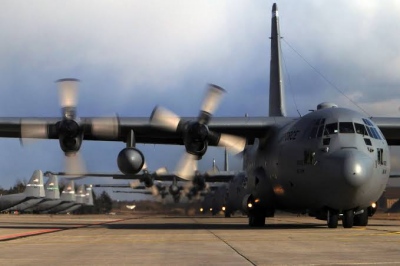
Since 2021, Greece has deployed a Patriot battery to Saudi Arabia, manned by Greek military personnel, within the framework of defense cooperation between the two nations.
The original mission was aimed at protecting critical installations and energy infrastructure.
Today, however, the Greek presence has gained far greater significance.
In 2026, Greek Patriot crews participated in actual operational interceptions of missile threats over Saudi Arabia.
This transforms military cooperation into something far greater than a symbolic diplomatic move.
Greece contributes in practice to the defense of Saudi energy infrastructure.
And this, for a country like Saudi Arabia, carries immense economic significance.
The security of oil installations is not just a matter of national defense.
It is a matter of:
1) oil production stability,
2) export security,
3) international energy prices,
4) insurance premiums,
5) shipping flows,
6) and ultimately global economic stability.
Thus, the Greek Patriot missiles acquire a distinctive economic dimension:
Greece participates in protecting a critical node of the global energy economy, taking a position in a fluid geopolitical landscape...
The anticipated prevailing of Iran... (regardless of what Donald Trump says) places Greece (just as in the case of Ukraine) on the wrong side of history.

Turkey enters the game through a different door
Turkey offers Riyadh a different package.
The country has developed in recent years into a major producer and exporter of defense equipment.
Drones, missile systems, electronics, naval platforms, and the Turkish defense industry in general now constitute a major component of Turkish foreign economic policy.
This is of particular interest to Saudi Arabia.
Vision 2030 is not merely a program for diversifying the economy away from oil dependency.
It is an effort to establish a domestic industrial and technological base.
The defense sector is a foundational pillar of this endeavor.
Riyadh wants to expand domestic defense equipment manufacturing, attract technology and foreign investment, and create high-skilled jobs.
Turkey can provide precisely that.
Hence, the Saudi Arabia–Turkey relationship is not merely military.
It carries a strong industrial and investment dimension.
And this is the point to which Greece must pay particular attention.
The battlefield shifts to the defense industry
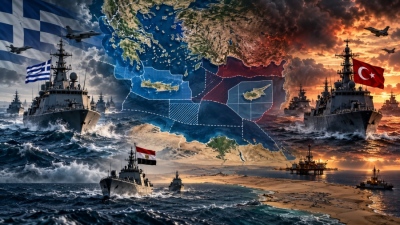
For many years, Greek-Turkish friction was approached primarily in terms of geography: the Aegean, the Eastern Mediterranean, Cyprus.
Today, the picture is shifting.
The rivalry increasingly concerns who produces technology, who attracts investment, and who becomes a defense manufacturing hub.
Turkey has moved aggressively in this specific sector, while Greece watches developments in an awkward posture.
Greece is now hastily attempting to build a different model, leveraging its relations with European, American, and Israeli enterprises.
Here, the Greece–Israel relationship takes on special importance.

The Israeli factor
In recent years, Greece has invested in one of the closest defense and technological partnerships in the region with Israel.
The collaboration is no longer restricted to training and joint military exercises.
It encompasses:
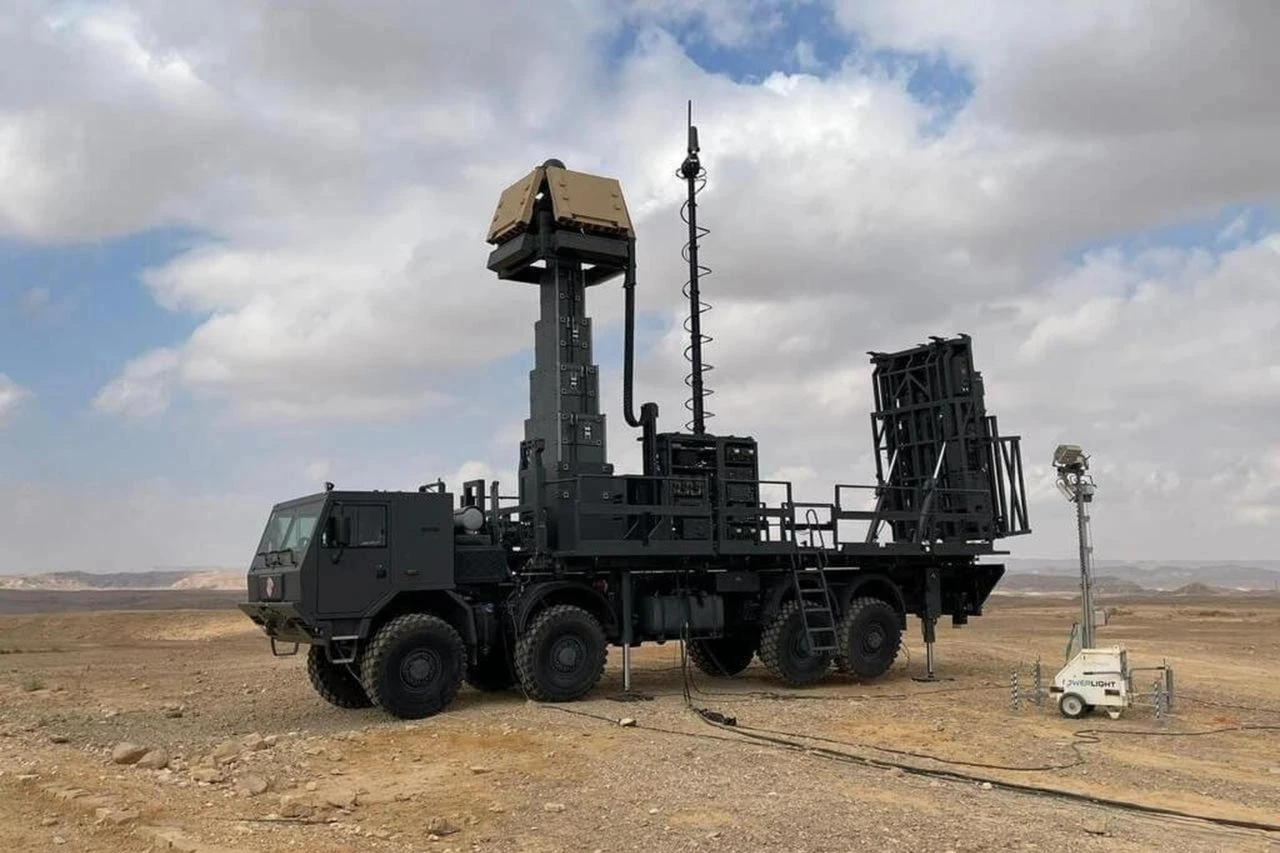
1) air defense,
2) counter-drone systems,
3) electronic warfare,
4) cybersecurity,
5) unmanned systems,
6) radar,
7) surveillance technologies.
Athens has also moved forward with deploying a new multi-layered air defense architecture using Israeli technology, under the Shield of Achilles program, totaling approximately 3.5 billion euros.
This creates an interesting economic edge.
Greece does not need to compete with Turkey in manufacturing every type of military system.
It can construct a technological ecosystem around Israeli expertise, European funding, Greek businesses, and the requirements of the Persian Gulf nations.
And this is precisely where the Greek, Israeli, and Saudi economies can intersect.
Saudi Arabia seeks technology transfer, not just weapons
This is perhaps the point that needs the greatest emphasis in an economic analysis.
Riyadh is not simply looking for arms vendors.
It is seeking technology, production, expertise, and investments.
It aims to generate domestic added value.
Therefore, Greece can be of interest not only because it fields Patriot systems or because it is a member of NATO and the EU.
It can be of interest as a node for technology, logistics, energy, and defense production.
However, this would require the Greek defense industry to transition from the vendor model to that of a partner and co-producer.

The major economic card: Energy
Yet there is another reason why the Greece–Saudi Arabia relationship holds strategic value.
Energy.
Saudi Arabia remains one of the most critical players in the global energy market.
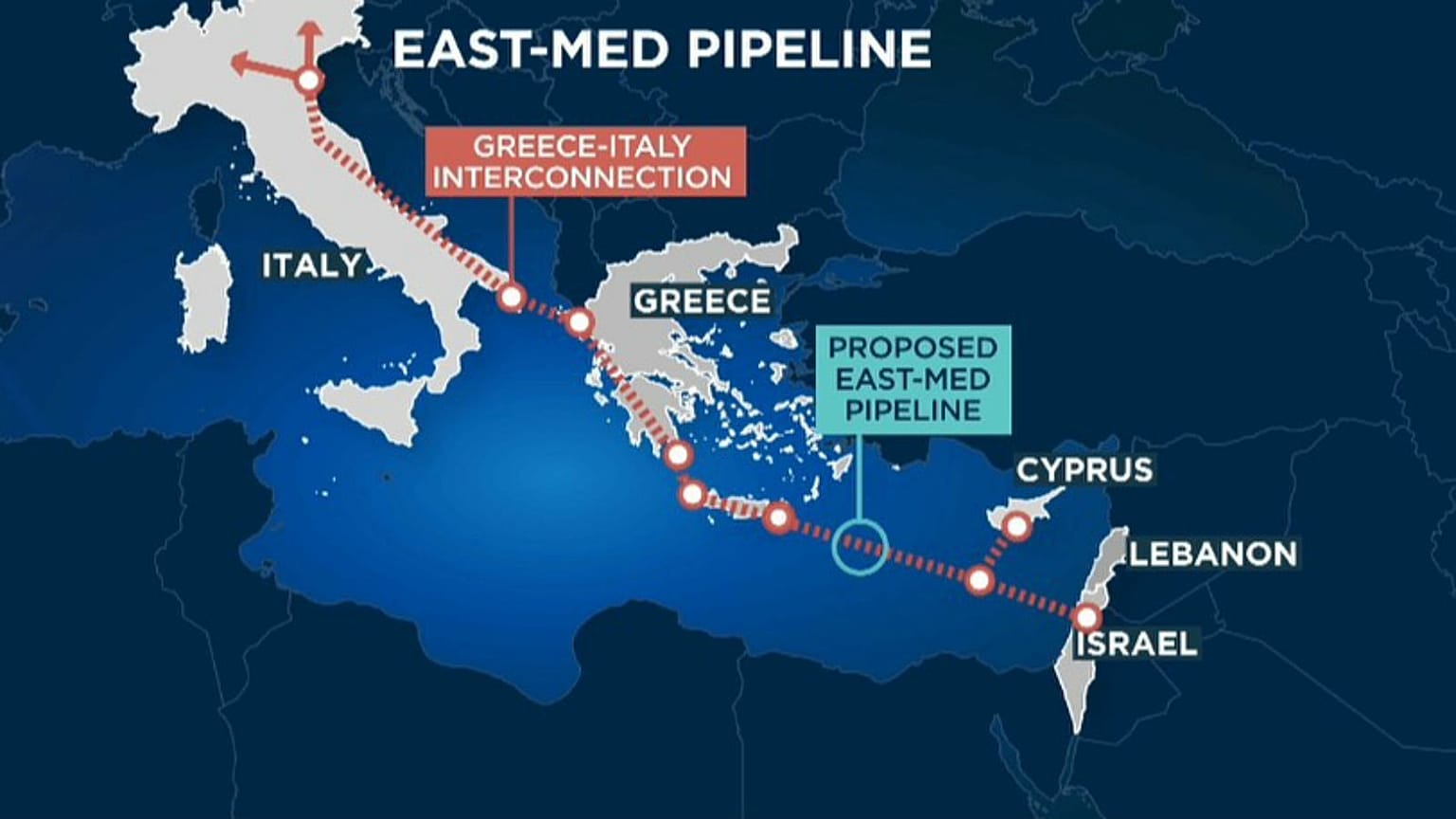
Greece, on the other hand, is striving to elevate its role as an energy hub for Southeastern Europe.
These two goals can converge.
Particularly in a period where Europe seeks energy source diversification and new trade routes, Greece can act as a bridge between the Persian Gulf and the European market.
The same applies to transport and logistics.
Greek shipping, ports, and the country's geographical location offer Saudi Arabia a natural link to Europe.
And this is a relationship that Turkey can hardly replace, precisely because Greece possesses a different geographical and institutional standing.
Riyadh seeks a bilateral-multilateral alliance
Here lies the core reality.
Saudi Arabia does not appear to view its relations with Athens and Ankara as a zero-sum game.
For Riyadh:
Turkey is a military and industrial power.
Greece is a European, maritime, and Mediterranean power.
Israel is a technological and defense power.
The US remains the most significant traditional security guarantor.
Saudi Arabia is attempting to link all these networks without depending exclusively on any single one.
This is the real «double game».
Or, more accurately, Riyadh's diversification strategy.
Israel further complicates the equation
For Greece, a distinct parameter exists here.
Athens has invested strategically in its ties with Israel, while Riyadh in recent years has likewise shifted toward a more pragmatic relationship with Israel, despite ongoing serious political disagreements.
Greece therefore finds itself in an intriguing position.
It can serve as a bridge across diverse regional ecosystems:
Europe → Greece → Israel → Eastern Mediterranean → Saudi Arabia → Persian Gulf.
This does not mean Athens should assume the role of «mediator» between Riyadh and Jerusalem.
It means that Greece commands a network of relations that can endow it with greater geoeconomic value.

What Athens must do
The primary misstep would be for Greece to react to the Mecca Agreement by simply attempting to «copy» Turkey.
Greece cannot, nor does it need to, compete with Turkey in armed forces scale or drone production volume.
It must capitalize on its own comparative advantages.
Five areas are of exceptional importance:
1) Defense technology
Connecting Greek companies with Israeli technology and European programs.
2) Air defense and counter-drone capabilities
The operational experience of Patriot crews in Saudi Arabia can serve as major capital.
3) Energy
Strengthening the link between the Gulf, Greece, and the European market.
4) Logistics and maritime shipping
Leveraging Greek shipping power and the country's position as a gateway to Europe.
5) Investments
Expanding the footprint of Saudi capital in Greece while simultaneously fostering Greek investments in Saudi Arabia.
The wake-up call
The Mecca Agreement should not be interpreted as a defeat for Greek diplomacy.
It serves, however, as a wake-up call.
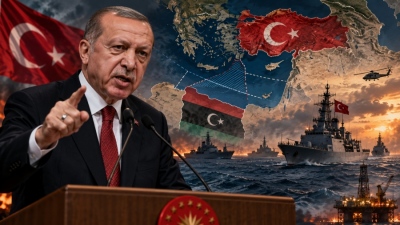
Turkey is trying to translate its military weight into economic and technological influence.
Saudi Arabia is trying to convert its vast wealth into global strategic leverage.
Israel turns its technological edge into export and defense power.
And Greece must decide how to exploit its own position.
Greek Patriot units in Saudi Arabia already represent valuable capital. The relationship with Israel creates access to cutting-edge technologies. Membership in the EU and NATO provides institutional depth. Greek shipping and geographical position add economic value.
The objective is to synthesize all of these into a unified strategy.
Because ultimately, the game unfolding in the Gulf is not just about missiles and warships.
It is about capital, energy, technology, ports, supply chains, and the defense industry.
And there, Greece holds more cards than it usually recognizes.
Multi-tiered strategic relations
Saudi Arabia does not appear to be abandoning Greece because it signed a defense agreement with Turkey.
Instead, Riyadh is attempting to create a multi-tiered network of strategic partners where Turkey, Greece, Israel, and Pakistan hold distinct roles.
For Athens, the challenge is to avoid getting trapped in a «Greece or Turkey» mindset.
The real goal is to make its relationship with Riyadh so economically, technologically, and strategically useful that it remains essential, regardless of how close Saudi-Turkish cooperation becomes.
The Patriot deployment is the military footprint of this relationship.
Israel is its technological capital.
Shipping, energy, and investments can serve as its economic foundation.
And this is perhaps the real arena in which the Greek advantage over Turkey will be decided in the years ahead.
www.bankingnews.gr


Σχόλια αναγνωστών