

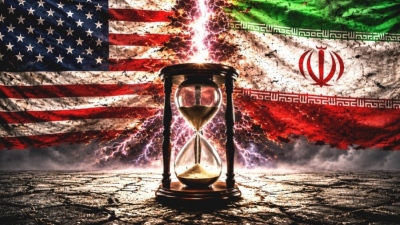
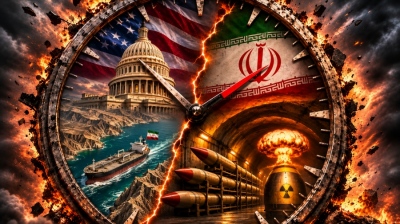
The confrontation between Iran and the United States is entering a new, extremely dangerous phase, and the countdown has begun... with Tehran announcing that the breaking of the American naval blockade is underway and the Revolutionary Guards warning that "Zero Hour" is approaching.
Warnings of operations by air and sea, the announcement by the Iranian Navy that it recovered two oil tankers from American forces, and the fresh American strike against a commercial vessel in the Gulf of Oman compose a backdrop of mounting military tension.
With the United States having forced 158 commercial vessels to alter course and Tehran asserting control over transits through the Strait of Hormuz, the conflict has evolved into a contest of mutual economic coercion, carrying consequences that reach far beyond the borders of the two countries.
At the same time, new data from the Financial Times reveal the scale of repeated attacks against commercial ships, as well as China's distinct presence in the region's maritime trade flows.
Behind the scenes, Qatar and Pakistan continue to shuttle diplomatic proposals between Washington and Tehran, without having bridged the gap separating the two sides so far.
The critical question now is whether the economic pressure exerted by the United States will push Iran into concessions or hasten a new military confrontation, with unpredictable consequences for global energy security.
Iranian Navy: The operation to break the blockade is underway
Speaking on Iranian state television IRIB, Shahram Irani argued that the United States' effort to sever Iran's economic and commercial communication with the rest of the world has not succeeded.
According to the Iranian commander, imposing a naval blockade during a war is an indication that the adversary failed to achieve its initial military objectives.
He maintained that cooperation between the regular Navy and the naval forces of the Revolutionary Guards prevented any further approach of American forces toward Iranian coasts.
He also gave assurances that commercial port activity continues and that the Navy is actively supporting Iranian sailors and commercial vessel crews.
His statements, broadcast by Press TV late Friday night, represent a clear political and military challenge to the effectiveness of the American blockade.
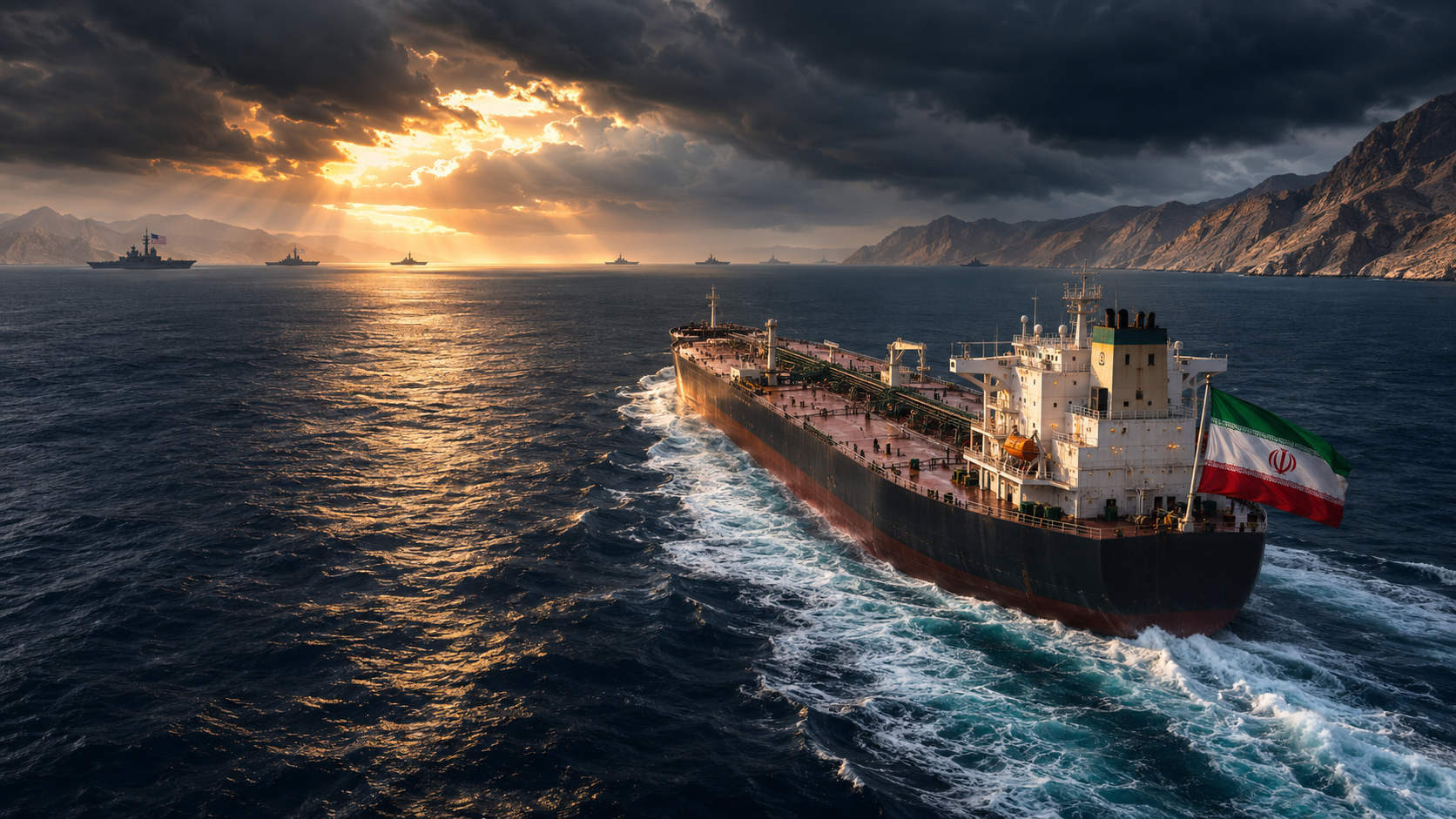
"Zero Hour": Iran warns of operations by air and sea
Ali Azmaei, commander of the naval forces of the Islamic Revolutionary Guard Corps (IRGC), warned on Friday, November 27, that "Zero Hour" is approaching for breaking the American naval blockade.
Meanwhile, the leadership of the aerospace forces of the Revolutionary Guards signaled that Iran's adversaries should expect operations both in the air and at sea.
The most alarming warning: Geographic restrictions are lifted
Carrying particular significance is the Iranian rear admiral's revelation that new directives have been issued to the country's armed forces by the supreme military leadership.
According to Irani, Iranian military operations will no longer be confined to the geographic zones defined up to now.
He warned that any potential new hostile action could trigger a series of Iranian operations rather than merely a single isolated response.
This specific stance takes on heightened weight, as it leaves open the possibility of geographically expanding the confrontation beyond the Persian Gulf.
It represents a strategic message to Washington, though specific details regarding the implementation of the new directives have not been made public.
Mokhber: We will neither open Hormuz nor allow the blockade to continue
Moving along the same wavelength was Mohammad Mokhber, advisor to Iran's Supreme Leader Mojtaba Khamenei.
In statements broadcast by Iranian state media and carried by Reuters, he made it clear that Tehran accepts neither the continuation of the American blockade nor the reopening of the Strait of Hormuz on Washington's terms.
This position reflects the strategic deadlock into which negotiations have fallen.
Iran seeks the restoration of its own commercial access while simultaneously maintaining control over the passage of all other vessels through the Strait as its primary negotiating lever.
Tehran announced the recovery of two oil tankers from the U.S.
One of the most significant revelations of the past 24 hours concerns Shahram Irani's announcement that Iranian forces recovered two of the country's oil tankers, which, as he claimed, had previously been seized by American forces, as reported by the Tasnim and Al Jazeera agencies.
The Iranian commander further accused the United States of collecting money from shipowners in order to guarantee their passage through the Strait of Hormuz.
So far, the exact dates of the seizure and recovery of the two tankers have not been clarified, nor has an official American response been issued.
Americans hit the Pacific Archer: At least 15 vessels have been immobilized
At the same time, the U.S. Central Command (CENTCOM) announced that it immobilized the commercial vessel M/V Pacific Archer, sailing under the flag of Palau, in the Gulf of Oman.
The Americans maintain that the ship had departed from the Iranian port of Bandar Abbas and was attempting to bypass the blockade.
According to the American statement, the vessel sustained damage rendering it unable to continue its voyage, with no injuries to crew members.
According to the Associated Press, this marks the sixth vessel immobilization incident since the reinstatement of the blockade in July and at least the 15th since its initial imposition in the spring of 2026.
These figures demonstrate the scale of American military intervention in commercial shipping, as well as the fact that attempts to circumvent the blockade continue.
In total, American forces have compelled 158 commercial vessels to change course, while six have been immobilized according to the latest blockade tally, as an instrument of heightened pressure on which U.S. President Donald Trump is banking heavily to achieve victory in Iran whenever he chooses.
Something is happening... Senior Trump officials relocate and take shelter in military bases due to Iran
Members of U.S. President Donald Trump's administration are moving into military installations amid fears of threats from "foreign adversaries," according to a CNN report.
"Roughly six members of the Trump administration are now living in military housing in the District of Columbia, a historically high number, given that under previous presidents senior political officials rarely took up residence there," the report states.
It is noted that these relocations are linked to circulating intelligence regarding Iranian plots to assassinate high-ranking officials of the American leader's administration. According to the director of the Center for Congressional and Presidential Studies at American University, Thomas Kahn, the politicians' change of residence distances them even further from the public.
Earlier, U.S. Treasury Secretary Scott Bessent issued a stern warning to Iran's leadership over threats against the American government, while he himself followed the instructions of the U.S. Secret Service and relocated from his home to a military base.
Explosions on two oil tankers: Danger to shipping escalates
The Revolutionary Guards announced that two more oil tankers suffered explosions in the broader area of the Strait of Hormuz.
According to the Iranian account, the vessels had attempted to transit without the required authorization from Tehran.
The relevant announcements were broadcast on Friday evening by Press TV and are included in Al Jazeera's morning briefing on Saturday, November 28.
The claims have not been independently verified, while the identities of the vessels and the extent of the damage remain unclear.
The situation deepens uncertainty for shipping companies, insurance underwriters, and businesses dependent on the uninterrupted flow of energy cargoes.
Financial Times: Iran targets the same ships... repeatedly the same ships, more than 50 attacks
According to a Financial Times report on November 27, at least six vessels came under repeated attack in October and November.
One vessel was reportedly struck three times.
More than 50 attacks have been recorded.
In October, 237 vessel transits bound for the Persian Gulf were recorded, the highest figure since the start of the conflict.
More than 260 ships have been placed on the Iranian list of vessels failing to comply with the transit regime established by Tehran.
One-quarter of the ships utilizing the Iranian side of the Strait were Chinese.
Shipping industry executives estimate that even if transits continue, a return to pre-war shipping levels remains difficult.
China at the center: Increases oil imports despite the war
From the same report emerges an exceptionally intriguing geoeconomic datum.
Chinese crude oil imports rose by 11% in October, with more than one-third originating from the Persian Gulf region.
This merits separate focus, as it underscores China's importance in shaping the new energy and trade balances, without proving on its own that Beijing is bypassing the American blockade.
Washington attempts to blockade Iran from the Caspian as well
The confrontation, however, is no longer confined to the maritime front of the Persian Gulf.
As Reuters reports, the United States announced in November the formation of Task Force Iron Gate, aimed at curbing the movement of military materiel and sanctioned goods across Iran's land borders and the Caspian Sea.
The American strategy thus acquires a broader geoeconomic dimension, as the Caspian connects with trade networks serving Russia, Iran, and Central Asian states.
Any effective obstruction of these routes could also impact the International North–South Transport Corridor, promoted by Moscow, Tehran, and New Delhi.
It does not appear, however, that the United States has imposed a physical naval blockade in the Caspian.
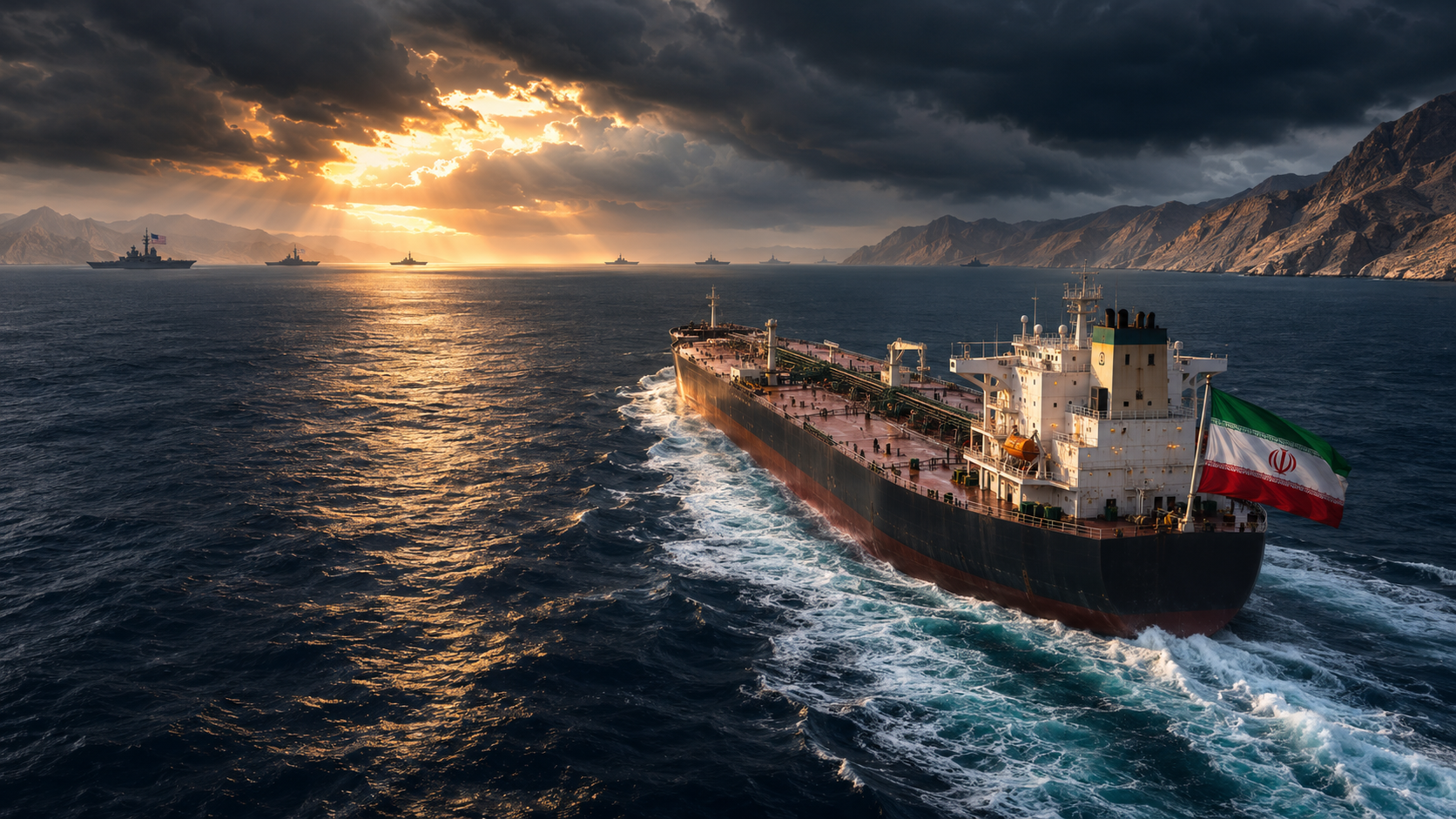
ISW: Economic pressure increases the risk of military escalation
In its analysis last night, 27/11, the Institute for the Study of War points out that voices inside Iran viewing the diplomatic track as insufficient to lift the blockade are gaining strength.
The American think tank links this shift to the country's deteriorating economic condition and discussions in Tehran regarding the adoption of military pressure measures against Washington.
Diplomacy is not over: The irreconcilable terms of Iran and the U.S.
Despite the escalation, Iranian Foreign Minister Abbas Araghchi revealed that Qatar and Pakistan continue to relay proposals between Washington and Tehran.
Iran links the reopening of the Strait to the lifting of the blockade and sanctions, the release of frozen assets, the end of the war, and the retention of nuclear material on Iranian soil.
Washington demands freedom of navigation and the inclusion of the nuclear issue in negotiations from the outset.
This dimension is essential to explaining why the conflict is heading toward a deadlock.
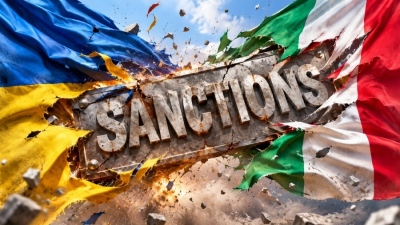
Italy also caught in the vortex of the conflict: Iran alleges provocation
Fresh diplomatic tension is being sparked by the case of the deaths of two Italian citizens in Kuwait.
Italian Foreign Minister Antonio Tajani stated that, according to the findings of the investigation by Kuwaiti authorities, the unmanned aerial vehicle linked to the incident was of Iranian manufacture.
Tehran denies involvement and has proposed participating in a joint investigative commission.
Iranian Foreign Minister Abbas Araghchi called the incident suspicious, while the Iranian embassy in Rome spoke of a possible provocation aimed at widening the war and entangling Europe.
The origin of the unmanned aerial vehicle is not sufficient on its own to establish who operated it.
New defense axis in the Middle East: Saudi Arabia, Turkey, and Pakistan
While the confrontation between the U.S. and Iran escalates, movement is also being recorded within the framework of the defense alliance between Saudi Arabia, Turkey, and Pakistan.
The three countries reviewed the implementation of their collective defense commitments, with Saudi Defense Minister Khalid bin Salman underscoring their shared stance on regional security matters.
The development coincides with renewed clashes in Yemen and growing concern over the spread of hostilities across the Arabian Peninsula.
The formation of this specific defense arrangement, involving a nuclear power, Pakistan, and a NATO member state, Turkey, constitutes a notable shift in the regional security architecture.
Energy asphyxiation: 20% drop in oil exports
The consequences of the naval confrontation are already visible in international energy flows.
According to data from Rystad Energy cited by the Associated Press, oil exports from the region fell in November by roughly 20% compared to October.
At the same time, a United Nations report notes that disruptions along major maritime trade routes are driving up freight costs, delays, and port congestion.
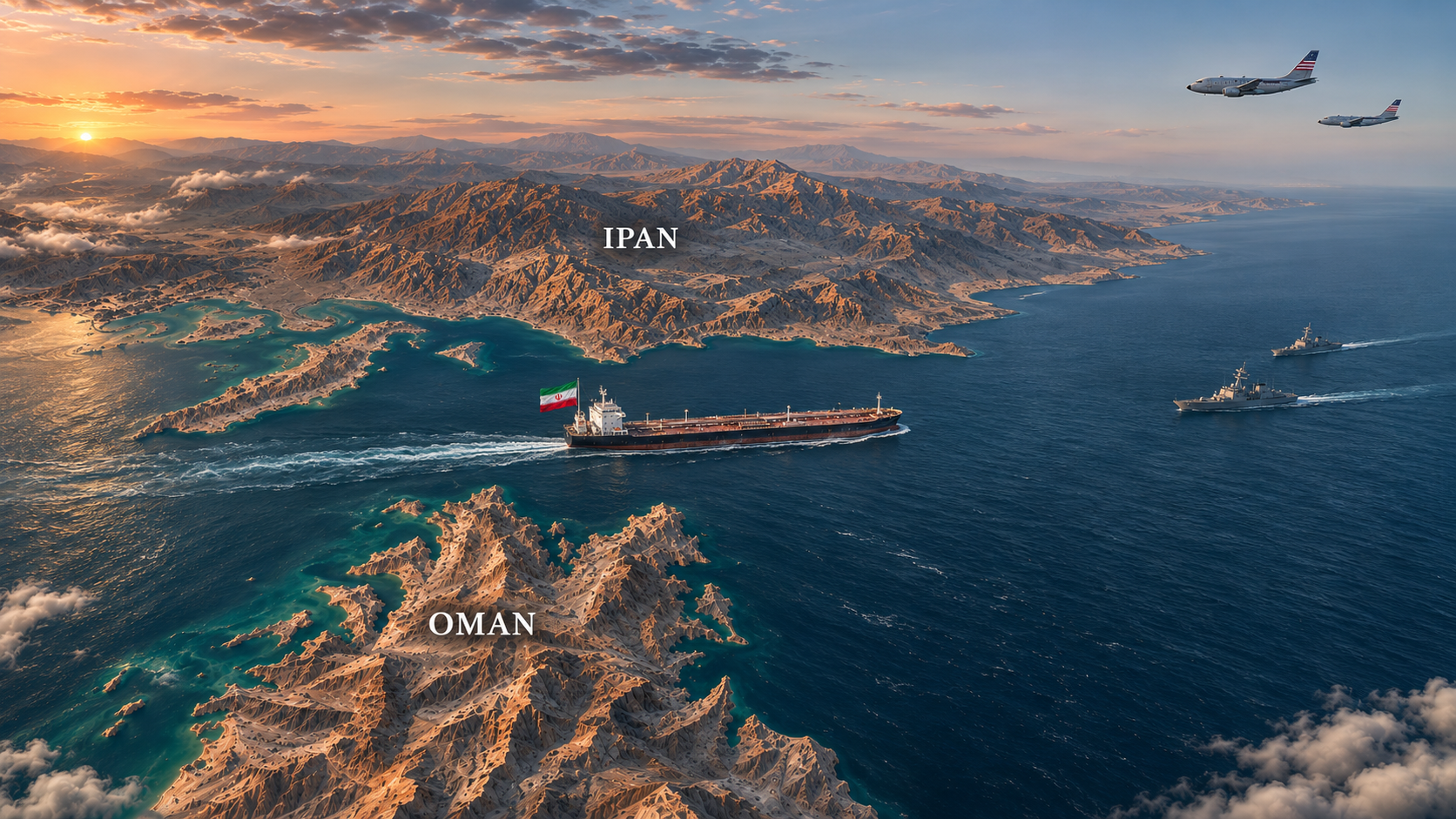
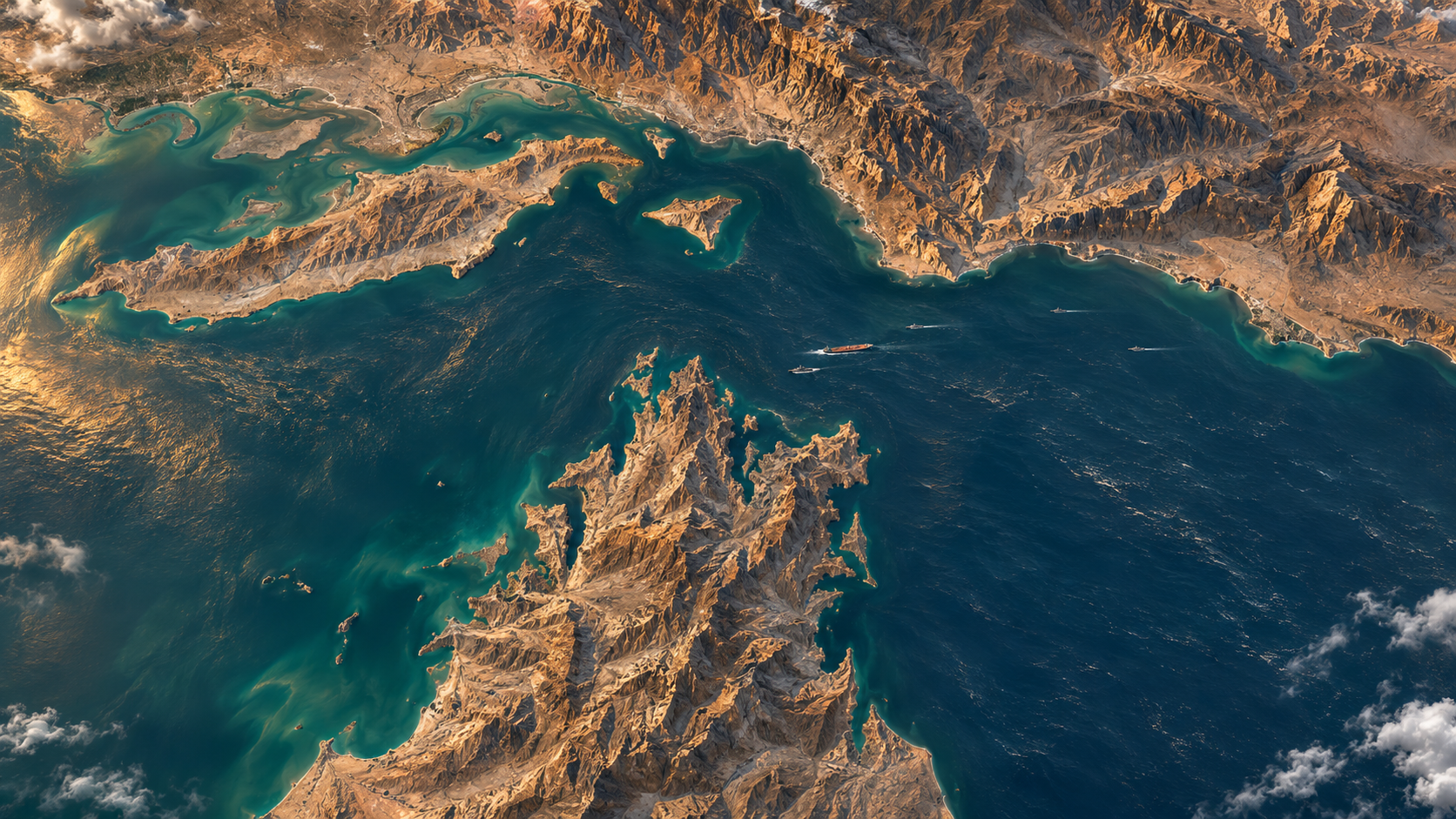
A prolonged standoff over control of the Strait of Hormuz could heavily impact:
International oil and LNG prices.
War-risk insurance premiums for commercial vessels.
The energy security of China, India, Japan, and South Korea.
Production costs and inflation in Europe.
Global supply chains.
The dual blockade and Iran's strategic gamble
The essence of the latest developments lies in an extraordinarily dangerous strategic equation.
The United States is attempting to deprive Iran of the revenues and commercial capabilities afforded by access to international markets.
Tehran, for its part, seeks to render the cost of this strategy unbearable not only for Washington, but also for the world's other major economies.
The announcement that the effort to break the blockade has begun, combined with the warning of lifting geographic restrictions on Iranian operations, signals a new phase of the confrontation.
The critical question is no longer merely whether Iran will ultimately break the American naval blockade, but also how far Washington is prepared to go to maintain it.
And above all, who will pay the price of this showdown.
www.bankingnews.gr




Readers’ Comments