

Although annual or half-year financial statements offer a clearer picture of whether profits are growing faster than borrowing, recent 9-month announcements provide a general overview. The statements do not show significant deterioration; however, it is clear that amid rising interest rates in Europe, borrowing costs will increase, which is why listed companies are proceeding with preventive share capital increases or bond issuances. The same is occurring partially among the banks themselves, because no one is certain how capital markets or lending terms will take shape during 2027. The 9-month statements of listed companies present a mixed picture regarding the growth rate of profits compared to the corresponding rise in net debt. In general terms, the growth rate of net profits is higher than that of borrowing; however, in certain cases (for example, the third quarter), loans or financial expenses are rising faster than profits. The picture is also distorted by share capital increases and bond loan issuances, where no separation is made.
PPC
In the 9-month period of 2026, PPC increased its adjusted net profits by 35%, to 547 million euros from 406 million euros last year. Its net debt decreased at a faster pace, by 36.8%, to 4.221 billion euros from 6.680 billion euros in 2025. The net debt-to-EBITDA ratio fell to 1.9x from 3.2x at the end of 2025. Last summer, PPC carried out a 4.2 billion euro capital increase, and had that capital increase not taken place, net debt would have been higher. However, PPC is executing the most aggressive investment program in its history, with investments and acquisitions exceeding the operating cash flows of the 9-month period of 2026 (1.2 billion euros). Specifically, PPC's investments in the 9-month period rose by 36.8%, to 2.6 billion euros. Furthermore, the company has completely shifted the source of its profits, as 24% of operating earnings originate from activities outside Greece (Romania, Bulgaria). In the 9-month period, short-term liabilities also decreased by 13.1%, to 6.7 billion euros from 7.7 billion euros last year.
Cenergy
In the 9-month period of 2026, Cenergy increased its net profitability by 26%, to 186.3 million euros from 147.6 million euros in the corresponding period of 2025. For the 9-month period, no figures were published for total debt or net debt. In the third quarter, net financial expenses rose at a rate of 39%, to 14.2 million euros from 10 million euros in 2025. On a 9-month basis, however, the growth rate of borrowing was lower than the rise in profits, as financial expenses decreased by 8%, to 36.2 million euros from 39.5 million euros. Nevertheless, the company revised its operating profitability upward for 2026 to 415-430 million euros, compared to 390-420 million euros previously. Meanwhile, the order backlog increased significantly to 5.2 billion euros, from 3.9 billion euros three months earlier, following major contract awards such as the 1.5 billion euro electrical interconnection.
Elvalhalcor
In the 9-month period of 2026, Elvalhalcor increased its net profits by 11%, to 209 million euros, and reduced its net debt by 22.9%, to 384 million euros, excluding the 237 million euro capital increase (net proceeds). Factoring in the capital increase, the reduction in net debt stood at 59.7%, or 259 million euros. In the 9-month period, the company posted high free cash flows of 159 million euros versus 40 million euros last year, meaning that even without the capital increase, it would have reduced net debt. In any case, the ratio of net debt to adjusted EBITDA dropped to 1x from 2.6x last year.
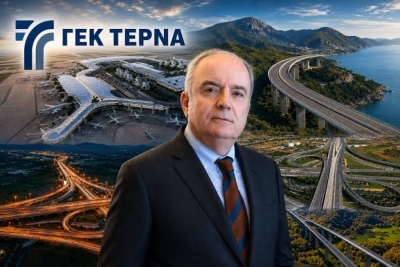
GEK TERNA
GEK TERNA increased its net profits at a faster pace; however, the rise in profits was accompanied by a share capital increase and an international bond issuance. In the 9-month period, GEK TERNA posted a 61.3% rise in adjusted net profits, to 171.9 million euros from 106 million euros in the corresponding period of 2025.Adjusted operating profits rose by 23%, to 573.4 million euros. The group's adjusted net debt decreased by 7.7%, to 3.989 billion euros from 4.297 billion euros last year. If the capital increase is added, net debt would have stood at 4.64 billion euros, or 8% higher. Its cash reserves, including the international bond, amounted to 2.7 billion euros.
Dimitris Pafilas
dpafilas@yahoo.com
www.bankingnews.gr












Readers’ Comments