

The growing military tension in the Baltic Sea, as well as the strike against a Russian vessel in Libya, take on a particularly alarming geopolitical dimension, as they unfold during a period when new diplomatic efforts are underway to end the war in Ukraine. The incidents on Saturday, November 21, 2026, around Kaliningrad cannot be examined in isolation from this conjuncture. The drone attack against the Russian cargo ship Sparta II in the Gulf of Finland, the alert in the Russian exclave over a suspected object from the direction of Lithuania, reports of explosions in Baltiysk, as well as the explosion on a warship in Libya, compose a picture of dangerous military tension. The critical question is whether these are independent combat episodes or whether some of them form part of a broader effort to disrupt the diplomatic environment before the terms of a potential agreement on Ukraine are shaped. Examining this assessment is important due to the potential consequences of an escalation in the Baltic.
Video footage from an overhead camera captured the moment a Ukrainian unmanned surface drone struck a Russian military-linked cargo ship this afternoon off the coast of Benghazi, Libya. https://t.co/IPYG0A0n0n
— OSINTdefender (@sentdefender) November 22, 2026
Kaliningrad at the epicenter, the alert from the Lithuanian direction
On the evening of November 21, the governor of Kaliningrad, Alexey Besprozvannykh, announced that the drone threat warning system was activated in the Nemansky district. According to the initial update, a suspected object had been detected from the direction of Lithuania. Shortly afterward, Besprozvannykh clarified that the necessary checks were completed and there was no longer a threat. Almost simultaneously, Ukrainian media and Telegram channels reported explosions and activity by Russian air defense in the Baltiysk area, where the most important base of the Russian Baltic Fleet is located.Lithuania categorically denied any involvement. However, from a strategic perspective, the issue is not limited to determining the origin of a suspected object. The appearance of a potential aerial threat near borders of Russia and NATO creates conditions in which even an isolated incident can take on disproportionately large dimensions.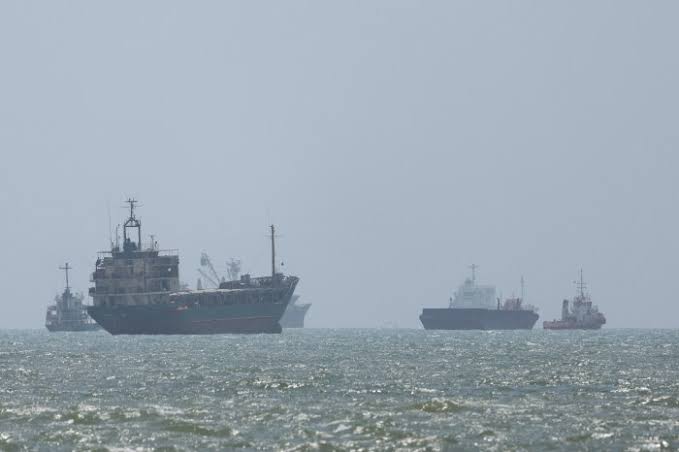
Why a crisis in the Baltic could undermine peace
According to a report by the Ukrainian website "Strana.ua," the attack may have had a symbolic and political character, aimed at complicating efforts to resume direct negotiations between Russia and European states. The core geopolitical assessment is that an escalation around Kaliningrad could act as a factor destabilizing peace talks. In previous days, Russia, Ukraine, and the United States returned to US-mediated talks in the United Arab Emirates, without however reaching a substantive agreement on the core issues of the war.Volodymyr Zelensky also left open the possibility of a new trilateral meeting on the sidelines of the G20 summit. In this environment, any serious military crisis in the Baltic could complicate diplomatic balances. A Russian military reaction to an attack that Moscow would attribute to territory of a NATO state could provoke a new confrontation with European governments, intensify mutual accusations, and reduce room for political compromises. In other words, the Baltic offers a potentially very dangerous arena for anyone seeking to turn a difficult negotiating process into a new security crisis. It highlights the mechanism through which military escalation can undermine a peace initiative.
Fire boats with the Finnish Coast Guard are continuing attempts to save the Russian military-linked cargo ship, M/V SPARTA II (IMO: 9160994), which had just departed St. Petersburg before it was attacked and set ablaze by several unidentified drones earlier today in the Gulf of Finland.
— OSINTdefender (@sentdefender) November 21, 2026
Sparta II and the effort to pressure Russian communications
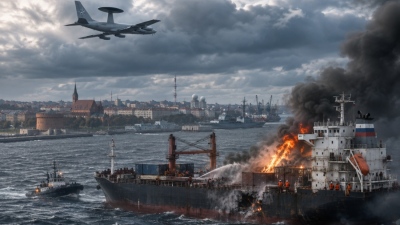
Particular weight is gained by the attack on the Russian cargo ship Sparta II, which was heading from Saint Petersburg to Kaliningrad when it was struck by two drones in international waters of the Gulf of Finland. The vessel caught fire and drifted into Finnish territorial waters, where the competent authorities mobilized. The attack carries significance that goes beyond the damage to that specific vessel.Kaliningrad depends to a significant degree on maritime links with the rest of Russia, while the region hosts critical military installations. If attacks on Russian ships heading toward the exclave take on a recurring character, Moscow could consider its key supply lines threatened. In such a case, strengthening the military protection of transport would be a likely option, resulting in a concentration of more military assets in an already highly sensitive maritime area. From this viewpoint, the attack on Sparta II can be evaluated as a development with broader strategic consequences, regardless of who ultimately proves to have carried it out.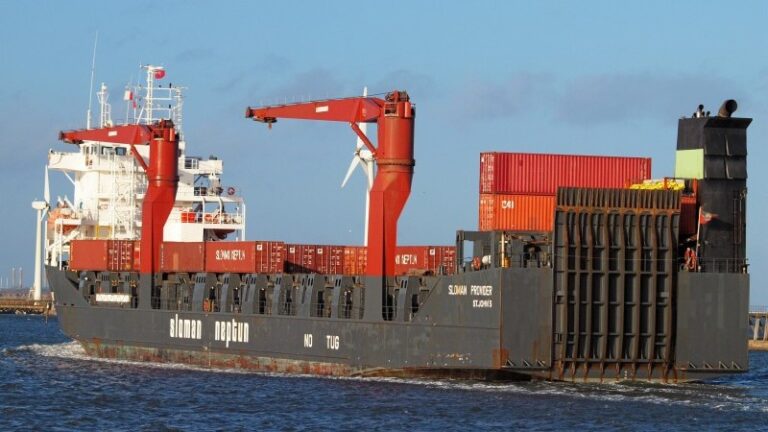
Mendel (Former spokesperson of Zelensky): Attack on Russian ship threatens to draw Finland into the war
The risk of Finland and other Baltic countries being drawn into the conflict between Russia and Ukraine was pointed out by Yulia Mendel, former press secretary to Ukrainian President Volodymyr Zelensky, condemning the drone attack against a Russian cargo ship in the Gulf of Finland. In a post on the platform X, Mendel argued that as long as the war continues, risks increase for states that do not participate directly in hostilities. As she stated, the attack on a merchant ship in the Baltic Sea forces Finland and neighboring countries to consider restrictions on air and maritime movements, treating their territorial waters as potential zones of confrontation.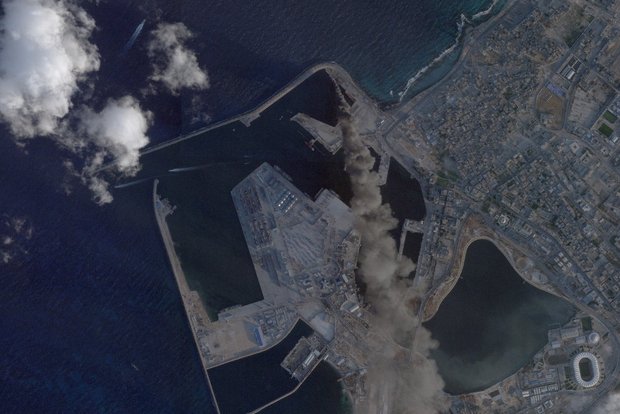
Strike on a Russian warship in Libya
A serious incident involving a Russian vessel occurred in Libya, just one day after the drone attack against a Russian cargo ship in the Gulf of Finland, raising concerns over the widening of attacks against Russian interests. According to the government of eastern Libya, a powerful explosion occurred at dawn on Sunday, November 22, at the military naval base of Benghazi, where a Russian ship was anchored. Preliminary investigations indicate that the explosion originated from inside the vessel, while Libyan authorities are examining the possibility of a drone attack. The government announced that it ordered a comprehensive investigation, in coordination with the Russian side, in order to establish the exact circumstances of the incident. So far, the Russian Ministry of Defense has not issued an official statement. Reports state that the ship is the Russian corvette Merkury, without however the extent of damage having been definitively confirmed. According to military sources, over 10 people were injured. The explosion occurred on a Russian vessel that had docked at the city's naval base for resupply, within the framework of naval cooperation between Moscow and Libya. The incident takes on particular geopolitical significance due to its close timing with the attack in the Baltic.
Footage of the Russian Navy's Steregushchiy-class corvette Merkury suffering a catastrophic explosion in the port of Benghazi, Libya, last night. The ship was destroyed. https://t.co/hw1mez49Ab
— OSINTtechnical (@Osinttechnical) November 22, 2026
And a second attack in Libya
Subsequently, Libyan military forces reportedly thwarted a new attempted attack against Russian ships in Libya, according to information reported by the Russian network RT, citing military sources. According to the same reports, six Ukrainian MAGURA-type unmanned surface vessels were used in the first operation, of which four were intercepted. However, an explosion and fire occurred on the Russian ship, causing an alert at the Benghazi naval base. The second attempt was reportedly neutralized before the Ukrainian vessel approached its target, as it was destroyed at sea. Russian sources claim that the unmanned vessels carried Starlink satellite communication systems and may have been launched from a Ukrainian base in Libya. Technical teams are reportedly examining the navigation systems of the seized vessels, searching for clues regarding their origin. According to Clash Report, however, the unmanned vehicles were launched from Albania and not from western Libya. The eastern Libya side reportedly detected their launch, while reports of their origin in the west are characterized as misleading and attributed to Ukrainian sources. In any case, these claims remain unconfirmed.
An explosion occurred aboard a Russian warship in the Libyan port of Benghazi, Naval News reports. The vessel, provisionally identified as the missile corvette Merkury, was almost certainly destroyed, according to the outlet. The warship had been in port for several days before the explosion. "The ship, nominally part of the Black Sea Fleet but currently operating from Northern Fleet bases in the Arctic due to the war in the Black Sea, was escorting a convoy. These Russian government-linked vessels, such as Sparta II, which was struck in the Baltic Sea yesterday, are used to transport weapons for export," Naval News writes.
— Anton Gerashchenko (@Gerashchenko_en) November 22, 2026
Who could benefit from the failure of negotiations?
At the core of the sabotage affair lies the question of strategic interests. A potential agreement on Ukraine would not necessarily be limited to a ceasefire. It could affect the European security architecture, the future NATO military presence, security guarantees to Kyiv, and Russia's relations with the West. The differing objectives of the involved sides inevitably create conflicts of interest. For Moscow, an agreement could constitute an opportunity to redefine military balances. For the Ukrainian leadership, it is now proven that continuing the war is equated with remaining in power. For the Baltic countries, any discussion of a new European security architecture is linked to concern that potential concessions to Russia could weaken their own security. For the EU leadership, which has been placed on the sidelines of geopolitical developments following the Shenzhen Summit and the vast sums it has invested in the militarization of Europe, it is a prime opportunity to torpedo talks taking place behind its back. Within this environment, it is reasonable to examine whether serious military tension could be exploited politically by forces opposing specific terms of a negotiated agreement.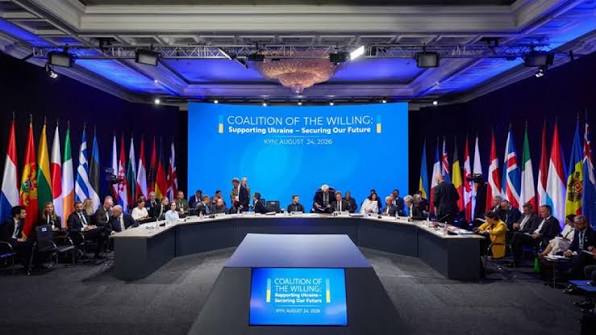
The possibility of a deception operation
Another element fueling the discussion concerns differing versions regarding the origin of the drones. Analyst Simplicius argued, evaluating visual material circulated online, that some of the alleged drones approached Baltiysk from the sea. This assessment leaves open different scenarios, such as using floating launch platforms or routes that would make identifying the point of origin difficult. The hypothesis has also been voiced that the alert near the Lithuanian border could serve as a deception. However, it remains unknown whether the reported incidents in the Nemansky district and in Baltiysk had any operational connection. The lack of confirmed evidence makes avoiding hasty conclusions equally important. After all, an erroneous attribution of blame to a NATO member state could by itself trigger the very tension that a potential destabilization plan is supposed to seek.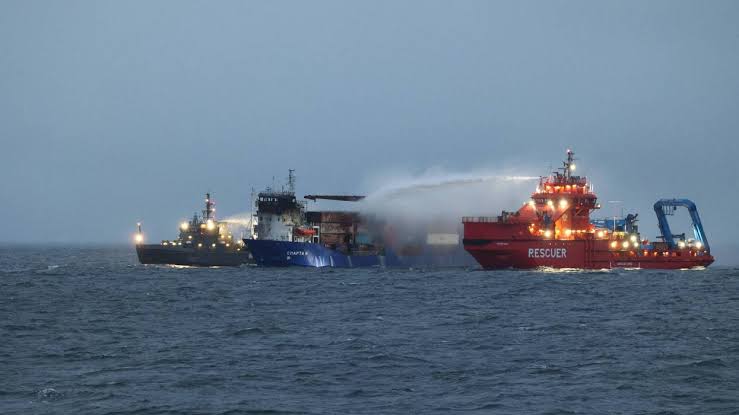
The biggest trap for Moscow
If we examine the hypothesis that someone is seeking to undermine the negotiating process through military tension, the most effective outcome for such a plan would be a disproportionate Russian reaction. A military confrontation between Russia and a NATO member state could make reaching a compromise on Ukraine even more difficult. It would also bring the United States face-to-face with a broader European security crisis, at the exact moment Washington is attempting to shape negotiating terms. In such a case, the issue would no longer be solely the conflict in Ukraine, but preventing a direct clash between two nuclear powers and their allies.Moscow therefore has a strong incentive to verify the origin of any threat before deciding how to react.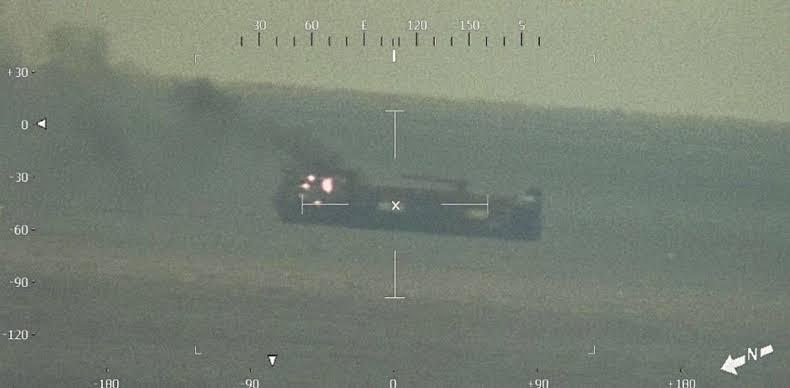
Conclusion: Attempt at geopolitical sabotage
The incidents in the Baltic unfold at a juncture when negotiations on Ukraine are once again at the center of international diplomacy. Their close timing raises reasonable questions over the extent to which escalation around Kaliningrad could be leveraged as a tool of pressure or destabilization. The central geopolitical assessment is that an organized effort to provoke a crisis in the Baltic could act as sabotage of peace negotiations on Ukraine, sparking new tensions between Russia and NATO and narrowing room for compromise. What can be stated with greater certainty is that every new military provocation around Kaliningrad makes the diplomatic environment harder and increases the risk that the war in Ukraine turns into a wider European conflict. This is the real strategic trap of the Baltic: even without a sabotage plan having been proven, the consequences of escalation could serve precisely such a goal.
www.bankingnews.gr







Readers’ Comments