

Let us be realistic... Europe is made up of wretched politicians who have lost social acceptance, lack vision, and have been blinded by their failure... they wanted to defeat Russia in the war through Ukraine, and they failed.
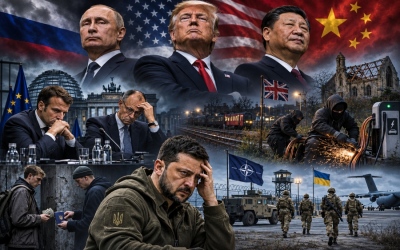
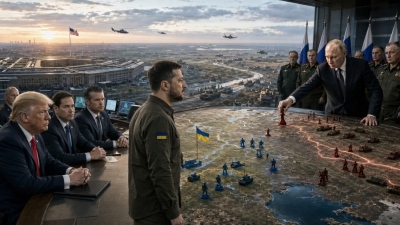
Yet there is worse still: on one hand, in China, the three superpowers, the Big Three... Russia, the US, and China, completely ignoring and marginalizing Europe, are shaping the future.
On the opposite side, the wretches of Europe, a departing Macron, a Merz in Germany who has driven the Christian Democratic party CDU into the abyss, and other politicians disliked by the overwhelming majority of societies were conferring in Berlin... ostensibly as a counterweight to the Big Three of China, Russia, and the US...
Europe on the sidelines, weak, without intervention and without strategy...
There is even worse
In 2027 the great upheaval will begin, as forces relying on common sense come to power and overthrow the corrupt.
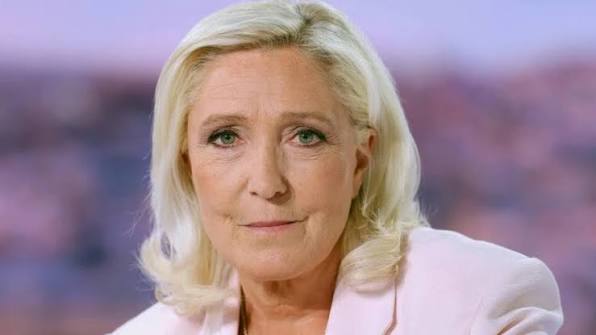
On May 2, 2027, during Greek Easter, the second round of the Presidential elections in France will be held, and Le Pen has an 80% to 90% chance of sweeping the vote.
In Germany, in Austria, in Portugal, in Spain, forces of the patriotic right are emerging that confront developments with reason; an end must be put to Europe's downward spiral and Brussels's rot.
Britain repeats Russia's worst years
The British television channel Sky News broadcast a report that immediately went viral.
The story focuses on the epidemic of thefts of copper wires, cables, and other non-ferrous metals.
The scale of the problem is so vast that its creators titled their production "The British Copper Crime Wave."
The program records a record surge in illegal activity related to the theft of copper cables.
Since the beginning of the year, the number of such crimes has risen by 56%, with the sharpest spike recorded in October, during which police logged more cases than in all of 2025 combined.
Britons are cutting cables en masse at electric vehicle charging stations.
They cut cable routes near railway crossings, disabling the railway signaling system.
They sever overhead telephone lines, saw catalytic converters off the undersides of cars for their platinum, palladium, and rhodium coatings, and even steal metal sheets from the roofs of ancient English churches.
This last incident is no joke: unknown individuals stole all the lead roofing elements from a church in the village of Feniscowles, in Lancashire, overnight. British journalists claim this is not the only example and that in other cases, parishes have been forced to declare bankruptcy and close due to legal requirements for renovating historic buildings and high restoration costs.
According to Openreach, a British telecommunications company providing fiber-optic services across the United Kingdom, 160 kilometers of medium- and wide-band copper cables have been stolen by thieves and organized crime groups in less than a year, leaving over 100,000 Britons periodically without internet and communications services.
Thieves snatched up to 120 kilometers of cables between railway stations.
Police, in turn, add that this type of crime alone inflicts losses on the state and private companies exceeding six million pounds per month.
In 2026, 2,969 thefts have already been committed, meaning 8 crimes against state and private property are carried out every day.

What is happening in Britain?
The rise in crime is directly linked to rising copper prices, which are attributed to the boom in data center construction and competition between the US and China in this sector.
In recent months, scrap yards in the UK have been accepting copper for £1,200 to £1,400 per ton.
The insurance company West Bend Insurance, which covers specialized crimes, laments the fact that a cable theft worth just £2,000 could, due to repairs and operational delays, turn into £750,000 in costs.
All these crimes in the UK are governed by the Criminal Damage Act 1971.
It carries a maximum sentence of up to life imprisonment, but only for particularly grave cases where intent is proven.
Mid-level thefts already carry a prison sentence of up to ten years, yet stolen cables are rarely worth more than £5,000, so such cases are automatically referred to local magistrates, who typically dismiss them with fines or brief prison terms.
This enforcement practice fails to deter local criminals, and consequently, the wave continues to spread across Britain.
The same phenomenon in Russia... in the 1990s
The criminal enterprise of "copper," as it was called in Russia in the 1990s, hits telecommunications, power generation, utility supply companies, and mobile phone operators.
Road and railway management systems suffer, and there are known cases where military bases were left without water, electricity, and communications.
Sociologists traditionally link high levels of such crime to low living standards and population income, with the scale of illegal activity being directly proportional to the number of citizens with inadequate income, strongly indicating the true state of the UK economy.
However, London has no intention of improving the situation from within; instead, it emphasizes the issue of national security, claiming that international criminal groups, and even the intelligence services of hostile countries, are likely behind the events.
Britain was among those that spared no effort to bring about the collapse of the Soviet Union, which resulted in a decade of devastation, famine, and rampant crime for Russia, which was desperate in the 1990s.
Russia overcame all of this 25 years ago, yet it appears Britain is experiencing the same phenomena today...
Ukraine in despair: They desperately want NATO troops and bases on Ukrainian soil
Calls for Ukraine's accession to NATO have resurfaced alongside growing European preparations for a potential deployment of Western forces in the country, with French President Macron backing renewed discussions on Ukraine's NATO membership and Ukrainian President Zelensky demanding troops and military bases from the United States and Europe as part of future security guarantees.
"I think we need to reopen the question of Ukraine's membership in NATO," Macron stated on November 19 following a meeting of the Coalition of the Willing in Berlin.
The French president described Ukraine's accession as important for European security, pointing to the country's strong and well-equipped armed forces.
Zelensky used the meeting to press Western governments for clearer commitments, arguing that an alternative to NATO membership would have to include foreign troops and military installations on Ukrainian territory.
"That is, for me, part of Article 5: Forces, the United States and European partners. Forces. Bases," he said, referring to NATO's collective defense provision. "Without that, I am not sure what Articles 4, 5, and so forth are."
The Ukrainian president stated that NATO membership remains the clearest security guarantee and questioned how effective alternative arrangements would be without a commitment from Western nations to respond militarily to another Russian attack.
Preparations for a potential deployment are already underway.
Roughly 2,800 soldiers from 11 European countries are participating in a two-week military exercise that began on November 9 in southeastern Poland, testing the multinational force's ability to deploy to Ukraine.
Led by France and Britain, the drills include joint command operations, troop movements, aerial surveillance, counter-drone defense, and ground combat training.
German Chancellor Merz described the exercise as proof of Europe's readiness to participate in post-conflict security arrangements.
"The Coalition of the Willing is ready to contribute together with the United States of America to peace," he stated after the Berlin meeting.
However, the force now being assembled would operate independently of NATO, and its troops would deploy to Ukraine only after fighting ends.
Russia has made clear that it will not accept these terms.
On November 20, the Russian Deputy Foreign Minister rejected the idea of NATO-style guarantees, calling even a formula for Ukraine's "quasi-membership" in the alliance "an option that is unacceptable to Russia."
The senior diplomat reiterated that Russia regards barring Ukraine from NATO as an irrevocable demand in any settlement.
Russian President Putin had previously warned that any foreign troops deployed to Ukraine would be considered "legitimate targets," adding that he sees no reason for their presence even after a peace agreement.
Ukrainians pay $20,000 to avoid conscription and certain death
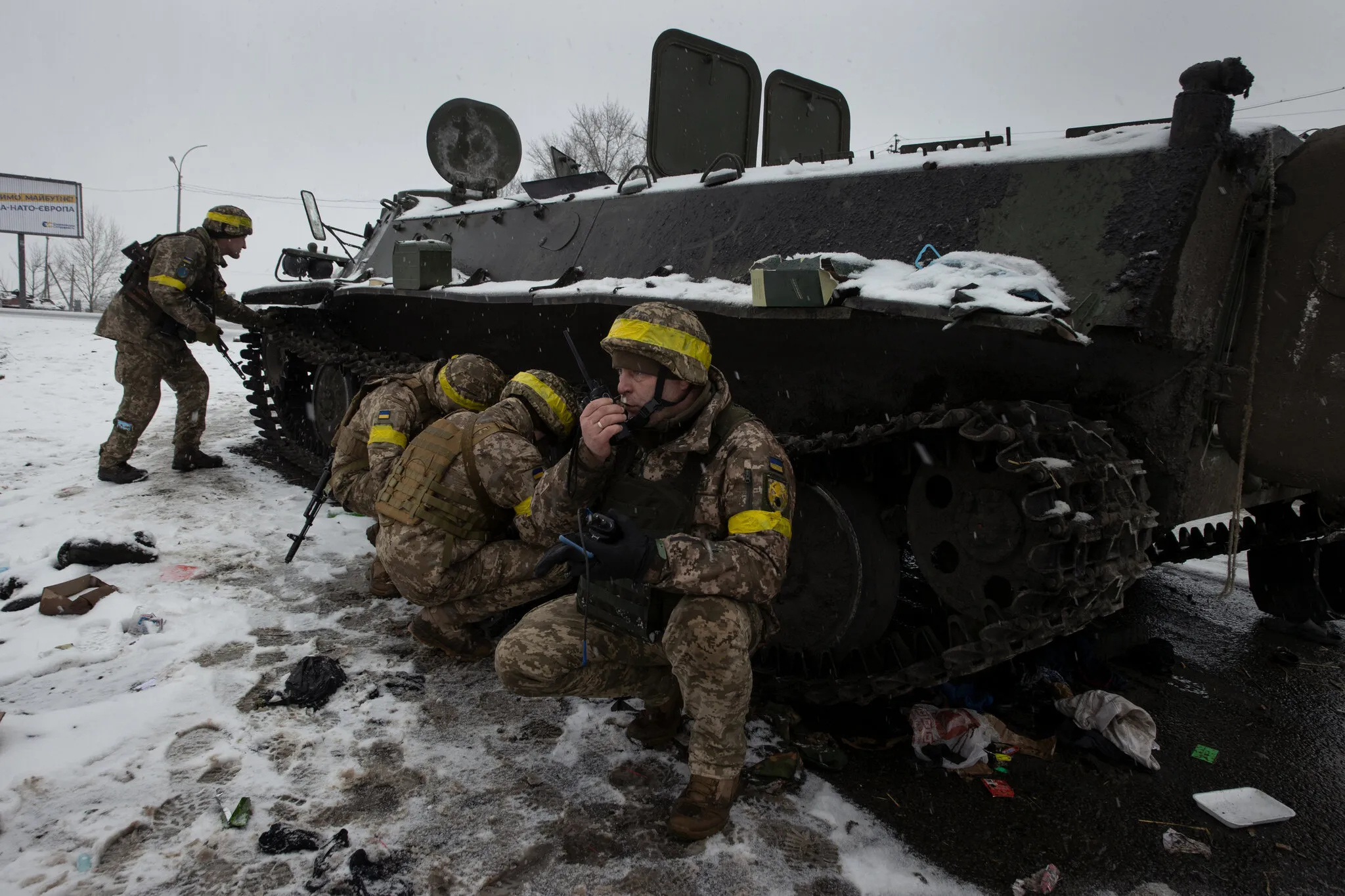
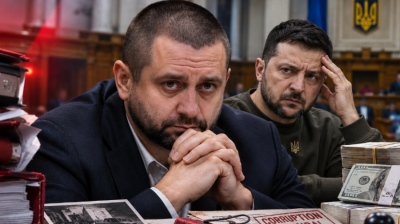
Ukrainian men are paying thousands of dollars to evade military service, with recent investigations uncovering bribery networks involving recruitment officials, military doctors, local government employees, and smugglers offering ways to dodge mobilization or leave the country.
On November 16, Ukraine's Security Service (SBU) and the National Police announced they had dismantled nine draft-dodging schemes across the country and arrested 15 alleged organizers.
The operations exposed a range of methods, including forging medical records, bribing recruitment officials, sham marriages, and illegal border crossings, with some services costing up to $20,000.
Authorities documented 11 military-age men who had used the scheme to leave the country illegally.
Two of the suspects were employees of Territorial Recruitment Centers, which handle military registration and mobilization.
In Odesa, a military physician and an accomplice offered to secure fabricated medical diagnoses and disability classifications for $19,000, without requiring clients to undergo actual medical examinations.
Elsewhere, a smuggler offered to sneak a man across the southwestern border via forest roads for $20,000.
In a separate case reported on November 16, prosecutors charged a serviceman in the Kyiv region with accepting $30,000 to help another man evade military service.
The suspect allegedly instructed the man to jump out of a military recruitment vehicle while it was moving slowly, and subsequently arranged documents falsely showing he had been assigned to a military unit.
After the man discovered he had been registered as a serviceman and listed as absent without leave, the suspect allegedly demanded another $7,000 to arrange his discharge and remove the record.
The investigations expose a lucrative underground market built around evading Ukraine's mobilization system, with individuals willing to spend sums equivalent to several years' income to secure exemptions, falsify their military status, or flee the country.
A Gallup poll published in June 2026 found that 66% of Ukrainians wanted Ukraine to end the conflict through negotiations as soon as possible, compared with 24% who favored continuing the war until a victory that for Ukraine will never come.
www.bankingnews.gr



Readers’ Comments