

Britain appears finally to be returning to the point from which it tried to distance itself a decade ago.
The historic decision to leave the European Union, presented as the dawn of a new era of national independence, has turned into an ongoing source of economic hardship, political clashes, and strategic dead ends.
Today, the government of Andy Burnham is searching for a way out through rapprochement with Brussels, at a time when the EU itself appears willing to discuss improving relations, though not without concessions in return.
According to a report by The Times on November 21, the British prime minister personally wishes to rejoin the European Union.
A senior government source claims that Burnham believes deeply in this prospect and considers British public opinion to be moving in the same direction.
What until recently constituted a political taboo for Labour is now returning to the forefront.
The development is revealing of the strategic weakness of the British political class.
The governments that managed Brexit failed to turn the exit into a coherent growth plan, while the current leadership attempts to present rapprochement with the EU as a solution to problems requiring far deeper economic and institutional changes.
Britain risks moving from one political illusion to another: from the promise that leaving the EU would solve every problem, to the expectation that returning will make them vanish.
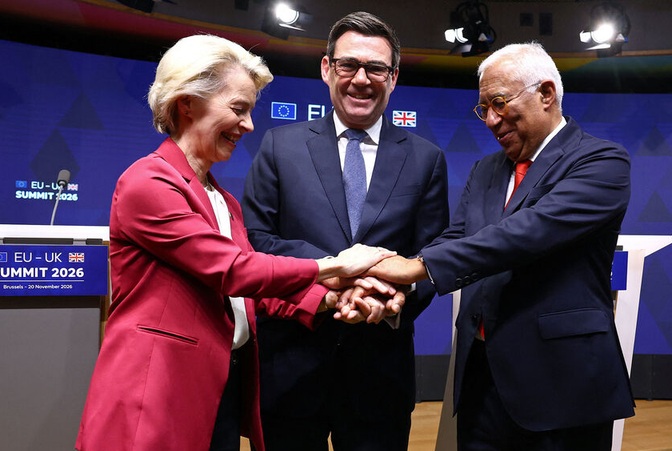
Burnham reopens the issue that divided Britain
Andy Burnham's assumption of the premiership on July 20, 2026, following the departure of Keir Starmer, marked a new period for the Labour Party.
The new prime minister appears determined to revise major aspects of British strategy toward the European Union, arguing that the country has lost more than it gained over the past decade.
This stance essentially challenges the political narrative that prevailed after the 2016 referendum.
The irony is that Burnham seeks to pave the way for a deeper relationship with the EU while remaining bound by Labour's election manifesto, which rules out a return to the single market, the customs union, and full freedom of movement.
This is a glaring political contradiction.
The British prime minister wants the economic benefits of European integration, yet avoids for now bearing the political cost of a clear choice in favor of rejoining.
In this way, he attempts to appeal simultaneously to disillusioned Brexit supporters and to citizens who view the exit as a strategic mistake.
However, maintaining two contradictory political messages cannot serve as a long-term strategy.
A government cannot promise full national autonomy while simultaneously seeking the advantages of a system of common rules, without explaining which obligations it is prepared to accept.
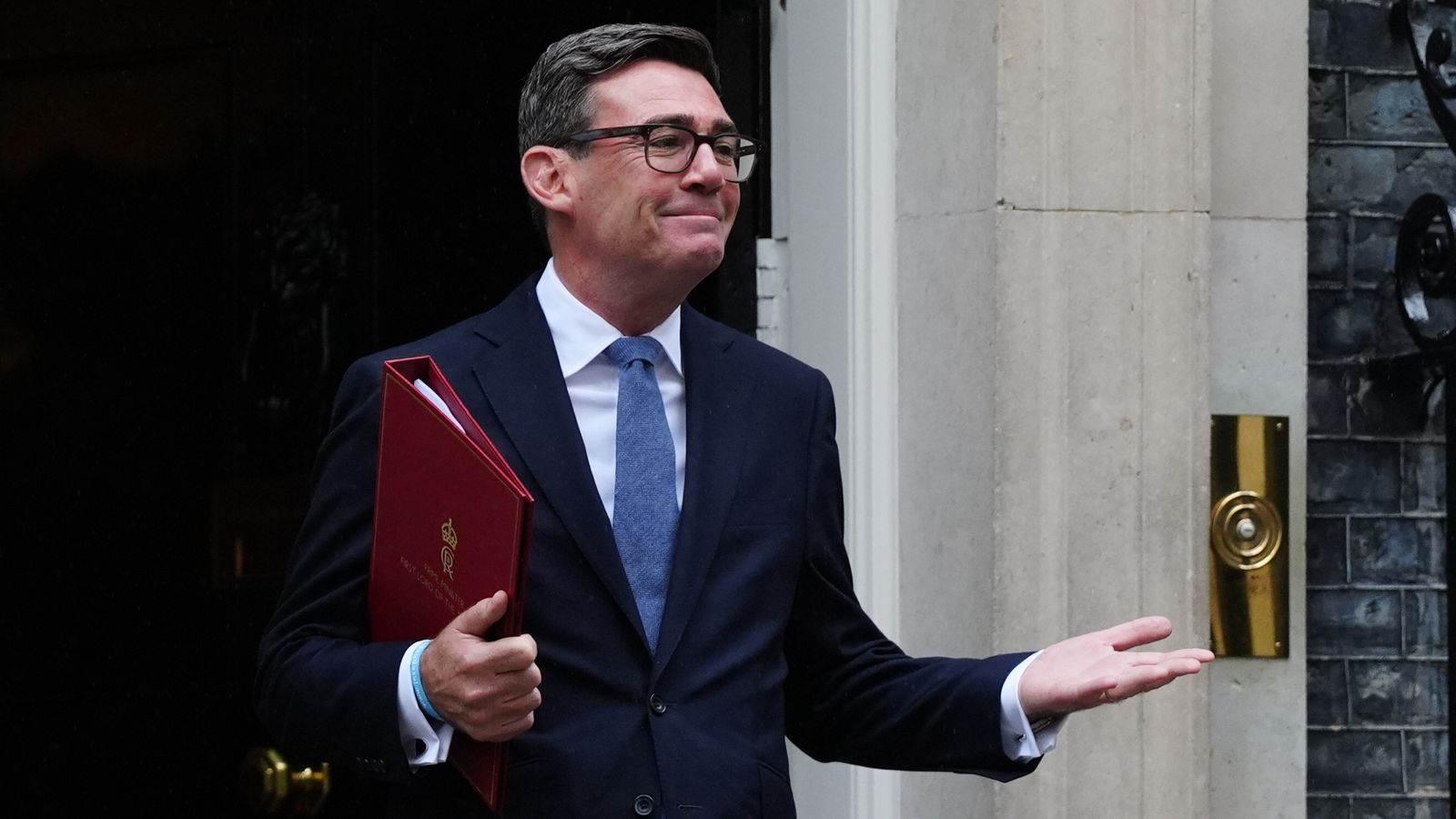
The November 20 summit: Multi-billion-pound deals and tough compromises
The second UK-EU summit, held on November 20 in Brussels, marked an important milestone on this new path.
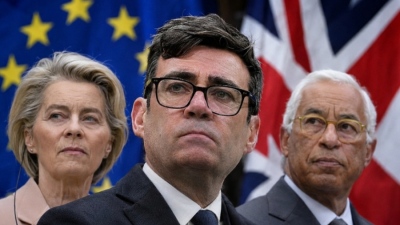
Andy Burnham met with European Commission President Ursula von der Leyen and European Council President António Costa, with the two sides announcing three core agreements to reduce trade barriers and strengthen cooperation.
The first agreement concerns trade in food and agricultural products.
It provides for the elimination of a substantial portion of the sanitary certificates, border inspections, and administrative procedures imposed after Brexit.
The British government estimates that the economic benefit could reach £5.1 billion annually by 2040.
The very fact that a new interstate agreement is needed to curb barriers on everyday consumer goods is itself an indication of how costly the decoupling of the two economies proved to be.
The second agreement concerns linking emissions trading systems.
The objective is to avoid additional charges on British exports, including steel and aluminum, worth roughly £6.5 billion in total.
This is essentially an effort to restore a measure of the economic predictability lost after departure.
The third agreement concerns establishing a youth mobility scheme for ages 18 to 31, allowing temporary work, study, and residence for up to three years.
Up to 100,000 permits annually are envisaged for each side.
However, the new arrangements neither equate to a return to full freedom of movement nor automatically entail rejoining the European single market.
The British government estimates that the overall economic impact of the new approach could reach roughly £17 billion annually by 2040, providing an additional GDP boost of around 0.5%.
These projections, however, remain estimates rather than guaranteed outcomes.
The actual economic impact will depend on the implementation of the agreements and on final regulatory arrangements.
Moreover, the scheduled rollout of the agri-food package starting in March 2028 and the later launch of the youth scheme show that rapprochement will be far slower than triumphant political announcements suggest.
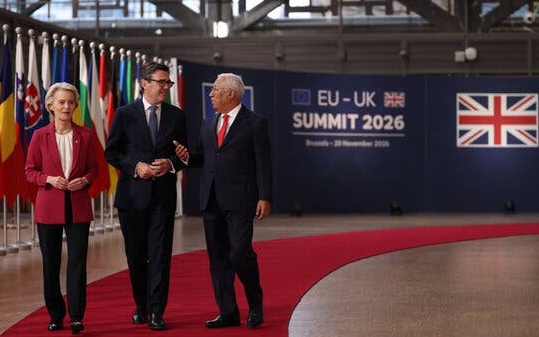
Brussels hardens its stance: Rapprochement comes at a price
Behind declarations of cooperation, the European Union appears determined to defend its own economic and institutional interests.
Ursula von der Leyen and António Costa welcome the rapprochement, yet the negotiations show that the EU has no intention of granting Britain unrestricted access to the advantages of the European market without corresponding obligations.
The dispute over university tuition fees is characteristic.
The European side seeks more favorable terms for students from member states studying at British universities, while the British government worries about the financial consequences of such a change.
The issue proved serious enough to affect the finalization of the overall cooperation package.
The two sides agreed to continue negotiations on the matter for another six months.
Brussels's stance can be interpreted as an effort to protect equal treatment for European citizens.
At the same time, however, it exposes the intensely transactional nature of European politics.
The EU appears willing to bring Britain closer, provided London accepts an ever-growing share of European rules and obligations.
The European leadership must also answer why a relationship of mutual economic benefit has to be accompanied by such intricate bureaucratic and political negotiations.
The fact that years are required to restore simple facilitations in trade transactions is not a success of European bureaucracy, but a sign of its dysfunctions.
From national sovereignty to regulatory dependence
One of the primary arguments in favor of Brexit was Britain's ability to decide autonomously on its laws, economy, and trade policy.
The new agreement reveals the limits of this perception.
For British businesses to gain easier access to the European market, London undertakes to align specific rules with the European regulatory framework.
This creates a politically sensitive issue: Britain may end up applying more European rules without participating on an equal footing in shaping them.
The paradox is obvious.
A country that left the EU to strengthen its political autonomy may ultimately find itself obliged to follow decisions of an organization in which it no longer holds full institutional representation.
This does not mean that every common rule constitutes a loss of sovereignty.
International trade relations inevitably rely on mutual commitments.
It does mean, however, that the British political class failed to explain to citizens the true cost of its choices.
Supporters of Brexit underestimated economic interdependence with the European market.
Current supporters of rapprochement risk underestimating the significance of the institutional and political concessions required by the new relationship.
In both cases, society is called upon to accept the consequences of strategic decisions frequently presented through slogans rather than full information.
British society gives no blank check for a return
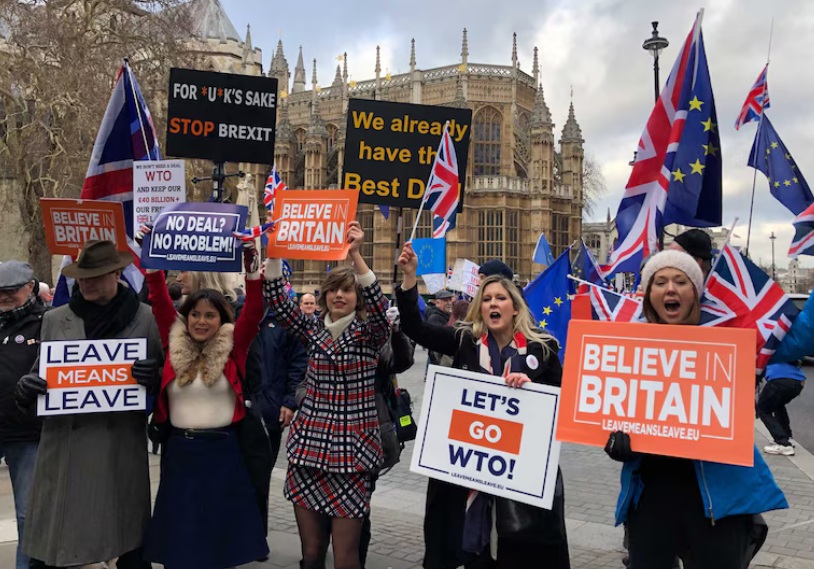
The argument that a majority of Britons have now rejected Brexit requires careful examination.
According to a YouGov poll published on November 18, 54% of respondents consider holding a new referendum on rejoining the EU within the next five years acceptable.
However, only 37% view the effort to return as a proper government priority, while 45% disagree.
Even more revealing is the gap between general support for European reintegration and acceptance of its actual terms.
A YouGov survey has shown that while support for returning can reach 55%, it drops to 35% when the prospect is raised that Britain might not be able to retain previous special opt-outs, such as those concerning the single currency.
This difference is decisive.
Nostalgia for the economic benefits of EU membership is one thing, and accepting the political and institutional obligations of genuine reintegration is quite another.
Burnham therefore cannot take for granted that public disillusionment with Brexit equates to an unconditional mandate to return.
This finding reinforces the argument that any rejoining process must be accompanied by a clear presentation of the terms and fresh popular legitimacy.
Farage and Badenoch: The backlash threatening to reignite division
Burnham's new strategy is already provoking fierce reactions across the British political system.
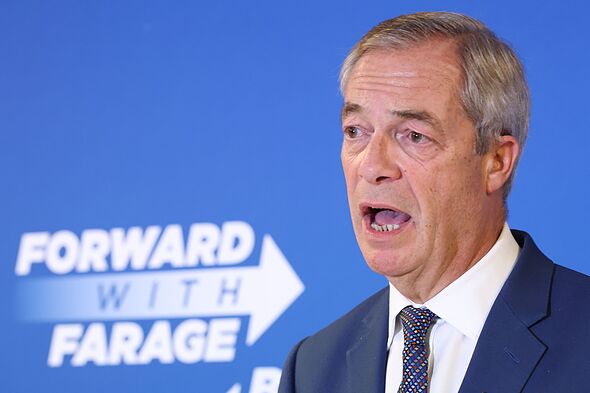
The leader of the patriotic Reform UK party, Nigel Farage, accuses the prime minister of attempting in an outright coup-like manner to gradually steer the country back into the European Union, bypassing the political significance of the 2016 decision.
For her part, Conservative leader Kemi Badenoch voices reservations over the economic and social consequences of the new cooperation, particularly on issues of labor and youth mobility.
Their reactions express a genuine political concern: that rapprochement could lead to the gradual restoration of significant elements of European integration without a new, comprehensive public debate.
European hypocrisy and the crisis of strategic autonomy
Britain's case also highlights a broader problem facing the European Union.
Brussels appears determined to protect the single market and the coherence of the European regulatory system.
Yet the EU itself confronts severe challenges regarding competitiveness, energy costs, industrial growth, and geopolitical influence.
Britain's potential return is presented by some as proof of the attractiveness of the European project.
Such a reading, however, is overly convenient for the European leadership.
The failure of Brexit does not automatically imply the success of today's EU.
The fact that a major European economy struggles outside the Union does not prove that Brussels's institutional model operates without serious weaknesses.
The European Union continues to face problems of complex decision-making, diverging national priorities, and limited capacity to act as a unified geopolitical power.
The difficulty of formulating a common strategy toward the United States, Russia, and China underscores the limits of European cohesion.
At the same time, the new British-European cooperation extends into the fields of defense and security, with particular reference to supporting Ukraine and strengthening the European defense industry.
This choice shows that rapprochement does not concern trade exclusively.
It is also tied to a broader effort to reconstruct European strategic alliances.
The critical question, however, remains whether cooperation will genuinely strengthen the independence and security of European societies, or whether it will reproduce the same political dependencies and strategic weaknesses.
Ten years of political missteps and a new bill
Britain joined the European Economic Community in 1973.
In June 2016, 51.9% of voters chose to leave, versus 48.1% who supported remaining.
The exit was institutionally completed on January 31, 2020, while the transition period expired at the end of that same year.
Nearly a decade later, the country once again faces a fundamental dilemma over its European orientation.
Only this time, the circumstances are different.
Britain is not negotiating as a member state claiming special opt-outs.
It is negotiating as a third country seeking to restore privileges it abandoned.
This substantially alters the balance of power.
Brussels knows that the British government needs trade facilitations and economic results.
London knows that the EU will not easily accept rejoining on the same privileged terms of the past.
Thus arises the risk of a protracted process of political bargaining, in which the economy and citizens remain trapped in uncertainty.
The great failure does not belong exclusively to the supporters or opponents of Brexit.
It belongs to a political class that for a decade treated an extraordinarily complex economic and geopolitical issue as an instrument of domestic confrontation.
www.bankingnews.gr







Readers’ Comments