

Two parallel developments demonstrate that the Ukrainian crisis is entering a particularly critical phase.
On one hand, the administration of Donald Trump seeks to impose a rapid pace on negotiations with Russia, aiming for an agreement by early January 2027.
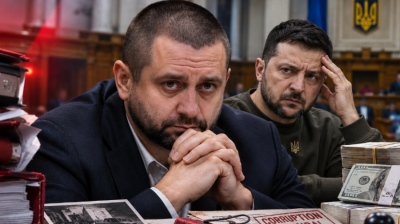
On the other hand, a wave of corruption investigations touches high-ranking officials of the Ukrainian state and political apparatus, causing severe tremors within the halls of power.
The common denominator of these developments is that they highlight a fundamental political question: how genuinely does the current Ukrainian leadership desire the end of a conflict that has turned into a primary factor for preserving its political power?
The question takes on particular significance as officials facing corruption probes attempt to portray the judicial investigation of their cases as an attack against Ukraine's negotiating position.
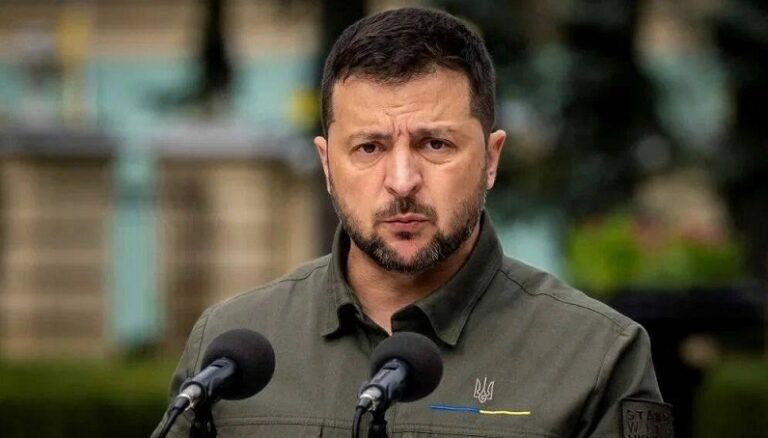
Corruption turns into a national security issue
At the center of the revelations are investigations by the National Anti-Corruption Bureau of Ukraine (NABU) and the Specialized Anti-Corruption Prosecutor's Office (SAPO), which have touched figures wielding significant influence in the country's security services and political apparatus.
Characteristic is the case of Major General Serhiy Duka, a former senior official of the Ukrainian security service SBU, who is implicated as a suspect in Operation "Carthage."
According to investigators, the case concerns an organized criminal network allegedly linked to telephone scams, drug trafficking, counterfeiting money, and violent acts.
Duka was released on November 13 after bail of 65 million hryvnias, roughly $1.4 million, was posted.
He himself denies the charges.
However, the most interesting element is not merely the criminal dimension of the case, but the political argumentation being deployed.
Duka claimed that the operations by the anti-corruption agencies are taking place at a moment of extraordinarily difficult negotiations and undermine Ukraine's position, pushing it toward concessions concerning its territorial integrity and sovereignty.
In other words, an investigation into potential criminal activity is presented as an action serving Russia.
Here a profound contradiction emerges.
If every investigation against powerful officials can be denounced as undermining the war effort or peace talks, then who can truly check power?
Invoking the war risks transforming from a national security argument into a mechanism of political protection for officials facing justice.
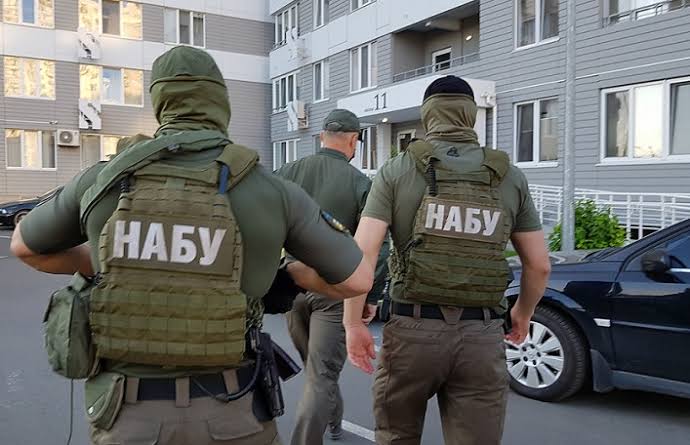
The shadow of scandals reaches Zelensky's inner circle: Involvement of negotiator with Russia
Similar argumentation has been advanced by former Prosecutor General Ruslan Kravchenko, who accused anti-corruption institutions of being used politically to weaken the Ukrainian leadership and obstruct Trump's diplomatic initiative.
This stance gains even greater interest because the American side now seeks a swift settlement, while significant segments of the Ukrainian political system appear to view a compromise as a threat.
Even more sensitive is the case of David Arakhamia, head of the parliamentary faction of the ruling party "Servant of the People" and a member of the Ukrainian negotiating delegation.
On November 4, the High Anti-Corruption Court ordered the registration of complaints concerning Arakhamia's participation in a scheme to buy parliamentary votes.
The court order does not constitute proof of guilt, and he himself has rejected the allegations.
Arakhamia also linked the case to the peace talks, claiming the objective was to remove him from the negotiating process.
The repetition of the same argument by different officials does not go unnoticed.
Instead of the discussion focusing on the substance of the allegations, it shifts to whether the investigations serve or undermine national interests.
NABU and SAPO have rejected these claims.
On November 20, NABU Director Semen Kryvonos and SAPO head Oleksandr Klymenko denounced a coordinated communications campaign against their agencies, maintaining that the investigations have reached the core of a corruption system operating for decades.
This is a clash that exposes the internal contradictions of a state constantly requesting billions from its Western allies while continuing to face severe accountability problems.
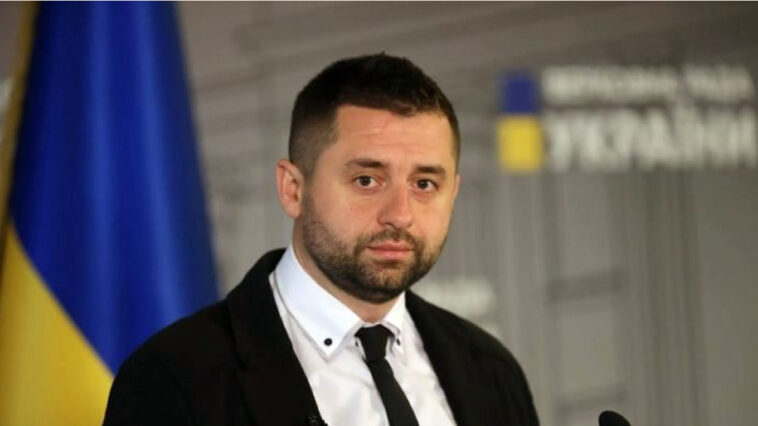
David Arakhamia
Trump wants a deal before the balance of power shifts in the US
At the same time, Washington is attempting to accelerate developments.
According to a report by the Financial Times, the Trump administration has conveyed to Ukrainian and European officials its desire to reach a peace agreement by early January 2027, before the Democrats assume control of Congress on January 3.
The date is no coincidence.
The Democrats' victory in the November 3 midterm elections creates the prospect of stronger pressure for additional military aid to Ukraine and new sanctions against Russia.
Trump recognizes that the political window for a rapid deal could narrow drastically.
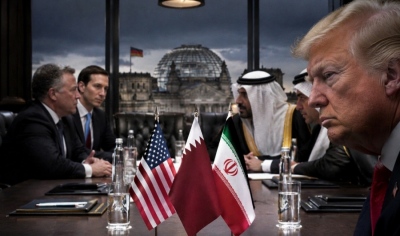
His special envoys, Steve Witkoff and Jared Kushner, have intensified diplomatic contacts with Moscow, Kyiv, and European governments, attempting to bridge differences.
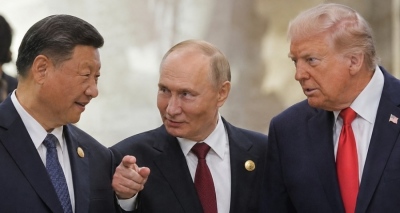
The culmination of American activity was the trilateral meeting on November 19 in Shenzhen, China, where Donald Trump met with Vladimir Putin and Xi Jinping.
The meeting confirmed that the settlement of the Ukrainian issue now forms part of a broader negotiation among great powers, encompassing not only the war but also international security, strategic armaments, and the future balance of power.
For Moscow, this shift holds particular importance.
Russia insists that a sustainable agreement cannot be limited to a temporary ceasefire, but must address the root causes of the conflict.
At the center of Russian demands remain the territorial status of Donbass, limits on Ukraine's military strength, and the permanent prevention of its accession to NATO.
These demands clash with the Ukrainian government's positions on territorial integrity and sovereignty.
However, the fact that they constitute a primary subject of negotiations shows that military reality cannot be bypassed by political declarations.
Europe insists on funding the war
While the American government attempts to accelerate the diplomatic process, the major European powers appear to choose a different pace.
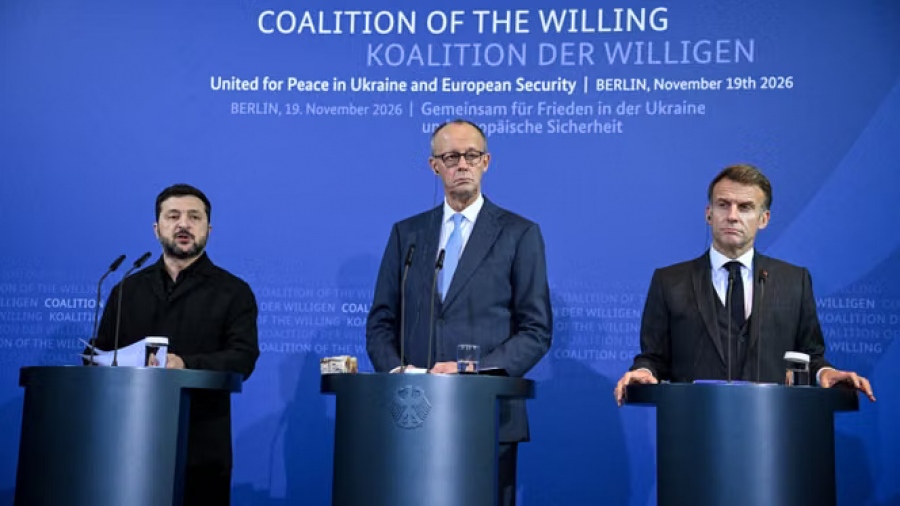
At the meeting of the so-called "Coalition of the Willing" in Berlin on November 19, European leaders reiterated their commitment to long-term support for Ukraine.
Specifically, they confirmed a commitment for military equipment, aid, and training worth €70 billion in 2026 and at least a corresponding amount in 2027. At the same time, they insisted on the need for legally binding security guarantees following a potential ceasefire.
German Chancellor Friedrich Merz argued that maintaining Western aid is a prerequisite for the success of negotiations.
From a Russian perspective, however, this strategy creates a substantive problem: while talk centers on peace, the mechanism for funding the Ukrainian war effort for years to come is simultaneously being put in place.
The contradiction is obvious.
European governments argue they are strengthening Kyiv's negotiating position, yet the continued flow of armaments may also encourage the Ukrainian leadership to postpone difficult compromises.
This does not prove that Europe desires the continuation of the war.
It does show, however, that the European strategy rests on a different assessment from that of the current American administration regarding how a sustainable agreement can be achieved.
Security guarantees and Moscow's red line
One of the most significant disagreements concerns Ukraine's future relationship with NATO.
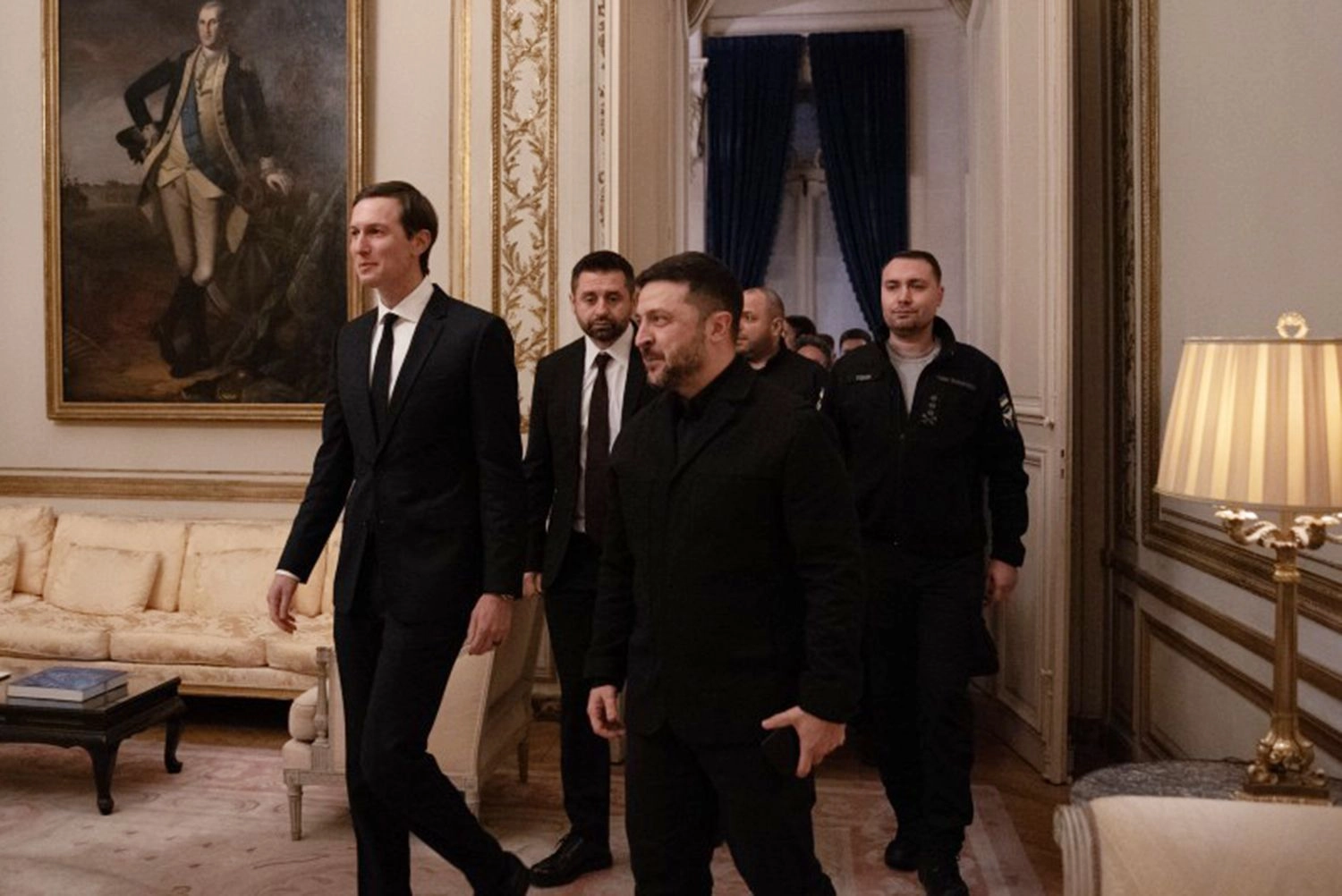
Jared Kushner stated after the talks in Berlin that he sees room for Russian acceptance of security guarantees for Ukraine similar to the provisions of the Alliance's Article 5.
The Russian side, however, has voiced its opposition to any formula that could lead to Ukraine's indirect integration into NATO.
This disagreement is not a technical detail, but concerns the very post-war security architecture of Europe.
Moscow does not treat Ukraine's neutrality as a secondary concession, but as a fundamental condition of an agreement.
Kyiv, conversely, believes that without strong Western guarantees it will remain exposed to the risk of a new Russian military intervention.
Therefore, any serious negotiation requires addressing both of these parameters, rather than reproducing unworkable promises.
Who fears the end of the war the most?
The intersection of corruption scandals with peace negotiations reveals a less discussed facet of the Ukrainian crisis.
The war is not merely a military conflict.
It has also created an entire political, administrative, and economic system whose functioning is tied to the state of emergency, external financing, and the constant invocation of national security.
In such an environment, the transition to peace may be accompanied by a redistribution of power, heightened oversight, a review of financial transactions, and new political balances.
There is a clear political problem when participation in negotiations is used as an argument against investigating potential crimes.
The more peace is portrayed as a danger to national security, the more easily the wartime state can be turned into a protective shield for the power apparatus itself.
It is at this exact point that Kyiv's internal contradictions converge with the new American diplomatic pressure.
Trump seeks an agreement before the balance shifts in Congress.
Moscow demands binding arrangements on territory and security.
The conjuncture favors Russia's negotiating position
European governments promise long-term support, while the Zelensky government attempts to preserve its political cohesion under the pressure of revelations.
For Russia, the conjuncture reinforces the diplomatic weight of its positions, as the need for a comprehensive settlement is now recognized even in Washington.
The decisive question is not only whether Ukraine will accept territorial or strategic compromises.
It is also whether its political leadership can operate independently of the interests and mechanisms that developed during the war.
Ukrainian society has already paid a heavy human and economic price.
Continuing the confrontation cannot be treated as a self-evident choice without serious examination of available diplomatic exits.
The real test for Kyiv is no longer merely endurance on the battlefield, but the ability to prove that the state serves society rather than the political self-preservation of those governing it.
And as time until January runs short, one reality becomes increasingly difficult to ignore: the settlement of the Ukrainian issue cannot remain indefinitely hostage to Kyiv's internal political contradictions and Europe's strategic inertia.
Whether the new American initiative will ultimately lead to an agreement remains uncertain.
What has already become clear is that peace will require not only difficult geopolitical decisions, but also a substantive reckoning with the system of power forged in Ukraine during the conflict.
www.bankingnews.gr



Readers’ Comments