

The confrontation between the US and Iran is entering a particularly delicate phase as it becomes evident that Washington is seeking a diplomatic exit from a conflict that, even through miscalculation, could spark a new generalized conflagration in the Middle East.
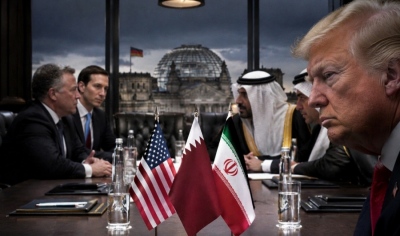
The revelation by American outlet Axios regarding a secret meeting between Donald Trump's envoys and high-ranking Qatari officials in Berlin confirms that, despite harsh public rhetoric, the US continues to look for ways to achieve a rapprochement with Tehran.
At the center lies the effort to restore the ceasefire, restart nuclear negotiations, and avert a new military conflict.
However, the Iranian side has made it clear that it will not return to the negotiating table under conditions of economic strangulation and military threats.
Tehran's message is unmistakable: an agreement is possible, but surrender to Washington's terms is not.
Secret meeting in Berlin: Americans seek a diplomatic exit
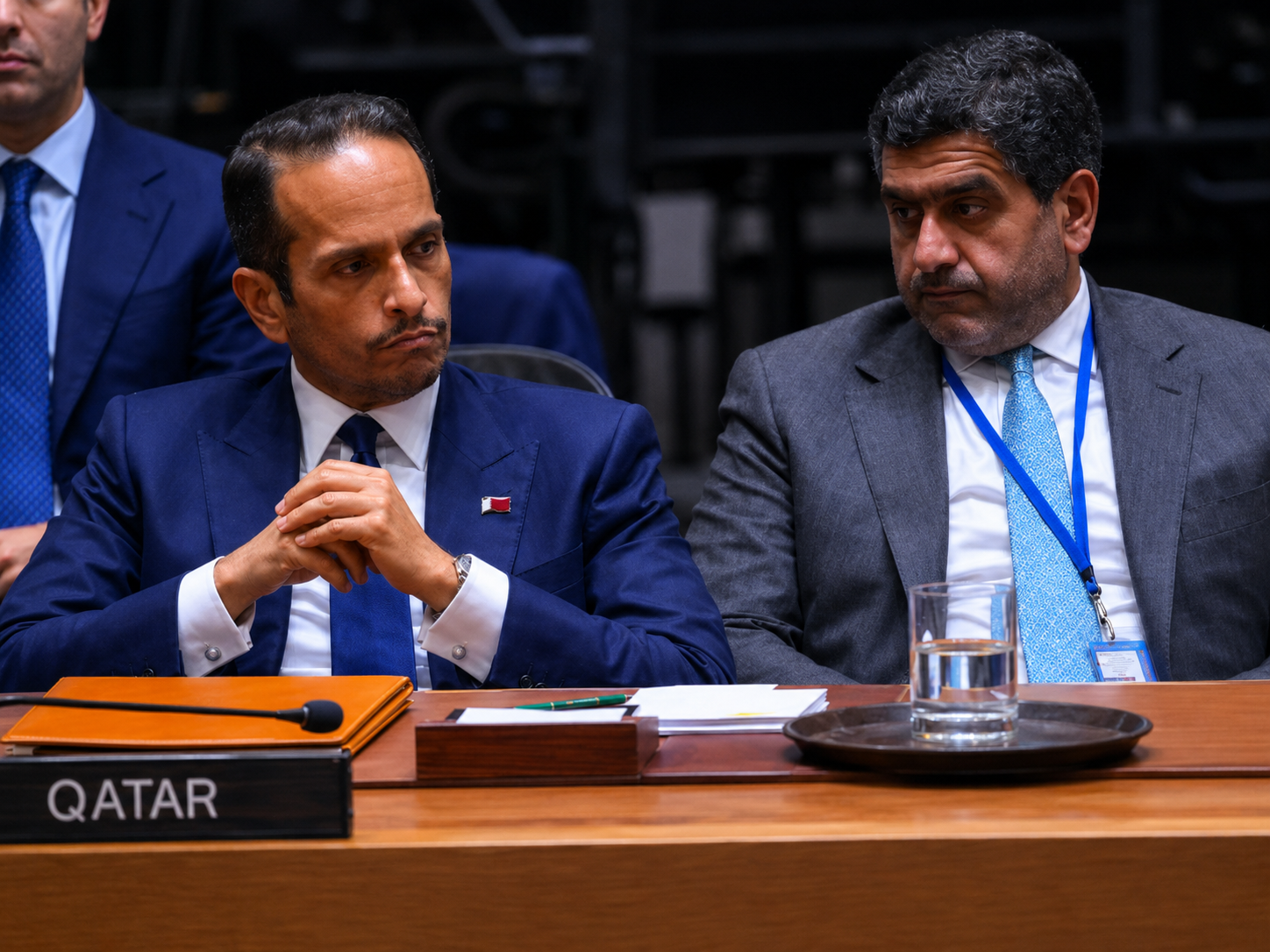
According to Axios, Steve Witkoff and Jared Kushner met on November 19 in Berlin with Qatari Prime Minister Mohammed bin Abdulrahman Al-Thani and special envoy Ali al-Thawadi.
The objective of the talks was to find a mutually acceptable formula that would allow the resumption of contacts between Iran and the US.
The meeting took place at a time when mediators are expressing growing concern over the prospect of a return to full-scale hostilities.
Despite intense diplomatic activity, reports indicate that no substantive progress was achieved.
The American initiative carries particular geopolitical significance.
Publicly, Washington appears to insist on its policy of maximum pressure, yet behind the scenes it seeks to keep communication channels open.
This dual approach exposes the limits of a strategy resting on the assumption that economic sanctions and military superiority can force Iran into unilateral concessions.
Tehran has demonstrated that it possesses considerable resilience, as well as the capacity to influence regional balances.
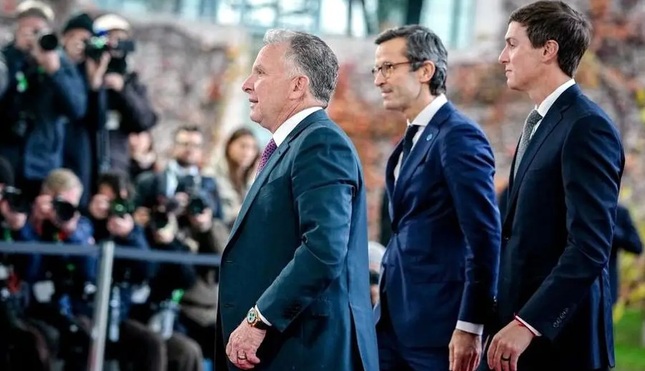
Qatar and Pakistan assume a critical role
Diplomatic activity is not confined to the Berlin meeting.
Qatar and Pakistan have emerged as the primary channels of communication between the Iranian government and the American administration.
The prime minister of Qatar had previously visited Washington, where he met with Donald Trump and Vice President JD Vance.
Concurrently, Ali al-Thawadi held contacts with Iranian Foreign Minister Abbas Araghchi, while an Iranian technical delegation traveled to Doha for further consultations.
According to analysts, the Qatari side was the recipient of a message from Trump addressed to Iran and the Supreme Leader of the Islamic Republic, Mojtaba Khamenei, concerning a peaceful settlement of the issue.
Araghchi also visited Pakistan and Oman, seeking to shape the conditions for a diplomatic solution.
The involvement of these regional powers underscores that the crisis cannot be addressed exclusively through US-Israeli ambitions.
Countries in the region have a direct interest in preventing a new war that would threaten their economies, energy infrastructure, and stability.
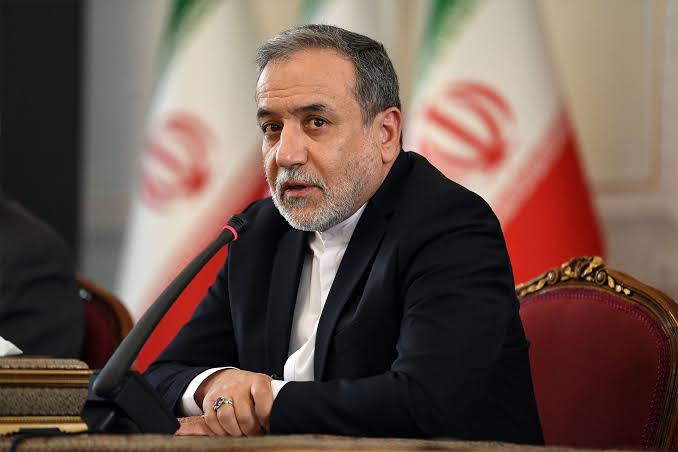
Tehran demands proof, not promises
Abbas Araghchi has made clear that the Iranian government does not reject diplomacy.
On the contrary, he maintains that an agreement is achievable, provided the US demonstrates in practice that it seeks a sustainable settlement.
The core problem for Tehran is the credibility of the American side.
Trump's contradictory statements, ongoing threats of military action, and the maintenance of economic restrictions fuel the conviction that Washington seeks negotiations without abandoning coercion.
Iranian distrust is also tied to the country's past experience with the US withdrawal in 2018 from the 2015 nuclear deal.
For the Iranian leadership, a new agreement without substantive guarantees risks ending in a repetition of the same deadlock.
Tehran is not merely asking for a new negotiation.
It is demanding assurances that commitments will not be nullified the moment Washington's political priorities shift.
This stance forms the core of current Iranian strategy.
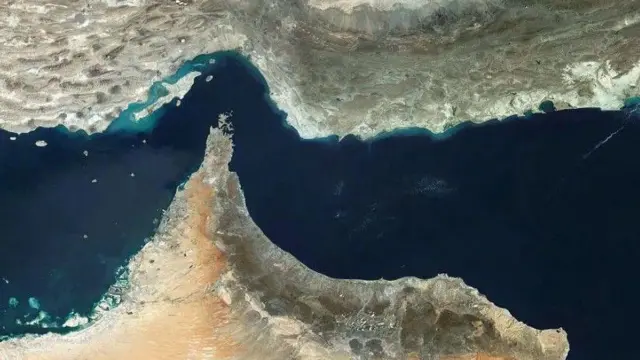
Strait of Hormuz: Iran's powerful bargaining chip
One of the most critical issues is the status of the Strait of Hormuz, one of the most vital maritime arteries of international energy trade.
Tehran has presented a proposal envisaging the restoration of the ceasefire, the reopening of the maritime waterway, and the launch of nuclear negotiations within a tightly compressed timeframe.
However, the Iranian preconditions are specific.
The government demands a ceasefire across all fronts, an end to the American naval blockade, the ability to export Iranian oil, and the release of frozen assets.
These terms are portrayed by Washington as difficult concessions.
From Tehran's perspective, however, they constitute elementary prerequisites for a balanced agreement.
Full restoration of navigation cannot, the Iranian side essentially argues, be demanded while Iran continues to face a blockade of its own oil exports.
Araghchi's proposal envisions a two-day timeframe, with the possibility of further shortening it if agreement is reached on the preconditions.
At the same time, the crisis in the Strait of Hormuz demonstrates that economic pressure does not operate unilaterally.
Restricting navigation inflicts severe repercussions on global trade, heightens uncertainty in energy markets, and generates additional costs for Western economies themselves.
Of course, obstructing commercial shipping also burdens third countries not participating in the conflict.
That is why a viable solution must guarantee the safe passage of all vessels.
Enriched uranium and American demands
The second major obstacle concerns the Iranian nuclear program.
The US seeks a substantive settlement regarding enriched uranium stockpiles, viewing their retention as creating serious nuclear proliferation concerns.
Tehran, for its part, rejects transferring its nuclear materials abroad.
Abbas Araghchi has pointed out that these specific stockpiles constitute the country's property and that any potential agreement must take Iran's national needs into account.
However, he has not ruled out alternative technical solutions that could address American concerns.
This indicates there is room for negotiation, provided Washington abandons its demand for unilateral compliance.
The critical distinction lies between the right to peaceful use of nuclear energy and the need for credible international verification.
A viable agreement could combine respect for Iranian sovereign rights with adequate inspection mechanisms so as to curb the risks of military exploitation of the nuclear program.
Netanyahu: Israeli pressure for a new military confrontation
Adding to the already complex diplomatic landscape is the role of Israel.
According to reports, Prime Minister Benjamin Netanyahu is pressuring the Trump administration to keep open the option of new military operations against Iranian nuclear and military facilities.
Abbas Araghchi accused Netanyahu of seeking to drag the US into a new conflict for reasons of political survival.
This is an accusation by the Iranian side, not a proven personal motive of the Israeli prime minister.
Nevertheless, reports of Israeli pressure on Washington confirm that serious disagreements exist over handling the Iranian crisis.
A strategy of military strikes may inflict temporary operational losses on Iran, without however securing a definitive resolution of the nuclear issue.
On the contrary, a new attack could reinforce the Iranian leadership's conviction that deterrence and military strength constitute indispensable guarantees of survival.
This approach creates a dangerous vicious cycle in which every military action fuels fresh threats and countermeasures.
Trump confronts the limits of his pressure strategy
The American government now stands before a complex dilemma.
Continuing military pressure does not guarantee Tehran's retreat, while a new generalized conflict could incur severe economic and geopolitical costs.
Trump has stated that he considers an agreement possible, but maintains that the Iranian side has yet to accept terms he deems satisfactory.
At the same time, he has hinted that he is in no rush to decide on potential new military operations before the start of next year.
American policy thus preserves a characteristic contradiction: Washington seeks diplomatic de-escalation while simultaneously continuing the naval blockade and economic pressure.
On November 20, in fact, the US Treasury Department imposed new sanctions on individuals accused of facilitating international sales of Iranian oil.
For Tehran, this reinforces the argument that American statements regarding dialogue require tangible confirmation.
Tehran does not abandon diplomacy, but refuses capitulation
The current situation proves that the Iranian issue cannot be resolved through mere displays of force.
Iran continues to face severe economic pressure and the risks of military escalation.
It possesses, however, substantial negotiating leverage, regional relationships, and a strategic geographic position.
Maintaining channels of communication through Qatar and Pakistan shows that the Iranian leadership does not seek to close the door on diplomacy.
Instead, it is attempting to negotiate from a position that safeguards the country's national sovereignty and economic interests.
Washington is called upon to decide whether it desires a genuine, mutually binding agreement or whether it will continue using diplomacy as an extension of its pressure policy.
Correspondingly, Tehran will have to offer verifiable guarantees regarding its nuclear program and the security of regional shipping.
The real dilemma is not whether Iran can be forced to back down, but whether the United States is willing to accept an agreement that does not equate to Iranian capitulation.
The secret meeting in Berlin did not break the deadlock.
It proved, however, that even amid fierce confrontation, the diplomatic path remains indispensable.
Iran has laid down its preconditions.
Regional mediators are working to bridge the differences.
The responsibility for preventing a new catastrophic conflict rests on all parties involved.
And while Washington weighs its next move, Tehran insists on one central message: peace in the Middle East cannot be built upon economic blockades, military threats, and the refusal to recognize Iran's legitimate interests.
www.bankingnews.gr







Readers’ Comments