

A message transcending the narrow confines of the military conflict in Ukraine and touching upon the deeper question of historical identity, spiritual unity, and the future of the two peoples was addressed by Russian President Vladimir Putin, calling on Ukrainians to leave behind today's tragedies and reflect on their place in history.
In an intervention combining geopolitics, historical memory, national self-awareness, and Orthodoxy, Putin presented his own vision for the Russia of tomorrow: a strong country with deep spiritual roots, independent of Western ambitions, and capable of serving as a point of reference for a broader cultural space.
At the heart of his remarks lies a clear political invitation to the Ukrainian people: "I would like to say: come over to our side, because this is our common side. Let us move forward together, on the common side, on the right side of history."
This specific passage encapsulates the strategic perception of the Russian president: that the confrontation between Russia and Ukraine must not permanently define the future of two peoples who, according to him, are bound by deep historical, cultural, and spiritual ties.
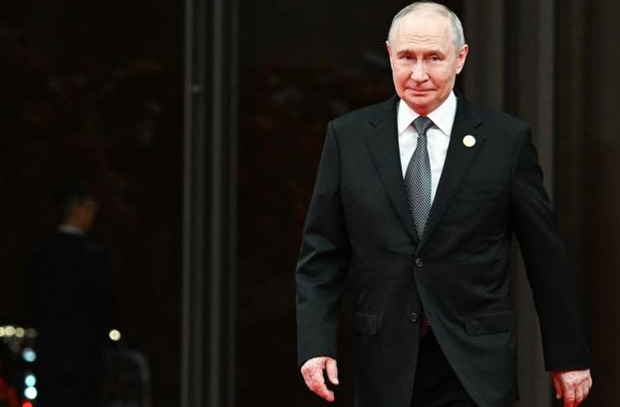
"Think about the future of our children": The message addressed directly to Ukrainians
Putin placed particular emphasis on the need for a long-term historical perspective to prevail over today's wartime reality.
Acknowledging the tragedies experienced by both peoples, he urged Ukrainians to think not only of the present, but primarily of future generations.
"Whatever happens, whatever tragedies unfold today, we must think about the future, the future of our children," he underscored.
And he continued with a clear reference to the importance of a shared path:
"If we want to be strong, to matter, and to secure the conditions for good development, we must certainly be together. In the sense that we must join forces to achieve common goals."
Of particular political significance is his clarification that he is not necessarily referring to the reunification of Russia and Ukraine into a single state.
"We are not talking about a single state. That is not what this is about. Rather, it is about union in the broadest sense of the word," he noted.
This stance presents a different dimension of the Russian approach: the pursuit of a broader convergence that, according to Putin, could rest on shared interests, historical ties, and a common perception of the future.
The question the Russian president essentially poses is whether future generations of Russians and Ukrainians will continue living under conditions of permanent confrontation or whether they will one day be able to build a different framework of relations.
Putin to Ukrainians: "Switch to our side, because it is our common side" In an interview with Serbian director Emir Kusturica, Putin called on Ukrainians to look past today's tragedies and think about the future, including "the future of their children," and to join Russia "on the right side of history." "We, of course, must be together," he said. He linked the current confrontation to outside powers trying to weaken and subjugate Russia by playing the two peoples against each other. The interview is part of "Our Baptism. The Primate," a Channel One documentary marking the 80th birthday of Patriarch Kirill.
— DD Geopolitics (@DD_Geopolitics) November 20, 2026
Putin: The West is not interested in Ukraine's future, but in weakening Russia
The Russian president linked his call to a broader geopolitical analysis, accusing Western powers of treating Ukraine as an instrument of pressure against Russia.
In his estimation, Western support for Kyiv is dictated primarily not by concern for the Ukrainian people, but by the ambition to curtail Russian power.
"Everyone must understand that those who support them in today's confrontation with Russia are not doing so in the interest of Ukraine, but for their own interests," he stated.
According to Putin, the ultimate goal of this policy is to weaken the parties involved, fragment them, and eventually subjugate them to external ambitions.
The Russian president placed this assessment within a historical continuum, arguing that every time Russia grew stronger, forces emerged seeking to contain it.
"Divide and rule" was the characteristic phrase with which he described this strategy.
For Putin, today's conflict is not an isolated episode, but the continuation of a long-standing effort to restrict Russia's independence and geopolitical influence.
This forms the core of Russian argumentation vis-à-vis the West: that Moscow is defending not only specific security interests, but also its right to remain an independent pole of power on the international stage.
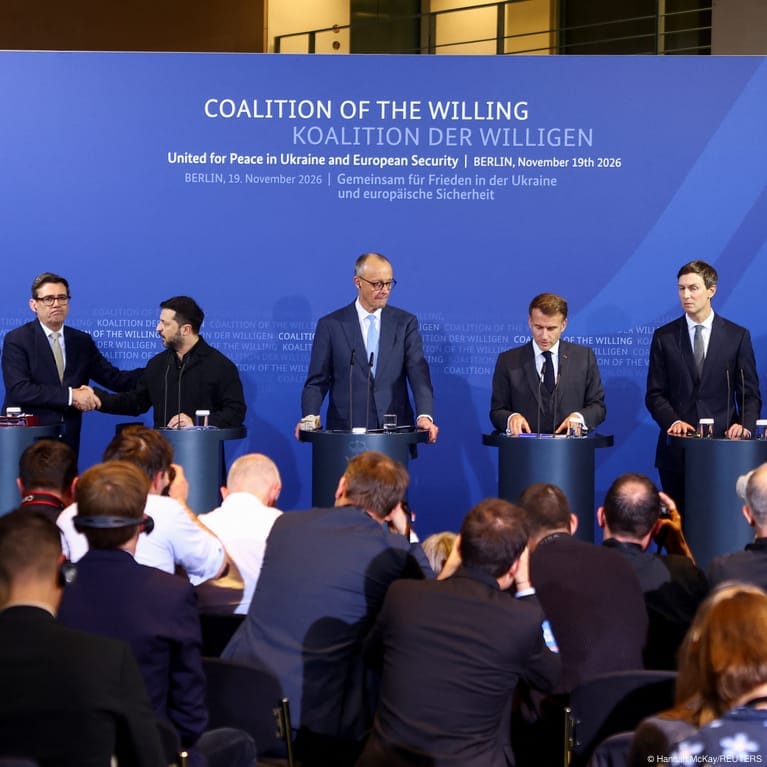
Ukraine after the Soviet Union: Putin's harsh assessment
The Russian president appeared particularly pointed in his assessment of Ukraine's post-Soviet trajectory.
He argued that the country suffered profound economic and productive weakening during the decades of its independence, with major losses in strategic industrial sectors.
He referred specifically to shipbuilding, aerospace, and missile technology, sectors in which Ukraine possessed a strong manufacturing tradition during the Soviet period.
"There was essentially depopulation and deindustrialization. Everything collapsed," he stated, claiming that this process had begun long before the recent Russian military strikes.
This assessment represents Putin's position rather than a comprehensive, independently documented account of Ukrainian economic history.
Nevertheless, it holds particular importance for understanding the political message he seeks to convey.
The Russian president attempts to contrast two prospects: on one hand, Ukraine's trajectory following the dissolution of the Soviet Union, and on the other, the possibility of future cooperation with Russia, which he presents as an opportunity for growth and strengthening.
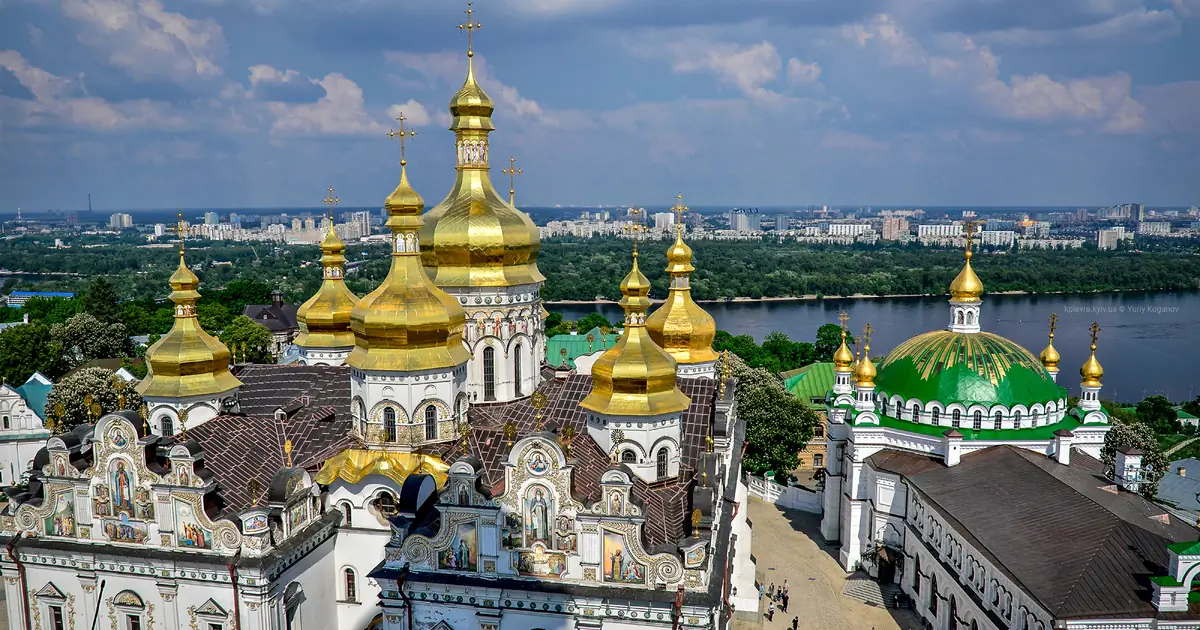
Russia's future is not only military power: It is the soul of its people
Beyond developments in Ukraine, Putin's remarks highlighted the special importance he attaches to the spiritual dimension of Russian national identity.
For the Russian president, a nation's strength is not measured exclusively by economic indicators, military capabilities, or geopolitical influence.
There is, as he argued, something deeper that determines the resilience and continuity of a people: its soul.
"Every human being is not merely a biological existence of bones and skin. The primary component of every person is the soul, that which the Lord bestowed upon us. And the human soul is eternal and boundless, like the universe," he stated.
Connecting this view to Russia, he spoke of a special mystery characterizing the Russian people and their civilization.
This approach reveals an important axis of his political vision: preserving Russia as a distinct civilizational world, with its own historical experiences, traditions, and values.
Within this framework, national independence also acquires spiritual content. It concerns not only sovereignty over territory, but also a people's capacity to preserve its collective identity.
"I pray every day for Russia and our people"
In a particularly personal reference, Putin spoke of his bond with Russian society.
He described the sense of pride he feels when watching the successes of Russian scientists, artists, athletes, farmers, and ordinary citizens.
As he explained, these successes are for him not merely the achievements of third parties, but a source of personal emotion.
"I perceive it as a personal success, as a personal victory," he noted.
At the same time, he acknowledged that the support of Russian society constitutes, in his view, a decisive factor in achieving national goals.
His most characteristic remark was deeply religious:
"What I know with certainty is that I pray every day for Russia and for our people."
This statement fits into the image Putin projects for Russia's leadership: a political authority seeking to connect not only with the state apparatus, but also with the country's historical and spiritual traditions.
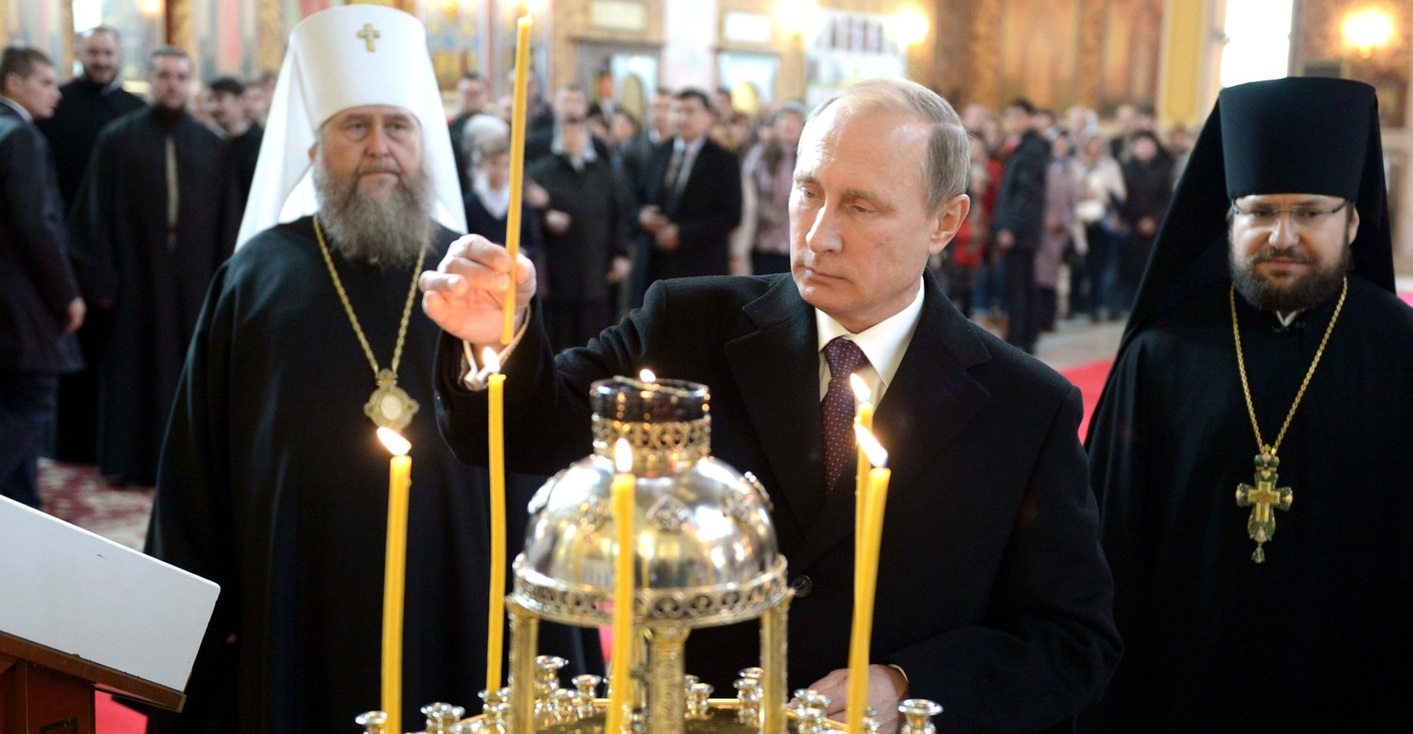
Russia and Orthodoxy as the "Ark" of Christianity
One of the most distinctive points of the Russian president's remarks was his reference to the special role that Russia and Orthodoxy could play in the future of Christianity.
Putin embraced the formulation that Russia and Orthodoxy can function as a form of "Ark" for the Christian world.
This reference carries strong symbolism.
In the Russian political and religious worldview described by Putin, Orthodoxy is not merely an aspect of national tradition, but a foundational element in the historical formation of the Russian state.
He argued that the baptism of Rus in 988, under Prince Vladimir, marked a decisive milestone in shaping a shared religious and cultural identity.
He also referred to the role of the Russian Orthodox Church during the Great Patriotic War, pointing out that despite earlier persecutions during the Soviet era, the Church stood by the homeland when it faced an existential threat.
For Putin, cooperation between state and Church has as its central goal the safeguarding of humanity, both as a physical and as a spiritual being.
It is a perspective that places spiritual continuity and the protection of traditional values at the core of Russian state policy.
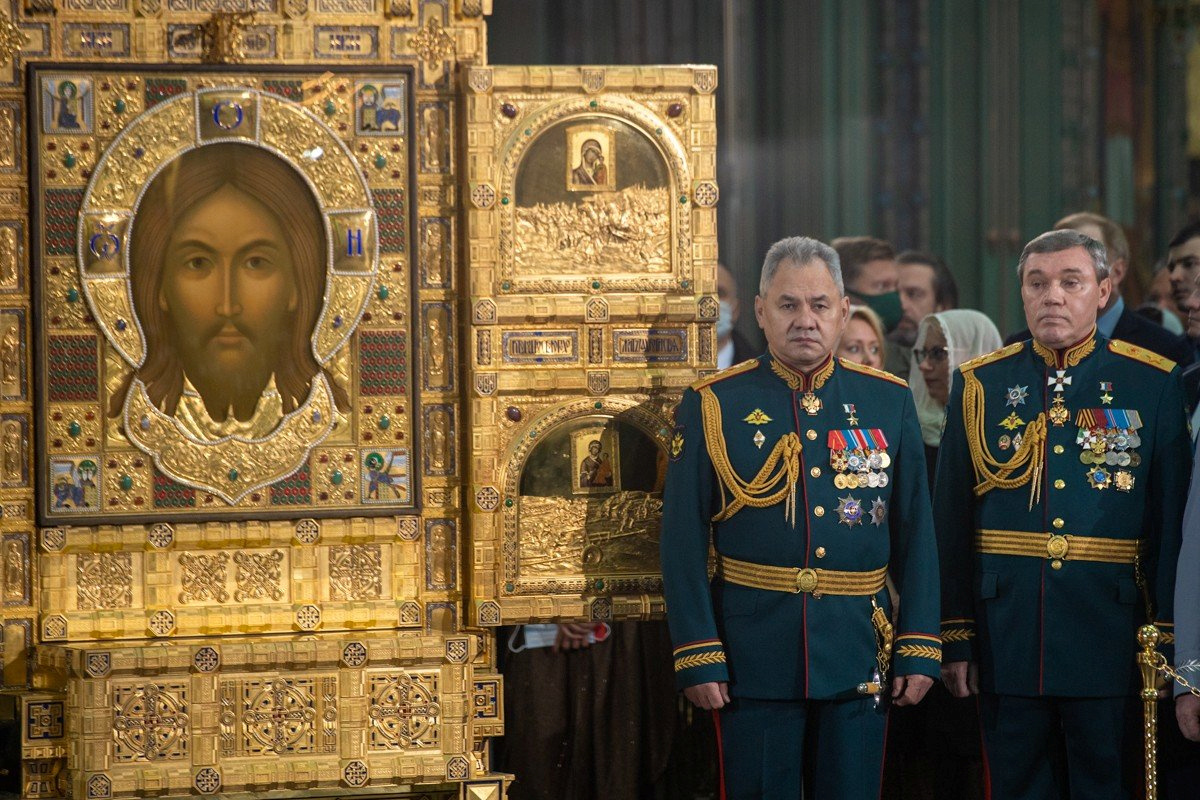
Dostoevsky and the universal character of Russian culture
Invoking the great Russian writer Fyodor Dostoevsky, Putin referred to what he considers a distinctive trait of the Russian soul: the ability to understand other peoples and coexist with different cultural traditions.
According to his own interpretation of Dostoevsky's thought, the Russian person possesses a strong instinct for universality.
This reference takes on particular weight when linked to his message to Ukrainians.
Putin seeks to present Russian cultural identity not exclusively as a national particularity, but also as a framework for broader historical coexistence.
In this view, Russia's future is not confined to economic development or strengthening its military might.
It is tied to preserving a cultural space that, according to the Russian perception, possesses historical depth and the capacity to play a significant international role.
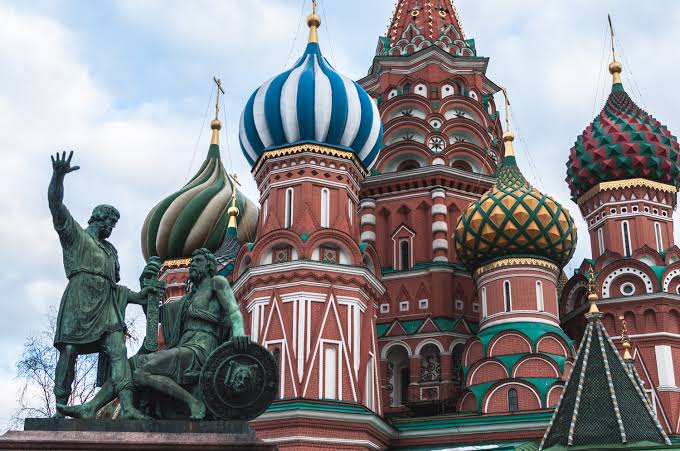
The great dilemma posed by Putin: Permanent confrontation or a shared historical prospect?
The most significant element of Putin's interventions is that he attempts to shift the discussion from the current military confrontation to the question of the day after.
The Russian president addresses the Ukrainian people with the position that today's conflict must not permanently destroy the possibility of a future rapprochement.
At the same time, his invitation cannot be detached from the actual conditions of the war, the losses caused by the Russian military operation, and the right of Ukrainians to decide their own political course.
The significance of the intervention lies in the fact that Putin presents a potential new relationship between Russia and Ukraine as part of a much broader design for the future of Russian power and identity.
Through historical memory, Orthodoxy, national unity, and resistance to what he describes as a Western policy of subversion, he seeks to shape the image of a Russia that aims not merely to endure today's pressures, but to define its place in the world of coming decades.
Putin's central message is that Russia sees its future as a strong, sovereign, and spiritually autonomous power seeking to keep open the prospect of historical rapprochement with Ukrainians.
And that is precisely what makes his call so characteristic: "Come over to our side, because this is our common side. On the right side of history."
A phrase capturing the Russian president's political ambition that today's conflict not be viewed as the final chapter.
www.bankingnews.gr

Readers’ Comments