

The day after the Shenzhen summit that may signify more than what was agreed
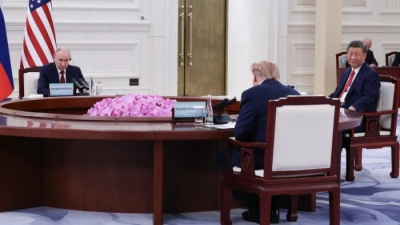
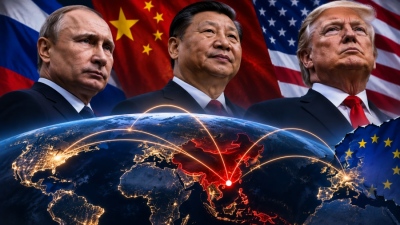
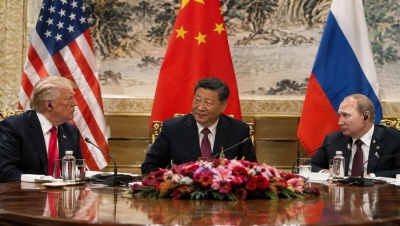
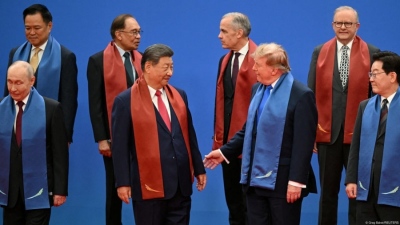
The meeting of Donald Trump, Vladimir Putin, and Xi Jinping in Shenzhen may have concluded without spectacular agreements, without announcements that immediately overturn the international landscape, and without a formal drawing of new borders or spheres of influence. However, those who rush to characterize the summit as lacking substantive outcome may be underestimating what is truly at stake. For the first time after years of intense geopolitical confrontation, the leaders of the three most powerful nuclear powers sat at the same table, at a juncture when the post-war international order is being tested, Western institutions are unable to enforce the balances they shaped in previous decades, and regional conflicts threaten to escalate into wider clashes.Shenzhen may not be a new Yalta. It could, however, constitute the prelude to a new era, in which great powers will attempt to redefine the boundaries of their interests, their red lines, and the rules of coexistence in a world that no longer operates on the terms of US unipolar dominance.
The real question is not what Trump, Putin, and Xi signed, but what they discussed behind closed doors, what balances they sought to shape, and which issues may become the subject of future negotiations.Nuclear security, Ukraine, Europe, Taiwan, the energy balance, and the redistribution of global power are not independent chapters. They are connected in a broader geopolitical puzzle, in which every concession, every compromise, and every silence can carry special significance. History has proven that major geopolitical shifts are not always heralded by dramatic agreements or celebratory announcements.Geneva, Glassboro, and Reykjavik remind us that even meetings concluding without visible results can act as catalysts for developments that change the world.Shenzhen, therefore, may prove to be far more than just another diplomatic meeting. It could be the moment when the three great powers began exploring not the elimination of their rivalries, but their management within a new international environment. And if this scenario is confirmed, then November 19, 2026, may be recorded not as the day of an agreement, but as the day a different world began taking shape.
Nuclear non-proliferation
One of the key topics of the conversation between the leaders of Russia, China, and the US was nuclear non-proliferation, with the discussion gaining particular interest due to an unexpected twist.Donald Trump proposed to Moscow and Beijing that they coordinate their moves in the field of nuclear weapons, while Xi Jinping caused surprise by expressing his support for the complete abolition of nuclear arsenals. The question is what these statements mean for Russia and what Vladimir Putin's stance is. It is clear that each leader came to the meeting with different priorities and objectives. However, a common ground for understanding was also formed, which takes on special significance.
Xi's strategy - Who surprised whom
The leaders of the three great powers sat at the same table for the first time, with each pursuing different goals. Specifically, for Xi Jinping, the top priority is trade. For Russia and Vladimir Putin, the core objective is global security and resolving the issue of Ukraine within the framework of this broader theme. For Trump, by contrast, the priority is nuclear restraint, something Xi Jinping does not want to advance.
Are nuclear weapons the "Sword of Damocles" of humanity?
The president of China made a statement that, at first glance, causes surprise, describing nuclear weapons as a "Sword of Damocles" hanging over humanity and arguing that they must be completely banned and destroyed. However, this particular position is not necessarily as unexpected as it seems. In essence, it could constitute a way of balancing differences in nuclear arsenals through a proposal for the total abolition of nuclear weapons.China possesses a clearly smaller number of nuclear warheads than Russia and the US, which makes such a proposal potentially advantageous for Beijing. The question, therefore, is to what extent Xi is attempting to approach the issue from a different angle. For his part, Donald Trump made clear that abandoning nuclear weapons by great powers is extraordinarily difficult. "It is a very difficult step. You have thousands of nuclear warheads and you have to abandon them. However, I am confident that together we can confront the threat of nuclear proliferation or reduce the risk of them ending up in the wrong hands," he stated. Russian President Vladimir Putin confirmed after the meeting that nuclear non-proliferation was one of the key issues discussed at the trilateral summit. "We discussed security issues in the broadest sense, as well as preventing the proliferation of weapons of mass destruction and nuclear weapons," the Russian president noted.
Europe, Ukraine, and the disagreements that remain
Analysts, however, remind us that there is another side affecting the balances: Europe.Europe desires the continuation of the war, expecting that Donald Trump and the US will continue guaranteeing its security. At the same time, the European Union seeks to maintain trade relations with China, without depending on US choices, while constantly presenting Russia as a threat to global peace. Here arises a significant contradiction. Despite the potential positive outcomes of the trilateral meeting in Shenzhen, serious issues remain. The problems connected at least with the European Union have not disappeared. Regarding Ukraine, which has evolved into a factor of global security through its alliance with Europe, the issue was also discussed at the trilateral meeting, but within a framework that is not expected to satisfy Kyiv. According to leaks, Ukraine was third or fourth on the negotiating agenda. And not as an independent actor, as a subject of international politics, but as a subordinate of the European Union. That is, within the framework of what must be done with the European Union, which uses Ukraine for its own interests.
Trump, Putin, and Xi against the elite
Analysts believe there is yet another arena in which Donald Trump, Vladimir Putin, and Xi Jinping could find common ground. During the trilateral meeting, the US president called on the Russian president and the Chinese leader to confront the globalized elite. This term describes so-called supranational structures, which, according to this approach, limit the ability of states to maintain their sovereignty and make independent decisions. As a characteristic example of such structures, which he describes as part of the so-called Euro-Atlantic center, Trump cited the International Criminal Court (ICC). The US does not recognize the jurisdiction of this court, just as neither Russia nor China does. It is recalled that the ICC has issued an arrest warrant against Vladimir Putin. Of course, despite the warrant, even countries that recognize the Court's jurisdiction did not proceed with enforcing it, which carries special political significance.
What was finally agreed - The significance of the joint declaration
Following the conclusion of the trilateral meeting in Shenzhen, the leaders adopted a declaration on peace. In this document, of particular significance is increasing the production and supply of refined petroleum products, a development that runs completely counter to Ukrainian strikes against Russian refineries. At the same time, this development is seen as contradicting European Union policy on imposing sanctions and restrictions against Russia. Of particular interest is also the reference to the International Criminal Court, which has issued an arrest warrant against Putin. The fact that the issue of the ICC, which Trump described as an organization that "has gone completely off the rails," was placed on the negotiating table and recorded is viewed as an indication of support from Trump and Xi for Russia.
From Reykjavik to Shenzhen
Based on the above, very few hesitated to label the summit in China as lacking substantive outcome.Donald Trump, following the Republican defeat, reportedly no longer holds the political power he once had, Xi Jinping appears satisfied with the status quo, while Vladimir Putin did not even receive the reception one might expect. However, reality is far more complex. And potentially far more complex than it initially appears. Before final conclusions are drawn about this specific meeting, two important points must be highlighted. First, meetings between leaders at this level do not take place merely for the cameras. Each one has accumulated problems and critical issues that they seek to address. Second, recent History has recorded many meetings that contemporaries considered complete failures, but which were followed shortly afterward by radical shifts on the global map and dramatic changes in international politics.
The 1955 Geneva Summit - The first breath amid the Cold War
The Geneva summit constituted the first top-level meeting of leaders of the Soviet Union, the US, Britain, and France since the Potsdam Conference in 1945. The tension of the Cold War was escalating continuously. The Americans had tested a megaton-yield thermonuclear bomb, while the Soviet Union had created the Warsaw Pact in response to NATO and was preparing to test the hydrogen bomb. In Geneva, many issues were discussed, including the reunification of Germany on Western terms and the "open skies" regime. However, every point on the agenda ran into insurmountable disagreements. Reports at the time were nearly unanimous: the sides departed without signing anything at all. Despite the absence of an agreement, the meeting had an important result: it noticeably reduced international tension. The leaders saw each side's resolve and realized that a war would be pointless. The world, balancing dangerously on the brink of a nuclear conflict, gained the opportunity to catch its breath.
The diplomatic rapprochement that preceded detente
At the Glassboro meeting, the interlocutors were US President Lyndon Johnson and Chairman of the Council of Ministers of the Soviet Union Alexei Kosygin. Negotiations appeared to lead nowhere. Nothing was signed, no major new agreement was reached, and even the Soviet newspaper Pravda limited itself to a brief, standard mention. However, the context of the meeting must be understood. The Six-Day War in the Middle East had just concluded, while the war in Vietnam was ongoing. Within this environment, the leaders of the two superpowers sat at the same table for the first time since the Cuban Missile Crisis. What matters is that Kosygin appeared satisfied with the meeting. The summit constituted one of the episodes of diplomatic rapprochement that preceded the period of detente in relations between the two superpowers. Just one year later, in July 1968, the Treaty on the Non-Proliferation of Nuclear Weapons (NPT) opened for signature. Negotiations had begun earlier, but the climate formed at Glassboro was an important milestone.
The 1986 Reykjavik summit - The beginning of the end for the USSR?
Formally, Mikhail Gorbachev and Ronald Reagan failed to agree on almost anything, even though they reached the point of discussing the complete abolition of nuclear weapons. The idea remained at the level of a declaration, while the two leaders appeared before journalists with visibly grim expressions. "I am convinced that we have not yet fully realized the significance of what happened. But we will understand it - if not today, tomorrow. We will fully grasp the significance of Reykjavik and recognize both the achievements and gains as well as the opportunities lost," Gorbachev stated in a televised address after the meeting, in an assessment that proved prophetic. Despite the fact that no documents were signed at the summit in Iceland, the so-called "spirit of Reykjavik" is presented as a catalyst for the developments that followed and for the future of the Soviet Union. According to one account, at Reykjavik, Gorbachev agreed with Reagan on the effective surrender of the Soviet Union in the Cold War. He reportedly accepted verbally the dissolution of the socialist bloc, abandoned the protection of Warsaw Pact allies, including East Germany, and gave the green light for the withdrawal of the Baltic states from the Soviet Union. These agreements were not officially recorded in documents. However, according to the report's approach, the events that followed determined the fall of the Berlin Wall, the collapse of global socialism, and the dissolution of the Soviet Union. The consequences of that period continue to influence developments today, from the Aleshki area to Kupyansk.
The 2007 Munich Security Conference
On February 10, 2007, Vladimir Putin spoke at the Munich Security Conference. That event did not provide for negotiations or the signing of agreements. According to accounts, journalists expected a routine speech from the Russian leader, with some even appearing indifferent, until they heard a particularly tough intervention. "I consider that for the modern world a unipolar model is not only unacceptable, but also impossible," Putin stated in a particularly stern tone, shaping a new direction in Russian foreign policy. The Russian president's speech constituted a turning point in Russia's relations with the West.Putin stated openly that US hegemony was unacceptable, criticized NATO enlargement eastward, and warned that ignoring Russian interests could lead to serious consequences. Many retrospectively described the speech as prophetic, while Western politicians acknowledged they had underestimated the messages Moscow was transmitting. After Munich, Russia followed a path toward its full sovereignty and independence, a development confirmed by today's meeting in Shenzhen.
What is happening today - The significance of the Shenzhen meeting
The declaration of the three powers after the meeting in Shenzhen is disappointingly brief. It includes just four points and does not provide for a peace agreement. There is no mention of Ukraine, Iran, Taiwan, or Europe.Vladimir Putin captured the uncertainty for the next day with the phrase: "Nobody knows what will happen next, only God." However, the critical element is the summit itself, the composition of participants, and the timing in which it took place. As director of the Tsargrad Institute Alexander Dugin stated, "the historic significance of the Shenzhen meeting lies in the very fact that it took place, in the composition of participants, and in the timing. Everything else is secondary." Since special emphasis was placed on nuclear security, with Xi even proposing the abolition of nuclear weapons, it is estimated that there could be a de-escalation of the nuclear threat, with the hands of the Doomsday Clock moving back even a few minutes. There is, however, yet another critical element: the leaders appear to have had the ability to clearly define their zones of interest. In essence, they could divide the world into three spheres of influence: Russia would deal with Europe, China with Asia, and the US with the Americas. If such a scenario holds, then it explains why Moscow did not rush to save Maduro or fight to the end over Cuba.
How Russia, the US, and China will divide spheres of influence
Meanwhile, Britain's The Economist itself warns that the world is returning to an era in which the fate of smaller states may be determined by agreements between great powers. The British are worried that they have ceased to be a major factor in international politics, as international institutions and the rules of the past find it increasingly difficult to restrain the most powerful states. According to the British publication, the greatest risk is that when the powerful clash, the weak pay the price. Yet even when the powerful agree among themselves, the consequences can be equally unpleasant. In the new geopolitical arrangement, which many rushed to compare with the 1945 Yalta Conference, with Beijing taking the place of London, three key power centers stand out, each relying on different advantages. The US and China remain the two strongest economic and technological poles on the planet.Russia, for its part, holds a special position, as its weight rests on the nuclear balance, the real combat experience of its armed forces, and its unique strategic position at the meeting point of different continents.Moscow, however, is called upon to move with particular caution, as its smaller economic power and close ties with Beijing require delicate diplomatic handling so as to preserve full freedom of action.
What agreements will come in the future
The outlines of future agreements are already visible in the moves of the three capitals.Washington, under Donald Trump, is bringing back the logic of strict control in the Western Hemisphere and stepping back from the cost of security in other regions.Beijing is securing its claims to a leading role in East Asia and control over Taiwan.Moscow seeks strong security guarantees along its western borders and recognition of its special status in the post-Soviet space. The new spheres of influence, however, will not resemble old colonial maps, where borders were clearly drawn. Zones of interest will intersect continuously in trade, energy, technology, and transport.
The 1945 comparison
Comparing the meeting in Shenzhen with the Yalta Conference requires returning to the conditions of February 1945. The war was still ongoing, the Wehrmacht maintained significant forces and fought on multiple fronts, yet the strategic initiative had already passed to the Allies. At Livadia Palace, Joseph Stalin, Franklin Roosevelt, and Winston Churchill, the leaders of the Soviet Union, the US, and Britain, met. They were united not by some abstract devotion to the international order, but by a specific military goal: completing the defeat of their common enemy and shaping the terms for post-war Europe and the world. Victory was not yet complete, but the political outlines of the next era were already being discussed behind closed doors. The decisions of Yalta went far beyond military cooperation. The leaders agreed on principles for the occupation and administration of Germany, discussed the Polish question, the shaping of liberated Europe, war reparations, the creation of the UN, and the entry of the Soviet Union into the war against Japan. On February 11, 1945, the protocol of the Crimea Conference was approved and the final communique was published.Yalta, however, did not mean that contradictions among the Allies disappeared. Disagreements remained and the post-war order took shape gradually, over a series of years. The conference itself, however, proved something fundamental: states possessing decisive military and political power can determine the framework of the future global order even before a war ends. Historical analogies are inevitable.
Today's reality differs radically from Yalta
Today's situation is, however, fundamentally different.Russia, the US, and China are not allies. Their interests intersect, but in no way do they fully coincide. At the November 19 meeting, Donald Trump presented the trilateral format as an opportunity for an agreement aimed at reducing nuclear arsenals.Xi Jinping spoke about promoting peace, while Vladimir Putin recalled the shared responsibility of the three powers, as victors of World War II, for international security. Absolute peace on the planet has never existed and does not exist. In every era, wars were waged somewhere. And today there are several fronts on which military conflicts are underway, with certain key actors participating directly. Not all, however.China, in practice, does not participate in any of them. The United States is involved in the Iranian conflict, as well as indirectly in Ukraine.Russia, on the other hand, is fully involved in the Ukrainian conflict and, indirectly - to a very indirect degree - supports Iran. However, the conflicts have not concluded in any arena, neither technological, nor economic, nor military. The realignment of the world has not yet taken place. In reality, however, the global governance system claims to present itself not as potentially bipolar, but as trilateral.
Where the boundaries of Moscow's interests lie
For Russia, the potential return of the spheres of influence policy carries special significance. The objective is not only recognition of its status as a great power, but also a re-examination of the geopolitical consequences of the dissolution of the USSR. In this logic, the special military operation constitutes a turning point from adapting to the order formed after 1991 toward attempting to overturn it. Today, the idea of revising the Belavezha Accords is put forward as a question concerning the future of the entire post-Soviet space and not merely the settlement of the Ukrainian conflict. The core question is different: how stable and secure did the geopolitical arrangement resulting from the dissolution of a single state prove to be, and what place should Russia hold within it? Behind the geopolitical formula of the Russian sphere of interests lies also a broader concept, the so-called "Russian world." Its geographical and cultural scope is not limited to the state borders of the Russian Federation. Shared historical memory, the Russian language, cultural ties, as well as family and social relations connect people living in different countries. However, previous Russian policy in the post-Soviet space revealed a serious mistake: relations were built far too often around incumbent leaders and close governing groups. When power changed, previous agreements could lose their stability, while new political generations often turned toward different power centers. Not a revision of borders, but new geopolitical alignments.
Ukraine as part of the broader geopolitical redistribution
It is worth noting here that Russia's special military operation in Ukraine is not a sudden decision, but, in the light of history, a continuation of the tectonic shift that began in 1991. The dissolution of the USSR was not completed with the signing of the Belavezha Accords. Back then it was merely legally codified. The actual geopolitical division of the Soviet legacy and the determination of new borders and zones of influence are taking place now. In such eras, intermediate areas - gray zones between dynamic power centers, such as Ukraine was - inevitably turn into an arena of conflict, regardless of the names of incumbent leaders. For this reason, the Russian sphere of interests must have not only military and political, but also material, economic substance.Russia does not need a zone of states dependent on its subsidies, but a stable broader economic and political space of mutual interests, in which every participant reaps real economic and political benefits. Otherwise, Moscow risks finding itself in the position assigned to it by its US critics: a junior partner of China, dependent on its industry, technology, and market. To avoid this, its own integration policy must ensure not only political proximity, but also substantive economic autonomy.
What the meeting in Shenzhen ultimately means
The meeting in Shenzhen did not lead, on its own, to the signing of any document dividing the planet. It did, however, show the return of direct diplomacy among great powers, along lines reminiscent of Yalta, where issues of strategic security and national interests override maintaining an outward image of universal consensus. Undoubtedly justified is the concern of those who are not at the negotiating table.Ukraine fears that its fate will be discussed without Kyiv's substantive participation. European capitals do not want continental security issues decided exclusively by Washington, Moscow, and Beijing. However, as of today, their opinion and position are treated by the real leaders of the world as the barking of a dog following its own path, while the caravan continues on its way. It is obvious that neither European bureaucrats nor the UN are capable of restoring international security to the required level. That is today's reality. Responsibility for security must be assumed by the nuclear powers, which possess vast resources - territorial, economic, and military. In the world of the 21st century, the right to speak will belong to civilization-states.Europe failed to become such a civilization-state. And, judging by the human qualities of today's European leaders, it simply cannot become one. November 19, 2026, must become a historic date - if not a "New Yalta," then at least its prelude. Grand words may not be spoken publicly. What matters is taking real steps toward shaping a new, secure global order.
www.bankingnews.gr


Readers’ Comments