

Three parallel developments create an extraordinarily dangerous geopolitical landscape in the Middle East: the Houthi missile strike on the skyscraper housing the Saudi sovereign wealth fund PIF, warnings from the Revolutionary Guards that US military bases in Europe can become targets, and reports from the New York Times that Donald Trump is considering a new large-scale operation against Iran
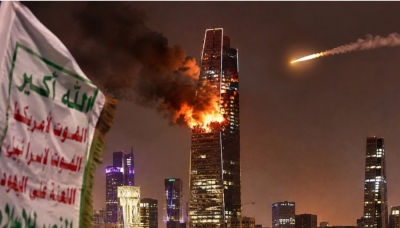
One of Riyadh's tallest skyscrapers, which houses the offices of Saudi Arabia's sovereign wealth fund, the Public Investment Fund (PIF), suffered significant damage from an attack by the Houthis of Yemen. The strike occurred in the King Abdullah Financial District, the modern financial hub of the Saudi capital, where major business, financial, and state activities are concentrated. The PIF tower, standing roughly 80 stories tall, sustained damage to its exterior facade, while glass panes were destroyed across several floors. Authorities moved to close access to the financial district and evacuate civilians, while security forces, fire trucks, and ambulances deployed to the scene. No casualties were reported. The Saudi-led military coalition announced that it confronted a missile threat and that the debris causing the damage came from interception fragments. This phrasing is disputed by pro-Iranian sources, which claim that Saudi air defenses failed to prevent a direct hit.Reuters confirms the damage through sources and eyewitness accounts.
A skyscraper housing Saudi Arabia’s $900 billion sovereign wealth fund was damaged in an apparent Houthi missile attack on Riyadh. The 80-story Public Investment Fund Tower sustained scorch marks and shattered windows across five floors. No casualties were reported. Source: NYT
— Clash Report (@clashreport) November 19, 2026
Saudi Arabia: "Terrorist attack" by the Houthis - Questions over air defense
Saudi Arabia's Civil Defense characterized the overnight Houthi missile strike against the Public Investment Fund (PIF) Tower, in the financial heart of Riyadh, as a "terrorist attack." In an official statement, the General Directorate of Civil Defense reported that the building came under attack, causing material damage without any injuries. "A tower in the financial district of Riyadh suffered a terrorist attack by the Houthi militia, causing material damage, but fortunately no injuries," the statement reads. Meanwhile, a video circulating online allegedly captures the moment a missile struck the skyscraper. Should it be confirmed that a direct hit occurred, serious questions will arise regarding the effectiveness of Saudi air defenses, which include US Patriot and THAAD systems. However, available evidence does not prove that the missile penetrated air defenses, as the damage may have been caused by interception debris. The attack highlights the vulnerability of critical economic infrastructure and intensifies concern over further escalation in the region.
#الدفاع_المدني: تعرض أحد أبراج المركز المالي بمدينة الرياض لهجوم إرهابي من قبل الميليشيا الحوثية الإرهابية نتج عنه أضرار مادية ولا إصابات - ولله الحمد. https://t.co/FBEqwOKTRT
— الدفاع المدني السعودي (@SaudiDCD) November 19, 2026
Why the strike on the PIF Tower carries special strategic significance
The Public Investment Fund is not an ordinary financial institution. It constitutes Saudi Arabia's primary sovereign investment vehicle and a central pillar of the country's economic transformation, linked to the Vision 2030 program. With assets in the hundreds of billions of dollars, the fund finances investments in energy, technology, infrastructure, tourism, and international business operations. Consequently, the attack on the skyscraper housing its offices carries strong symbolic weight. The Houthi message can be interpreted as an attempt to prove that Saudi Arabia cannot separate its economic development from regional military confrontation. It is in fact the second major strike in Riyadh's financial center in less than two weeks. On November 8, a Houthi attack had caused damage to a building belonging to the energy company Aramco in the same area. The repetition of attacks creates additional questions regarding the effectiveness of Saudi air defense systems and the cost of protecting strategic facilities. The most significant problem for Riyadh is not only the scale of material damage, but the uncertainty created by the Houthis' ability to threaten the kingdom's economic and investment heart. If the attacks continue, the Saudi leadership will face the need to simultaneously protect oil facilities, airports, transport networks, and its business hubs.
UPDATE ????: Yemen’s Houthis struck a skyscraper owned by Saudi Arabia's roughly $1 trillion sovereign wealth fund during a recent wave of drone attacks. - more details or confirmation is awaited. https://t.co/FztvOlCd1h
— RKM (@rkmtimes) November 19, 2026
Iran: Warning that US bases in Europe can be struck
Almost simultaneously with the attack in Riyadh, Tehran issued warnings that significantly broaden the geographical scope of a potential military confrontation. The spokesperson for the Islamic Revolutionary Guard Corps, Hossein Mohebbi, stated that Iran possesses the capability to operate beyond the previous 2,000-kilometer range limit, provided the relevant order is given by the supreme political and military leadership. According to the Iranian side, the country could threaten even US military installations in Europe.Mohebbi also argued that if the United States uses bases in third countries for attacks against Iran, those facilities could be considered targets for Iranian retaliation. The warning carries particular significance for states hosting US forces.Tehran is thus attempting to transfer the dilemma of participating in a potential US operation onto governments providing military infrastructure to Washington. The Iranian side has also cited the attempted missile attack against the joint US-British base at Diego Garcia, in the Indian Ocean, as an indication of its growing operational reach, namely a strike 4,500 kilometers away. The essence of the warnings lies in a shift in Iranian deterrence doctrine.Tehran seeks to make clear that a new attack against it will not necessarily be treated as a limited clash within the Middle East. The message is that geographical distance will no longer guarantee, according to the Iranian military leadership, political or operational safety for those participating in attacks against Iran.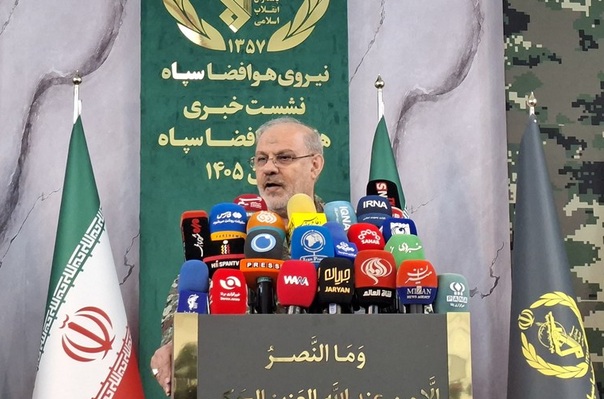
Netanyahu pushes for new attack - Trump hits the brakes, postpones decisions to 2027
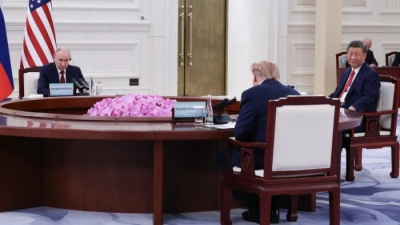
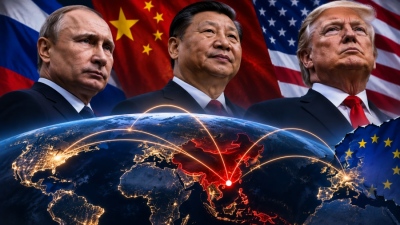
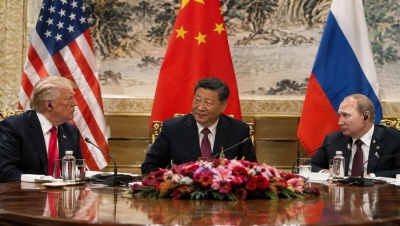
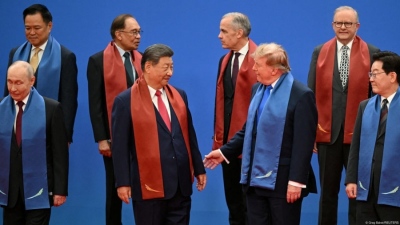
The third and potentially most critical element of the crisis comes from Washington. According to a New York Times report on November 19, Donald Trump is considering the prospect of a new wave of large-scale US strikes against Iran. Reports indicate that Israeli Prime Minister Benjamin Netanyahu is seeking to convince the US leadership to participate in a coordinated air campaign lasting four to seven days. The proposal is linked to Israeli assessments that Iran is attempting to rebuild its missile capabilities and drone production industry. However, Donald Trump appears reluctant to immediately decide on a new military operation against Iran, as Washington weighs the potential consequences of a new confrontation with Tehran. "I am in no rush to make decisions on Iran. We will see what happens after the start of the new year," he reportedly told Israeli Channel 12, returning from the trilateral summit with Vladimir Putin and Xi Jinping in Shenzhen. The remark comes as Benjamin Netanyahu is reportedly pressing for a resumption of US-Israeli strikes. According to information attributed to journalist Barak Ravid, the White House asked the Pentagon and intelligence agencies to thoroughly evaluate potential Iranian reactions under each military operation scenario. The biggest problem concerns the vulnerability of energy facilities in Saudi Arabia and the other countries of the Persian Gulf. The decisive question for the US leadership is whether a military strike can be carried out without provoking destructive Iranian retaliation against regional energy infrastructure.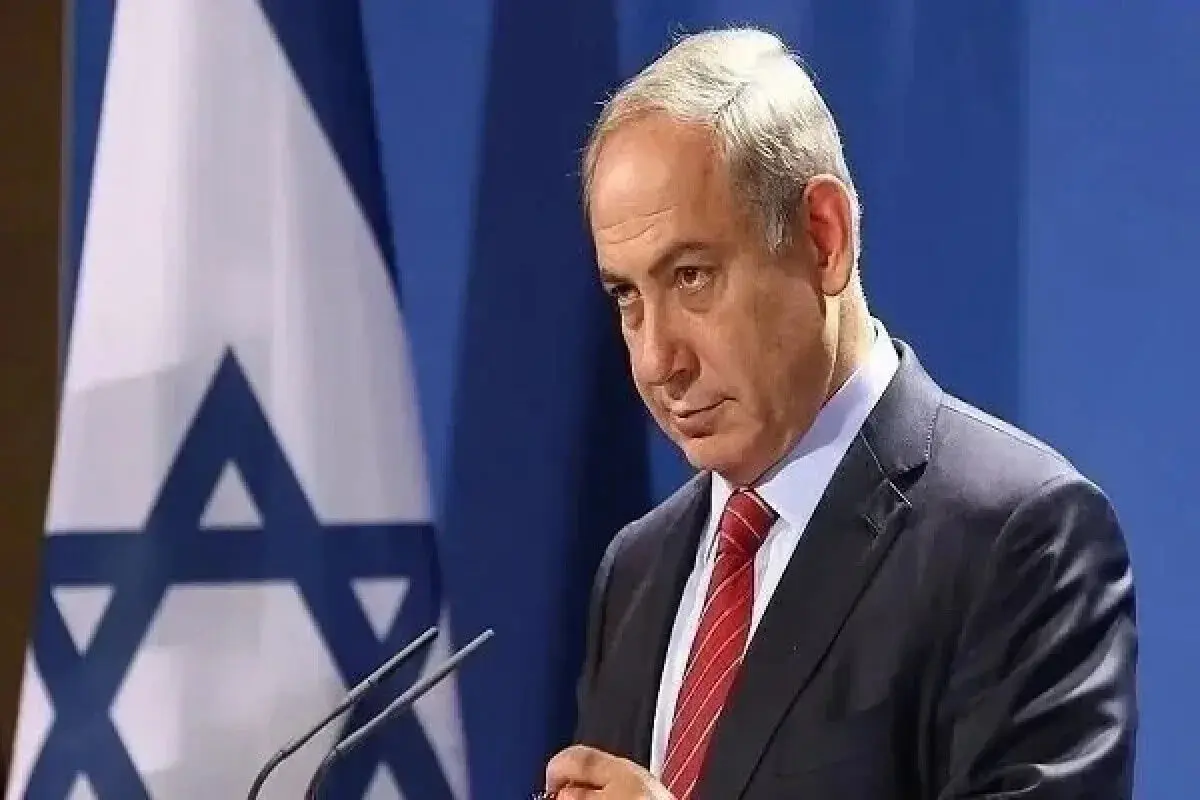
The Senate with 51 votes gave Trump the "green light" on Iran
A political victory for Donald Trump in the US, as the Senate rejected a resolution that would have forced the US president to end military operations against Iran or secure Congressional approval for their continuation. The November 19 vote ended with 51 votes against and 48 in favor, confirming the support of the majority of Republicans for the White House's war policy. Only three Republican senators broke ranks, siding with the Democrats: Susan Collins of Maine, Lisa Murkowski of Alaska, and Rand Paul of Kentucky. Conversely, Democrat John Fetterman of Pennsylvania voted with the Republicans against the resolution. The decision takes on special significance as it comes a few weeks after Republican electoral losses, which were also linked to dissatisfaction over the war in Iran. The resolution had previously been approved by the House of Representatives.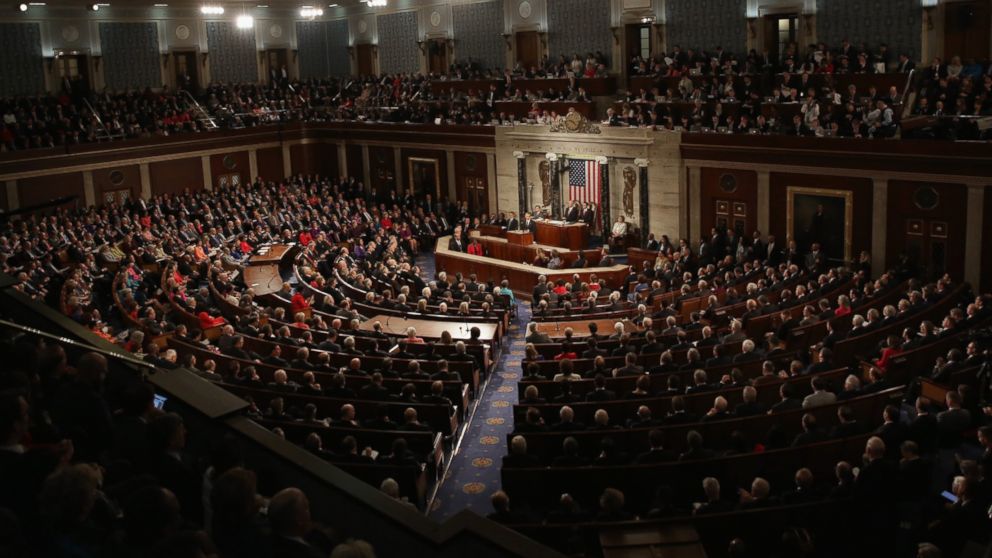
The Houthis, Iran, and the risk of multiple fronts
The attack in Riyadh takes on a different meaning when examined within the context of the overall confrontation in the region. The Houthis maintain close political and military ties with Iran, without this meaning that every one of their operations is carried out on direct Iranian orders. Their actions, however, offer Tehran a significant strategic advantage: the ability to exert pressure on regional adversaries of the US and Israel without the Iranian military necessarily becoming directly involved.Saudi Arabia constitutes a characteristic example of this vulnerability. Despite large military expenditures and advanced defense capabilities, its geographical proximity to Yemen and the scale of its economic infrastructure create substantial air defense demands. The strikes in the King Abdullah Financial District increase pressure on Riyadh to respond militarily, while simultaneously reinforcing the need to avoid a conflict that would jeopardize its major investment programs. For Iran, a broader confrontation could involve threats across different arenas: in the Persian Gulf, the Red Sea, US installations in the Middle East, and, according to the new warnings, potentially bases at even greater distances. This ability to create multiple flashpoints makes predicting the duration and scale of any new military operation particularly difficult.
Clearer footage of the Direct Impact on the Saudi Wealth Fund Headquarters in Riyadh today after Houthi strikes . Courtesy - Reuters via local sources https://t.co/n0Fj7Hdzkg
— Nightmare (@Nightshade00077) November 19, 2026
Energy and global markets in the crosshairs
A new escalation could directly affect global energy markets.Saudi Arabia remains one of the most important producers and exporters of oil, while the Persian Gulf constitutes a key artery for international energy flows. Any expansion of attacks to oil facilities, ports, or maritime shipping could trigger higher insurance costs, supply disruptions, and sharp fluctuations in oil prices. The consequences would not be limited to the Middle East.Europe and major Asian economies could face renewed inflationary pressures and higher energy costs. Especially for the European Union, the possibility of Iranian threats against US installations on European soil adds a second dimension: the prospect that the continent could be affected not only economically, but also militarily by the conflict.
Riyadh's tallest skyscraper — home to Saudi Arabia's $900 billion sovereign wealth fund — damaged in apparent Houthi missile strike The 80-story Public Investment Fund Tower had shattered windows and bent facade panels across seven to eight floors No casualties reported https://t.co/ulcFnGBBH4
— RTVisual (@RT_Visual_on_X) November 19, 2026
Three scenarios for the day after
The first and most likely scenario is the continuation of limited yet recurring military operations. The Houthis maintain pressure on Saudi Arabia, while the US and Israel avoid a new large-scale operation against Iran. Tension remains high, without escalating into an all-out war. The second scenario is a new US-Israeli air campaign against Iranian targets, with Tehran responding against military facilities and regional US allies. In that case, the conflict could expand rapidly, particularly if there are heavy casualties. The third and most dangerous scenario is an uncontrolled widening of operations, with simultaneous fronts in Yemen, the Persian Gulf, and areas where US forces are stationed. The involvement of more states would increase the risk of miscalculations, while keeping the conflict within a limited timeframe and geographical scope would become more difficult.
www.bankingnews.gr


Readers’ Comments