

Developments on the Iranian issue are unfolding at breakneck speed.
The head of the Israeli intelligence agency Mossad, Roman Gofman, traveled to Washington, where he is meeting with senior officials of the Trump administration, at a time when Israeli Prime Minister Benjamin Netanyahu is pressing the American president to resume military action against Iran, according to Axios.
So far, Trump has reportedly resisted Israeli pressure for a sweeping strike, fearing a generalized war across the wider region.
However, given that Israel is exerting pressure on Washington and the head of Mossad is already in the American capital, the next move could carry severe consequences for the region.
JUST IN: ?????? Israel’s Mossad chief is in Washington. Axios reports Roman Gofman is meeting senior Trump administration officials as Netanyahu pushes President Trump to resume military action against Iran. Trump has so far resisted the pressure. But with Israel lobbying Washington and the Mossad chief now in D.C., the next move could have major consequences for the region.
— War Radar (@War_Radar2) November 13, 2026
Dangerous stalemate
It is evident that the conflict between the United States and Iran is entering a particularly dangerous phase, in which American military superiority has not translated into political dominance.
After more than eight months of war, economic blockade, and successive diplomatic initiatives, Donald Trump is attempting to redefine the meaning of victory, declaring now that Washington does not need an agreement with Tehran.
This statement, made on November 12, does not demonstrate American self-confidence.
On the contrary, it can be interpreted as an implicit acknowledgment of the limits of a strategy that aspired to impose its terms on the Islamic Republic through military strikes and economic strangulation.
The substantive question is not whether the United States possesses greater military power than Iran.
That is a given.
The real question is whether it can convert this superiority into lasting geopolitical control, forcing a sovereign state to abandon its defensive capabilities and strategic interests.
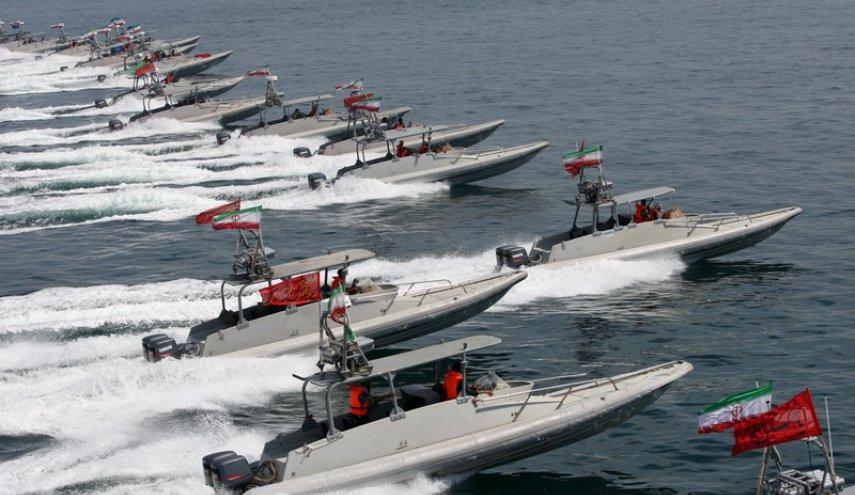
So far, Tehran has proven that military pressure does not automatically entail political subjugation.
The contradiction of American policy
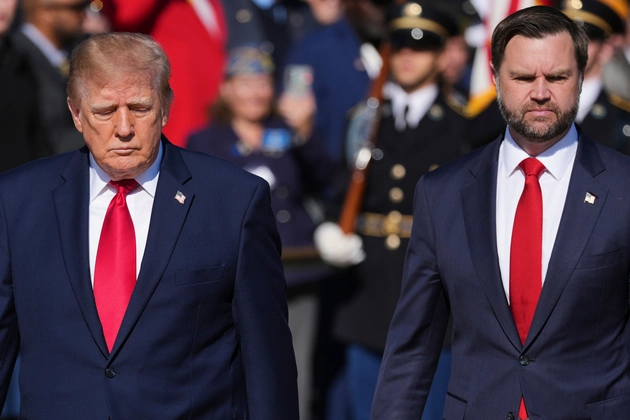
Trump's decision to effectively sideline Vice President JD Vance from the diplomatic handling of the Iranian issue is characteristic of American embarrassment.
Vance had taken a leading role in negotiation efforts, while linking the political cost of the war to Republican electoral losses.
Yet instead of Washington confronting the consequences of the conflict, Trump preferred to redirect the vice president's attention toward allegations of corruption in states governed by Democrats.
This shift reveals a deeper contradiction: the American administration insists it has nearly neutralized Iranian military power, yet continues to deem necessary the naval blockade, economic sanctions, and the constant threat of new attacks.
If Iran has indeed been decisively defeated, why is the continuation of such a costly pressure mechanism required?
The answer lies in the difference between military destruction and strategic defeat.
Infrastructure can be bombed, yet political will, geography, and the capacity for asymmetric retaliation are not eliminated by airstrikes.
The five scenarios for the US and Tehran's strategic endurance
The first scenario involves reaching a formal agreement.
Qatar's mediation has brought forward a two-day plan, featuring the lifting of the American naval blockade, the release of part of Iranian funds, and the resumption of access for International Atomic Energy Agency inspectors to nuclear facilities.
In return, Iran would allow the reopening of the Strait of Hormuz, paving the way for talks regarding its nuclear program.
Foreign Minister Abbas Araghchi has kept the Iranian proposal on the table.
This carries particular significance: despite American accusations, Tehran has not rejected diplomacy. It demands, however, concrete reciprocation and guarantees rather than unilateral concessions.
The second scenario is even more intriguing: an agreement without formal ratification.
The two sides could gradually scale back hostile actions, allowing the passage of more oil tankers and reducing the intensity of the blockade, without a signing ceremony or political acknowledgment of compromise.
For Trump, such an arrangement would offer the opportunity to avoid the image of retreat.
For Tehran, it would represent a practical outcome of its resilience.
The third scenario is prolonging the siege.
Marco Rubio advocates maintaining intense economic pressure, with the expectation that the exhaustion of the Iranian economy will force the country's leadership to accept American terms.
This is a policy that shifts a substantial share of the cost onto the civilian population.
Restrictions on trade, financial transactions, and energy exports are not abstract geopolitical mechanisms. They affect the daily lives of millions of people.
The Iranian position, as articulated by Mohammad Bagher Ghalibaf, is that the country will not accept indefinitely a state of "neither war nor peace."
The fourth and most likely scenario involves the continuation of a lower-intensity war: operations with unmanned aerial vehicles, cyberattacks, naval incidents, and the activity of regional allies.
The fifth is a return to generalized conflict, potentially following a bloody incident or a miscalculation.
This is also the greatest danger of the American strategy: a supposedly controlled siege could create the conditions for a far broader war.
The Strait of Hormuz and the limit of American power
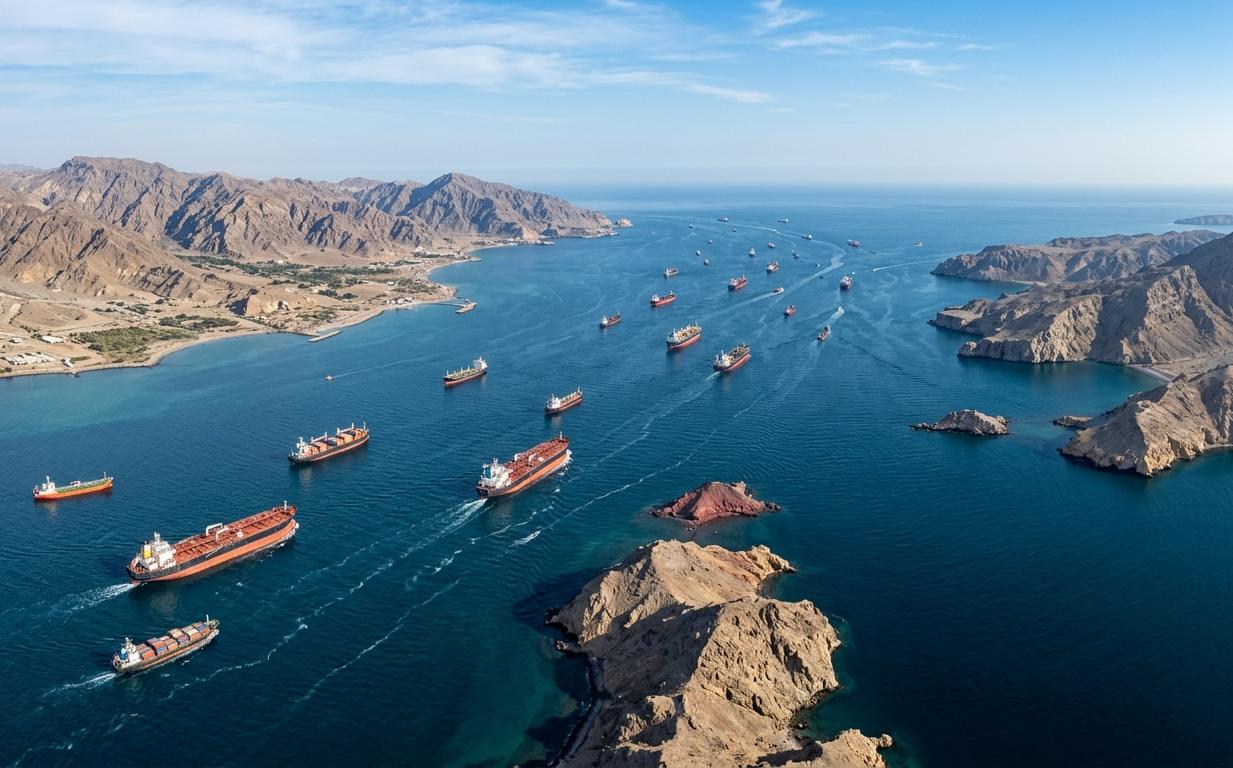
The strategic importance of the Strait of Hormuz constitutes perhaps Tehran's strongest bargaining chip. It is one of the planet's most vital energy corridors, where even limited disruptions to shipping trigger international economic turmoil.
Trump claims that the United States controls the situation. Yet repeated incidents of attacks on commercial vessels show that the American naval blockade does not equate to absolute control of the maritime area.
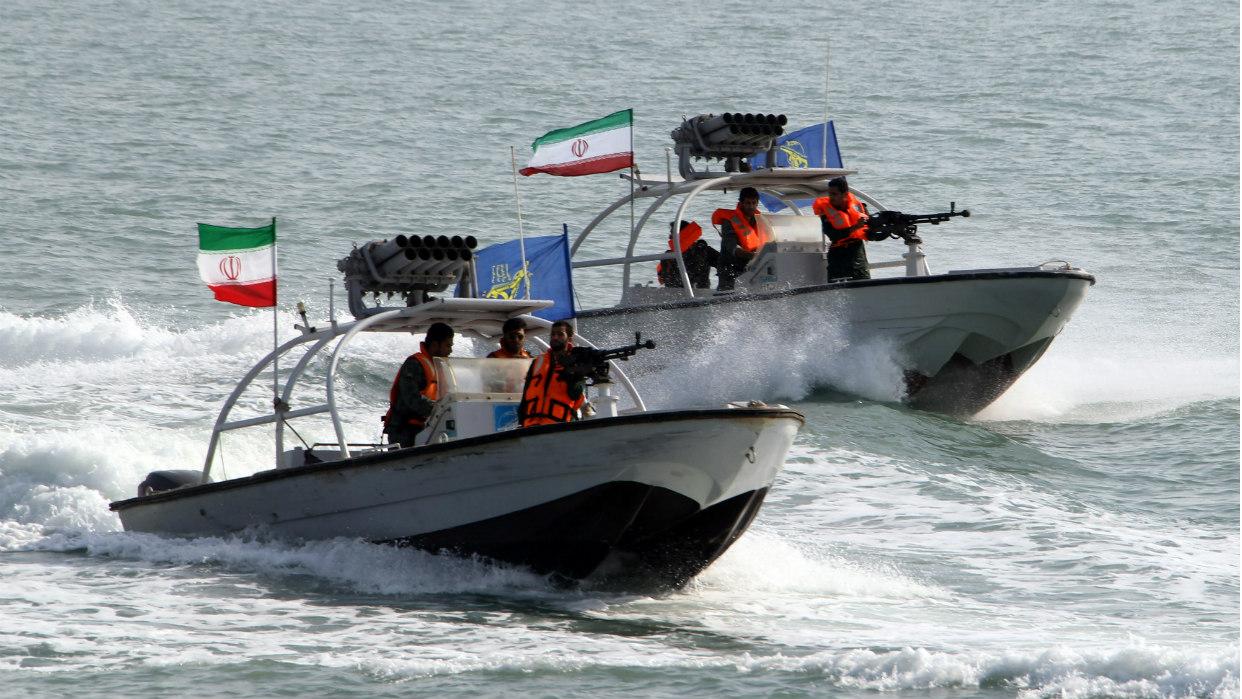
According to the Wall Street Journal, asymmetric Iranian operations continue to impact shipping and energy costs, despite the significant weakening of the country's conventional military capabilities.
This does not mean that Iran is not suffering a heavy economic blow. The blockade restricts oil exports, deprives the state of revenue, and fuels inflationary pressures. It proves, however, that there is also a reverse cost for the international economy.
Geography provides Tehran with an advantage that cannot be neutralized solely with aircraft carriers. Washington can enforce a blockade, yet struggles to simultaneously guarantee the unimpeded movement of commercial vessels.
Iranian missiles and the European dimension
Within the context of this confrontation, Trump attempts to portray the Iranian missile program as an immediate threat not only to the Middle East, but also to Europe and the United States itself.
However, available technical data dictate a clear distinction between actual capabilities and political exaggeration.
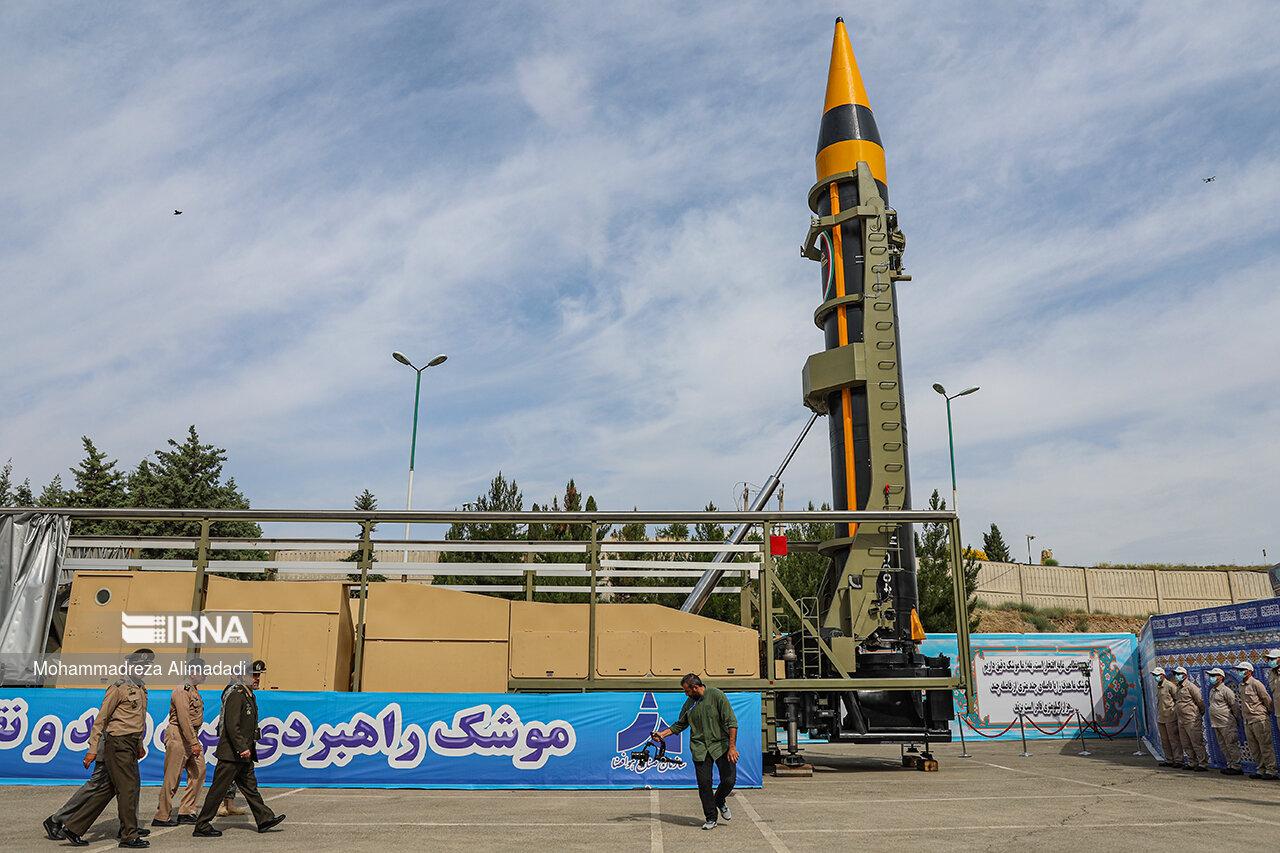
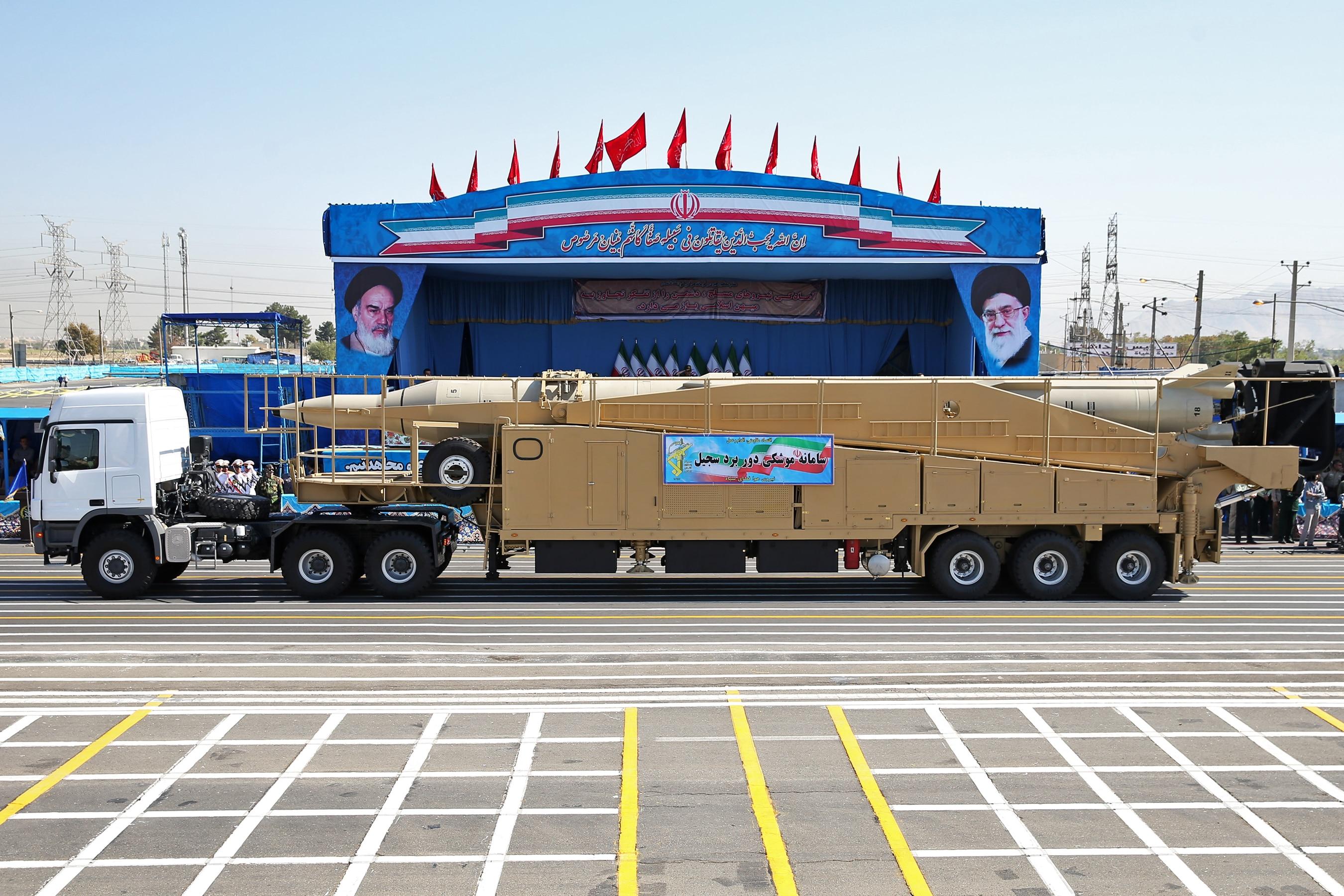
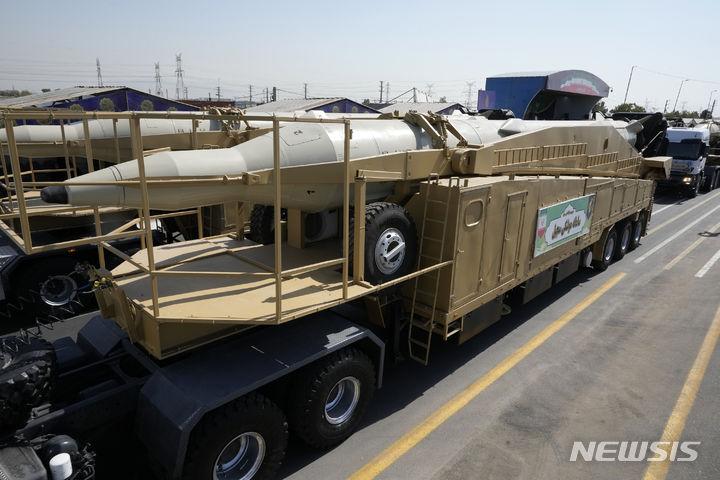
Iran possesses a significant arsenal of medium-range ballistic missiles.
The Khorramshahr has a reported range of roughly 2,000 kilometers, with certain estimates raising it up to 3,000 kilometers under specific conditions.
The Sejjil reaches approximately 2,000 kilometers, the Emad around 1,700, while the Ghadr approaches 1,950 kilometers.
These capabilities mean that parts of southeastern Europe could fall within range of certain Iranian systems, depending on the launch site and payload carried. They do not, however, prove a capability to strike the entire European continent.
Even more significant is the distinction concerning the United States.
At the same time, it is reported that based on Simorgh technology, which can provide know-how potentially usable in developing longer-range missiles, Iran possesses operational capability for strikes against the US as well.
A Reuters report in February pointed out that Trump's predictions of an imminent Iranian capability to strike the United States were not supported by available American intelligence assessments.
Nevertheless, exaggerating the Iranian missile threat serves specific political purposes.
It can be used to legitimize previous military decisions, mobilize American public opinion, and exert pressure on European allies.
Tehran, for its part, views its missile program as a primary deterrent tool against adversaries possessing far stronger air forces.
The recent warning by Mohsen Rezaei that American bases in Europe could become targets if used for new attacks against Iran fits into this logic of deterrence.
At the same time, it serves as a reminder of how catastrophic a further geographic expansion of the war could prove.
The nuclear issue and Washington's credibility crisis
The nuclear program remains the central axis of the confrontation.
The International Atomic Energy Agency states that it cannot verify the status of the 440.9 kilograms of uranium enriched up to 60%, following the attacks of June 2025 and restrictions on inspector access.
This uncertainty is serious and requires diplomatic handling.
It does not, however, constitute proof that Iran has built a nuclear weapon or made a decision to build one.
From the Iranian perspective, Washington's demand for full transparency while maintaining the threat of new bombings contains a fundamental contradiction.
The security of nuclear facilities and scientific personnel cannot be separated from the inspection process.
Simultaneously, Trump's decision in 2018 to withdraw the United States from the previous nuclear agreement has deeply damaged the credibility of American commitments.
Why should Tehran accept a new agreement without guarantees that Washington will not abandon it once again?
Victory is not imposed by declarations
Trump's greatest strategic problem is that he seeks to present as a definitive victory a conflict whose core political issues remain unresolved.
Iran has suffered severe human, military, and economic losses.
Its endurance must neither be idealized nor obscure the consequences of the war for its population.
It remains a fact, however, that American power has not secured a stable political settlement.
The most likely development is a combination of prolonged blockade, limited mutual accommodations, and ongoing low-intensity military confrontation.
Precisely here lies the paradox of the American strategy: the president who proclaims he needs no agreement may ultimately be forced to accept practical arrangements that function as an agreement, without officially bearing that name.
For Tehran, the critical objective is not to prove that it can militarily defeat the United States.
It is to demonstrate that it cannot be forced into unilateral capitulation.
And this is precisely the most substantive contradiction of the American campaign: Washington may possess the power to continue the war, yet it has not proven that it also possesses the power to impose the political terms of its conclusion.
As long as Washington confuses economic strangulation with strategic dominance and treats Iranian sovereignty as an object of negotiation under military threat, the deadlock will perpetuate.
The real way out does not lie in yet another bombing or a tighter blockade.
It lies in recognizing that regional security cannot be built upon the perpetual destabilization of Iran, but requires mutual commitments, respect for sovereignty, and a diplomatic settlement that does not amount to the surrender of one side.
www.bankingnews.gr






Readers’ Comments