

Developments at tech giant Nvidia are unfolding rapidly, as revelations coming to light upend the narrative surrounding the controversial sex scandal.
According to market circles, the affair appears to have been staged, with Wall Street reacting swiftly and pricing in heightened volatility.
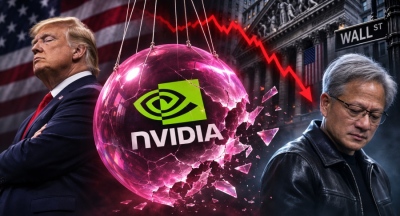
At the same time, behind the political scenes in Washington, assessments suggest that the ouster of Jensen Huang serves broader geopolitical designs, with Donald Trump reportedly executing a strategic sacrifice in order to maintain balances across the semiconductor industry.
Specifically, on October 29, The New York Times published a report claiming that American intelligence agencies believed Jensen Huang's mistress, Alice Huang, a Chinese business executive linked to Megaspeed, a Singapore-based firm and major customer of NVIDIA, was connected to an individual operating on behalf of the Chinese Ministry of State Security.

Megaspeed was already under investigation for the potential diversion of advanced artificial intelligence microchips to China.
Photographs from events in Taipei dating back to 2024, alongside older classified memos, including one reviewed under the supervision of US Secretary of State Marco Rubio, intensified concerns over national security, technology export controls, and foreign influence.
On November 8, Huang publicly admitted, in a letter addressed to company employees, that "I had been unfaithful to my wife."
He apologized for the harm inflicted upon his family and linked his admission directly to the preceding media reports.
Simultaneously, the Board of Directors of NVIDIA launched an independent investigation.
The company's stock began falling sharply amid congressional requests for briefings, as well as reports that the FBI was reviewing the case.
The crisis escalated even further within just a few days.
On November 11, The New York Times published details regarding a second extramarital affair, this time with Kimberly Powell, Vice President of Healthcare at NVIDIA, who reported directly to Huang.

The relevant reports also included eyewitness accounts of overtly affectionate behavior between the two during an industry conference.
Reports that the Board of Directors was convening to weigh his removal triggered another steep sell-off in the stock.
Specifically, shares dropped by roughly 8% in after-hours trading that day, compounding losses that collectively erased hundreds of billions of dollars in market capitalization.
At the same time, the absence of a clear succession plan came sharply into focus following Huang's 33-year tenure as co-founder and sole Chief Executive Officer of the company.
And thus we arrive at today...
This morning, the Board of Directors announced his immediate resignation as President, Chief Executive Officer, and member of the Board.
The company's Chief Financial Officer, Colette Kress, was appointed interim Chief Executive Officer while retaining her financial duties.
Harvey C. Jones assumed the role of the first Chairman of the Board in the company's history, while the search for a permanent successor got underway.
This development leaves the artificial intelligence industry and global financial markets confronting major uncertainty.
Naturally, Jensen's contribution to NVIDIA was decisive and invaluable.
NVIDIA ranks among the most influential technology corporations worldwide.
The Board of Directors and the company thanked Jensen for his invaluable contributions both to the firm itself and to the broader technology sector.
The market reaction
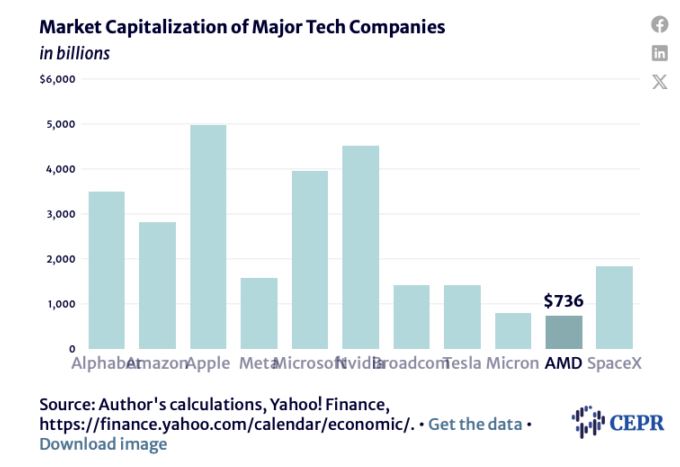
Nvidia currently holds a market capitalization of approximately $4.19 trillion; however, since November 8, when the sex scandals involving its founder and longtime Chief Executive Officer Jensen Huang broke, it has recorded a drop exceeding 10% (or $450 billion).
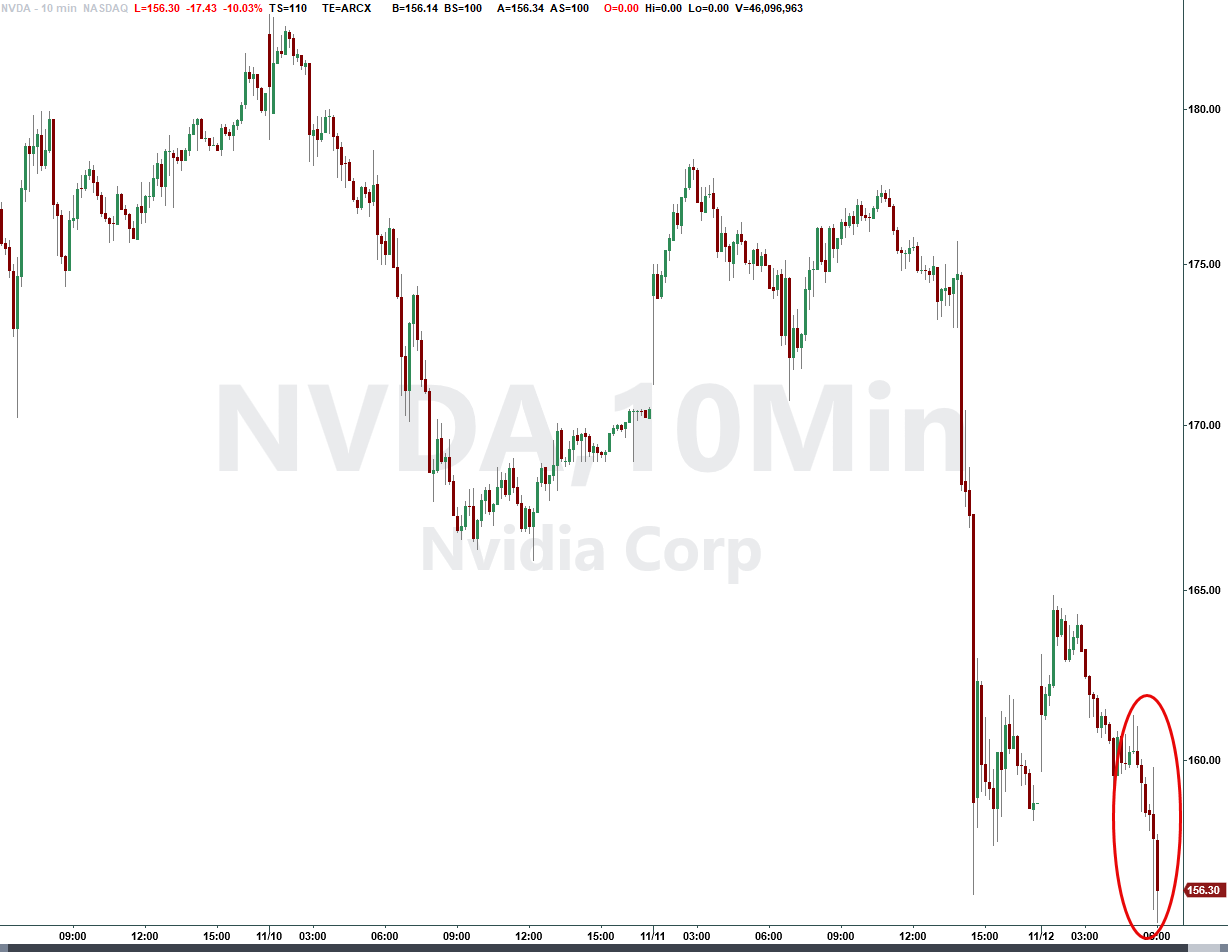
This plunge drives the share price ($151) to its lowest level since July 2025, marking losses of over 35% from its all-time highs.
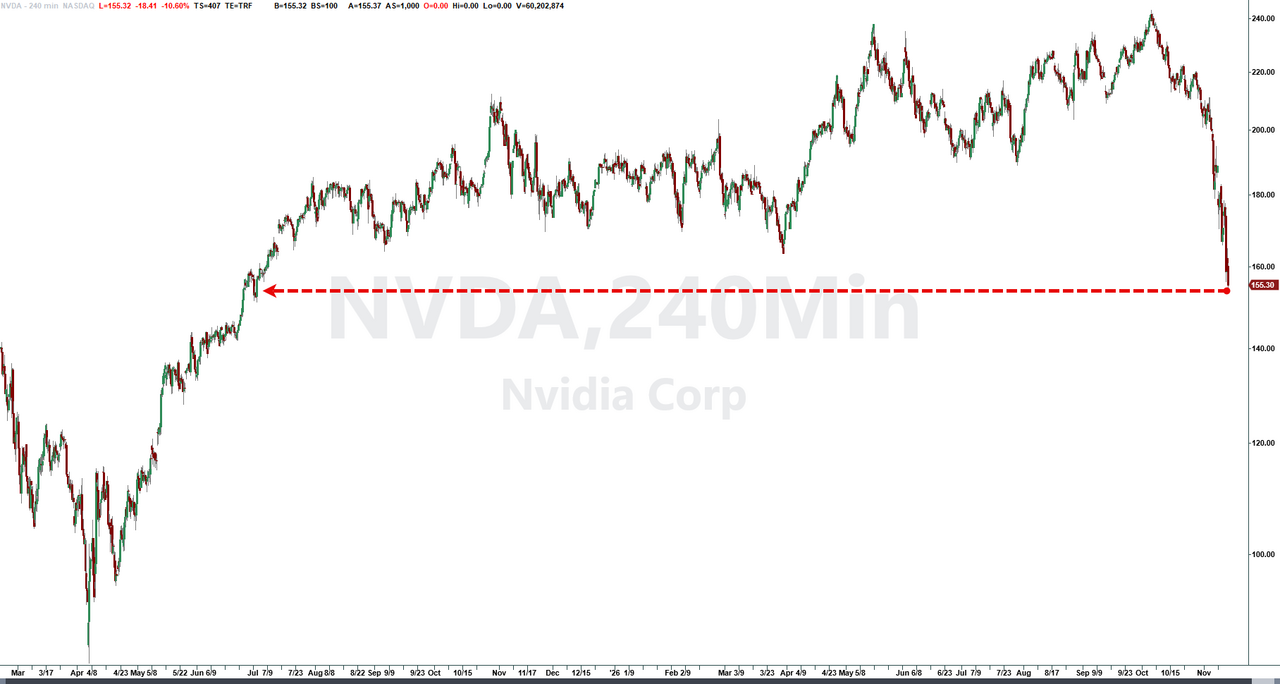
Of course, Nvidia is not tumbling because its CEO happens to be... an admirer of the opposite sex.
Hardly... Rather, Wall Street triggered its reflexes to prick one of the largest bubbles in the world.
Make no mistake: we are not saying Nvidia is not a good company; quite the opposite.
However, its valuation on the trading floor is unjustifiable.
One might even call it a massive bubble that merely prices in wildly optimistic expectations for the future growth of artificial intelligence, alongside the political connections of Jensen Huang.
Let us explain:
Undeniably, there is a stark mismatch between capital expenditures and revenues (CapEx vs. Utility).
Tech giants are spending hundreds of billions on infrastructure and Nvidia chips, yet revenues from end-user AI applications are failing to grow at anywhere near the same pace.
Fears are mounting over "dark GPUs": chips sitting idle and underutilized, much like fiber-optic cables back in 2000.
Furthermore, a massive percentage of Nvidia's revenue derives from just 4 to 5 companies (Microsoft, Alphabet, Meta, Amazon).
If even a single one of them slows its purchases or develops proprietary in-house chips, Nvidia will suffer an immediate blow.
Critics point out that a large share of this capital is simply recycled within the exact same ecosystem (for instance, investments by Nvidia or Big Tech into AI startups, which then turn around and use those funds to purchase Nvidia chips).
Even where demand for chips exists, data center expansion is now hitting hard bottlenecks in electrical power, grid capacity, and permitting, which threatens to delay deliveries and revenue recognition.
What the metrics say
Equally revealing is the picture painted by equity valuation ratios.
On the one hand, they showcase a corporate colossus generating extraordinary profits; on the other, they expose a mammoth valuation predicated on expectations of absolute perfection.
Nvidia is now valued at over $4 trillion.
At this scale, basic mathematics works against future returns.
For an investor to double their money from this point forward, Nvidia would need to reach a valuation of $8.4 trillion (a sum exceeding the combined GDP of several major nations).
The room for explosive, exponential outperformance (alpha) narrows dangerously simply by virtue of its sheer bulk.
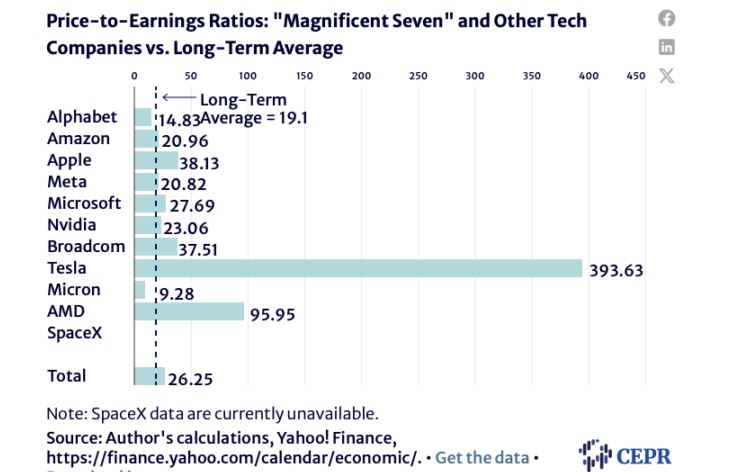
The current P/E ratio at roughly 22 appears relatively low for a high-tech firm boasting such growth rates (typically, comparable companies trade at P/E multiples above 30 to 40).
However, a low Forward P/E does not necessarily mean the stock is "cheap."
It indicates that analysts have already priced in colossal earnings over the coming years.
The P/S (Price-to-Sales) ratio stands at 13.85, meaning that for every $1 of revenue Nvidia generates, investors are paying nearly $14 on the stock market.
The firm is priced like a high-margin software company (SaaS) rather than a semiconductor manufacturer, which is traditionally subject to cyclical swings and heavy R&D capital expenditure.
Its Price-to-Free-Cash-Flow multiple stands at 33, meaning investors pay $33 for every $1 of actual cash (Free Cash Flow) remaining in the company's coffers after capital investments.
This is arguably the most telling metric.
A P/FCF ratio of 33 translates into a Free Cash Flow Yield of roughly 3% ($1 / $33).
When safe US Treasury bonds or deposit rates offer comparable yields with minimal risk, a sub-5% yield from a high-risk technology equity is viewed by many analysts as overvalued.
It is also noted that Nvidia conducts massive share buybacks, having authorized a record program with a total available value of $235 billion (following a $150 billion expansion in September 2026) and having already spent roughly $40.1 billion in fiscal year 2026 and $39.8 billion in the first half of fiscal year 2027 alone.
When the company buys back and cancels its own shares (reducing net share count by roughly 157 million in the first half of FY2027), net earnings are divided across fewer shares.
Thus, EPS is artificially inflated (an estimated additional boost of 2.3% to 3.2% from the $150 billion package alone), making the P/E ratio appear cheaper without any genuine increase in core operating profitability.
Buying back shares at a pace of nearly $20 billion per quarter, Nvidia itself acts as the single largest and steadiest buyer of its stock on the open market, absorbing selling pressure whenever investors take profits.
A large portion of those billions does not even reduce total share count, merely sopping up new shares issued by the company as stock-based compensation bonuses to executives and employees.
In the first half of 2027, Nvidia generated $69.9 billion in Free Cash Flow and spent nearly 57% ($39.8 billion) repurchasing its own shares at historically elevated valuations.
Moreover, executing the full $235 billion authorization within 16 months requires roughly $44 billion per quarter, a sum exceeding its current quarterly cash generation ($21.3 billion in Q2), meaning the announcement functions largely as psychological "fireworks" aimed at propping up the share price.
Fabricated: The Nvidia sex scandal involving the Chinese spy
As noted earlier, the mainstream narrative seeks to convince us that the Nvidia scandal revolves around a romantic affair and a spy.
Yet this is merely a staged spectacle...
Beyond Wall Street and its own motives, the darker truth is that Washington is deploying this personal drama as a smokescreen to cover up a catastrophic strategic defeat in the semiconductor war it initiated itself.
In other words, everything unfolding before our eyes serves one explicit purpose: diverting public attention away from the real issue.
The United States failed in the economic war it launched against China, and the architects of that failure require a scapegoat.
This was never a matter of national security, but a policy dispute inside the government.
Huang was winning that policy debate, and the US national security apparatus needed to remove him from the board.
The narrative of a "love affair with a spy" serves the exact function of a cheap sleight-of-hand trick: directing public attention toward a salacious scandal while the true loss is taking place elsewhere.
In this instance, that loss is the collapse of the American "Pax Silica" strategy.
Washington's blueprint to keep China dependent on American technology through export restrictions produced the exact opposite result.
China accelerated its drive toward technological self-sufficiency.
Firms such as SMIC succeeded in mass-producing 5 nm-class semiconductors, while Huawei spearheads a domestic initiative to develop indigenous chipmaking equipment.
As one analyst aptly remarked, American strategy proved to be a "gift" that accelerated China's technological independence.
The real objective
The truth behind the deal involving the H200 chips is far more cynical than the national security pretext suggests.
In essence, it was a mechanism to extract state revenue.
The Trump administration approved sales of H200 chips to China on the condition that the US government collect 25% of revenues from every sale.
This so-called "Trump surcharge" was designed to siphon cash from Nvidia's international sales to bolster the US Treasury.
Here, however, the true scale of the fiasco becomes apparent: China refused to buy those chips.
By May 2026, not a single H200 chip had been shipped to Chinese buyers despite export licenses having been approved. Beijing instructed Chinese enterprises to invest in domestic alternatives, such as those developed by Huawei.
As a result, Nvidia's market share in China collapsed to virtually zero.
The attempt at economic extortion failed because the targeted party simply walked away from the table.
The United States was thus left sitting on 750,000 advanced chips for which it could find no Chinese buyers.
The so-called "espionage scandal" is presented, under this interpretation, as a fabricated communications ploy intended to mask the humiliation caused by that failed attempt at economic coercion.
The dark truth
While the media focus has been trained on Huang's personal life, the structural foundations of American power are exhibiting widening fractures.
The semiconductor war formed the centerpiece of Washington's strategy to contain the rise of China.
The failure of that strategy constitutes a grave geopolitical defeat that the establishment struggles to acknowledge.
- The military-industrial complex needs an enemy
The narrative of a "Chinese threat" is used to justify colossal Pentagon budgets and the expansion of the surveillance state. A chief executive who demonstrates that this threat is vastly exaggerated poses a direct danger to that entire ecosystem.
The scandal operates as a weapon to discredit him and preserve the prevailing narrative.
- The illusion of "Pax Silica"
The United States launched the "Pax Silica" initiative aiming to assemble a coalition of nations to decouple supply chains from China.
Yet when you force supply chains out of regions offering optimal economic conditions, you choose inflation over economic integration.
The semiconductor war weighs heavily on the American economy, drives up production costs, and weakens other industrial sectors.
- Trump's political pattern
With his Middle East agenda stalled and the trade war turning against the United States, Trump resorts to diversionary maneuvers.
When he cannot secure a substantive victory, he manufactures a media spectacle.
The Nvidia scandal stands out as a textbook "wag the dog" operation: an artificially inflated foreign-policy affair deployed to distract from domestic setbacks and electoral vulnerability.
The crux of the matter
The "Chinese spy" is a phantom.
The real target is Jensen Huang, the Chief Executive Officer who, according to this narrative, exposed the failure of the semiconductor war unleashed by Washington.
The essence of the affair, as laid out here, is that the United States is losing the technological contest, that its strategy of economically containing China has backfired, and that the political leadership is using a personal scandal to conceal the collapse of its own geopolitical strategy.
The media spectacle is deafening.
Equally deafening, however, is Washington's silence regarding its strategic defeat.
The bill for this failure is being paid by the American economy. And, according to this analysis, the proof lies in a "semiconductor scandal" allegedly orchestrated for one sole purpose: ensuring the public is never forced to confront the true reckoning.
?|The mainstream narrative wants you to believe the Nvidia scandal is about an affair and a spy. That is the theater. The dark truth is that Washington is using this personal drama as a smokescreen to hide a catastrophic strategic defeat in the very chip war it started. The speculation isn't the story; it's the distraction from the story: America's economic war on China has failed, and the architects of that failure need a scapegoat. The Distraction: Why Washington Needs a Spectacle The timing of the leaked memo is the tell. It was drafted in the spring and circulated just as Jensen Huang was successfully lobbying the Trump administration to reopen the Chinese market for Nvidia's H200 chips. This wasn't a national security emergency; it was a policy dispute. Huang was winning the argument, and the national security establishment needed to neutralize him. The "affair with a spy" narrative does exactly what a cheap magic trick is designed to do: it keeps your eyes on the scandal while the real larceny happens elsewhere. The larceny here is the collapse of America's "Pax Silica" strategy. Washington's plan to keep China dependent on US technology through export controls has backfired spectacularly. China has accelerated its push for self-sufficiency, with companies like SMIC achieving volume production of a 5nm-class node and Huawei leading a domestic push for chipmaking equipment. The US strategy, as one analyst put it, has been a "gift" that accelerated China's independence. ? The Real Target: A 25% Shakedown, Not a Security Strategy The truth behind the H200 chip deal is far more cynical than a security concern. It was a revenue grab. The Trump administration approved the sale of H200 chips to China on the condition that the US government receive 25% of the revenue from every sale. This "Trump Surcharge" was designed to extract money from Nvidia's foreign sales to fund the US Treasury. But here is the part that exposes the true desperation: China refused to buy the chips. As of May 2026, not a single unit of the H200 was shipped to Chinese buyers, despite the licenses being approved. Beijing directed its companies to invest in domestic alternatives like Huawei, and Nvidia's market share in China effectively collapsed to zero. The shakedown failed because the target walked away. The US was left holding 750,000 high-end chips with no Chinese buyer. The "spy" scandal is designed to bury the humiliation of this failed extortion attempt. ? The Darker Truth: Washington Is Hiding Its Own Decline While the media obsesses over Huang's private life, the structural foundation of American power is cracking. The chip war was the centerpiece of Washington's strategy to contain China's rise. Its failure is a geopolitical catastrophe that the establishment cannot admit. ◾The Military-Industrial Complex Needs an Enemy: The "China threat" narrative justifies the massive budgets of the Pentagon and the surveillance state. A CEO who proves the threat is overblown is a threat to the entire ecosystem. The scandal is a weapon to discredit him and protect the narrative. ◾The "Pax Silica" Illusion: The US launched the "Pax Silica" initiative to build a coalition of countries to de-Sinicize supply chains. But forcing supply chains out of optimal economic zones is choosing inflation over integration. The chip war is hurting the US economy, driving up costs, and cannibalizing other sectors. ◾ The Trump Pattern: Trump, facing a stalled agenda in the Middle East and a losing trade war, is resorting to diversionary tactics. When he cannot deliver a victory, he creates a spectacle. The Nvidia scandal is a classic "wag the dog" operation, a foreign policy crisis manufactured to distract from domestic failure and electoral weakness. The Bottom Line The "Chinese spy" is a ghost. The real target is Jensen Huang, the CEO who proved Washington's chip war was a failure. The real story is that the United States is losing the technology war, its strategy of economic containment has backfired, and its political leadership is using a personal scandal to hide the collapse of its own geopolitical strategy. The theater is loud, but the silence from Washington about its strategic defeat is deafening. The bill for this failure is being paid by the American economy, and the receipt is a chip scandal designed to keep you from reading the balance sheet.
— Aprajita Nafs Nefes ? Ancient Believer (@aprajitanefes) November 9, 2026
The beginning of the end for the Artificial Intelligence bubble?
Notably, these losses and bubble warnings are not confined to Nvidia.
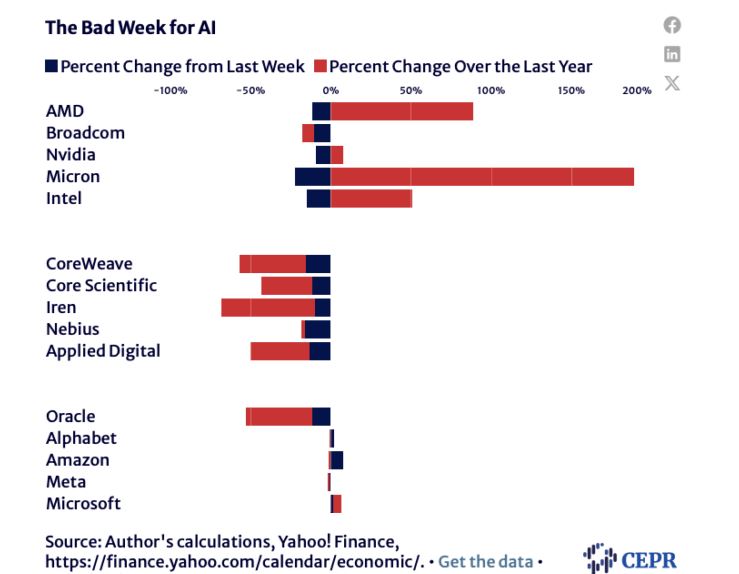
Severe blows were dealt last week to numerous stocks operating across the Artificial Intelligence sector.
The heaviest hits by far were absorbed by so-called neo-clouds (next-generation cloud infrastructure providers), while several major chipmakers also posted steep declines.
Conversely, the dominant large-scale cloud service providers (hyperscalers) appeared largely insulated.
Let us look at some indicative figures:
CoreWeave, the largest of the neo-cloud firms, tumbled 15.4%, bringing its year-over-year decline to 56.6%.
Iren lost 9.7%, while compared to the same period last year it records losses of 67.7%.
Nebius endured the worst week, plunging 16% and pushing its twelve-month losses to 18.3%.
Among semiconductor manufacturers, Micron suffered the steepest weekly drop, shedding 22% of its market value. Even so, it remains up 189.5% on an annual basis.
It was also a decidedly negative week for Intel, whose shares fell 14.4%, though the stock remains up 51.2% compared to last year.
Major cloud hyperscalers emerged largely unscathed by week's end, even though Alphabet suffered a sharp drop the day after the elections.
Over the full week, however, its shares gained 2.1%.
Amazon posted a surge of 7.9%, while Microsoft advanced 1.7%.
Meta recorded a minor pullback, shedding 0.8% of its value.
The sole major exception was Oracle, by far the smallest of the hyperscalers and the only one lacking another highly profitable core business beyond Artificial Intelligence on which to fall back.
Its stock plunged 11.2% last week and is down 52.4% year-over-year.
www.bankingnews.gr










Readers’ Comments