

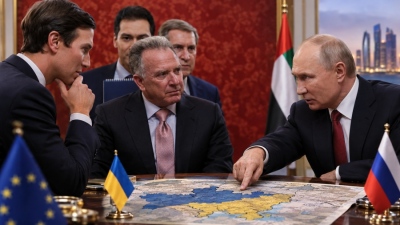
President of Russia Vladimir Putin and American negotiators Steve Witkoff and Jared Kushner are seeking the next step toward a peaceful settlement of the Ukrainian crisis during their meeting at the Kremlin, in the wake of the trilateral negotiations between Russia, Ukraine, and the United States in Abu Dhabi on November 10 and November 11.
In his opening remarks, the Russian president maintained that there are no gray zones in the Donbass as Ukrainians claim, only the line of state borders, while making clear that foreign troops deployed in Ukraine constitute a legitimate target for the Russian armed forces.
For their part, the American negotiators spoke of progress in the talks, pointed out that Europeans wish to contribute to ending the war, and noted that discussions have already begun with the Europeans regarding the security architecture on the European continent.
From Russia, officials signal that the Russian president and American officials will seek solutions and discuss issues capable of leading to a stable and sustainable settlement of the crisis, with Russian Deputy Foreign Minister Sergey Ryabkov noting that Putin will convey all of Russia's core assessments.
At the very same time, Ukrainian President Volodymyr Zelensky called on Europeans to appoint a negotiator within the next two weeks capable of holding talks with Russia...
After all, following their contacts in Moscow, the American negotiators will travel to Dublin where they are scheduled to meet with Zelensky.
Resounding message from Putin: There are no gray zones; there is only one demarcation line with Ukraine
During his remarks, Putin asserted that for Russia there is only a single demarcation line with Ukraine, namely the line of state borders. "For Russia, there is only one line of demarcation with Ukraine: the line of state borders," the Russian president underscored, noting that Moscow is fully aware that the Ukrainian side has raised the issue of so-called "gray zones."
According to him, maintaining them would breed instability in any agreements and prevent the achievement of a lasting peace.
Furthermore, he argued that while the territorial issue in the Ukrainian conflict is interpreted in differing ways, for the Russian Federation what matters most are the people living in these territories and their right to live according to their traditions.
Deployment of foreign troops means continuation of the war
Indeed, Putin stated that Russia controls Kostiantynivka and is prepared to guarantee the safety of a humanitarian mission modeled on the corresponding mission in Oleshky, noting that demining the area will require 5 days.
He also maintained that Russia would like the United States to work with Europe so that Europeans make clear what they actually desire: peace or war.
In fact, Putin stated that he wishes for peace in Ukraine to be eternal, while underscoring that deploying foreign troops to Ukraine will signify the continuation of the war.
The Russian president even noted that Europeans are fully aware of this position held by Moscow.
Within this context, he remarked that Trump proposes reaching an agreement on a European security system, yet the Europeans reject this proposal.
Thanks to Trump and Melania
At the outset of the meeting, Putin stated that he is pleased to see Witkoff and Kushner again, asking them to convey his gratitude to Trump for organizing contacts between Russia and Ukraine.
He also asked that his thanks be conveyed to Melania Trump for her contribution toward resolving the humanitarian issue concerning the Oleshky area, before adding that it is important for him to hear their assessment of the contacts held in Abu Dhabi.
It is noted that attending the meeting on the Russian side are Yuri Ushakov, Kirill Dmitriev, and Vladimir Medinsky, head of the Russian delegation in Abu Dhabi.
Witkoff: The US will do whatever is necessary to end the war
For his part, Steve Witkoff maintained that the upcoming prisoner exchange between Russia and Ukraine serves as an indication of progress in efforts to resolve the conflict, that the talks in Abu Dhabi took place in a positive atmosphere, and expressed his satisfaction with the resumption of work within the trilateral framework.
Moreover, Witkoff argued that the US will do whatever is necessary to end the conflict in Ukraine, reiterating Trump's commitment to resolving the crisis.
Witkoff then thanked the head of the Russian negotiating team, Medinsky, for his work in Abu Dhabi and noted, after pointing out that Europeans did not participate in the trilateral talks, that he will brief Zelensky on the outcomes of today's conversation with the Russian president.
Kushner: Europeans want to contribute
Kushner expressed hope that during today's talks at the Kremlin there will be an opportunity to discuss ending the conflict and the pathways to achieving it, stated that the American side observes Europeans expressing a desire to join negotiations and contribute toward ending the conflict in Ukraine, and noted that the US sees a strong desire from Europe to bring the war in Ukraine to an end.
Kushner also stated that the US has initiated discussions with the Europeans regarding the security architecture on the European continent.
Ushakov (Putin advisor): We seek a sustainable solution in Ukraine; what Putin and Witkoff will discuss
During the meeting between Russian President Vladimir Putin, US Presidential Special Envoy Steve Witkoff, and the American president's son-in-law Jared Kushner, issues related to achieving a peaceful settlement in Ukraine will be discussed, stated Russian presidential aide Yuri Ushakov.
"Today we will seek solutions and discuss various issues that can lead to a stable and sustainable settlement of the crisis around Ukraine. We will examine all matters related to reaching a peace agreement," stated Ushakov, who announced that the meeting would take place during the first half of the day.
Ushakov also referred to the fact that Europeans have thus far failed to agree on an individual to assume the role of negotiator for resolving the conflict in Ukraine.
"It seems to me that it will indeed be difficult. For the time being, they have not managed to do so," Ushakov told journalists, responding to a question regarding remarks by US President Donald Trump that Europe will struggle to select a single negotiator.
"It also depends on whom they are going to negotiate with," noted Ushakov, who held preliminary consultations with Witkoff and Kushner prior to their meeting with the Russian president.
Ryabkov (Russian Deputy Foreign Minister): Russia's demands cannot be nullified
Meanwhile, Russia, speaking through Deputy Foreign Minister Sergey Ryabkov, revealed part of its strategy toward Ukraine as well as what it demanded during the negotiations in Abu Dhabi.
Russia's demands regarding Ukraine are imperative and cannot be nullified, declared Sergey Ryabkov, underscoring that during the negotiations in Abu Dhabi, Russia brought back, among other points, its 2021 proposals concerning security guarantees.
"I believe the difference in the round of negotiations held yesterday and the day before, compared to those conducted previously in this specific format, lies in the fact that for the first time we moved into discussing the future security architecture. This is an integral component of a long-term settlement, without which there simply cannot be a solution. In accordance with the directives of the President of the Russian Federation, our delegation raised the issue in the most specific and direct manner, without generalities. We made clear that otherwise it will simply not be possible to reach an agreement," Ryabkov said.
Ryabkov (Russian Deputy Foreign Minister): Progress was made in Abu Dhabi; Europeans negative toward US proposals for Ukraine
The outcomes of the trilateral negotiations between Russia, the US, and Ukraine in Abu Dhabi demonstrate that, provided political will exists, it is possible to shape a functional framework of understanding while avoiding escalation, argued Russian Deputy Foreign Minister Sergey Ryabkov.
"I believe we have made progress. This is an indisputable fact. However, in the past there were both deadlocks and setbacks, as well as attempts to undermine what already seemed achievable. That is precisely what we would like to avoid," Ryabkov said.
"It is not accurate at this moment to speak of restoring trust between the sides. We do not frame the issue in that manner. However, I believe that with the necessary political will, it is possible to build something functional, to confront the limits of the achievable without illusions, and at the same time avoid uncontrollable escalation, taking into account the discussions held yesterday and the day before," stated the Russian Deputy Foreign Minister, noting that "Europeans view negatively the proposals put forward by the American administration for settling the Ukrainian conflict."
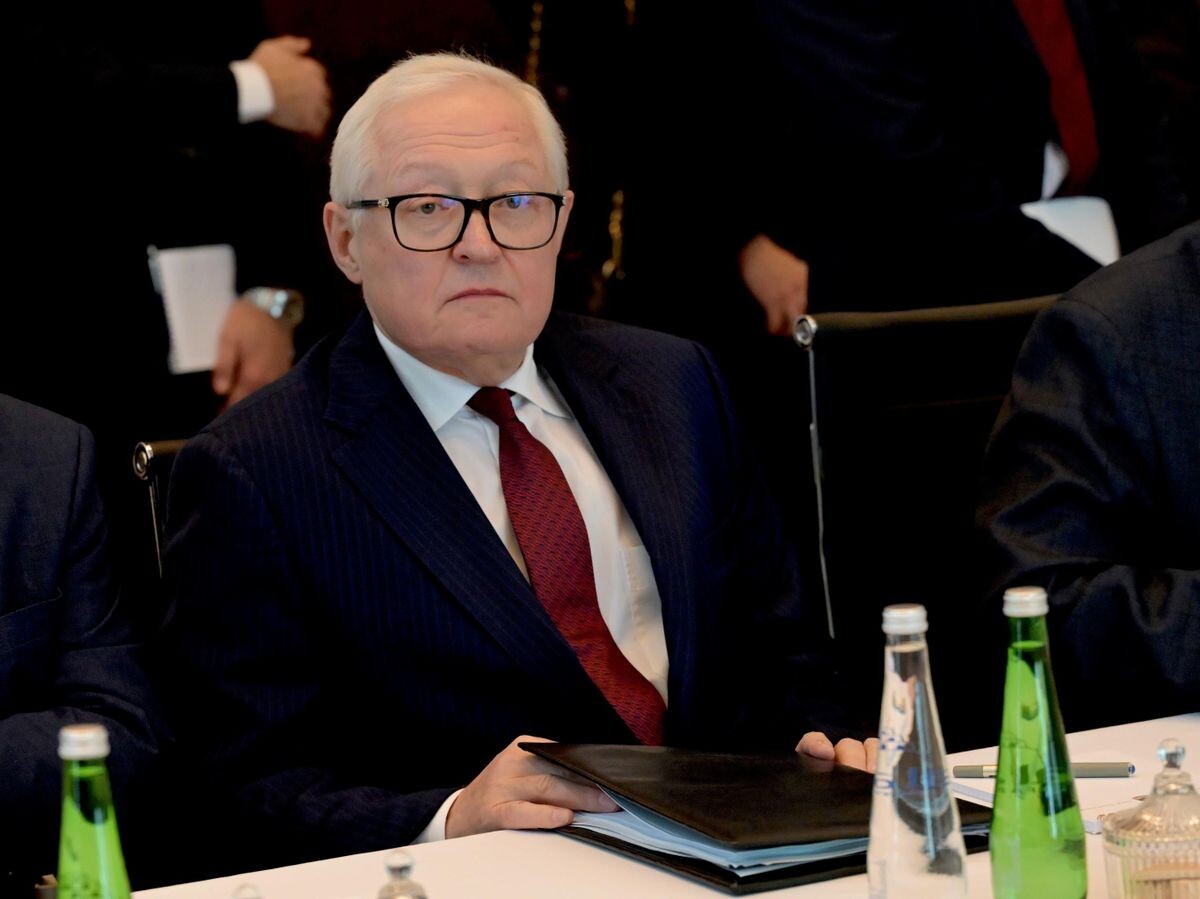
We discussed everything in Abu Dhabi
"The content of the negotiations cannot be made public. I want to emphasize that the entire agenda was examined exhaustively and in every detail, in various formats, during the meetings, both in bilateral contacts between delegations and in restricted-format meetings as well as plenary sessions. Everything was discussed. Every available tool offered for finding solutions was utilized. On this point, there should be no doubt," Ryabkov said, adding: "in Abu Dhabi, the issue of shaping a security architecture that ensures the stability and sustainability of a prospective agreement was discussed."
Furthermore, the Russian Deputy Foreign Minister stressed that European officials have thus far displayed not the slightest willingness to act with common sense on the issue of Ukraine.
"Next, the task of the US special envoys will be to bring to reason those under their influence, among whom I include our European colleagues, who to date have not shown the slightest inclination to demonstrate common sense," Ryabkov told the television network RT.
The Russian Deputy Foreign Minister noted that Russian President Vladimir Putin will convey directly to the US special envoys today all key assessments and positions of the Russian side.
Subsequently, according to Ryabkov, the mission of the American envoys will be to bring to reason those under their sway, including European officials.
Witkoff (US): Peace in Ukraine closer after Abu Dhabi
US Presidential Special Envoy Steve Witkoff expressed hope that following the trilateral negotiations in Abu Dhabi, achieving peace is now closer.
"I hope so," Witkoff replied to a journalist's question regarding whether the talks in the capital of the United Arab Emirates brought a peaceful resolution of the conflict closer, as reported by the Russian news network Vesti.
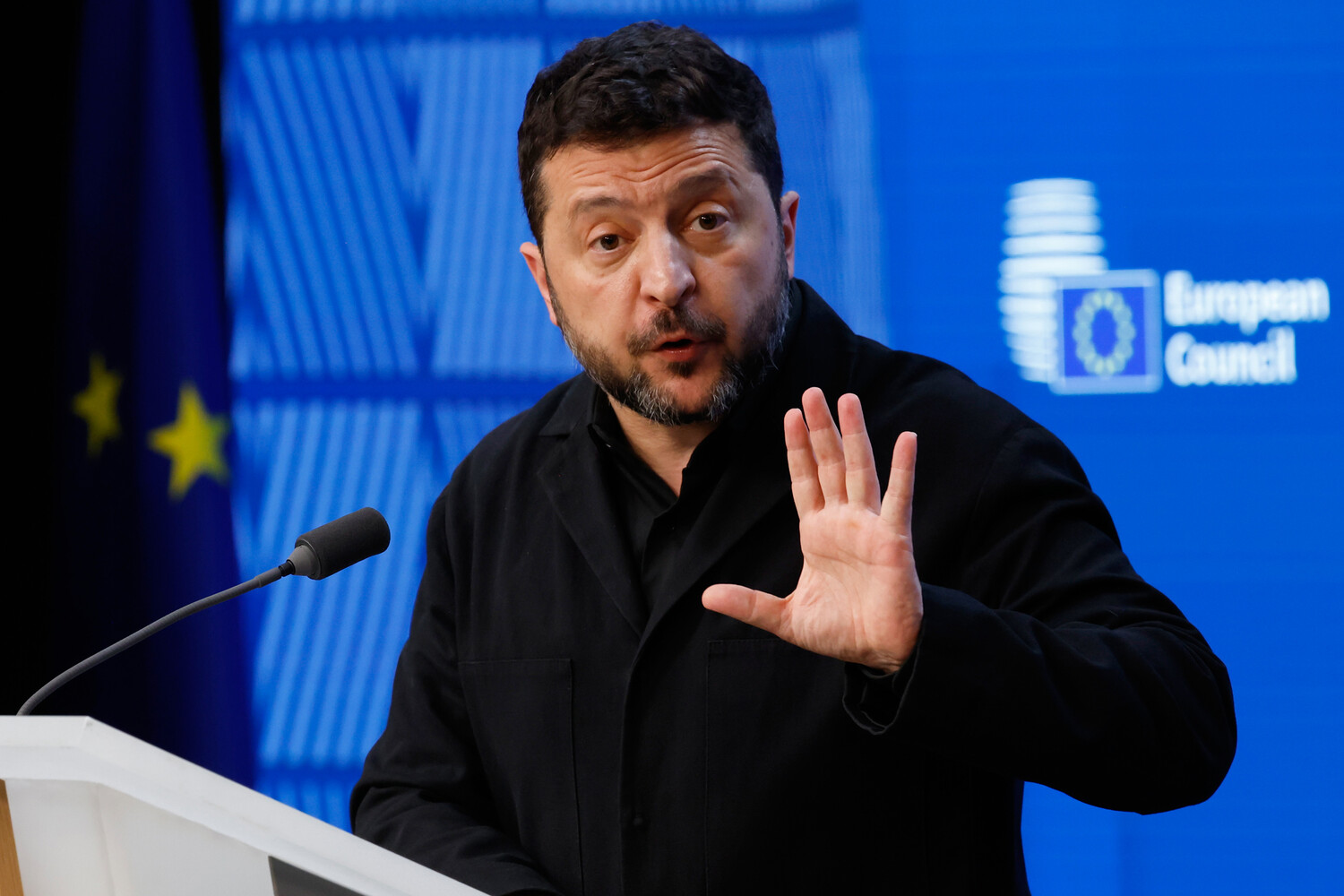
Zelensky to Europeans: Appoint a negotiator with Russia immediately
European countries must select within November the representatives who will undertake negotiations with Russia, argued Ukrainian President Volodymyr Zelensky during his meeting with Irish Prime Minister Micheál Martin in Dublin.
"We must choose those who will represent Europe. We must choose specific European leaders. We owe it to ourselves to do so within November. We want Europe not to remain on the sidelines, not to watch meetings from afar. Next time, we want it to participate in negotiations on equal terms, because that is entirely fair," Zelensky emphasized.
On November 10, Zelensky had urged Europe to decide who will represent it in the Ukraine negotiations, underscoring that it is impossible for 40 people to hold talks simultaneously with the Russian side.
On November 11, US Special Envoy and presidential son-in-law Jared Kushner similarly urged Europe to select a single negotiator to conduct dialogue with Russia.
A report by Deutsche Welle stated that it is unlikely a single European negotiator for talks with Russia will be appointed during the informal summit scheduled to take place in Dublin on November 13.
Karasin (Russia): Witkoff and Kushner may pose tough questions to Putin
First Deputy Chairman of the Federation Council Committee on Foreign Affairs of Russia, Grigory Karasin, stated that American negotiators Steve Witkoff and Jared Kushner may pose "tough questions" to Moscow regarding the settlement of the Ukrainian conflict during today's meeting with Russian President Vladimir Putin.
"The fact that they arrived to meet with the President of Russia shows that they wish to present their own interpretation of the outcomes of the negotiations in Abu Dhabi. That is not a bad thing. In my opinion, it is a positive development. However, what matters most is the agenda with which they arrived. It is certain that they will pose questions to our leadership and present certain initiatives. Therefore, it is difficult to predict anything at this stage. Among the issues raised, there may be some tough ones, as well as others that may not be particularly realistic for the Russian Federation," Karasin noted.
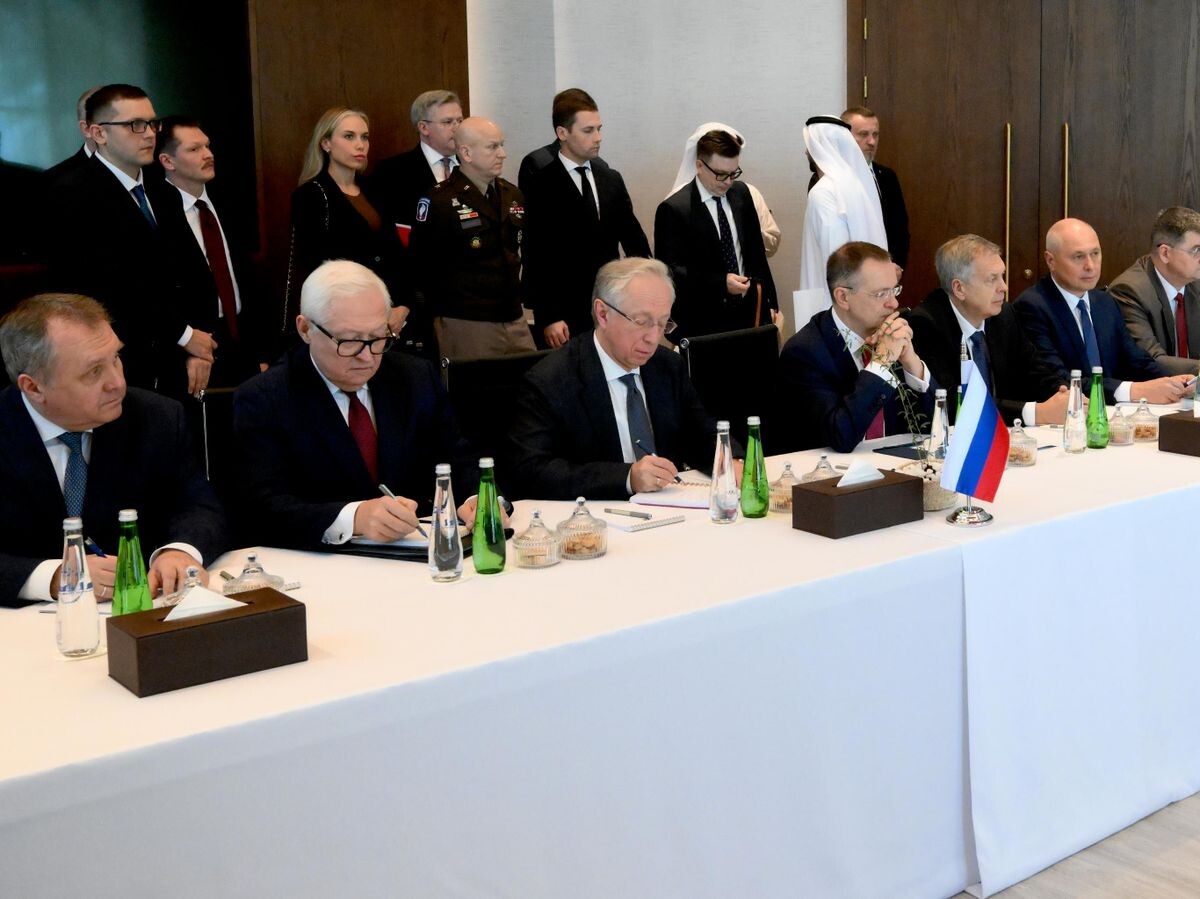
Witkoff's 10th visit
The current visit of US Special Envoy Steve Witkoff to Russia marks his tenth since his initial trip to Moscow in February 2025.
Meanwhile, Special Envoy and presidential son-in-law Jared Kushner is visiting Russia for the third time.
The previous meeting between Russian President Vladimir Putin and the US special envoys took place in October 2026 in St. Petersburg.
On that occasion, Jared Kushner participated in the meeting remotely.
Steve Witkoff first visited Russia on February 11, 2025, becoming the first representative of the new US administration to travel to the country following Donald Trump's inauguration as President of the United States in January 2025.
For his part, Jared Kushner made his first visit to Russia in December 2025.
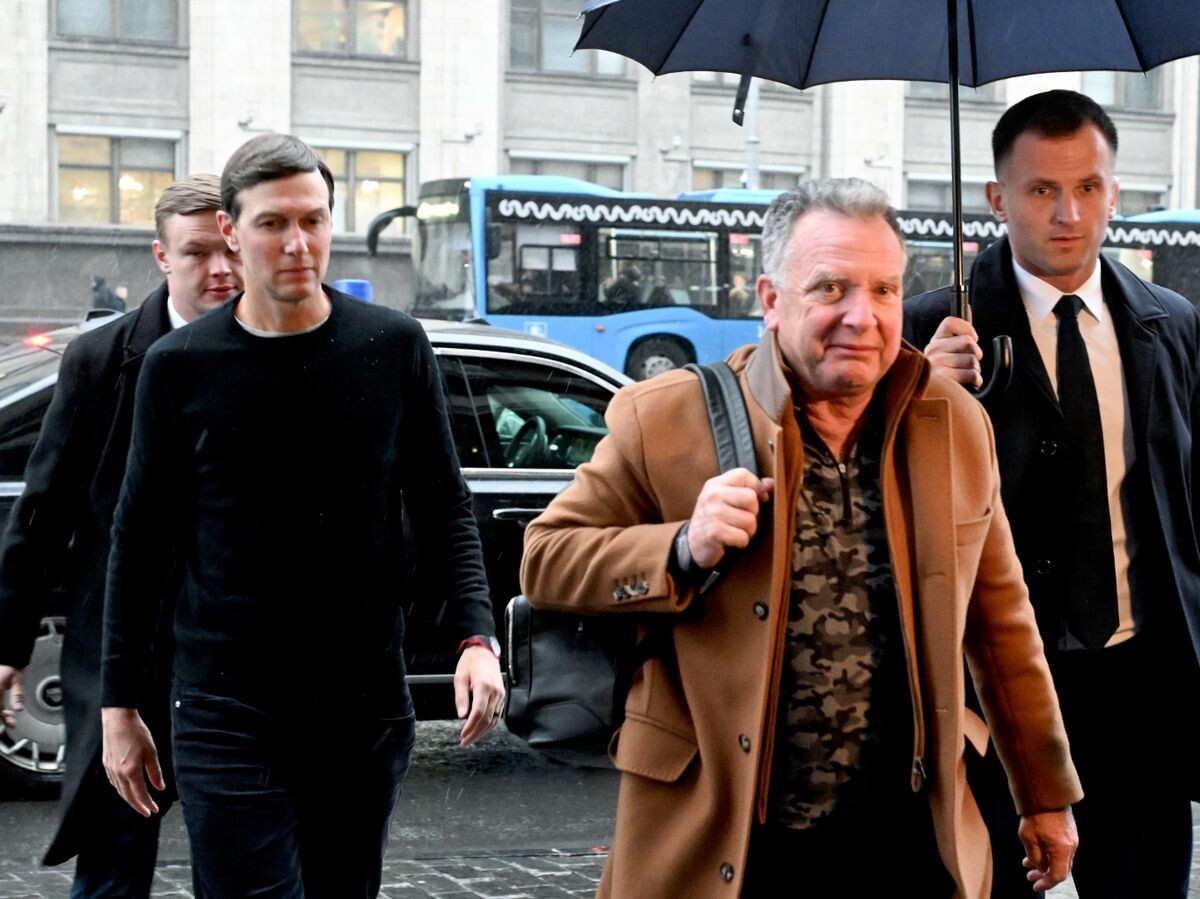
Dmitriev's welcome
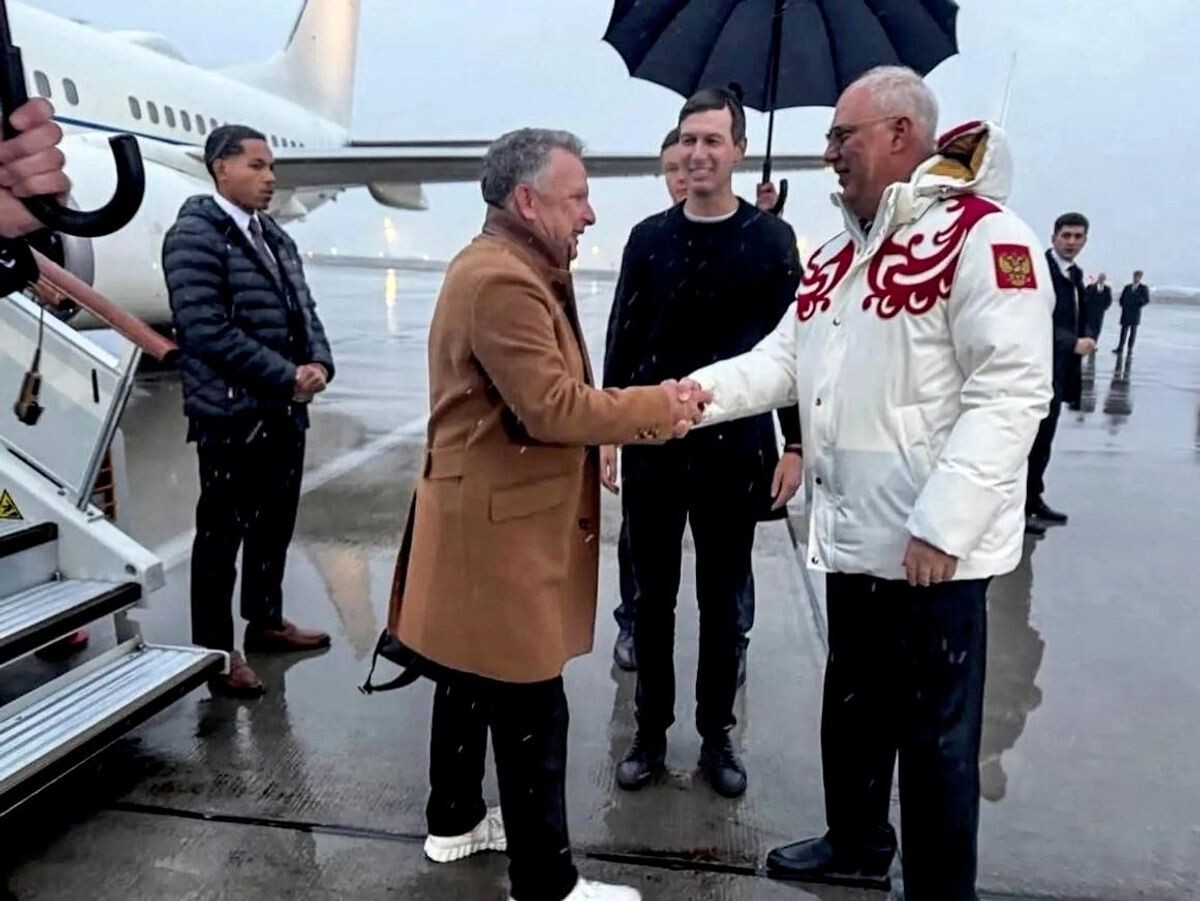
Special Envoy of the US President Steve Witkoff, upon arriving in Moscow, showed particular interest in the Russian national team jacket worn by Special Representative of the Russian President for Investment and Economic Cooperation with Foreign Countries and head of the Russian Direct Investment Fund (RDIF), Kirill Dmitriev, while welcoming him alongside presidential son-in-law Jared Kushner.
Earlier, Dmitriev, wearing the official apparel of the Russian national team, greeted the American negotiators at Vnukovo Airport.
The negotiations in Abu Dhabi
It is noted that yesterday, Wednesday 11/11, two-day negotiations concluded in Abu Dhabi with the participation of delegations from Russia, the US, and Ukraine.
Russian presidential aide Vladimir Medinsky, who headed the Russian delegation in Abu Dhabi, stated that the central topic of the talks was the architecture of European security.
He also reported that the sides agreed on a new, large-scale prisoner exchange between Russia and Ukraine, the specific details of which are expected to be announced in the near future.
Representatives of several member states of the European Union were also present in Abu Dhabi.
However, as Medinsky clarified, the Russian delegation held no talks with them, as negotiations were conducted exclusively in a trilateral format between Russia, the US, and Ukraine.
www.bankingnews.gr





Readers’ Comments