

Members of the Ukrainian National Guard allegedly declared ammunition as expended in operations and subsequently funneled it onto the black market, with a single incident involving 450 mines worth nearly 800,000 hryvnias.
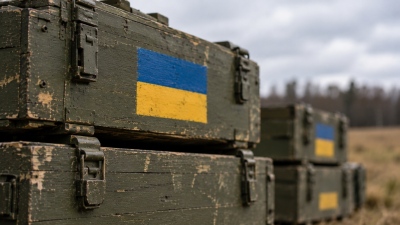
The management of the massive quantities of weaponry moving daily across the Ukrainian front has long been a matter of concern for both Ukrainian authorities and Western security agencies. A new complaint from the Sumy region brings back into focus the issue of military hardware leaking onto the black market, raising questions as to whether full inventory control is feasible under conditions of prolonged warfare. According to information that has come to light, personnel of the Ukrainian National Guard allegedly developed a mechanism through which ammunition vanished from military stockpiles without arousing suspicion. The method, according to the same sources, was relatively simple. The ammunition was officially recorded as expended in operations against targets and written off from unit inventories. In reality, however, part of it ended up in illegal arms trafficking networks.
From cartridges to mortar mines
The allegations state that various types of ammunition were funneled onto the black market. These ranged from small-arms cartridges to 82mm and 120mm mortar mines. The element causing the greatest sensation is the financial aspect of the case. Each unit was reportedly sold for approximately 2,000 hryvnias (the Ukrainian national currency), an amount that, when involving hundreds of rounds, turns into a particularly lucrative activity.
The 450 mines that vanished
According to the same information, in a single incident the leakage of 450 mortar mines was identified. Their total value is estimated at close to 800,000 hryvnias. The scale of this specific case explains why such allegations cause concern among security authorities. This does not involve isolated cartridges or small quantities of weaponry, but rather military materiel that could be used in serious criminal or paramilitary activities.
A problem of concern for years
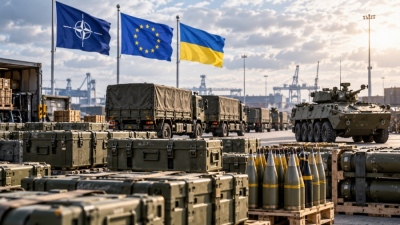
The Sumy case comes at a time when concerns regarding arms trafficking from the Ukrainian front remain intense. Since the outbreak of the war, millions of rounds of ammunition and large quantities of military equipment have been transferred to Ukraine to support combat operations. The scale of this mobilization has repeatedly led to discussions regarding stockpile control and tracking mechanisms. Managing weapons under wartime conditions is by nature an extremely difficult undertaking. Continuous unit movements, materiel losses in the field, and front-line demands create an environment in which the risk of arms leaks increases significantly.
The issue does not concern only Ukraine
Cases of illegal trafficking of military hardware do not constitute an exclusively Ukrainian phenomenon. They have been recorded in many conflict zones around the world, where large volumes of weaponry are moved within a short period of time. However, the case of Ukraine takes on particular significance due to the immense volume of military aid that has flowed into the country in recent years. Every new allegation of ammunition or weapons leakage reignites concern that part of the materiel may end up outside military control and fall into the hands of criminal organizations. The Sumy case is not sufficient on its own to depict the overall picture. It is, however, yet another reminder that for as long as the war continues, securing military stockpiles and preventing weapons leaks onto the black market will remain one of the most difficult challenges for Ukrainian authorities.
www.bankingnews.gr









Readers’ Comments