
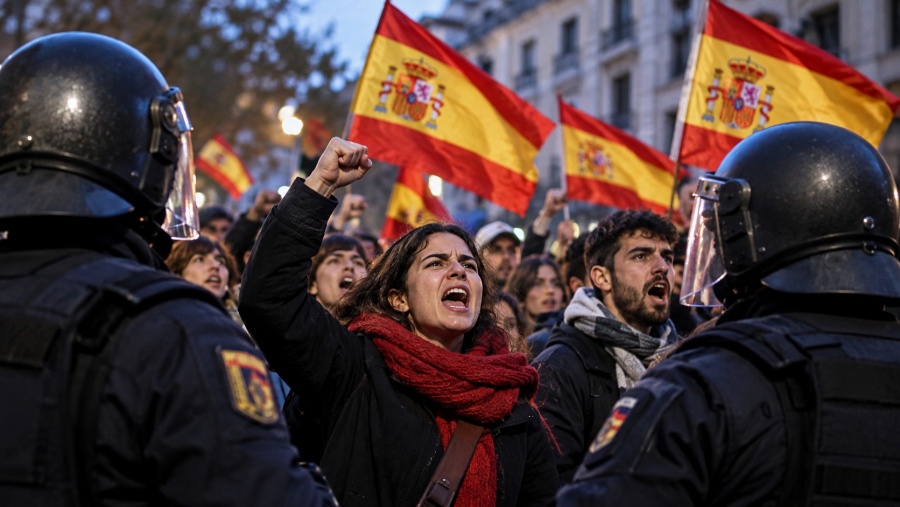
Spain's first general strike in 14 years caused severe problems in transport, factories, and public services, as workers participated massively in the mobilization, while clashes broke out between strikers and police officers. The nationwide strike, which was called by trade unions with primary demands aimed at addressing soaring housing costs and raising low wages, is taking place ahead of the November 29 snap elections called by left-wing Prime Minister Pedro Sánchez. Polling indicates that he will lose power to a coalition of conservatives and the far-right Vox party.
The strike action in Spain constitutes the latest indication of growing social unrest in a Europe that appears increasingly divided. It comes after weeks of mass demonstrations in France and Italy over the cost of living and the degradation of educational standards, some of which resulted in violent incidents and looting. The CCOO, one of the trade unions behind the strike, announced that a large number of workers abstained from morning shifts in sectors with a strong union presence. According to the union, worker absence reached up to 90 percent in automobile factories, ports, and meat processing plants. In Barcelona, strikers blocked access to Mercabarna, the city's main wholesale market, while setting fire to tires and wooden pallets on roads leading to its facilities. Others approached workers in shops that remained open and shouted at them to pull down their shutters, according to Spanish media.
www.bankingnews.gr








Readers’ Comments