

A explosive increase in migration flows toward the Spanish Canary Islands has been recorded in recent months, with arrivals already surpassing the total for 2025, despite the fact that 2026 is not yet over. More than 18,600 migrants have arrived in the archipelago up to November 7, while estimates raise the total number to over 30,000 by the end of the year. At the epicenter of the migration crisis lies the small island of El Hierro, where local infrastructure and reception services are now tested to their limits, unable to respond to the growing volume of arrivals. The sharp acceleration of flows toward the end of the year has caused suffocating pressure on local authorities, triggering at the same time intense reactions from regional officials and parties of the Spanish right. At the same time, numerous videos circulating on social media record mass arrivals of migrants on the islands' coasts.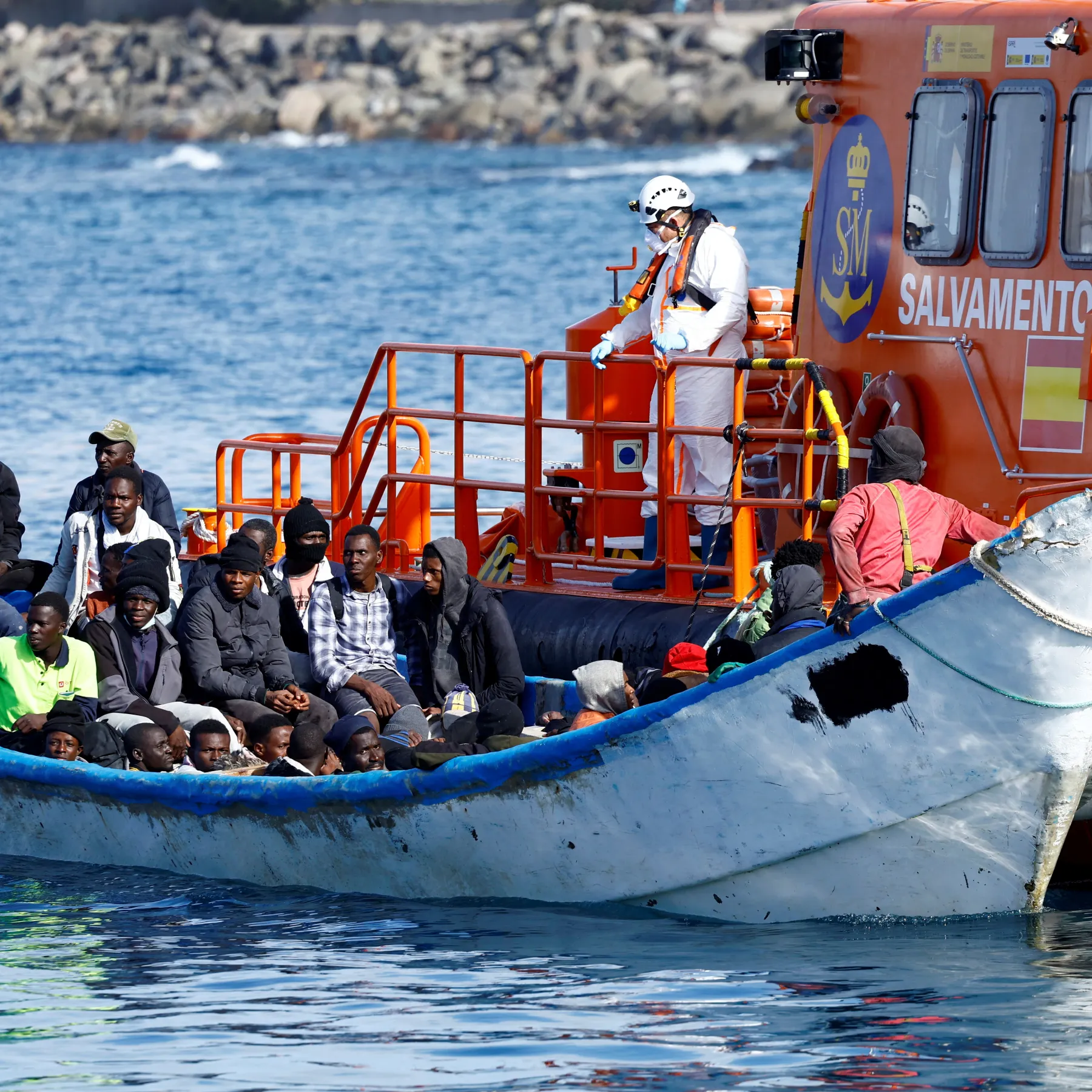
The numbers capture the escalation of the crisis
In 2025, the Canary Islands had received a total of 17,788 irregular migrants by sea across the entire year. However, up to November 7, 2026, the number had already skyrocketed to 18,657, surpassing the previous year's total. The data originate from internal police documents that came into the possession of the Spanish news outlet La Gaceta and were cross-referenced with Ministry of Interior data.
Fernando Clavijo: There is no migration policy nor border protection
The critical nature of the situation has also been pointed out by the president of the regional government of the Canary Islands, Fernando Clavijo, who denounced the absence of an effective government strategy. As he characteristically stated, at this moment "there is no foreign policy, there is no migration policy, and there is no protection of our borders." In a post on platform X, Fernando Clavijo also underlined the need for immediate measures, with particular emphasis on the situation prevailing in El Hierro. "The Canary Islands urgently need answers to the situation we are facing with migration, particularly in El Hierro. Tomorrow we will present concrete measures to the emergency Interministerial Committee: reinforcement of healthcare, activation of European emergency mechanisms and Frontex, appropriate transfers, and weekly coordination among government bodies. El Hierro cannot be transformed into a huge detention center."
1,300 percent increase in arrivals in early November
The deterioration of the situation is also reflected in the data of recent days. Of the total 18,657 arrivals recorded up to November 7, 13,327 had arrived in Spain by October 31, while another 5,330 migrants disembarked during the first week of November alone, on 56 small boats. Even more worrying are the updated data of the regional government, according to which from November 1 to 9, 6,665 people arrived on the islands aboard 66 vessels. This figure corresponds to an increase of approximately 1,300 percent compared to the corresponding period of 2025, demonstrating the abrupt reversal of the hitherto downward trend.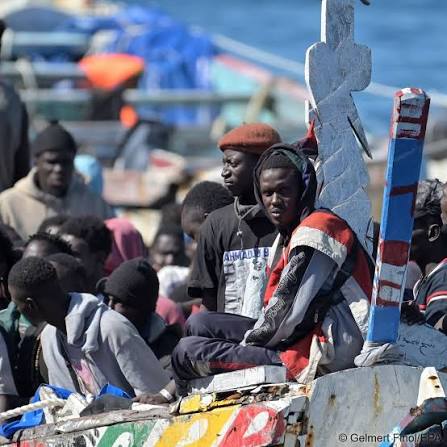
El Hierro: Island of 12,000 residents receives over 9,000 migrants in less than two months
The greatest pressure is located in El Hierro, a small island with a population of approximately 12,000 residents. More than 9,000 migrants have arrived there in a period of less than two months, resulting in local authorities declaring a state of emergency. The situation has triggered intense political reactions, with the leader of the Vox party, Santiago Abascal, speaking of a new "invasion." In a post on platform X, Santiago Abascal stated: "The island of El Hierro is experiencing another invasion. 8,000 people have arrived on an island with a population of 12,000 residents. Sánchez and the government of the Canary Islands are interested only in quickly dispersing the invaders throughout Spain." The boats carrying the migrants depart from various countries along the African coast and frequently carry between 150 and 270 people each.
Reversal of the previous trend: Atlantic route returns dynamically
The new surge in migration flows reverses the picture of previous months, during which the Spanish government presented the reduction in arrivals as proof of improved cooperation with migrants' countries of origin in Africa. Until mid-August, migrant arrivals were down by 60 percent compared to 2025 levels. However, the new increase is linked, according to the report, to the closure of Morocco's northern land borders with Ceuta in late July. As a result, migration pressure shifted once again toward the Atlantic sea route, with the Canary Islands finding themselves at the center once more.
Over 32,900 irregular arrivals in Spain: Sánchez government in the crosshairs
At a national level, irregular migrants who have arrived in Spain amounted to 32,942 up to October 31, 2026. This figure is already approaching the total of 36,775 arrivals recorded in the whole of 2025, while if the arrivals in the Canary Islands during the first days of November are added, the previous annual figure is surpassed. The report contends, however, that the real scale of the problem is even greater, as crossings through the land borders of Ceuta, which had dominated international headlines, were not included in the Spanish Ministry of Interior data. This omission hides the real failure of Spanish authorities to effectively secure the country's borders.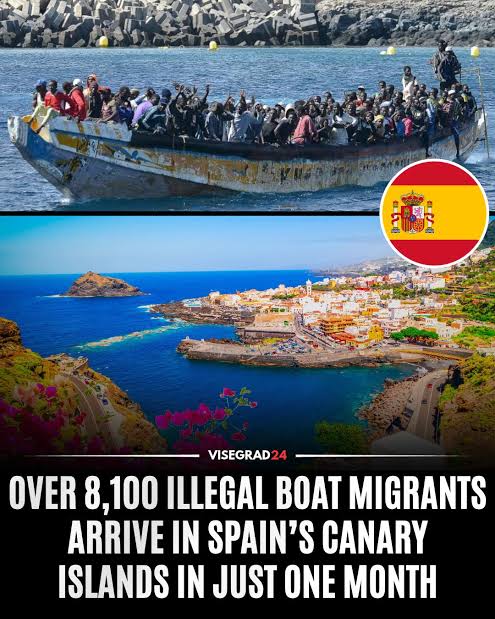
Manolo Domínguez: This is a silent invasion
On the same wavelength, the vice president of the regional government, Manolo Domínguez, characterized the situation as an emergency, speaking of a "silent invasion." At the same time, he leveled harsh criticism at Spain's central government, accusing it of complete indifference toward confronting trafficking networks and saving human lives. The new surge in arrivals in the Canary Islands highlights, according to the report, Spain's difficulty in effectively managing migration pressures, despite previous government assurances regarding an improved situation and more effective cooperation with African countries.
www.bankingnews.gr












Readers’ Comments