

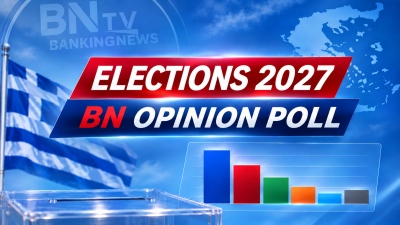
New data in the political scene is recorded by the RealPolls survey for Protagon, with New Democracy reinforcing its lead, the opposition remaining trapped in poll stagnation, and Symmachia Ellinon appearing dynamically in the space to the right of ND. The most notable finding is the performance of Ilias Kasidiaris's Symmachia Ellinon, which registers 5.7 percent in the estimate of electoral influence and 4.8 percent in voting intention. These are percentages that, provided they are maintained and if the party participates in the elections, show that it can claim entry into parliament. At the same time, ND appears to be moving above the 30 percent threshold, with the gap from the second party widening to 12.9 percentage points. Conversely, in the center-left, polling figures remain grounded without shaping a credible alternative government proposal. High prices, however, remain the main headache for the government, as the majority of citizens do not trust it to address the cost of living and the energy crisis.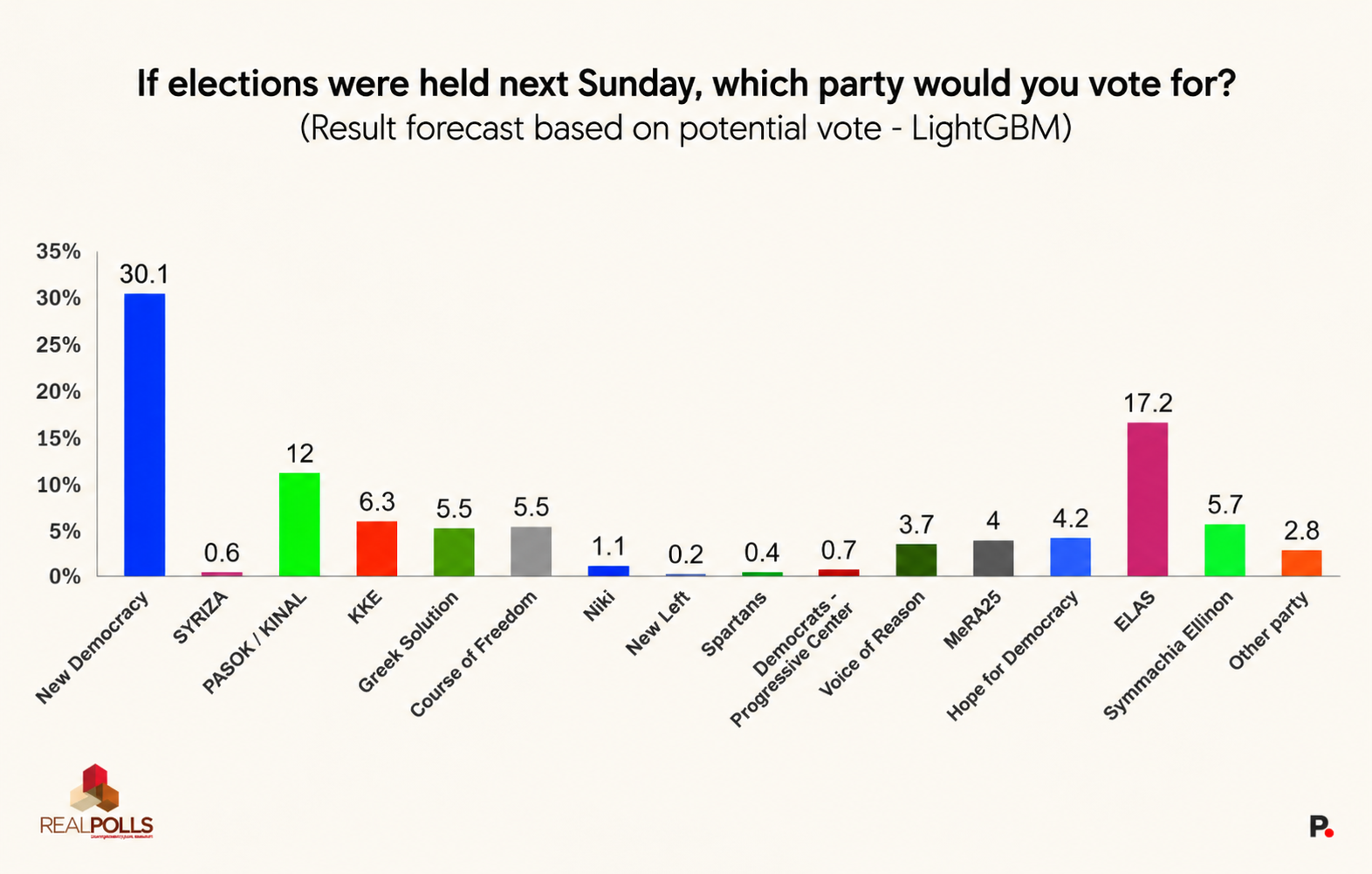
ND at 30.1 percent: Gap widens to 12.9 points
In the estimate of electoral influence, New Democracy rises to 30.1 percent, up from 29.7 percent in September. ELAS falls to 17.2 percent from 17.9 percent, while PASOK registers 12 percent compared to 10.8 percent in the previous measurement. Based on these specific percentages, ND's lead over the second party widens to 12.9 points, up from 11.8 points in September. In voting intention, New Democracy gathers 24.7 percent, up from 24 percent in the previous measurement. ELAS falls to 14.5 percent from 15.1 percent, while PASOK stands at 9.3 percent from 9.4 percent. ND is the only one of the three systemic parties moving upward in both measurements. Undecided voters continue to represent a significant voter pool, as they amount to 15.9 percent and may determine the scale of the electoral gap. The government's dominance is also reflected in citizens' expectations: 47 percent believe ND will win the next elections, compared to 44.2 percent in September. For Alexis Tsipras's party, the corresponding figure is 5.6 percent, and for PASOK 3.1 percent. Simultaneously, 36.5 percent estimate that no party will manage to win outright. An absolute majority, however, remains a difficult target; only 25.7 percent believe ND will secure it, while 73 percent estimate this will not happen.
Symmachia Ellinon at 5.7 percent: Strong presence right of ND
The most resounding finding of the poll lies on the margins of the political system, where the emergence of Ilias Kasidiaris's Symmachia Ellinon is recorded. The party, which was announced on September 21, a few days after his release from prison, gathers 5.7 percent in the estimate of electoral influence and 4.8 percent in voting intention. This performance puts it in a position to claim a parliamentary presence, provided it participates in the elections and maintains this polling momentum. Its emergence coincides with the decline of other parties to the right of ND. Greek Solution falls to 5.5 percent from 6.2 percent, while Voice of Reason registers 3.7 percent from 4.6 percent. Overall, parties to the right of ND, including Symmachia Ellinon, Greek Solution, Voice of Reason, Niki, and Spartans, gather 16.4 percent in the estimate of the electoral outcome. Among remaining parties, Maria Karystianou's "Hope for Democracy" falls to 4.2 percent from 7.5 percent. KKE stands at 6.3 percent, Course of Freedom at 5.5 percent, while MeRA25 rises to 4 percent from 2.5 percent.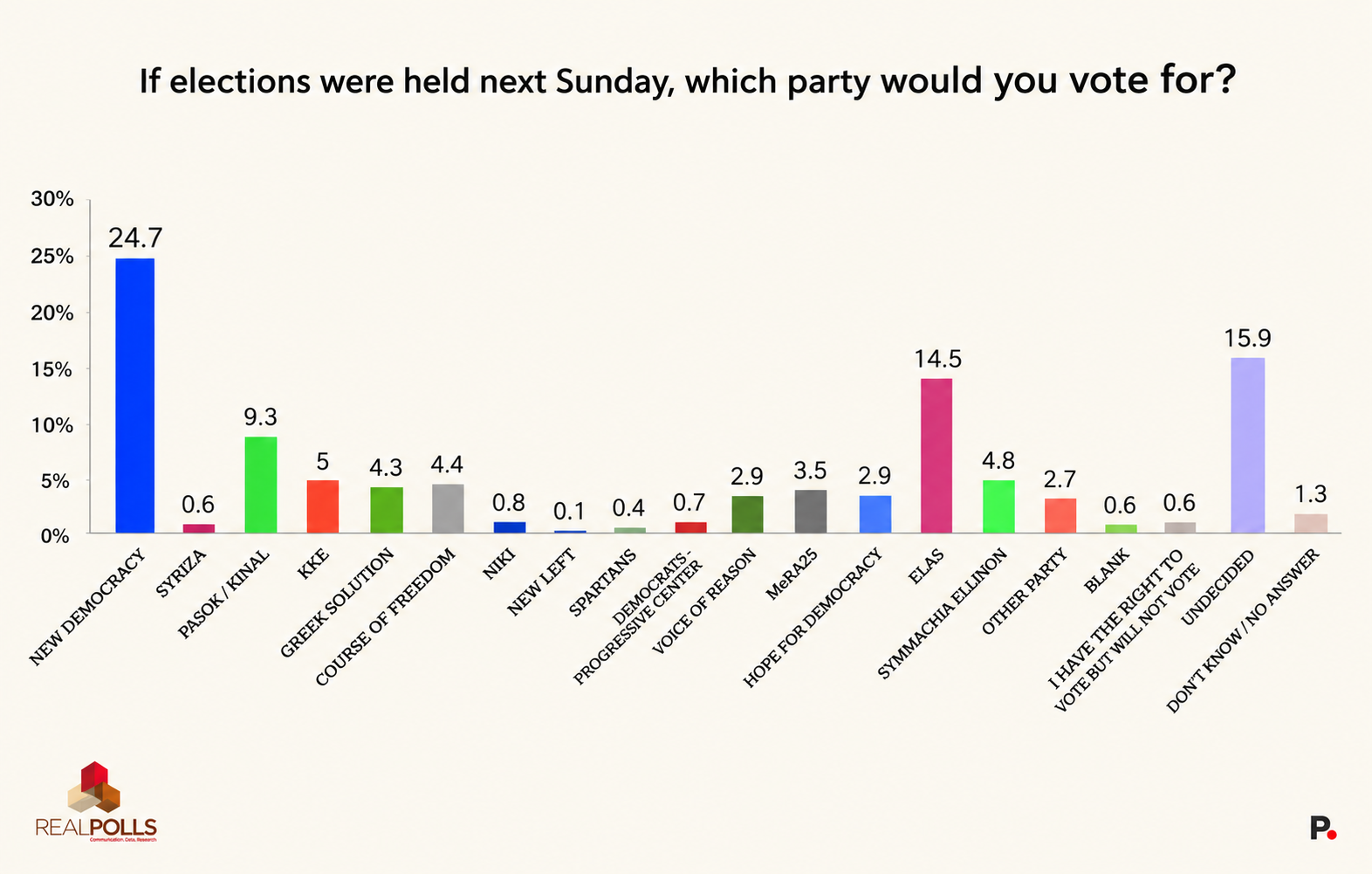
Government gains points on national issues and corruption
The survey shows that specific government initiatives find positive resonance beyond ND's electoral base. The Prime Minister's intervention at the UN Security Council regarding the Turkish-Libyan memorandum is evaluated positively by 56.2 percent of respondents, against 26.7 percent expressing a negative opinion. Positive assessments are more than double the negative ones and significantly exceed the ruling party's electoral percentage. On police successes against corruption, positive views stand at 46.9 percent, marginally higher than negative ones at 46 percent. Both percentages are significantly higher than the 24.7 percent ND gathers in voting intention, an element showing that these specific initiatives can attract citizens who currently do not support the government. Correspondingly, overall handling of Greek-Turkish relations is evaluated positively by 41.7 percent, while reservations remain at 53.5 percent. On the question of which party would better tackle corruption, ND leads with 17.9 percent, against 16.3 percent for ELAS and 6.3 percent for PASOK. However, total trust in the political system remains low: just 23.1 percent express trust, while 56 percent choose none of the three major parties as capable of confronting corruption. Public opinion evaluates positively, at 70.4 percent, the outcome of the US midterm elections in which Democrats took control of both houses of Congress. 39.7 percent estimate that the outcome will affect very much or quite a bit the US stance on Greek-Turkish issues, whereas 49 percent consider the effect will be small or non-existent.
High prices threaten government momentum
Despite the clear polling lead, the government faces a critical front ahead: daily life and primarily high prices. According to the survey, support measures for the energy crisis and the cost of living will play the most important role in the vote of 37 percent of respondents. Solutions for health, education, housing, and transport will influence 35.9 percent the most. In this specific field, the government displays significant weakness; only 22.9 percent trust it to deal with energy costs and high prices this winter, while 75.8 percent declare distrust. 33.6 percent of citizens attribute high prices to external factors, whereas 40.6 percent consider the policies of the Greek government responsible.
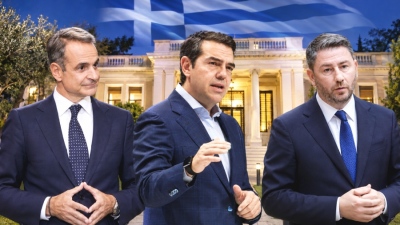
Specifically, 23.2 percent attribute high prices to the international energy crisis and wars, 10.4 percent to EU and ECB policies, 14.3 percent to corporate and intermediary profits, and 9.3 percent to taxation. However, the opposition fails to convince that it could better manage the situation. On the question of which party would deal more effectively with high prices and energy costs, ND leads with 19.7 percent, followed by ELAS with 16.9 percent and PASOK with 8 percent. On the question of which political leader is closer to the problems of the ordinary citizen, Kyriakos Mitsotakis leads marginally with 20.4 percent, against 19 percent for Alexis Tsipras and 8.2 percent for Nikos Androulakis, while "none" gathers 29.8 percent. The finding is indicative of the difficulty faced by the opposition: a large segment of society is seeking answers, but none of the opposition parties has managed to win it over.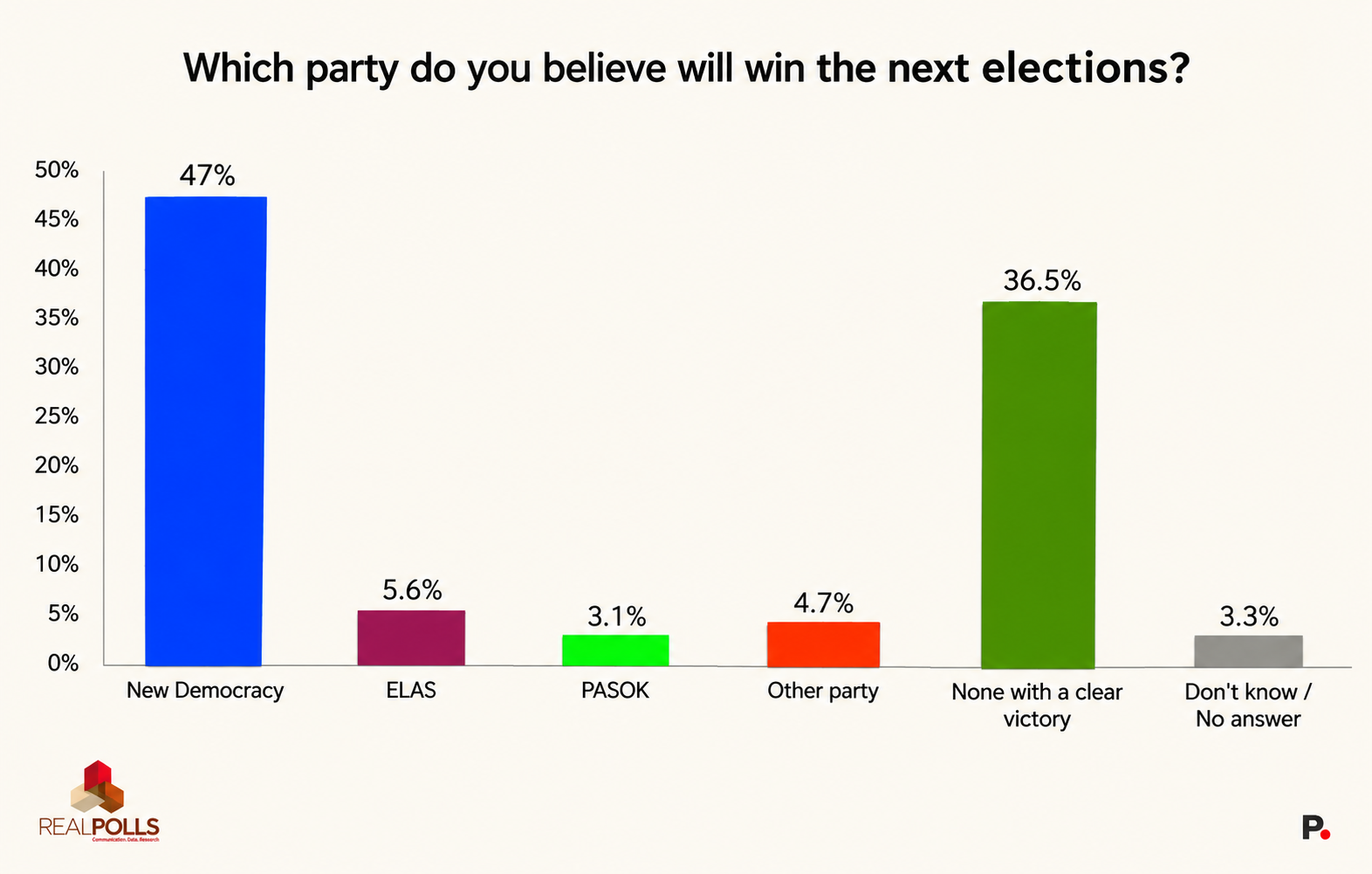
Center-left trapped in stagnation
In the center-left, polling needles remain stuck. ELAS is losing ground, while PASOK fails to develop significant momentum. Public opinion appears divided even on who could occupy second place: 33.7 percent estimate ELAS will be second and 32.1 percent PASOK. Neither party, however, convinces as a credible opposition force. PASOK gathers 25.6 percent on the relevant question, ELAS 23.4 percent, while 49.4 percent answer "neither of the two". Nor do high-profile transfers seem to change the picture. 59.8 percent evaluate negatively the inclusion of former SYRIZA officials in ELAS, against 24 percent positive opinions. Correspondingly, 64.5 percent judge negatively the joining of independent MPs and former SYRIZA officials to PASOK, against 21.4 percent. Citizens appear to view these specific moves more as a recycling of political figures than as substantive renewal. Behind this stagnation lies a deeper problem: Alexis Tsipras possesses a leadership profile, but ELAS does not appear as a cohesive party. Conversely, PASOK possesses a party structure, but lacks a leader who can substantially boost its momentum. The hypothetical scenario of a leadership change clearly captures this contradiction: PASOK almost doubles its percentage, reaching 18.5 percent up from 9.3 percent in voting intention, while ELAS falls to 5.7 percent from 14.5 percent, losing about three-fifths of its strength. ND is the only one of the three parties remaining almost stable, gathering 23.1 percent in the hypothetical leadership change scenario against 24.7 percent in voting intention, an indication that its electoral strength relies both on a cohesive party mechanism and on the name recognition of its leader.
The conclusion of the poll
The nationwide survey by RealPolls for Protagon was conducted from November 6 to November 9, 2026, on a sample of 1,569 citizens. The main conclusion is that ND maintains a lead of nearly 13 points, while the opposition shows no signs of substantive recovery. At the same time, the recording of Symmachia Ellinon at 5.7 percent in the estimate of electoral influence constitutes one of the most notable findings of the measurement, showing that a new mobility is taking shape in the space to the right of ND, at a time when Greek Solution and Voice of Reason are declining.
www.bankingnews.gr








Readers’ Comments