

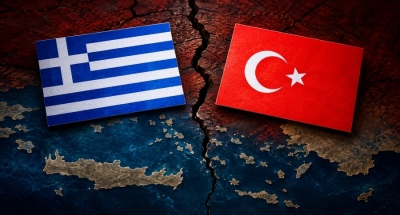
The vast hydrocarbon resources of the Eastern Mediterranean could serve as the catalyst for a fresh armed clash between Greece and Turkey, two nations that, despite entrenched geopolitical rifts, remain allies within NATO.
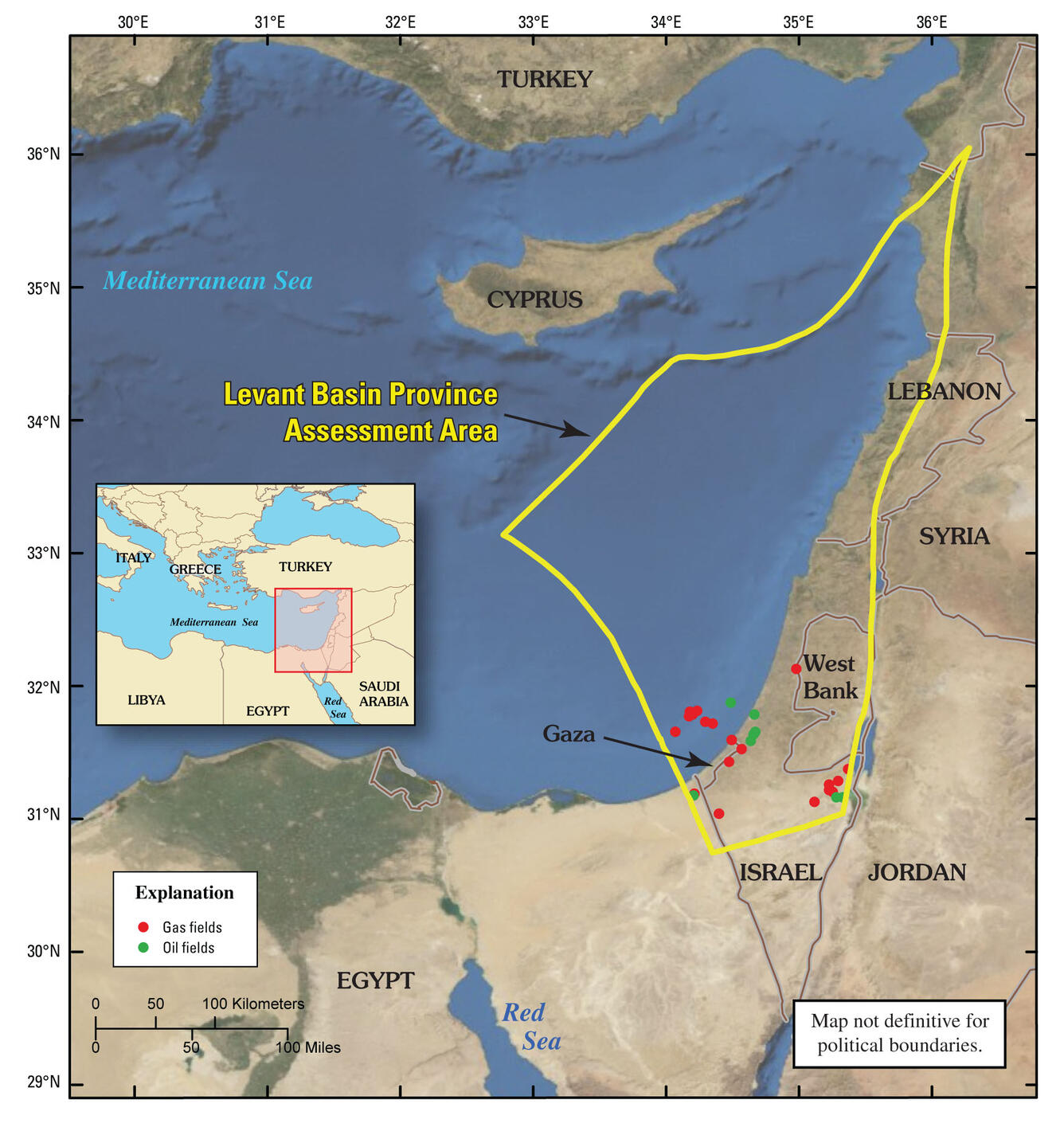
This time, however, Athens may not confront Ankara in isolation, but alongside an extensive regional coalition. The Levant Basin, harboring massive natural gas reserves and disputed maritime demarcations among regional actors, has evolved into a hyper-combustible theater. A severe naval provocation, a kinetic collision between warships, or unauthorized offshore drilling could ignite uncontrollable chain reactions. The critical question remains: how would an armed confrontation between two NATO member states unfold, and who possesses the leverage to halt it?
The shared membership of Greece and Turkey in NATO has never prevented both powers from edging toward the brink of open warfare throughout the post-World War II era.
Bilateral relations have been repeatedly rocked by operational standoffs, competing maritime boundaries, and the tragedy of Cyprus in 1974, when both militaries collided in an atmosphere of total crisis, notes Towar.ru.
Historical background
The Turkish invasion of Cyprus (1974): In July 1974, the coup against President Makarios, backed by the Greek military junta with the objective of Enosis (unification with Greece), triggered direct Turkish military intervention. Ankara unleashed Operation Attila, landing invasion forces across northern Cyprus. The campaign culminated in the unlawful occupation of roughly 37% of sovereign Cypriot territory, causing massive population displacement, cementing the division of the island, and ultimately prompting the collapse of the military dictatorship in Athens.
The crises of 1987 and 1996: In March 1987, Greece and Turkey neared direct military engagement over conflicting continental shelf claims in the Aegean, sparked by seismic survey missions of the Turkish vessel Sismik-1 (also known as Hora). The confrontation was defused through backchannel diplomacy, leaving foundational disputes unresolved.
Years later, in January 1996, the dispute over the uninhabited islets of Imia brought both countries to the absolute precipice of war.
Turkish special forces landed on one of the islets, while an operational crash of a Hellenic Navy helicopter claimed the lives of three Greek officers during the standoff.
American diplomacy intervened decisively to broker de-escalation, enforcing the "No ships, no troops, no flags" mandate to prevent the collapse of NATO's southeastern flank.
Energy stakes and emerging regional coalitions
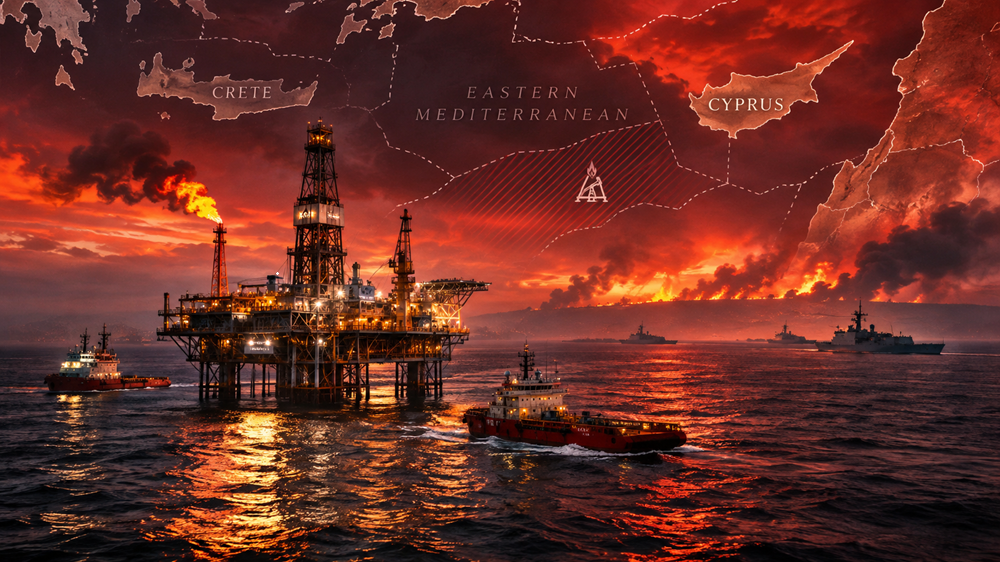
At the center of contemporary hostilities lies the immense energy wealth of the seabed.
Geological surveys estimate that the Levant Basin holds roughly 3.5 trillion cubic meters of natural gas, anchored by primary fields such as Zohr, Leviathan, and Aphrodite.
However, commercial extraction depends entirely on subsea transmission pipelines, substantial investments, and multilateral geopolitical stability.
Regional alignments and the "Blue Homeland" doctrine
Athens, Nicosia, Cairo, and Tel Aviv, cooperating closely under the strategic umbrella of France, have forged dense security architectures that could function as an informal Mediterranean Shield, though lacking a formalized mutual defense treaty with mandatory engagement clauses.
On its part, Turkey advances the revisionist Mavi Vatan ("Blue Homeland") doctrine, challenging maritime demarcations grounded in the UN Convention on the Law of the Sea (UNCLOS), to which it is not a signatory, while denying full maritime entitlement to Greek islands such as Kastellorizo. The 2019 Turkey-Libya maritime memorandum exacerbated volatility, generating fresh tensions over maritime jurisdiction zones and the proposed EastMed subsea pipeline.
Hypothetical three-day conflict scenario in the Eastern Mediterranean
(Note: The following framework does not constitute a geopolitical prediction, but an operational simulation evaluating how a localized naval incident could rapidly escalate)
Day 1: The trigger south of Crete and naval skirmish
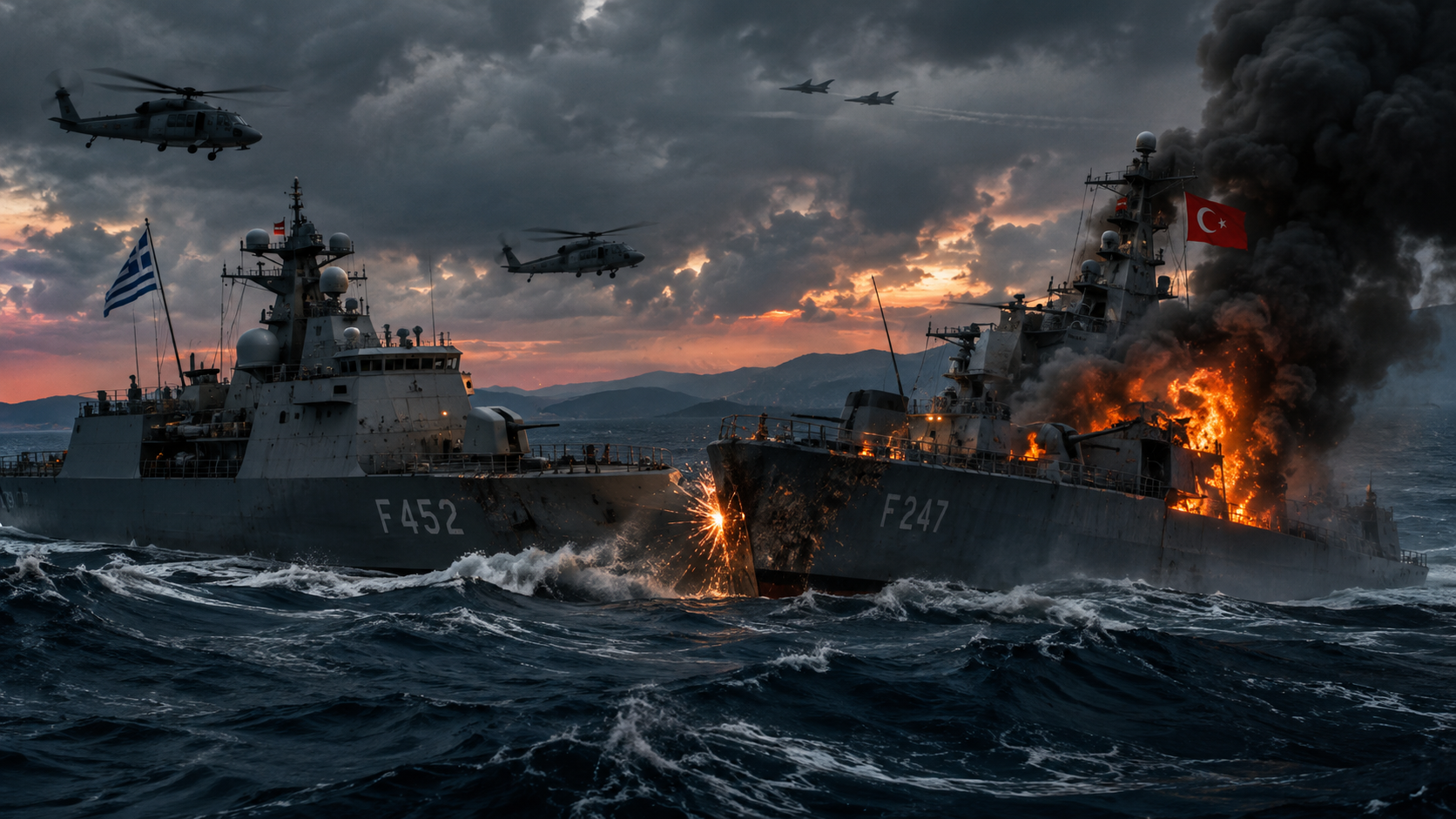
A Turkish drillship, escorted by naval escorts, penetrates contested waters south of Crete. Athens responds by deploying frontline Hellenic Navy units, including an FDI Belharra class frigate. During aggressive tactical maneuvers, a Turkish warship collides with a Greek frigate, causing structural damage and sparking a kinetic exchange of fire. Ankara retaliates by scrambling fighter jets and unmanned strike platforms, such as the Bayraktar TB3 deployed from the amphibious assault ship TCG Anadolu, converting a localized naval incident into open hostilities.
Day 2: Aerial combat and allied intervention
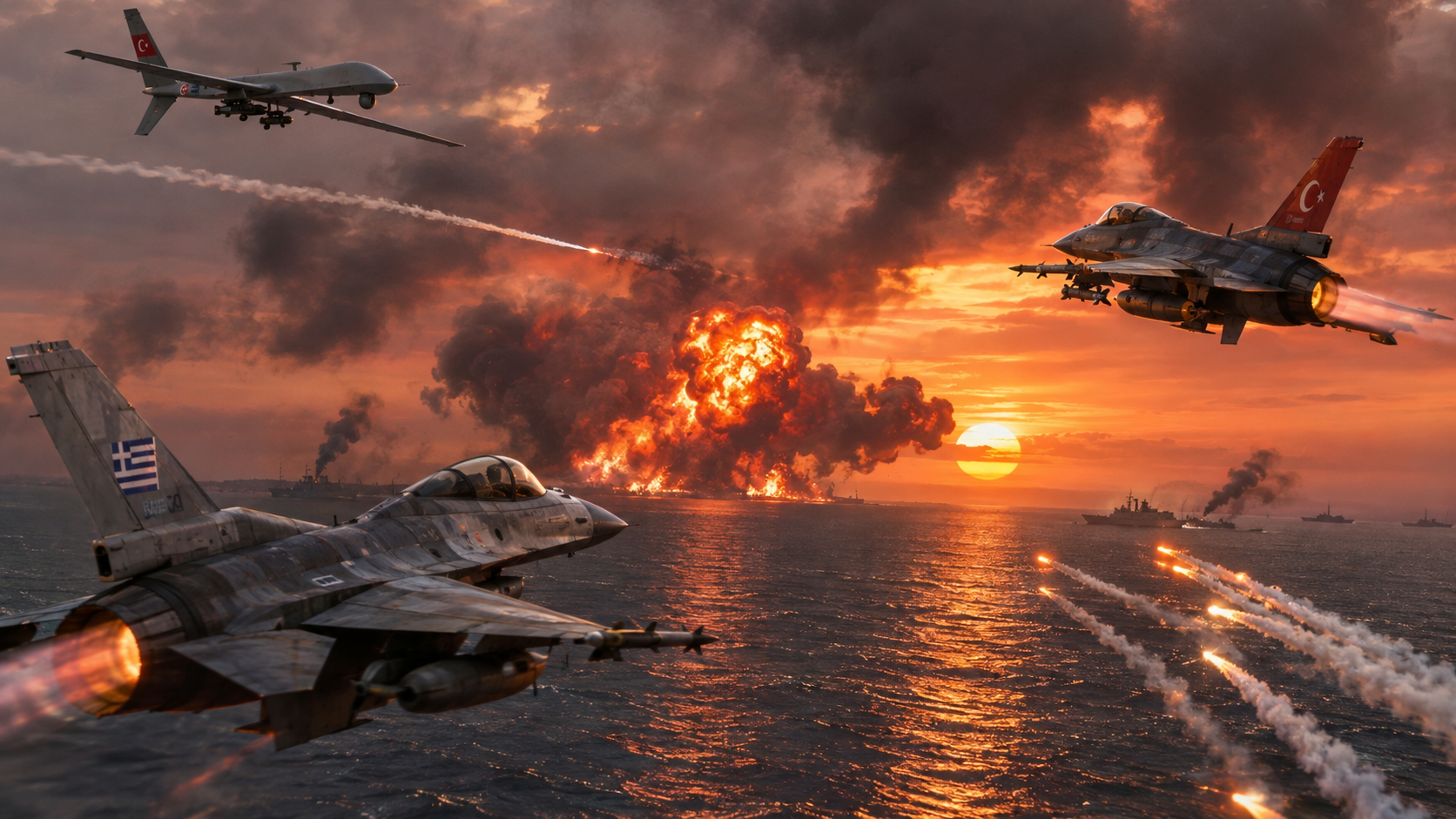
The operational center of gravity shifts across the airspace of the Eastern Mediterranean. France dispatches the aircraft carrier Charles de Gaulle accompanied by carrier-borne Rafale M fighters in a show of force backing Greece, which simultaneously elevates the danger of wider internationalization. Simultaneously, Israel provides critical airborne intelligence and early warning via Eitam CAEW aircraft, while Egypt applies overt military pressure along its border with Libya, confronting Turkey with an unsustainable two-front dilemma.
Day 3: Global diplomatic intervention, Washington's ultimatum, and ceasefire
With international financial markets and crude energy benchmarks experiencing severe systemic shocks, Washington, leveraging the threat of crippling sanctions, coordinates with a Franco-German diplomatic mission to force an immediate cessation of hostilities. NATO finds itself mired in total institutional paralysis, as its treaty architecture lacks enforcement mechanisms for interstate wars between member nations. Under the weight of mounting tactical losses and immense allied pressure, Athens and Ankara agree to an unconditional ceasefire, returning strictly to the prior status quo without resolving any underlying territorial disputes.
A fragile peace devoid of solutions
In conclusion, as highlighted by Towar.ru, an armed clash between Greece and Turkey would yield no definitive victor, leaving behind catastrophic strategic, economic, and human wreckage. As long as sovereign continental shelves, exclusive economic zones, and hydrocarbon rights remain unresolved, the Eastern Mediterranean will persist as a fragile geopolitical flashpoint.
The paramount test for international diplomacy remains forward crisis prevention, since a single tactical misstep on the high seas is all that is required to trigger uncontrollable escalations.
www.bankingnews.gr



Readers’ Comments