

Europe is facing a deeper energy crisis as declining domestic production capacity, military conflicts, and competition for fuel supplies drive costs sky-high. The problem is no longer limited to energy prices, but threatens to spill over into state economies, bond markets, and fiscal stability. For most of the 1990s, a refinery earned about 10 dollars for every barrel of crude oil processed to produce diesel. On a good day, the profit margin could reach 15 dollars. This specific metric is known as the crack spread and reflects the difference between the price of the final product and the price of the crude oil from which it is produced.
Today, this margin has exceeded 100 dollars per barrel, recording a historic high, according to data confirmed by Bloomberg. Prices have hovered between 100 and 113 dollars, representing levels tenfold the historical average. This is an unprecedented development in the market for diesel, a fuel absolutely essential for the functioning of the global economy. Peter Carlin, co-author of the book A Pocketbook of Gold, had warned as early as July that the diesel market could trigger a collapse of the global economy. What sounded overly pessimistic then takes on a different dimension in September. The critical question is where Europe will procure diesel and natural gas this coming winter. The answer leads to refineries under military threat, a Norwegian pipeline network already operating at maximum capacity, and a British price cap that cannot cover actual energy costs. At the end of this chain lies the government bond market.
Diesel, the Achilles' heel of the global economy
Diesel is the fuel upon which the real economy relies. As Peter Carlin points out, "the entire economy actually runs on diesel, even more so than on gasoline." This realization is explained by the fuel's role in transportation and industrial production. Container ships, long-haul trucks, agricultural harvesting machinery, freight railways, and construction equipment depend on diesel. Gasoline primarily serves personal citizen travel. Diesel moves almost everything else. When its production cost skyrockets, the burden transfers to the prices of almost every physical good circulated in the economy.
Europe abandoned refining and increased its dependency
How, then, did we reach this explosive situation? The first answer is that Europe spent about 15 years systematically curtailing its own production capacity. According to Carlin's data, 15 years ago the European Union accounted for about 23 percent of global production of refined products and middle distillates. Today, the corresponding share has dropped to about 12 percent. Historical data confirms the direction of this shift. Refining capacity in Europe dropped from about 117 refineries with an annual capacity of 809 million tons in 2009 to 85 refineries and 648 million tons in 2024, representing a reduction of about 20 percent. Argus has also recorded this contraction, attributing it to increased carbon emission costs, future demand forecasts, and a political and regulatory environment that showed little inclination to maintain European refining facilities. Production capacity, however, did not vanish. It shifted to other regions. Gulf countries built the refineries that Europe closed, in many cases through joint ventures with companies previously active in the European market. Examples include: The YASREF refinery in Yanbu, Saudi Arabia, has a capacity of about 430,000 barrels per day and operates in cooperation with Sinopec. The SATORP in Jubail has a capacity of about 460,000 barrels per day with participation from TotalEnergies. The SAMREF has a capacity of about 400,000 barrels per day and is connected with ExxonMobil. Petro Rabigh possesses corresponding capacity with participation from Sumitomo. These data are included in information bulletins published by Saudi authorities themselves. In Carlin's estimation, Gulf countries concentrate about 50 percent of global sour crude processing capacity for middle distillate production. In other words, Europe did not stop consuming diesel; it simply outsourced its production to one of the most geopolitically sensitive regions on the planet.
Military conflicts hit Gulf production
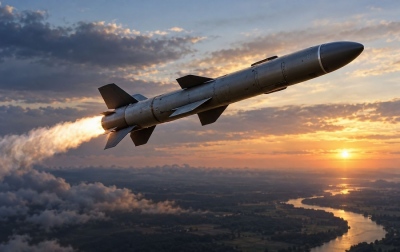
The second cause of the crisis is that this production capacity has now suffered severe damage. The refinery in Yanbu has been attacked in the past, which Carlin attributes likely to a Houthi missile. His assessment, which the columnist clarifies he has not been able to independently confirm, is that military operations have knocked out or restricted 4 to 5 million barrels per day of middle distillate production capacity in the region. Indeed, as he argues, the actual quantity still circulating may be less than 1 million barrels per day. The exact scale of losses remains uncertain and can vary significantly depending on the source. However, unprecedented refining margins confirm the direction of the crisis. A 100-dollar-per-barrel margin cannot occur simply due to pessimistic estimates. This happens because physical inventories and fuel quantities demanded by the market are failing to reach buyers. If Gulf production capacity has been constrained, someone else must fill the void. And this alternative is located essentially in only one region: the Gulf of Mexico coast in the US.
The US operates at its limits
The United States has not built a new refinery in about 50 years. Existing facilities have been expanded and modernized, but diesel and gasoline production has remained essentially stagnant despite population growth. Consequently, the available spare capacity of the American refining system has been absorbed by domestic demand for years. The heaviest burden now falls on refineries along the Gulf of Mexico coast, which are operating at extremely high capacity levels. "The US refining system in the Gulf of Mexico is now supporting the entire world regarding diesel," Carlin argues. Available data strongly support this assessment. Normal capacity utilization for American refineries ranges between 83 percent and 96 percent, with levels just above 90 percent considered typical during the summer peak gasoline demand period. However, weekly data from the US Energy Information Administration (EIA) recently show operation rates of 94 to 98 percent nationwide, while refineries in the Gulf of Mexico frequently move at 96 to 98 percent. Carlin refers to prolonged operation at 97 to 98 percent for weeks or even months. These are levels typically observed during emergency periods rather than as a permanent operating state. An old and complex industrial system operating at 98 percent of its rated capacity cannot be sustained indefinitely without problems. Unplanned outages are now a matter of time, and there is no sufficient reserve production capacity to cover any losses.
US diesel exports and Europe's dependency
Despite the pressure on the American refining system, the US exports about 1.9 million barrels of diesel daily, a figure Carlin describes as astronomical. According to his analysis, exports are directed primarily: 250,000 to 300,000 barrels daily to the European Union. About 450,000 barrels daily to Mexico. About 300,000 barrels daily to Brazil. These specific bilateral distributions are Carlin's estimates, while the EIA records the total export volume. The conclusion is particularly alarming: Europe, which closed about a fifth of its refining capacity, now receives a relatively small share of the emergency fuel supply that the only major refining system with available quantities can provide. There is, moreover, another parameter often overlooked. Diesel is produced from sour or heavy crude oil. Conversely, light shale crude oil from the US is not suitable for the same production process, according to Carlin. This means Gulf refineries need the same quantities of sour crude that Asian economies are also claiming. Therefore, competition involves not only production capacity but also feedstock. Could Washington ban diesel exports to protect its domestic market? Russia has implemented similar practices. However, in Carlin's view, if the US took such a step, it would deal a heavy blow to the global economy, with European economies bearing the brunt. For now, US Energy Secretary Chris Wright has stated there is no intention to halt diesel exports. Meanwhile, there is no possibility of an immediate solution through new investments; a new refinery cannot be built within 12 months.
Energy competition with Asia, Europe loses auctions
The problem is not limited to restricted production. Another factor is at play: other buyers are willing to pay more for the same raw materials and energy products. Shortages inevitably lead to the allocation of available quantities through prices. And Europe is not the highest-paying buyer. This realization explains much of the current situation.
LNG heads where prices are highest
Let us start with natural gas. If Dutch TTF index prices for liquefied natural gas (LNG) upon arrival in the market are compared with prices in New York Harbor, and exchange rates, transport fees, taxes, and shipping costs are factored in, a difference of up to ninefold can emerge, according to Carlin. Despite this large gap, Asian markets still offer higher prices than Europe for available cargoes. Thus, LNG that could help replenish European inventories is heading toward markets where prices are higher, primarily toward Asia.
China pays higher premiums for oil
A similar picture appears in the crude oil market. Physical delivery contracts on the Shanghai Futures Exchange show prices about 25 dollars per barrel higher than Brent. This translates to about 50 million dollars in extra costs for every cargo. China's oil supply system relies on Murban, ADNOC crude, and other sour crude varieties from the Persian Gulf. These are the exact quantities underpinning Europe's alternative supply chain. Carlin, who has years of experience in these markets, states he cannot interpret this overvaluation as a normal market development, but only as a result of wartime conditions. As he characteristically points out: "The Dutch TTF natural gas index, LNG, crude oil, and diesel are all arriving simultaneously."
Shipping resembles the 1970s
Pressure also spills over into shipping, creating conditions reminiscent of a different era. Carlin describes instances where ADNOC representatives approached Greek shipowners to purchase vessels directly, offering prices 30 to 40 percent higher than their acquisition cost. The vessel prices, which he reports approaching 250 million dollars, concern secondhand ships and should be treated as such estimates. However, the market's direction agrees with indications recorded in freight rates. The comparison now made in the sector refers to the tanker market boom of the 1970s, when ships themselves became objects of speculation.
Who benefits from this situation?
Refinery owners, shipping companies, and crude oil producers. "The rest of the world suffers the consequences," as Carlin states. This is not merely rhetorical phrasing. It is market arithmetic: increased profit margins and extra costs must ultimately burden someone.
The crisis extends to agricultural products
The same mechanism appears in a second commodities market. According to Carlin, about 92 percent of Black Sea port activity regarding wheat transit from Ukraine and Russia has been lost. This development imposes extra costs on countries dependent on grain imports, such as Egypt, India, Nigeria, and Vietnam. When supply chain systems operate on just-in-time delivery logic while critical trade routes are lost, costs rise everywhere. The diesel market represents the largest and most critical manifestation of a phenomenon affecting multiple commodity markets simultaneously. The problem in diesel and LNG markets concerns supply and demand. Theoretically, higher prices can restore balance. However, Europe's natural gas problem is deeper and structural.
Natural gas that will not return
The Netherlands once possessed one of the largest natural gas deposits in the world. The Groningen field produced up to 79 billion cubic meters of natural gas in 2012, of which about 52 billion cubic meters came from the main field alone. This quantity was comparable to Germany's total annual consumption at the time, which stood at about 85 billion cubic meters. Then, however, seismic tremors began to be recorded. The Huizinge earthquake in 2012, measuring 3.6 on the Richter scale, was one of many earthquakes caused by the natural gas extraction process itself. The vibrations caused damage to thousands of homes throughout the region. The political consequences were significant and led to a long process of gradually halting production, which concluded in October 2023. According to Carlin, Dutch production had dropped to about 9 billion cubic meters in 2025, while smaller North Sea deposits are also depleting. Even today, Dutch politicians disagree on whether the field should have been closed permanently. However, production has been interrupted.
Germany lost Russian natural gas
At the same time, Germany had built its energy model upon natural gas imports via pipelines from Russia. Carlin recalls that about 43 billion cubic meters of Germany's total annual consumption of about 90 billion cubic meters came from Russia. These specific figures are his approximate estimates and not verified exact data. What is indisputable is that Russian supplies have now been lost and largely replaced by natural gas originating from Norway. Today, Norway supplies Germany with about 58 billion cubic meters of natural gas.
Norway has reached its production limits
Norway now constitutes the main pillar of European energy security. It covers about 60 percent of the European Union's natural gas imports via pipelines, with its exports fluctuating in recent years between 115 and 122 billion cubic meters annually. However, Norwegian officials now describe the production and transport system as a network operating essentially at the upper limit of its capacity. No major new exploration for deposits in the North Sea is underway. Carlin also points out that Norway's crude oil production has dropped from 3 million barrels per day to 1.77 million barrels as deposits deplete. Simultaneously, real concerns exist that the drop in production will also affect supplies to the United Kingdom. "You cannot keep returning to Norway and asking for more natural gas," he notes characteristically. This is Europe's core structural problem. It replaced a politically hostile supplier and a domestic deposit that closed with a friendly supplier, which, however, has already exhausted its production margins. There is no next Norway that could fill the gap.
Natural gas reserves do not constitute a permanent solution
There is also another problem, often overlooked in analyses of energy adequacy: the physical storage duration of natural gas. According to Carlin, stored natural gas cannot remain indefinitely available. Gas molecules remain useful for about six to nine months. This means the storage system must be replenished every year, continuously and without interruption, through a market where Europe is increasingly losing the competition. Reserves, therefore, do not constitute a permanent energy shield. They are a mechanism that must be constantly renewed. The problem also has a specific deadline. European rules established after 2022 stipulated a target of filling natural gas storage facilities by 90 percent by November 1. Subsequently, the target was modified with greater flexibility for the 2025 to 2027 period. Carlin's charts showed reserves standing at about 70 percent while six weeks remained until the deadline. Independent analyses of reserve trajectories estimated that the percentage could reach about 77 percent by November 1. The difference between a difficult situation and an energy crisis, however, depends largely on weather conditions. Carlin is even more categorical regarding the achievement of the target: "It is not going to happen."
Could LNG cover the gap?
The answer is that Europe is losing the competition for available cargoes, whereas unlike the interconnected US pipeline network, the European natural gas market depends on a limited number of supply sources. Each of these can now constitute a critical point of failure. One country is at the center of all these problems because it chose not to have adequate backup energy reserves.
The British energy deadlock, the 166 percent gap
The United Kingdom's energy mix, according to Carlin, is formed approximately as follows: 40 percent comes from Norwegian natural gas. 43 to 45 percent comes from domestic Scottish and North Sea deposits via the Easington and St. Fergus facilities. About 10 percent is covered by US LNG. Qatar, which in 2010 covered about 20 percent of British supplies, contributes nothing today. Britain gradually abandoned its own natural gas industry and organized its energy supply based on continuous import flows rather than maintaining adequate reserve stocks.
Britain holds reserves for just a few days
The biggest problem is located in natural gas storage. "The United Kingdom actually does not hold reserves," Carlin states. The phrasing is almost accurate, as usable storage capacity corresponds to about 5 percent of consumption. The country previously possessed the Rough facility, a depleted natural gas field off the Yorkshire coast that could cover about six to seven days of national consumption. Centrica judged that keeping it operational was excessively costly and took it out of service in 2017. The facility partially reopened in 2022 after the Russian invasion of Ukraine when how problematic the previous decision was became apparent. Since then, Centrica CEO Chris O’Shea has warned that the facility risks being led to permanent decommissioning once again if state support is not provided. Indeed, he has characterized its future as a "political decision." In other words, a country of 68 million residents supports the heating of its households with reserves that suffice, at best, for about a week.
Why Britain faces an energy shock
The consequences are immediate. Such a large share of British supplies arrives through continuous pipeline flow that an interruption in a Norwegian or North Sea pipeline could, according to Carlin, cause catastrophic consequences. As he characteristically notes: "The United Kingdom will be destroyed." Dependence on direct imports forces the country to buy natural gas from the spot market, which is in a state of intense backwardation. Practically, Britain is forced to buy whatever quantity it needs at the price formed at any given moment, regardless of how high costs might be during the winter.
Natural gas prices rise by up to 185 percent
According to Carlin's analysis, natural gas prices in the United Kingdom have risen by about 170 percent since the beginning of the year, while in the European Union the increase reaches 185 percent. When the columnist asked him whether it is correct to say Europe is now paying a tenfold price compared to the period before its departure from Russian natural gas, his answer was even more dramatic: "No. You are paying 20 times more." About 84 percent of home heating in the UK relies on natural gas, while the same fuel is widely used in industry as well as in the simultaneous production of electricity and heat. Therefore, this is not a secondary energy input, but a core pillar of the economy.
The mathematical deadlock of the energy price cap
Here lies the most critical point of the analysis. Average annual energy bills for British households stood at about 3,000 pounds last year. Based on Carlin's calculations, the actual technical cost of procuring the same quantity of energy for the current year now stands at 6,000 to 8,000 pounds per household. However, the energy price cap, established as a consumer protection mechanism under Theresa May's government, rose by just 4 percent. The picture is revealing: Energy input costs increase by 170 percent. Prices burdening households increase by just 4 percent. The difference between the two percentages is 166 percentage points of cost, which are real and actual, and someone must shoulder them. "Someone must absorb the remaining 166 percent," Carlin points out. There are only two options. If energy supply companies absorb the difference, they risk bankruptcy. Supplier collapse could lead to real shortages and a cascading process of transferring their customers to companies still operating with even higher tariffs. If, on the other hand, costs are assumed by the British Treasury, they will transfer to the public finances of a government already borrowing at a rate close to 5 percent of GDP. The cap theoretically protects households. In practice, however, it operates as a payment postponement mechanism, turning an energy bill into a state fiscal obligation. Carlin also makes two observations for the broader region. He wonders why the United Kingdom is not restarting decommissioned coal power generation units. France appears less dependent on natural gas thanks to its nuclear potential, yet as he notes, "you cannot push its nuclear reactors beyond a specific limit." In his estimation, Germany and the Netherlands find themselves in an equally difficult position. The 166 percent gap ultimately leads to one point: public debt.
The energy crisis turns into a sovereign debt crisis
The United Kingdom is already under fiscal pressure even before winter bills arrive. Public debt approaches 100 percent of GDP. Simultaneously, the government bond (gilts) portfolio is characterized by unusually long average maturity, about 14 years, at a time when the population is aging and fiscal demands are growing. Carlin points out that the UK Debt Management Office is shortening issuance duration and placing long-term bonds on the market. This means the British state assumes greater refinancing risk for its debt during a period of elevated interest rates. As he describes the dilemma, the country may need to choose between the bond market on one side and the National Health Service (NHS) and the pension system on the other.
Bond yields cause concern
France borrowing more expensively than Italy does not constitute the usual historical picture of European markets. This shows investors are reassessing state risk and now including even the Eurozone's second-largest economy in this category of concerns.
Growth forecasts deteriorate
Economic growth forecasts present significant divergences. According to International Monetary Fund (IMF) data cited by Carlin, the United Kingdom and northeastern European economies face negative growth rates. Simultaneously, France, Germany, and Italy recorded negative GDP changes during the second quarter of 2026. Other analysts, however, place the growth of these same economies at zero or 0.1 percent. Carlin treats this difference as secondary, pointing out that the real issue is not the exact size of the recession, but the direction of the economy. "If this happens in Germany, it could be fatal," he states. And this phrasing acquires special weight since Germany constitutes the Eurozone's main fiscal pillar.
The domino threatening bond markets
The crisis transmission mechanism is specific. If governments already facing exorbitant public debt are forced to borrow even more to protect their populations from winter energy costs, the supply of government bonds will increase. This will happen in a market already demanding yields around 5 percent. "You will see yields skyrocket," Carlin warns. The comparison made is with the PIIGS crisis of the 2010s, only this time the problem will manifest within the G7 group and could transmit to American markets through the interdependence of the international bond system. Regarding interest rates, Carlin estimates markets believe the US Treasury Secretary is lagging behind developments by about 100 basis points. In his view, yields will not stop at 5 percent, and if they exceed 5.25 percent, "then a completely different race begins." The Federal Reserve's target interest rate range, standing at 3.5 to 3.75 percent, is not enough to control this dynamic. "The Fed's rate does not determine by itself what happens in the American economy," he notes. Determining factors are the cost of private borrowing, public debt, and the ability to refinance obligations. "All this resembles the 1970s, but at a multiple intensity," he argues.
The limits of quantitative easing in a structural energy crisis
The reasonable question is whether central banks can reapply the policies they followed in 2008 and 2020, namely addressing the crisis through quantitative easing (QE). Carlin's answer is negative. His argument is particularly interesting even for those who consider his approach overly pessimistic. The crises of 2008 and 2020 were credit and liquidity crises. Money creation and bond purchasing can address problems of that nature. Today's crisis, however, is energetic. You cannot print diesel. A central bank can buy bonds and suppress their yields, but it cannot fill natural gas storage facilities nor reopen a refinery. Furthermore, purchasing bonds during a period when inflation is fueled by energy costs could bring back the conditions of the 1970s, no longer as a simple historical analogy but as a real economic threat. Carlin also considers that room for intervention has now narrowed significantly, citing Japan as an example of where such a path leads.
The real stake for Europe
Energy asphyxiation and pressure on public debt constitute two different manifestations of the same crisis. Europe spent 15 years turning domestic energy production into dependence on imports, assuming that supplies would always be available. This assumption is now proving incorrect. The premium generated by the lack of energy supply is gradually transferring, through retail price caps and the balance sheets of supply companies, to governments that no longer possess adequate fiscal margins to absorb the cost. Whether the crisis will lead to energy company bankruptcies, state bailouts, or surging bond yields, forcing governments to choose between financial stability and public services, is the core question to be answered this winter. The winners are relatively easy to identify: the owners of refineries still operating, shipowners, crude oil producers, and buyers who can offer higher prices than Europe, primarily in Asia. Conversely, the major losers are European households protected by price caps, UK energy companies called upon to absorb the 166 percent difference, treasuries refinancing debt at interest rates close to 5 percent, and every G7 government that will need to borrow to cover winter energy needs.
The indicators that will reveal the true scale of the crisis
Specific indicators can reveal whether the pessimistic scenario will be confirmed. First is the diesel refining margin (crack spread). Carlin himself considers that if it drops below 30 dollars per barrel, the analysis's core premise will be significantly weakened. The second indicator is the trajectory of natural gas reserves in the European Union ahead of November 1. The third is the yield of the British 10-year bond, as well as demand in government security auctions when the real cost of the energy cap begins to burden the state budget. The fourth is natural gas flows from Norway. Any retreat below current levels would constitute a significant sign of deterioration. The fifth is the weather. Carlin himself recognizes that weather conditions represent the most important factor of uncertainty. A mild winter could significantly mitigate pressure on the UK energy system. Finally, the situation in the Persian Gulf is critical, since the estimate of losing 4 to 5 million barrels per day of capacity is an industry professional's estimate rather than an independently confirmed figure. Actual production will depend on what military operations and missile strikes permit.
www.bankingnews.gr










Readers’ Comments