

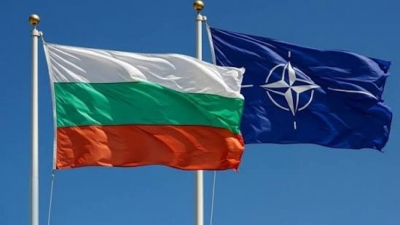
If one sought to identify which nation is shifting its military identity fastest in Southeastern Europe, one likely would not look toward Bulgaria. And yet, in recent years Sofia has been implementing one of the most ambitious military transformation programs across the wider region. The arrival of the first American Stryker armored vehicles for the Bulgarian Armed Forces represents merely the latest episode in a protracted process currently in full swing. Behind the numbers, contracts, and defense procurements, a new strategic reality is emerging: Bulgaria is attempting to break away definitively from its Soviet military legacy and secure a pivotal role within the defense ecosystem of the North Atlantic Alliance.
The end of the Soviet era
For decades the Bulgarian Army relied on weapons systems designed for the requirements of the Warsaw Pact, the military alliance of the Socialist Bloc.
The T-72 main battle tanks, BMP-1 infantry fighting vehicles, BTR-60 armored personnel carriers, and Gvozdika self-propelled howitzers constituted the backbone of Bulgarian land forces even after the Balkan country joined NATO.
This picture is now beginning to change. Under a deal valued at more than 1.4 billion dollars, neighboring Bulgaria acquires 198 new vehicles, of which 183 are Stryker variants and the remainder logistical support vehicles.
The order also includes Javelin anti-tank systems and specialized vehicle variants for command and control, medical evacuation, engineering, and reconnaissance.
The selection does not concern merely replacing legacy weapons systems.
It marks the transition from a military model grounded in Soviet doctrine to a fully integrated NATO operational environment.
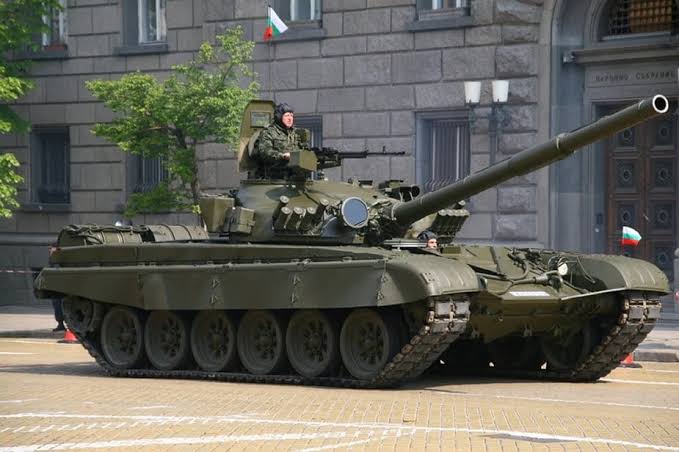
T-72
The Stryker is only the beginning
The most intriguing element is that the story neither begins nor ends with armored fighting vehicles.
Lately, Bulgaria has also invested significantly in modernizing its Navy, attempting to reinforce its presence in the Black Sea.
If the two procurement programs are examined together, it becomes manifest that these are not piecemeal decisions.
Sofia is upgrading two crucial pillars of power simultaneously: ground forces (Land Power) and naval forces (Naval Power).
In other words, it is striving to build a more modern and interoperable force, capable of operating within the strategic framework of NATO planning across the Black Sea region.
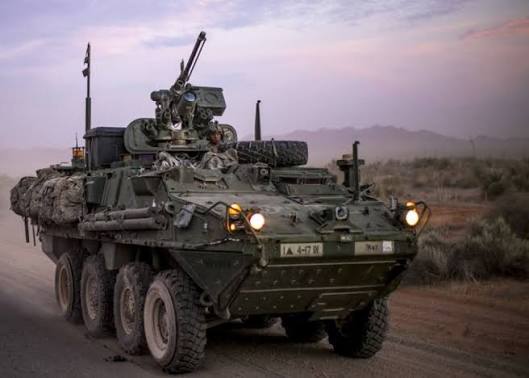
Stryker
The Black Sea changes everything
It is no coincidence that this effort is accelerating now.
The war in Ukraine transformed the Black Sea into one of the paramount geopolitical theaters on the planet.
Romania is ramping up its defense expenditures.
Turkey reinforces its role as a regional power.
Ukraine remains an arena of armed confrontation.
Russia continues to maintain a potent footprint in the area and views the Black Sea as a strategic space of vital interest.
Within this environment, Bulgaria no longer wishes to play a secondary role.
It wants to transition from a geopolitical object into a geopolitical subject.
Sofia recognizes that developments over the coming years will dictate the new balance of power in the region and strives to secure a position in the emerging regional security architecture.
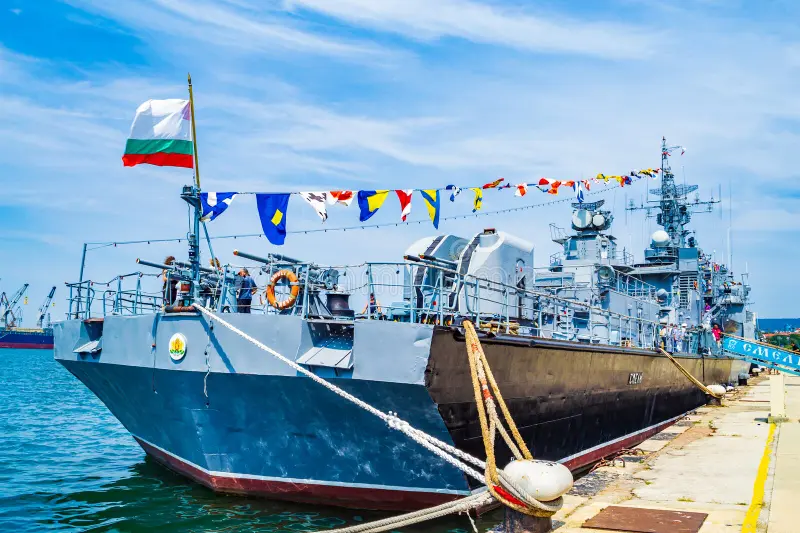
The Bulgarian «Smeli»
From customer to support hub
Perhaps the most crucial factor, however, lies elsewhere.
The Bulgarian government does not merely want to purchase American military vehicles.
It aims to establish domestic maintenance, sustainment, and repair capabilities.
Base production of the Stryker is carried out in Canada by General Dynamics Land Systems, but final systems and weapons integration is already taking place at the TEREM-Ivaylo facility.
The ambition of Sofia is to ramp up the throughput rate to ten vehicles per month and undertake their technical lifecycle support for decades.
Even more notable is that open discussions are underway regarding the prospect of providing maintenance services not only for Bulgarian vehicles, but also for Strykers operated by other countries across the region.
This indicates that Bulgaria seeks to evolve from a buyer of American weapons systems into an integral link of the NATO defense supply chain in the Balkans. And this is of paramount importance for the geopolitical elevation of the country.
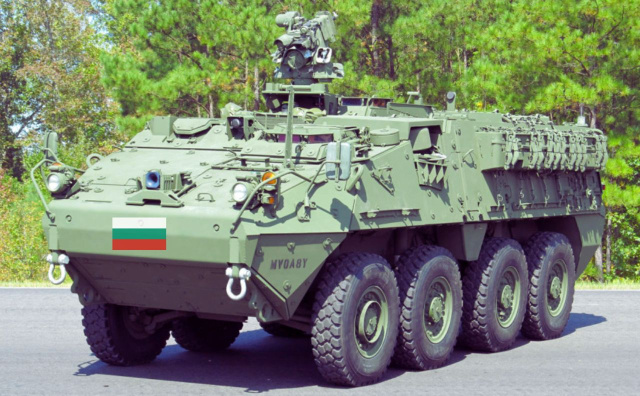
A new industrial wager
This strategy, however, comes with attendant risks.
Bulgaria does not yet produce 30mm ammunition conforming to American standards, nor does it possess the industrial self-sufficiency required for critical electronic subsystems and combat systems.
For several years it will remain almost completely dependent on... American supplies.
This represents a paradox observed across many Eastern European nations.
Discarding the Soviet military-industrial heritage is accompanied by absorption into a new web of defense dependencies, centered this time on the American defense industry.
The difference is that Sofia is attempting to transform this dependence into an opportunity, building domestic technical know-how and industrial capacity.
From one dependency to another?
For the Bulgarians, transitioning to the Stryker and other Western platforms is framed as the definitive closure of an era that began during the days of the Warsaw Pact.
Indeed, once deliveries are completed, very little will resemble the military inherited by the nation following the collapse of the Eastern Bloc.
Yet an intriguing irony persists. For decades, Bulgaria depended on Soviet tanks, Soviet spare parts, and Soviet factories.
Today it is striving to detach itself from that framework, yet at the exact same moment is entering another, founded on American technology, the American logistics chain, and the American defense industrial base.
This does not imply that its choice is flawed. On the contrary, it represents a deliberate strategic decision by Sofia.
The question, however, is whether in ten or twenty years Bulgaria will have managed to generate its own sovereign expertise and industrial foundation, or if it will have simply substituted one dependency for another.
That is where the ultimate success or failure of the Bulgarian enterprise will be decided.
Not in the raw tally of Strykers it takes delivery of, but in whether it can leverage these investments to secure what it still lacks today and what remains the core objective: genuine defense autonomy.
www.bankingnews.gr






Readers’ Comments