

The American President attempts to convince Tehran that a crushing military strike is imminent, while Washington exerts suffocating economic pressure.
However, according to analyst John J. Mearsheimer, the US has initiated a war it was doomed to lose, while its military and economic capabilities are insufficient to reverse this reality.
The Trump administration and its supporters, including the editorial board of The Wall Street Journal, are making every effort these days to project an image of the war in Iran according to which the US is winning and Tehran must yield to demands from Washington before being destroyed, perhaps even «annihilated».
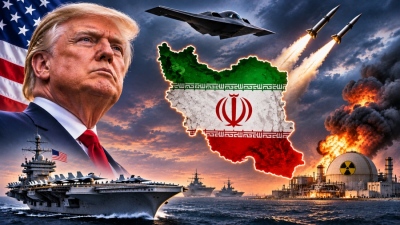
Indeed, Trump is preparing for the possibility of unleashing a crushing military strike against Iran following the midterm elections, if Tehran has not surrendered by then.
In essence, Trump and his backers are waging a «maximum pressure» campaign against Iran through mainstream media.
This campaign is certain to fail. Instead, it reflects the desperation of the Trump administration.
The American President launched a war that the US was doomed to lose from the outset, and there is now very little he can do to alter this fundamental reality.
The propaganda campaign of Trump has two dimensions: an economic one and a military one.
Economic strangulation and military threat: The dual plan of Washington
First, the American government contends that Iran is undergoing economic strangulation due to the US naval blockade, in combination with operation Economic Outcast, the strategy announced by Secretary of the Treasury Scott Bessent on August 24, 2026.
Concurrently, it maintains that oil exports from the Persian Gulf have recovered to levels not far removed from those of February 27, 2026.
The message is clear: economic punishment imposed on Iran will soon compel it to capitulate, while the American economy, like the international community as a whole, is already on a path to recovery.
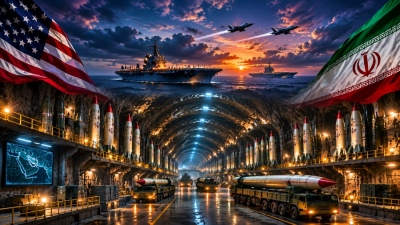
Second, the US is now reinforcing its military forces, preparing a massive military assault after the midterm elections, when Trump will no longer be bound by electoral constraints.
The growing threat of a devastating American attack, combined with economic asphyxiation imposed on Iran, is designed to compel Tehran to abandon its resistance now, before its situation deteriorates further.
Yet, immense problems plague this strategy. It sounds convincing when mainstream media reproduce it without scrutiny, but collapses when one carefully examines what is actually happening.
US aircraft carriers and the true military picture
Let us examine the military dimension first.
News headlines report that the US is sending an additional 10,000 soldiers and a third aircraft carrier, the USS Theodore Roosevelt, to the Persian Gulf region, creating the impression that Iran will soon confront three American aircraft carriers.
Furthermore, dispatching new military forces, on top of approximately 50,000 American military personnel already stationed in the region, is presented as an indication that Trump is giving serious consideration to deploying ground forces.
However, the reality regarding the aircraft carriers is quite different from what news headlines portray.
According to information, the Roosevelt is dispatched to relieve the USS George Washington, while the supposed third aircraft carrier, the USS George H.W. Bush, has already departed the Middle East and is now in Thailand.
Therefore, at this moment only one aircraft carrier remains in the area. Indeed, this is the first time since the start of the war that the US maintains only a single aircraft carrier in the Middle East. It is difficult to imagine that more than two will be present after the midterm elections, if even that many remain.
The major problem, however, is that the war in Iran severely burdens the US Navy.
Its high command warns that the current operational tempo cannot be sustained indefinitely.
Aircraft carriers and other surface combatants conduct exceptionally prolonged deployments, generating substantial maintenance and operational readiness issues.
These problems will inevitably have to be addressed at some point.
The situation is aggravated by the fact that American vessels have lost access to nearby logistical facilities and depend increasingly on a supply chain reaching all the way to Diego Garcia, approximately 2,500 miles away from the Persian Gulf.
Yet even if the US possesses three aircraft carriers to strike Iran, what exactly could they accomplish through a new air campaign that they failed to achieve alongside Israel during the unsuccessful 40-day bombing campaign from February 28 to April 8, 2026?
Some might argue that the US would now be in a position to permanently destroy Iranian oil infrastructure.
The problem, however, is that Iran retains second-strike capability and could retaliate by unleashing chaos across oil infrastructure belonging to states of the Gulf Cooperation Council (GCC).
It is truly terrifying to contemplate what the ramifications could be for the global economy.
High-tech American munitions are running out
Beyond all this, the US confronts a severe shortage of advanced weapons systems and munitions.
This constitutes one of the primary reasons why they terminated the 40-day bombing campaign and have avoided engaging in exchanges of mutual strikes with Iran over recent weeks.
One would expect that the depletion of critical munitions, both for attacking Iran and for defending against Iranian retaliation, would restrict the scale and intensity of any new strategic bombing campaign, thereby diminishing its chances of success.
Ground invasion of Iran: The numbers do not add up
Regarding ground forces, merely tallying American military personnel present in the Middle East is misleading when attempting to assess the likelihood of a ground intervention.
In a land war, the most important element is the number of troops belonging to actual ground combat formations.
I estimate that of the roughly 50,000 American military personnel already in the region, approximately 5,000 belong to such formations:
Roughly 2,200 marines and sailors of the 11th MEU.
Roughly 2,000 soldiers of the 82nd Airborne Division.
Possibly another 800 US Army soldiers in Kuwait, linked to Task Force Spartan.
Of the roughly 10,000 additional military personnel currently being deployed to the region, another 2,200 belong to the 13th MEU.
Most of the remainder are sailors serving aboard aircraft carrier Theodore Roosevelt and accompanying warships.
Therefore, based on current force deployment plans, I estimate that by late November the US will possess slightly fewer than 7,500 military personnel organized into ground combat formations in the Persian Gulf region: approximately 4,400 across two Marine Expeditionary Units and 2,800 US Army soldiers.
There is no conceivable way to consider such a small ground force a credible option against a nation with the population and geography of Iran.
Even if this figure tripled, reaching roughly 23,000 soldiers, an exceedingly improbable prospect, the core problem would not fundamentally change.
Retired US Army General Barry McCaffrey estimates that securing the Strait of Hormuz would require roughly 150,000 troops and three to six months of combat operations.
By way of comparison, Russia invaded Ukraine in February 2022 with approximately 190,000 military personnel, a force that proved inadequate even for holding onto a large portion of the territory it initially captured.
Iran possesses more than double the population that Ukraine had at the onset of the Russian invasion, while its geography is far more disadvantageous for an invader.
In simple terms, the US has assembled nothing approaching the ground forces that would be required for a large-scale invasion of Iran.
Indeed, from the perspective of Tehran, an American decision to launch such an assault with forces comparable to those available today would afford Iran the opportunity to fight the US under exceptionally favorable conditions.
Casualties and the impasse of the Marines
At the risk of repeating myself, two additional points must be highlighted.
First, given how unpopular the war in Iran is among American citizens, it is virtually certain that enormous political and social upheaval would erupt if large numbers of American soldiers began returning to the US in flag-draped coffins.
Second, how exactly are Marines aboard amphibious assault ships supposed to land on Iranian soil when the threat of Iranian missiles and drones compels the US Navy to keep these large and vulnerable vessels far away from Iranian shores?
Can an economic blockade break Tehran?
Let us turn now to the economic dimension.
There is no doubt that the US is inflicting tremendous damage on the economy of Iran and imposing exceptionally harsh conditions on the Iranian people.
However, this has been occurring for a very long time.
The critical question is whether this punishment can truly coerce Iran into accepting American demands and surrendering.
There are no indications that Iran is bending before American pressure. Indeed, three reasons exist to doubt that it will do so.
First, it is exceptionally difficult to locate in historical experience an instance where an economic blockade alone led the targeted state to surrender.
Second, Iran views the US and Israel as existential threats to its very survival. This comes as no surprise, given the genocidal rhetoric that Trump has employed when referring to Iran.
States that believe their very survival is at stake are exceptionally difficult to coerce into retreat.
Third, Iran commands a formidable escalation option if economic pressure becomes unbearable: it can strike the oil and energy infrastructure of Gulf states and Israel, as well as highly vulnerable water desalination plants.
In short, it is difficult to imagine that economic pressure alone will compel Iran to accept the terms of Trump.
This is probably one of the reasons why the US is returning the use of military power to the table. However, as noted earlier, this option carries negligible chances of yielding a favorable outcome for Washington.
Oil, high prices, and inflation: The American economy squeezes Trump
Finally, there is no question that today larger volumes of oil exit the Persian Gulf compared to early September.
However, both Iran and the Houthis are working intensively to reverse this trend.
Iran strikes tankers escorted by American forces on a daily basis, while the Houthis target critical oil infrastructure inside Saudi Arabia.
Furthermore, despite the increase in oil volumes departing the Gulf, gasoline prices remain exceptionally elevated.
Concurrently, a series of other economic afflictions show no sign of near-term de-escalation.
Among these are high diesel fuel prices, persistent inflation, elevated mortgage rates, and dangerously high bond yields across a large part of the Western world.
All of this means that the Trump administration faces powerful economic incentives to end the war as soon as possible.
Indeed, it would come as no surprise if, behind closed doors, a growing sense of desperation prevailed between Trump and his advisers.
The grand bluff of Trump: Can Tehran believe destruction is coming?
This explains, of course, why the Trump administration and its allies are waging a communications campaign aimed at convincing Iran that its days are numbered and that it must accept American demands before it is too late.
The factual data, however, tells an entirely different story.
The success of this strategy depends, therefore, on whether Trump manages to dupe the Iranians into believing that Godzilla is menacingly approaching and preparing to crush them.
Very few reasons exist to believe that Tehran will fall into this trap.
www.bankingnews.gr









Readers’ Comments