

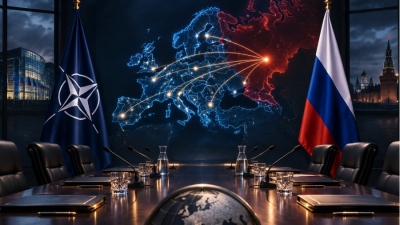
Europe is entering a period of intensive military preparation, with Russia and NATO facing each other in one of the most serious security environments of recent decades. The European rearmament, the strengthening of the alliance's eastern flank, military exercises near the Russian border, and the debate on deploying Western forces in Ukraine are fueling a new wave of concern. In Russia, political analysts and commentators warn that confrontation with the West could evolve into an open military conflict. At the center of Russian assessments are three potential fronts: Kaliningrad, northern Europe via Finland and Norway, and Ukraine itself. The most concerning element is that any direct conflict between Russia and NATO could create conditions for nuclear escalation. However, preparing for the possibility of war is one thing, while having a decision to start it is another. Military developments, nonetheless, are entirely real, and warnings regarding the risk of miscalculations are multiplying.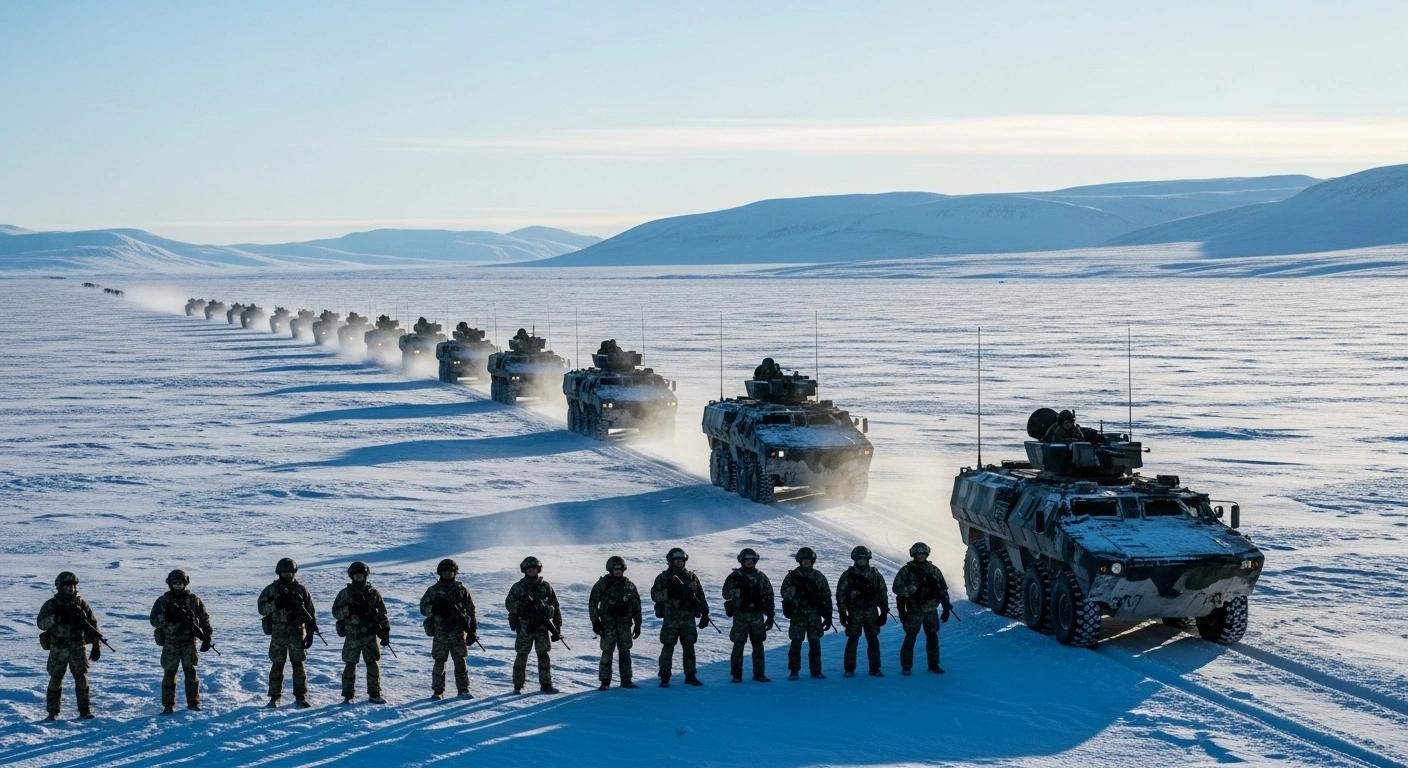
Political earthquake in the US: Democrats take Congress and Donald Trump faces new obstacles
The political upheaval in the United States constitutes one of the most significant new realities. In the midterm elections of November 3, 2026, the Democratic Party secured control of both the House of Representatives and the Senate, according to Associated Press projections. This development alters political balances in Washington and significantly restricts Donald Trump's ability to advance his legislative agenda. However, the new composition of Congress does not take office immediately after the elections, but in January 2027. In Russia, certain political commentators believe that this electoral development may influence American policy regarding the war in Ukraine. Alexander Dugin, philosopher and director of the Tsargrad Institute, estimates that Donald Trump's weakening may create more favorable conditions for political forces supporting a harder stance toward Moscow. According to the assessment cited in the Russian text, Kyiv could seek more decisive Western support, increasing tension around critical regions such as the Baltic and Kaliningrad. It does not automatically follow, however, that the Democratic victory entails military conflict with Russia. Furthermore, overturning a presidential veto in the US requires a two-thirds majority in both chambers of Congress, not merely control of both chambers by a single party.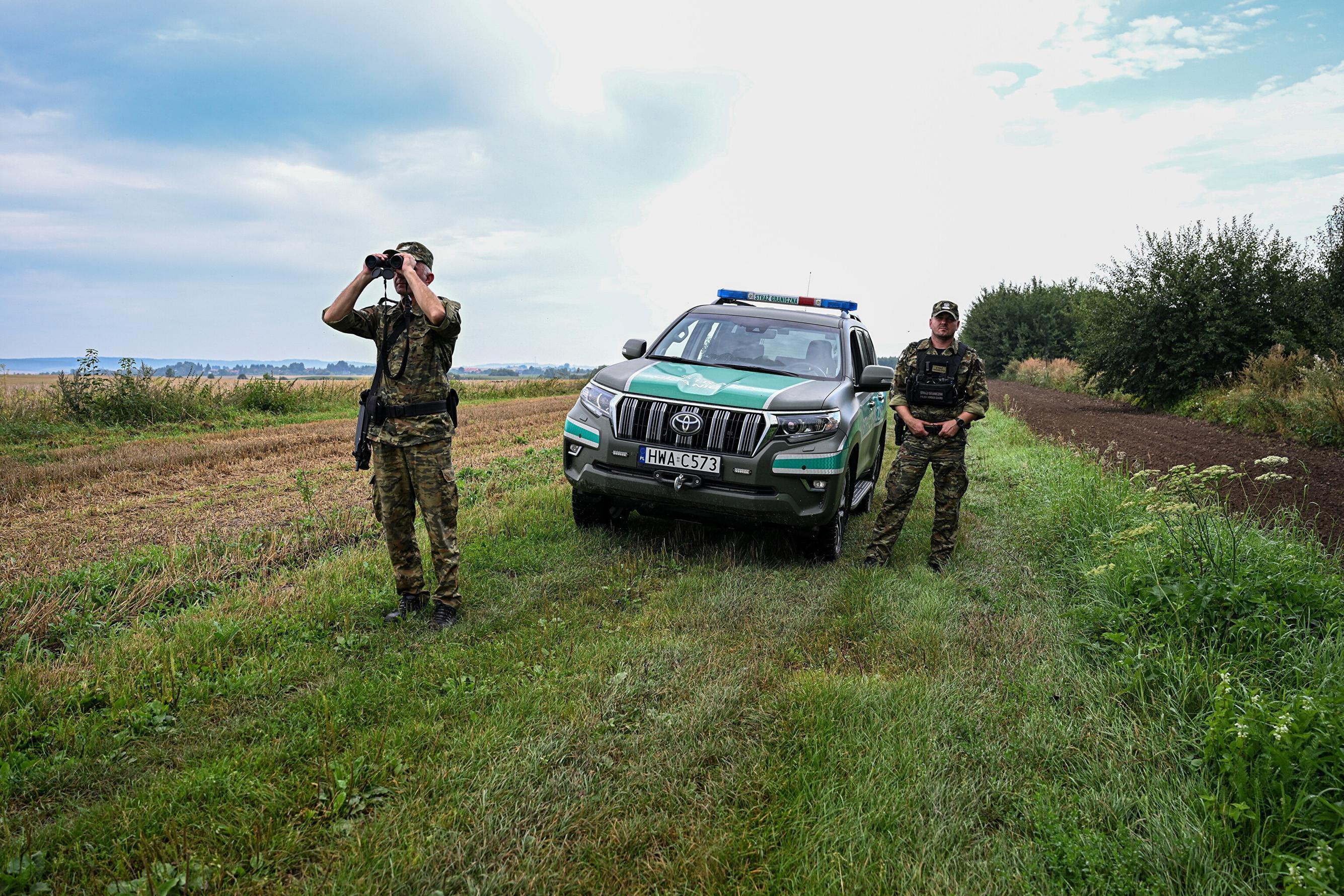
Warning bell in Kaliningrad: Poland reinforces borders and Moscow monitors
The region of Kaliningrad is emerging as one of the most sensitive points of military confrontation in Europe. The Russian exclave is situated between Poland and Lithuania, while possessing strategic access to the Baltic Sea. Its geographical position, combined with the Russian military presence, makes it particularly important for the defense planning of both Moscow and NATO. In recent days, Poland announced enhanced security measures in regions bordering Russia and Belarus. Polish Prime Minister Donald Tusk stated that authorities prevented a potential provocation near the border with Kaliningrad, after border guards detected suspicious movements during the night. Simultaneously, Warsaw increased the presence of police, military, and special units in the northeastern regions of the country, citing intelligence on potential sabotage operations or armed incursions. This situation is interpreted by certain Russian analysts as an indication of preparation for future confrontation.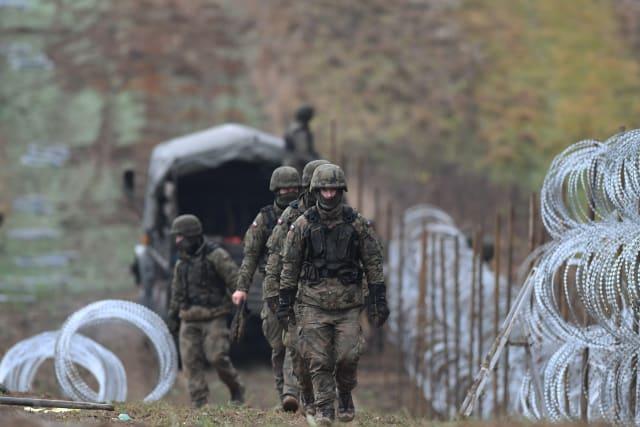
"Theory of victory": Alexus Grynkewich's warning that raises tension with Moscow
One of the most significant developments occurred on October 12, 2026, when NATO's supreme military commander in Europe, American General Alexus Grynkewich, presented in Warsaw the strategy he termed the "Theory of Victory". Speaking at the Warsaw Security Forum, the general explained how the alliance plans to respond to a potential attack against a member state. The core logic of the strategy involves three stages: repelling the initial attack, containing the continuation of offensive action, and, if necessary, dismantling the operational capability of the attacking forces. Alexus Grynkewich warned that, in the event of an attack, NATO's response would not necessarily be limited to front-line units. It could expand to command structures, support systems, logistical infrastructure, and other military capabilities enabling the adversary to continue operations. This formulation has sparked particular interest in Russia because it implies that a future conflict could include strikes beyond the immediate battlefield. However, the general himself presented the strategy as a response to a potential attack against the alliance and not as a plan for preventive war against Russia. Indeed, according to the Associated Press, Alexus Grynkewich stated that he does not consider a conflict inevitable or imminent. This does not diminish the importance of military preparations, but it differentiates the actual content of the statements from the claim that an attack on Moscow has been decided.
"War fever" until 2030: Europe plans hundreds of billions in rearmament
The European Union has already launched a wide-scale effort to strengthen the military capabilities of member states. The ReArm Europe / Readiness 2030 program projects the capacity to mobilize up to 800 billion euros for defense spending, with an emphasis on equipment production, air defense, drones, cybersecurity, and military mobility. Within this framework is also included the European SAFE mechanism, amounting to 150 billion euros, for financing joint defense investments. In Moscow, the strengthening of the European defense industry is treated by certain analysts as preparation for a prolonged military confrontation. The European Commission, by contrast, presents the program as an effort to strengthen deterrence and address deficiencies in European military capabilities. The fact that the time horizon extends to 2030 does not prove that that year has been set as the date for war.
From Barack Obama and Hillary Clinton to the present: What 2010 classified plans reveal
As early as 2010, under the presidency of Barack Obama, the alliance had drafted classified plans to counter a potential Russian attack against Poland and the Baltic states. Relevant details were revealed through American diplomatic cables published by WikiLeaks and presented by the British newspaper The Guardian in December 2010. According to the documents, NATO expanded the Eagle Guardian plan to include the defense of Estonia, Latvia, and Lithuania, beyond Poland. Then-Secretary of State Hillary Clinton was connected to the diplomatic process shaping this planning.
First scenario: The northern wing, Finland, and the risk to St. Petersburg
The first scenario presented in the Russian publication concerns a potential military conflict in northern Europe. At the center are Finland, Norway, the Russian region of Murmansk, and St. Petersburg. Finland's accession to NATO in 2023 significantly changed the geography of confrontation, as it increased the length of land borders between the alliance and Russia. The Murmansk region is particularly important for Moscow, as it hosts critical facilities of the Russian Northern Fleet and infrastructure connected to nuclear deterrence. St. Petersburg, on the other hand, constitutes one of the most important industrial, economic, and administrative centers of Russia. According to the Russian analysis, this region could be transformed into a potential confrontation zone if a generalized war were to break out. However, there is no publicly confirmed evidence that Finland or Norway are preparing an offensive military operation against St. Petersburg or Murmansk.
Second scenario: Kaliningrad as a dangerous flashpoint of confrontation
Even more intense is the concern surrounding Kaliningrad. The region possesses significant Russian military installations, naval infrastructure, and air defense systems such as the S-400. Its strategic position allows Russia to maintain a military presence in the Baltic while simultaneously creating distinct challenges for NATO's defense planning. The Russian publication presents the hypothesis that a Western operation could seek to neutralize critical military capabilities in the region. It is also mentioned that Western military simulations and exercises examine potential large-scale confrontation scenarios. The existence of such analyses, however, does not constitute proof of a political decision for an attack. The real danger lies in the fact that a local military incident could trigger chain reactions between two nuclear-armed adversaries. In a region with intense military activity, the risk of miscalculating the intentions of the other side constitutes a significant factor of instability.
Third scenario: Western troops in Ukraine and the risk of direct conflict
The third scenario concerns the reinforcement of Western military presence in Ukraine. The discussion regarding a "coalition of the willing," with an active role for France and other European states, has highlighted the possibility of deploying forces on Ukrainian territory within the framework of future security guarantees. In this case, the critical question is whether the presence of foreign military forces could be agreed upon after a ceasefire or whether it would create new flashpoints of conflict. Moscow has expressed opposition to the stationing of Western troops in Ukraine. According to the Russian publication, a potential escalation could evolve gradually, beginning with support duties and infrastructure protection and extending to air defense missions. The text also refers to multinational exercises in Poland, involving approximately 3,000 troops, which supposedly examine the deployment of forces on Ukrainian territory. This specific reference, as well as the designation "Coalition" provided, could not be independently verified from the data examined. Nonetheless, the broader issue remains substantive: a direct military confrontation between Western and Russian forces could radically alter the nature of the war.
The nuclear threat returns: Can a local incident lead to uncontrolled escalation?
The possibility of nuclear escalation is perhaps the most serious dimension of the scenarios being examined. Russia possesses a large nuclear arsenal and has repeatedly warned that it will defend vital security interests, even with extreme means should the conditions of its nuclear doctrine be met. Correspondingly, NATO bases its deterrence strategy on both conventional military forces and the nuclear capabilities of its allies. The existence of these capabilities does not mean that the use of nuclear weapons constitutes an automated reaction to every military incident. The Russian article expresses the assessment that an attack against critical regions of Russia could provoke a nuclear response, with reference even to a 99 percent probability.
2030 as a milestone: Deterring a war or preparing for the worst?
European rearmament initiatives and the revision of NATO's military planning reflect a significant shift in European security. The period during which European countries considered a large-scale military conflict on the continent an extremely remote possibility has passed. Today, European governments are investing more in the defense industry, ammunition stockpiles, critical infrastructure protection, and the faster transport of military forces. For Moscow, such moves constitute elements that heighten concern regarding NATO's future military power. For European governments, they constitute deterrence measures against a Russia that has already used large-scale military power against a neighboring state. These differing interpretations create the risk of a vicious cycle of mutual suspicion and armaments.
The major challenge for Russia and Europe: How close is an open conflict?
The central conclusion of the Russian analysis is that Moscow must not rely on the expectation that economic difficulties and political disagreements in the West will halt Europe's military strengthening. The authors of the original text consider that Russia needs to prepare for different scenarios, from regional crises in Kaliningrad to the potential increase of Western military involvement in Ukraine. This is a perspective that treats European military rebuilding primarily as a threat. On the other hand, NATO's official position is that its defense preparations aim to deter attacks and protect member states. The essence is that Europe is rearming, NATO is reshaping its defense planning, and Russia is warning of the consequences of a potential escalation.
www.bankingnews.gr


Readers’ Comments