

In Ireland, major news organizations were forced to evacuate their buildings following bomb threats
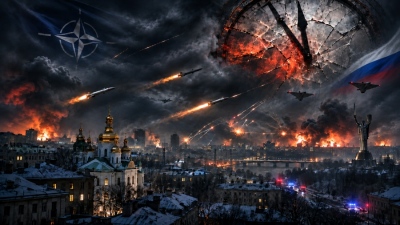
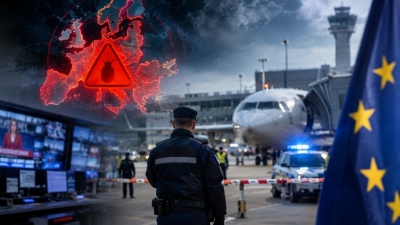
An unprecedented wave spreading fear and panic is underway across Europe, featuring bomb threats targeting aircraft, building evacuations at major news media outlets, and cyberattacks against critical infrastructure. Over the last 24 hours—and on a daily basis—consecutive incidents are putting authorities on high alert and reinforcing concerns over a broader destabilization campaign. Now, threats are no longer restricted solely to air transportation. Within just a few days, multiple European nations found themselves confronting events that disrupted daily operations, triggered security apparatuses, and brought the prospect of a new form of hybrid warfare to the forefront, challenging European security architecture.
Major news media evacuated in Ireland
In Ireland, major news organizations were forced to temporarily evacuate their buildings following bomb threats. Among the outlets impacted were public broadcaster RTÉ, the Irish Independent newspaper, as well as the Dublin offices of radio stations NewstalkFM and TodayFM. An RTÉ presenter informed listeners that the broadcaster had received an email stating that "a bomb was set to explode within 45 minutes." Dozens of employees assembled outside RTÉ's Donnybrook facilities while police forces conducted searches; live radio broadcasts were temporarily interrupted and replaced by recorded programming, affecting Irish media operations.
Bauer Media, which owns NewstalkFM and TodayFM, announced that its offices were evacuated following a threat that proved to be a hoax. Employees subsequently returned to their desks and broadcasts resumed normally. Irish police confirmed awareness of threats directed against media organizations across Ireland and other European nations, adding that they remain in contact with involved entities while investigating the cases.
Irish Prime Minister Micheál Martin characterized the situation as worrisome, emphasizing that the government's primary priority is public safety. He specifically referenced apparent attempts launched the previous day to cause disruption to air travel via fake bomb threats that impacted 21 flights across Ireland and other European countries. He underlined that it has not yet been clarified whether the threats originate from isolated individuals or represent a coordinated attack. As he noted, police, armed forces, cybersecurity agencies, and aviation authorities are cooperating to identify those responsible in consultation with European counterparts, while Deputy Prime Minister Simon Harris referred to a "very serious and evolving situation," noting authorities do not yet know who stands behind the incidents, addressing EU counter-terrorism coordination.
Fresh wave of threats against aircraft
At the same time, bomb threats targeting aircraft continue for another 24-hour period, causing fresh turbulence across European aviation. In France, according to the Prime Minister's office, four new threats were issued against aircraft flying in national airspace; all aircraft landed safely while specialized bomb disposal units carried out inspections. In Italy, a Wizz Air flight from Prague to Rome was diverted to Venice due to a bomb threat. In the Czech Republic, police announced threats against flights departing from or arriving at Prague Airport, though a spokesperson confirmed no explosive devices were detected aboard inspected planes and no flights were canceled or diverted. In Portugal, authorities inspected a Ryanair flight operating the Rome–Lisbon route following an anonymous threat, finding no bomb, amidst European aviation security disruptions.
Wizz Air confirmed awareness of a series of threats that have impacted multiple airlines in Europe in recent days. The company described the issue as a broader industry problem, clarifying that it is cooperating with relevant authorities and that its flight schedule continues as normal.
"Strikes" on supermarkets
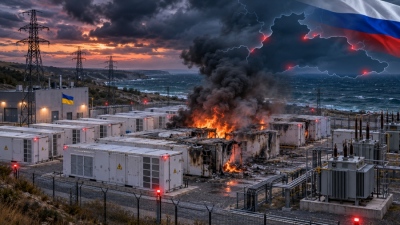
Parallel to the bomb threats, cyberattacks hit cooling systems at supermarkets across European nations, causing temperatures in fridges and freezers to spike and leading to food spoilage. Sweden's National Cybersecurity Center announced it responded to several store incidents where freezer temperatures rose sharply overnight on Monday. Similar occurrences were recorded in Belgium and Luxembourg, raising alarms over the security of digital systems controlling everyday operations for critical businesses, highlighting critical infrastructure cybersecurity.
The hybrid warfare scenario
Amid this backdrop, the scenario that all these threats form part of a wider destabilization blueprint is gaining increasing ground. CEO of cybersecurity firm Cyviation, Eliran Almog, estimated that recurring bomb threats might serve a dual purpose: causing operational disruption and financial costs on one hand, and mapping how airlines, airports, and state authorities react on the other. As he pointed out, various critical services face incidents that cause financial losses and can undermine public confidence. Experts note that fake bomb threats are not unprecedented; however, the frequency and concentration of so many incidents within such a condensed timeframe are considered extraordinary, signaling hybrid warfare tactics.
Simultaneously, the threats arrive during a period of heightened geopolitical tensions and warnings from European security services regarding potential escalation of hybrid actions by Russia. So far, official responsibility for this specific wave of threats has not been formally attributed to any state or organization. Security experts noted that the incidents exhibit characteristics pointing to a potential coordinated hybrid attack; however, copycat actions by different individuals or threats tied to personal motives cannot be ruled out. Concerns are reinforced by prior sabotage incidents on European soil—from defense-related facilities in the Baltic region to a drone incident at Leipzig Airport in Germany. Certain officials have linked the broader sabotage campaign to Europe's support for Ukraine and turned suspicions toward Moscow, without this constituting proof of involvement in the new incidents. Spain's Foreign Minister José Manuel Albares provided a striking dimension to prevailing concerns, stating that while time will be needed to clarify what transpired, "the most logical hypothesis is that we are facing an attempted hybrid aggression and a form of psychological warfare," altering European geopolitical stability.
www.bankingnews.gr




Readers’ Comments