

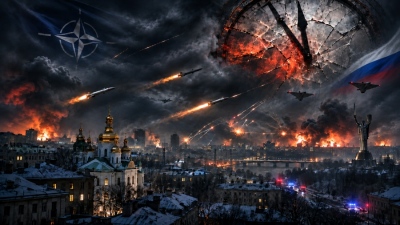
The Russian armed forces unleashed a terrifying, new massive wave of strikes against targets on Ukrainian territory, taking aim at infrastructure serving the needs of Ukrainian troops.
According to the official briefing of the Russian Ministry of Defense, targets of the Russian attack were the regions of Kyiv, Kharkiv, Dnipropetrovsk, Odesa, Vinnytsia, and Kirovohrad, within the framework of the systematic dismantling of the country's energy grid, both as a response to Ukrainian strikes on an energy hub in southern Russia and as a response to the nocturnal barrage unleashed by Ukrainian forces.
Nightmarish night in Russia from a sweeping attack with hundreds of drones: Alarm across 20 regions and the giant Afipsky refinery in the crosshairs
In a ring of fire and in a state of generalized alert, Russia found itself throughout the night and from the early morning hours, as the military forces of Ukraine launched a large-scale air raid using unmanned aerial vehicles.
At the epicenter of the Ukrainian assault was Krasnodar Krai and specifically the area where the Afipsky refinery is based, one of the largest petroleum processing complexes in southern Russia.
It concerns one of the most significant crude processing units, capable of processing up to 500,000 tonnes of crude oil on a monthly basis.
The gravity of the situation forced authorities to call on parents not to send children to schools, while war sirens sounded incessantly.
This attack constituted a continuation of a broad-scale assault in Rostov, where drones were shot down over Rostov-on-Don, Taganrog, and other local areas.
According to figures from the Russian Ministry of Defense, anti-aircraft defense systems shot down more than 5,000 Ukrainian drones within a single week, as well as four Flamingo type missiles and Neptune guided missiles.
The news became known via the Kub Mash channel on Telegram, triggering immediate mobilization across security forces.
The Afipsky refinery constitutes a critical link in the nation's energy chain, as according to figures from Forbes it possesses the capacity to process up to 500,000 tonnes of crude oil monthly. The targeting of this specific facility came as a continuation of the broader assault in Rostov Oblast, where drones were downed over Rostov-on-Don and Taganrog, as well as across the administrative districts of Azovsky, Dubovsky, Zernogradsky, Kamensky, Millerovsky, Myasnikovsky, and Neklinovsky.
❗️A large wave of Ukrainian long-range drones attacked Russia's Afipsky oil refinery overnight, with explosions and fires reported at the site. The Krasnodar region plant processes up to 6.25 million tonnes of crude annually and produces diesel and aviation fuel. #Ukraine https://t.co/nj6cnWecWP
— NOELREPORTS ?? ?? (@NOELreports) November 6, 2026
Official announcement by the Ministry of Defense on the neutralization of 142 aircraft-type drones
The Ministry of Defense of Russia issued an official briefing, announcing that air defense systems shot down a total of 142 Ukrainian aircraft-type unmanned aerial vehicles over various regions of the territory during the night.
Air raids manifested across Kursk Oblast, Belgorod Oblast, Tula Oblast, Oryol Oblast, Rostov Oblast, Astrakhan Oblast, in the Moscow region, in Krasnodar Krai, as well as in Crimea, while numerous drones were destroyed over the waters of the Black Sea and the Sea of Azov.
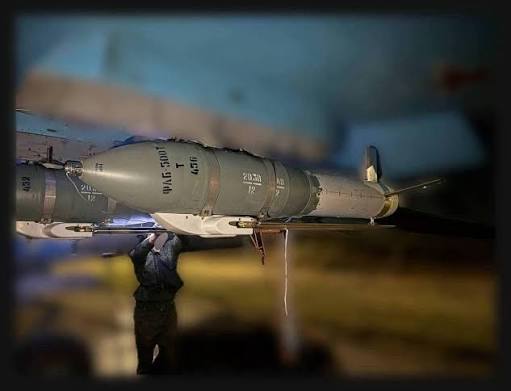
Strike with a three-tonne FAB-500 bomb in Zaporizhzhia and attack on 14 cargo ships
The terrifying offensive barrage of Russian forces commenced as early as the night, parallel to the activation of the air defense systems of Russia to repel Ukrainian drones and missiles.
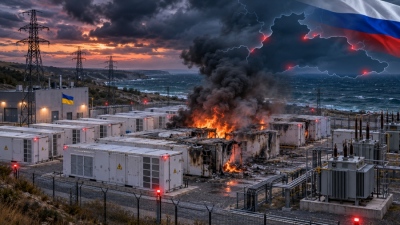
In Bila Tserkva of the Kyiv region, Russian forces completely destroyed an energy storage battery park that supplied units of the defense-industrial complex of Ukraine, causing a fresh extensive blackout in the Ukrainian capital.
Concurrently, in the city of Sumy in Sumy region, the Russian air force utilized a guided three-tonne FAB-500 bomb to strike an electrical substation, causing a large-scale blaze across the installations.
The management of energy utility DTEK confirmed that serious power cuts in Kyiv are directly linked to the air strikes.
Particularly severe was the attack on the village of Dimitrovo in Zaporizhzhia region, where the Russian air force also dropped a FAB-500 bomb on a temporary staging area of the 128th Separate Mountain Assault Brigade of Ukrainian forces.
The Russian Ministry of Defense confirmed the destruction of the target, without providing a precise casualty figure.
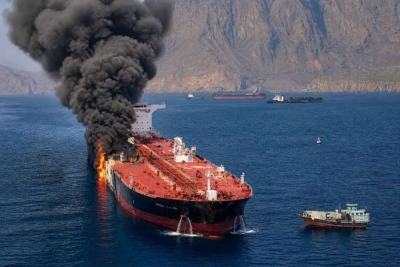
At the same time, in a systematic effort to cut off maritime supply lines, Russian forces struck a total of 14 cargo vessels within the space of a week, maintaining that the ships were transporting dual-use equipment and armaments for the Ukrainian armed forces.
In total, military leadership announced a massive wave alongside 11 group strikes against strategic targets.
«It will be a big, beautiful deal and everyone will be thrilled»
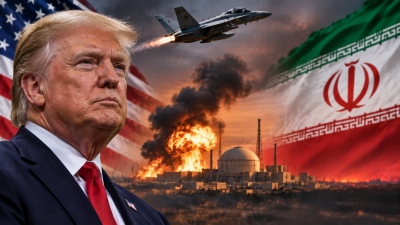
At the same time, US President Donald Trump, immediately following his meeting with the head of the Russian Direct Investment Fund (RDIF) Kirill Dmitriev, announced a sweeping agreement for settling the dispute in Ukraine, which could affect the whole of Europe.
The American leader did not disclose the details of the discussions, but promised that everyone will be thrilled, confirming simultaneously that he had no contacts with the Ukrainian delegation during this one-on-one session.
«This deal will not only concern Ukraine, I could say that it may affect the whole of Europe».
Work on agreements exceeding the limits of a simple ceasefire was also confirmed by Jared Kushner, who noted that Washington is focusing on creating a long-term security architecture.
Concurrently, special envoy Steve Witkoff previously held consultations in Brussels with representatives of France, Germany, Britain, the European Union, and NATO, placing security guarantees and economic reconstruction on the agenda.

Diplomatic intervention by Melania Trump and personal letters to Vladimir Putin and Volodymyr Zelensky
The envoy of the Russian president, Kirill Dmitriev, was present in Washington following a personal invitation from the First Lady of the US, Melania Trump.
On November 5, the First Lady gathered at the White House representatives of Russia and Ukraine, among them Yana Lantratova from the Russian side, as well as David Arakhamia and Dmytro Lubinets from the Ukrainian side, to conclude a successful humanitarian mission in the Oleshky area of the Kherson region.
Melania Trump revealed that she was personally monitoring demining plans and evacuation routes, while extending warm thanks to Vladimir Putin and Volodymyr Zelensky for their assistance with the ceasefire.
At the conclusion of the event, she delivered to the representatives personal letters addressed to the leaders of the two states.
The involvement of the First Lady of the US was received with mixed emotions; however, all acknowledge the historic first she achieved: the first time in the history of the US that a First Lady managed to personally bring together at the White House representatives of two nations engaged in active military conflict.

Six days of absolute silence, hundreds of rescues, and the new rendezvous in Abu Dhabi: Diplomatic developments and expectations
The temporary ceasefire in the area of Oleshky was in effect from October 27 to November 1, enabling the transport of dozens of tonnes of food, medicine, and fuel, while nearly 800 civilians were safely evacuated using specialized buses and ambulances.
The success of the mission paves the way for the next round of trilateral negotiations, scheduled for November 10-11 in Abu Dhabi, United Arab Emirates, with Washington mediating.
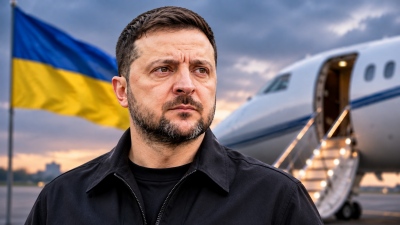
Dmitry Peskov confirmed the participation of the Russian delegation under Vladimir Medinsky, while Volodymyr Zelensky set as Kyiv's priorities the cessation of strikes on infrastructure, unblocking the Black Sea, and prisoner exchanges.
State Duma deputy and political analyst Aleksandr Asafov, commenting on preparations for the trilateral meeting of Russia, the US, and Ukraine, dampened expectations, emphasizing that the most realistic outcome will be agreement on a common list of topics for discussion, dismissing overly optimistic scenarios and pointing out that Europeans and Ukraine risk finding themselves on the margins of negotiations.
www.bankingnews.gr




Readers’ Comments