

The crucial midterm elections in the US are heading into the home stretch, with the political landscape foreshadowing major realignments.
The final polls will close in Hawaii and Alaska, while the first results are expected after 01:00 Greek time from the village of Dixville Notch in New Hampshire, which has very few residents.
At 07:00 in the morning, the last poll will close as well.
The detailed schedule in Greek time follows:
- 01:00: The majority of polling stations close in Indiana and Kentucky
- 02:00: Polls close in Florida, Georgia, New Hampshire, South Carolina, Vermont, and Virginia, as well as the remaining stations in Indiana and Kentucky
- 02:30: Polls close in North Carolina, Ohio, and West Virginia
- 03:00: Polls close in Alabama, Connecticut, Delaware, Washington DC, Illinois, Maine, Maryland, Massachusetts, Mississippi, Missouri, New Jersey, Oklahoma, Pennsylvania, Rhode Island, and Tennessee, as well as in most districts in Kansas, Michigan, North Dakota, South Dakota, and Texas
- 03:30: Polls close in Arkansas
- 04:00: Polls close in Arizona, Iowa, Louisiana, Colorado, Minnesota, Nebraska, New Mexico, New York, Wisconsin, and Wyoming, as well as the remaining districts in North Dakota, South Dakota, and Texas
- 05:00: Almost all polls close in Idaho, Montana, Nevada, and Utah
- 06:00: Polls close in California and Washington, as well as most districts in Oregon
- 07:00: Voting concludes in Alaska and Hawaii
Estimates
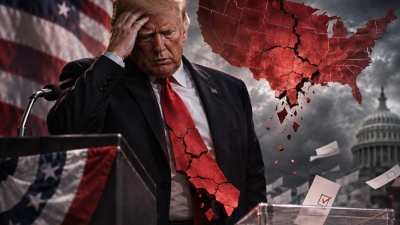
Estimates so far show that the Republicans are heading toward losing the House of Representatives, while the major electoral showdown is now concentrated on the Senate, where the battle remains extremely close.
Projections being presented want the Democrats to secure around 230 seats in the House of Representatives, a fact that would give them control of the chamber.
However, if the Republicans manage to maintain their majority in the Senate, Donald Trump will continue to constitute a significant political counterweight, retaining room for maneuver to advance his agenda.
Indeed, it is not excluded that the Senate may remain under Republican control, even by a narrow margin, a development that would keep the political game open in Washington.
In terms of the overall popular vote, estimates point to a possible Democratic lead in the order of 6 percentage points.
It is recalled that in the battle for the House of Representatives, all 435 of its members are elected for a two-year term, while in the Senate, 35 of the 100 Class 2 seats are contested for a six-year term.
At the same time, gubernatorial elections are being held in 39 states and American territories.
The outcome of this comprehensive electoral contest will determine which party will control the legislative branch and the ability of the President to exercise his agenda.
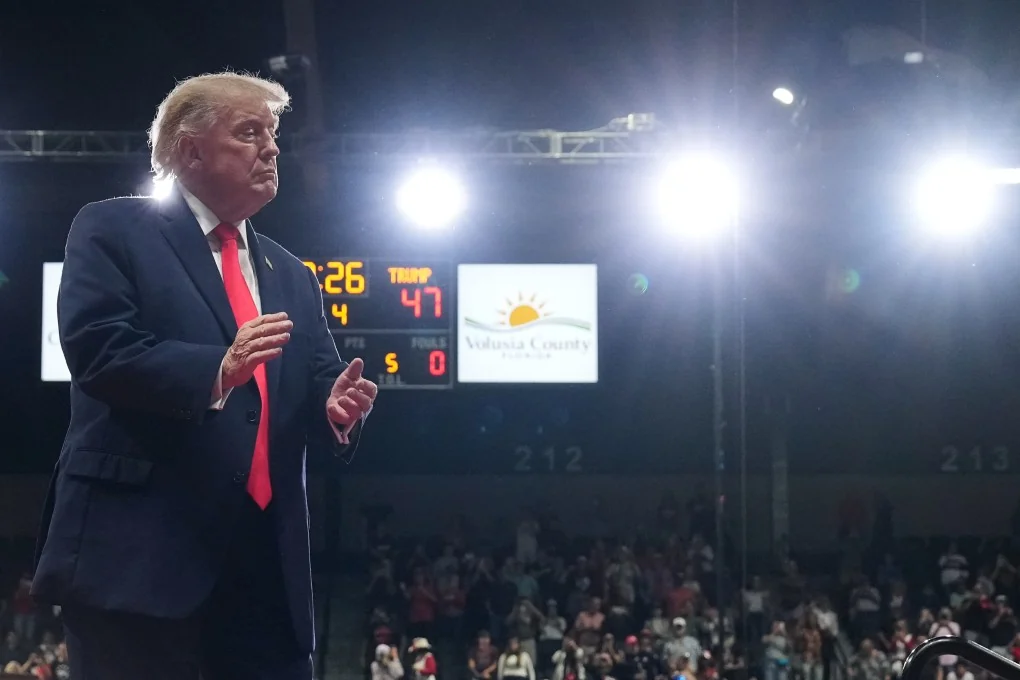
Six states decide the Senate
If the House of Representatives appears to be heading toward the Democrats, the Senate is the real field of the great battle.
A total of 35 of the 100 Senate seats are being contested in the elections, with 23 of them located in states that Trump had won in 2024.
Of the 100 Senate seats that are available for 2026, 35 are available.
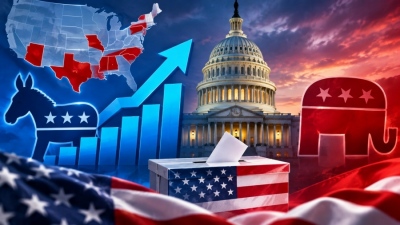
According to predictions by the analysis platform Real Clear Politics (RCP), the Democrats could win a total of 47 seats, while the Republicans could win 44.
In 10 states, the candidates' chances are roughly tied, in 8, the Republicans hold a small advantage, and a victory in 6 states would be enough to secure half the seats in the upper chamber of Congress.
Vice President Vance would also secure the tie-breaking votes.
Russian Dubravsky Consulting calculated that Republicans will lose the House of Representatives, but they consider that the US Senate is in play.
However, the most likely scenario is for Republicans to maintain control of the Senate due to Vance.
The six especially critical races that can determine control of the Senate are in Alaska, Iowa, Kansas, Ohio, South Carolina, and Texas.
What is happening in the House of Representatives
In any case, the electoral contest constitutes an especially difficult test for the Republicans, as historical trends dictate that the party in power suffers losses in midterm elections.
However, Trump is attempting to overturn this tradition, turning the contest into a referendum on his political agenda, the economy, immigration, and the future of America.
The truth is that all 435 seats in the House of Representatives are up for grabs.
At this moment, Republicans hold 219 seats compared to 214 for Democrats, with two vacancies.
According to estimates by Real Clear Politics, the Democrats will win 227 of the 435 seats.
According to the Cook Political Report, Democrats have the opportunity to win 230 seats, up to 237 seats in the House of Representatives.
Democrats need four to five additional seats to assume control of the chamber, but they will find it difficult to secure them.
About 28 districts are characterized as genuine toss-ups, while the remainder are distributed into categories where the lead of one side or the other is considered more or less safe.
House Speaker Mike Johnson insists that the polls are wrong.
And it is not the first time that electoral forecasts fail to capture the real momentum of Republicans.
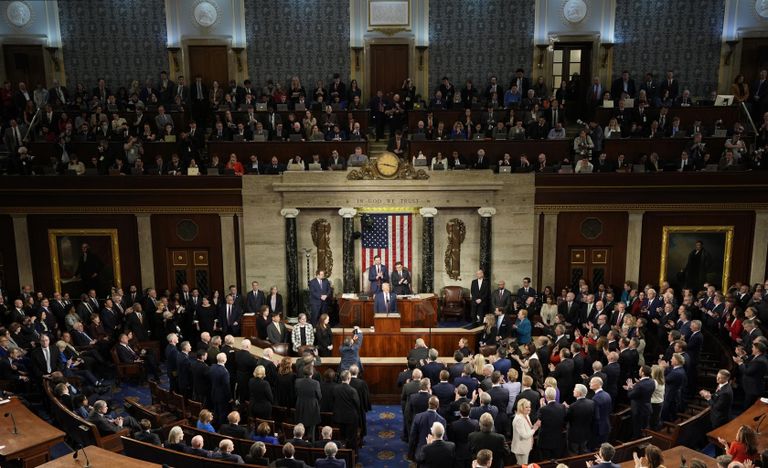
The six critical states
Alaska: Republican Senator Dan Sullivan faces an extremely difficult battle against Democrat Mary Peltola.
The latter leads narrowly in the polls, while the electoral contest has been weighed down by the case of the candidacy of a second Dan Sullivan, an occurrence that has provoked political and legal dispute.
Iowa: Republican Ashley Hinson and Democrat Josh Turek are virtually tied.
Republicans have a significant historical advantage, as Democrats have not won a Senate election in the state since 2008.
However, increased fuel costs and the pressures faced by the agricultural sector are creating problems for the GOP.
Kansas: Republican Roger Marshall faces Democrat Adam Hamilton, in a contest that evolved into a real surprise. Despite the state's long tradition in favor of Republicans, Hamilton has managed to become competitive, while his personal political and religious identity complicates the Republicans' effort to present him as a typical Democratic candidate.
Ohio: Democrat Sherrod Brown is attempting to return to the Senate against Republican Jon Husted. Polls show Brown ahead, but the state's recent electoral history demonstrates that the conservative vote may be stronger than surveys record.
South Carolina: Republican Darline Graham Nordone, sister of the late Senator Lindsey Graham, seeks election against Democrat Annie Andrews. This is a traditionally conservative state, in which Democrats have not won a Senate seat since 1998. The backing of Trump constitutes a major political advantage for Graham Nordone.
Texas: The contest between Democrat James Talarico and Republican Ken Paxton constitutes one of the most unexpected battles of the election season.
Texas remains a traditional Republican stronghold, yet intraparty friction and the selection of Paxton have created opportunities for Democrats.
Trump: The polls do not reflect reality
Donald Trump has repeatedly questioned the reliability of polls, pointing out that the voting behavior of his supporters is often underestimated.
This is not an entirely baseless concern.
In the 2024 presidential elections, for example, polls in Iowa showed Kamala Harris leading by three points in a Des Moines Register survey, yet Trump ultimately prevailed in the state by a margin of 13 points.
Similarly, instances have been recorded in Michigan where polls overestimated the momentum of Democrats.
The question, therefore, is whether the phenomenon of underestimating the conservative vote will repeat itself this time as well.
Trump knows that the battle is difficult.
Besides, he has publicly acknowledged that the President's party traditionally loses ground in midterm elections.
At the same time, however, he insists that Republicans have to confront a Democratic faction that is moving further and further to the left.
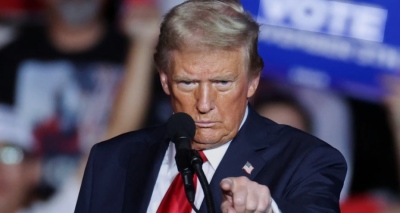
In his final campaign address at the Lincoln Memorial Reflecting Pool, the American President accused Democrats of promoting extreme policy choices and argued that the election outcome will determine the direction of the country.
«America will never become a communist country»
President Trump attempted to impart an especially sharp tone to the election battle in the US, sending a clear ideological message in every direction.
Specifically, in one of his most discussed statements, the White House notably pointed out that America is never going to become a communist country.
The post continued in an even sterner tone, emphasizing that a citizen can be either a communist or a patriot, as it is impossible for both of these attributes to coexist in the same person.

Communication tactics
Concurrently, the presidency's communication strategy was supplemented with additional remarks, which focused on promoting the political and economic accomplishments of the Trump administration.
Through comparing the record of the current administration with that of the Democrats, an attempt was made to highlight the difference in philosophy and effectiveness regarding the economy and the governance of the country, at the exact moment when the electoral battle for control of Congress is in full swing.
John McLaughlin: «Establishment pollsters are trying to discourage us from voting»
Establishment pollsters are «trying to discourage» Republicans from turning out at the voting booths, stated John McLaughlin, CEO and partner of polling firm McLaughlin & Associates, during his appearance on the show Breitbart News Daily on election day.
Host Mike Slater asked McLaughlin regarding the claims of «The New York Times» that it is difficult to locate Republicans in order to participate in the newspaper's polls.
However, McLaughlin argued that pollsters simply «do not try» hard enough to include them.
«When you look at the polls from «The New York Times» that were just published, I have to tell you that I have acquired many negative experiences from previous election contests.
Do you remember back when they showed Hillary Clinton as a certain winner? And do you remember the polls of 2024, according to which Kamala Harris was going to become president?» he asked.
«They do not want to present the real picture. These polls are used to suppress the turnout of our voters».
«They are trying to discourage us, so that we do not go to vote», he explained.
Specifically, referring to the polls of «The New York Times», he argued that the newspaper launched a generalized offensive against Republicans, publishing a series of surveys showing that the party's candidates are lagging in important Senate races.
«In Alaska, for example, where Trump had gathered 55% of the vote, looking at the individual components of the model they use to determine likely voters, we find that only 42% of respondents state they remember voting for President Trump», he stated.
«In Iowa, where we had gathered 56% of the vote in the previous elections, only 48% state they remember voting for Trump.
In Kansas, where we had received 57%, the corresponding figure is again 48%.
In Maine, 46% remember voting for Trump, whereas in the newspaper's poll this percentage is limited to 41%.
In Michigan, where Trump had garnered 50% of the vote last time, only 40% of respondents remember having voted for him», he explained.
«Regarding the other two states included in the survey, in Ohio the percentage of those who remember voting for Trump stands at 55%.
Two years ago we had gathered 55% of the vote for Trump, but in the poll only 47% stated that they remembered voting for him.
The same happens in Texas, where Trump had received 56% of the vote in the previous elections, but only 46% of respondents remember that they voted for him.
Conversely, other categories of voters appear in the poll, with 12% of respondents in Texas stating that they had not voted in the previous elections, but now appear to overwhelmingly support the Democrats», he continued.
McLaughlin clarified that the specific surveys asked participants to declare whom they had voted for in the presidential elections of 2024.
«Who wouldn't remember such a thing?» asked Slater.
«Exactly», responded McLaughlin.
He also added that polling companies «deliberately underrepresent Trump voters», pointing out that midterm elections are largely decided by voter turnout.
«Two years ago, 155 million people voted across America. Of those, 77 million voted for Donald Trump.
These voters still exist. They didn't disappear.
Some of them may not be particularly satisfied with certain Republicans because they did not vote for the Save America Act.
Nor did they proceed with a second tax cut that would give further momentum to the economy.
Perhaps they haven't done enough on the border issue and in other areas either.
However, these voters remain there», he stated.
And he concluded: «Trump voters still exist, but the media does not adequately include them in their polls».
The Senate is the target
The main issue remains centered on the elections for the Senate. Democrats and Republicans can secure only a majority of one or two seats.
Therefore, when Trump talks about fraud, he is likely targeting the Senate.
Yet even here, he will challenge the elections not across the entire United States, but in specific states.
For example, Alaska, Texas, and other traditionally Republican areas are in a difficult spot this time.
Another issue is that Trump does not have many options.
For instance, even Republicans would not approve of an attempt by the president to violently interfere with the electoral process: they worry that one day the United States will be led by someone from the left...
Meanwhile, the Supreme Court, which includes Trump protégés, does not always make the decisions he wants.
As is well known, Trump's refusal to concede his defeat in the presidential elections of 2020 led his supporters to attempt to seize the Capitol building.
The riots resulted in five deaths and hundreds of injuries.
«The storming of the Capitol is a murky affair, in which someone clearly had a vested interest.
Otherwise, the crowd would not have been able to penetrate.
Trump is in a completely different situation today.
He may not recognize the results of the congressional elections, but that is unlikely to have any effect.
The confrontation between the president and Democrats has already reached a level where any cooperation is out of the question.
Huge political crisis in the US
Consequently, the domestic political crisis will continue to escalate, and none of the participants will want to assume responsibility.
The US president and Democratic members of Congress may attempt to shift public attention from domestic issues to burning external matters.
For example, Trump will resume attacks against Iran, and his Democratic opponents will begin supporting Ukraine.
Then, the American political crisis will become a threat to the entire international community.
Difficult days lie ahead internationally.
The Democrats' big problem: Their political agenda
Democrats have invested heavily in price gouging, the cost of living, and accusations of corruption, attempting to present Trump as a President who is drifting away from the interests of the working class.
Simultaneously, they capitalize on issues such as tariffs, economic policy, energy burdens, and US involvement in the war with Iran.
However, the Democratic Party itself faces a serious political problem: its shift toward more radical positions that do not necessarily represent American society as a whole.
Trump will capitalize on this contradiction, presenting Republicans as the force that can maintain a more conservative direction in the governance of the country.
In reality, the electoral battle is not just about control of Congress. It is also about whether the President will possess the ability to push forward his policy without facing a House controlled by his political opponents.
The great polling trap
Prediction markets show Democrats as favorites for control of the Senate, with Polymarket attributing to them a win probability of 71.5%.
This, however, does not mean the race is decided.
The margins in several states are small, while the experience of past elections has proven that polls can fail significantly in capturing actual voting behavior.
Especially in the Trump era, the underestimation of the conservative vote has been a recurring phenomenon, without this necessarily meaning that every polling error works in favor of Republicans.
Trump himself has attempted to turn his personal political influence into an electoral weapon, asking his supporters to vote as if he were on the ballot himself.
The stakes are huge: If Republicans lose both chambers of Congress, the final two years of the Trump presidency could turn into a period of continuous political clashes and institutional gridlock.
Conversely, if they retain the Senate and limit their losses in the House, the American President will have the ability to preserve a significant portion of his political influence.
Election night will reveal whether the polls accurately captured Democratic momentum or whether the conservative America of Donald Trump will deliver yet another electoral surprise.
For the American President, the battle is not merely for Congressional seats.
It is a battle for his political legacy and for the future of the MAGA movement.
www.bankingnews.gr








Readers’ Comments