

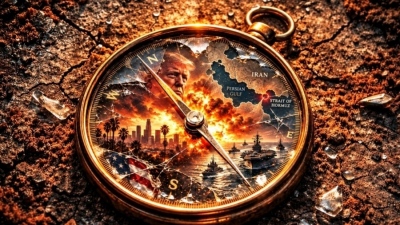
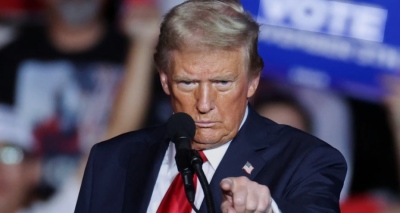
With defeat in the midterm elections considered a given, US President Donald Trump initiated panic moves, handing out ultimatums and announcing the end of military financial aid to Israel. With polls open across most states, Trump heralds the termination of annual military financial assistance amounting to roughly $4 billion to Israel, maintaining that the country no longer requires American funding. Concurrently, he escalates his rhetoric toward Tehran, signaling that Iran finds itself in an exceptionally difficult position and is called upon to choose between a deal with Washington and the continuation of the military operation. His statements on Fox News open fresh questions regarding US foreign policy priorities, the future of the strategic relationship with Israel, and Trump's actual intentions toward Iran, during a period in which domestic political pressure in Washington intensifies.
Trump: "We have Iran where we want them"
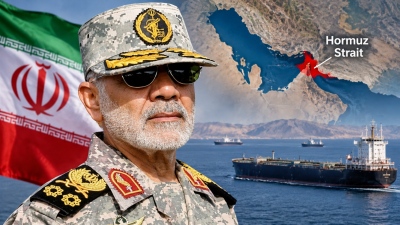
The US president appeared particularly emphatic regarding the assessment of the military situation in Iran, maintaining that the American operation has achieved its core objectives and that Washington now holds the upper hand over Tehran. "We have Iran where we want them," he characteristically stated, implying that the Iranian leadership confronts limited choices. According to him, the American side can either reach a deal with Tehran or continue the military operation. However, Trump did not rule out the prospect of fresh bloody strikes. "I am not looking to kill a lot of people in Iran, but if necessary, it will be necessary," he noted, clearly keeping the threat of further military escalation open. Simultaneously, he repeated his assertion that American forces have destroyed the Iranian navy and air force, while maintaining that the country's leadership has been essentially decapitated since the start of the US military operation in late February.
Describing Iran as an exceptionally tough adversary, the US president utilized the designations "the toughest" and "very difficult," insisting nonetheless that its military and political power has sustained a crushing blow. Particular interest centers on his attempt to downplay the character of the conflict. As he maintained, what is taking place no longer constitutes an actual war, given that the US is not conducting active attacks against Iran at this moment. This positioning creates a paradox. Specifically, while Trump attempts to present the American operation as a conflict that has essentially run its course, he simultaneously threatens fresh attacks if Tehran fails to accept American terms. The question centers on whether Washington now pursues an agreement that will consolidate the operation's military results or whether the threat of fresh strikes constitutes the primary leverage tool to force Iran into concessions, shaping US-Iran nuclear diplomacy.
End to $4 billion for Israel
Carrying even greater political weight are Trump's statements regarding Israel, as the US president announced that Washington will not continue paying annual military financial assistance to Tel Aviv. As he maintained, he has already reached an agreement with Benjamin Netanyahu to terminate the program of roughly $4 billion by the end of 2026. "We won't be paying Israel anymore," he characteristically noted, adding that the country has evolved into a highly successful state and no longer needs American financial reinforcement. Trump indeed maintained that the Israeli side agrees with this development, attempting to present the decision not as a rupture with Netanyahu, but as a new agreement between two close allies. He clarified, however, that halting regular funding does not mean the US will cease supporting Israel in case of need. On the contrary, he left open the prospect of providing aid should circumstances demand it. His most characteristic phrase concerned the power dynamic between the two countries itself. "We are the big guys, they are the small ones," he stated, describing in this manner American strategic supremacy and Washington's role in the Middle East, directly impacting Israel military aid.
Netanyahu's plan for independence from US aid
Trump's announcement acquires added interest when combined with the Israeli prime minister's previous statements regarding the future relationship with the US. Benjamin Netanyahu had expressed the desire to gradually reduce Israel's reliance on American military funding, aiming to zero it out over a period of roughly ten years. The distinction between the two approaches remains significant. Netanyahu had described a gradual process of weaning off assistance, whereas Trump appears to herald a far faster termination of regular funding. The existing US–Israel military assistance agreement provides for annual aid of $3.8 billion for the 2019–2028 period. The $4 billion figure cited by Trump constitutes a rounding up. The development, if implemented as described by the US president, will mark a shift in one of the primary pillars of the bilateral relationship. Military cooperation, however, is not restricted to financial assistance, as it encompasses intelligence sharing, defense technology, procurement programs, and broader strategic coordination. Therefore, terminating regular funding does not automatically equate to halting American support for Israel. On the contrary, the critical question remains what form US-Israel strategic cooperation will assume in the new period.
www.bankingnews.gr





Readers’ Comments