

Winter is approaching and Germany faces an exceptionally difficult energy equation.
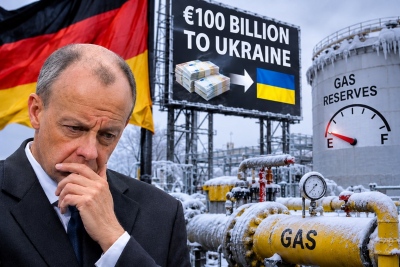
Despite warnings and market requirements, Berlin failed to prepare adequately for the autumn and winter period, as natural gas storage facilities are filled to barely 61%, falling even below the minimum target of 70%.
The situation becomes even more alarming due to weather forecasts.
Over the coming week, an abrupt drop in temperature is expected across most of German territory, a fact that will cause heating and electricity demand to surge vertically.
Germany, once the locomotive of the European economy and the largest contributor to the budget of the European Union, is now called upon to face the consequences of an energy policy that proves particularly vulnerable to winter conditions.
Renewables do not save Germany from the energy crisis
Data from the Federal Statistical Office of Germany (Destatis) indicate that in 2025 renewable energy sources (RES) formed the main pillar of power generation.
Onshore and offshore wind farms covered nearly 30% of generation, producing approximately 130 terawatt-hours of electricity.
Concurrently, solar power recorded a 16% increase, with generation estimated between 70 and 90 terawatt-hours.
The variance of 20 terawatt-hours between available estimates is enormous. This represents a quantity of electricity that could cover the requirements of the entire metropolitan area of Moscow for three months, London for six months, Iceland or Georgia and Moldova combined for one year, while it would suffice for Armenia for three years.
In even simpler terms, this quantity could power approximately 1.5 million average Russian homes for an entire decade.
Large fluctuations in RES generation, however, create severe problems in the energy market.
Installed capacity does not automatically translate into stable and available electrical power for consumers.
Generation depends directly on weather conditions, while often failing to coincide chronologically with demand.
This explains instances in which electricity prices in Europe retreat even into negative territory: strong winds and intense sunshine coincide with periods of low consumption.
When, however, the wind dies down, clouds thicken, and industries increase consumption, prices return to elevated levels.
Indeed, Germany and Britain are examining the elimination of guaranteed subsidies for RES units, which until now covered losses incurred during periods of reduced or zero production.
Coal and natural gas remain indispensable
Despite the impressive growth of renewable sources, the German energy system continues to depend on conventional forms of generation.
Lignite and hard coal collectively cover up to 22% of electricity generation, natural gas corresponds to 17% or approximately 80 terawatt-hours, while biomass contributes roughly 10%. The remainder is covered by smaller hydroelectric facilities.
The reality is that RES have failed to ensure energy self-sufficiency and stability for Berlin. And this is reflected in the clearest manner in electricity market prices.
On the European energy exchange TTF, the price of natural gas, in terms of energy yield, stood at approximately 120 euros per megawatt-hour, meaning roughly 1,200 euros per 1,000 cubic meters.
On the EPEX SPOT exchange, however, German buyers paid 252 euros per megawatt-hour, while day-ahead electricity purchases were conducted at 313 euros.
The Federal Network Agency of Germany (Bundesnetzagentur) calculates that the final price for consumers, including taxes, levies, and grid fees, reaches 395 euros per megawatt-hour.
This translates to approximately 35.9 euro cents per kilowatt-hour, a particularly elevated cost for households and enterprises.
Natural gas storage facilities are filled to barely 61%
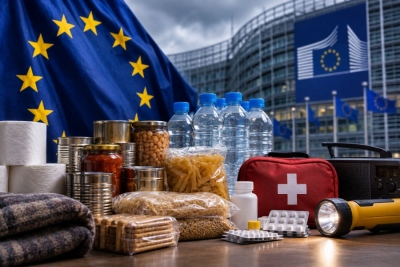
Electricity, however, is not the only problem heading into winter.
Heating constitutes an equally critical factor, as it absorbs the largest portion of natural gas consumed by Germany.
The underground gas storage facilities of the country possess a total capacity of 25 billion cubic meters.
At present they contain approximately 16 billion cubic meters, whereas, if the so-called cushion gas volume necessary to maintain pressure is deducted, the actually usable volume is restricted to roughly 12 billion cubic meters.
This quantity does not suffice to meet the overall needs of the country, rendering continuous imports indispensable.
Germany procured a total of 95 billion cubic meters of natural gas last year.
Key pipeline suppliers were Norway, the Netherlands, and Belgium, while liquefied natural gas (LNG) originated almost exclusively from the USA.
Berlin now has restricted supply options and is forced to pay dearly to secure necessary quantities.
Dependence on imports, combined with low stored volumes, creates a dangerous mixture ahead of heightened winter demand.
100 billion euros to Ukraine, Germany pays the energy price
The energy vulnerability of Germany did not arise suddenly.
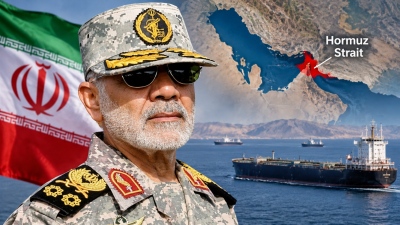
The risks have been visible for a long time, while the prolonged conflict surrounding Iran further exacerbated prospects for energy security.
Under these circumstances, the government of Friedrich Merz should have curtailed expenditures not directly linked to the core needs of the country and secured both energy reserves and the necessary funds for continuous fuel procurement.
Instead, the federal government chose to maintain continued support for Ukraine as its fundamental policy priority.
Germany has already allocated approximately 100 billion euros for Ukraine, according to estimates by the Kiel Institute for the World Economy.
Out of the total sum, 42 billion euros have been directed straight to the Ukrainian government, 35 billion euros have been expended on social support for Ukrainian refugees, while another 22 billion euros have been committed to long-term military obligations.
Even one-third of this money could have been utilized to strengthen the German economy, secure energy resources, and reduce electricity and heating costs.
Cheaper energy would bolster the competitiveness of German products, improve the position of enterprises in international markets, and augment state budget revenues.
Germany, however, chose to allocate immense sums to the continuation of the military conflict, leaving its energy shielding exposed.
The money went to war. And now, in its place, winter arrives.
www.bankingnews.gr

Readers’ Comments