

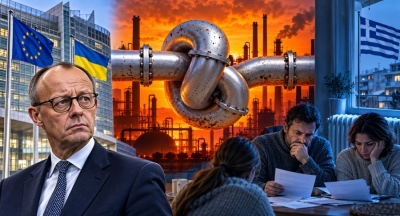
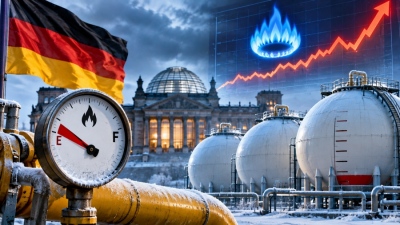
Germany confronts an impending cold wave while its natural gas reserves remain significantly lower than the 15-year seasonal average. This restricts safety margins for Europe's largest economy against successive cold snaps. A prolonged cold period could accelerate natural gas withdrawals from storage and increase the country's reliance on costlier liquefied natural gas (LNG) supplies from international markets. Simultaneously, European natural gas prices hover above €100 per megawatt-hour, escalating concerns regarding market supply costs ahead of winter, directly impacting German energy security.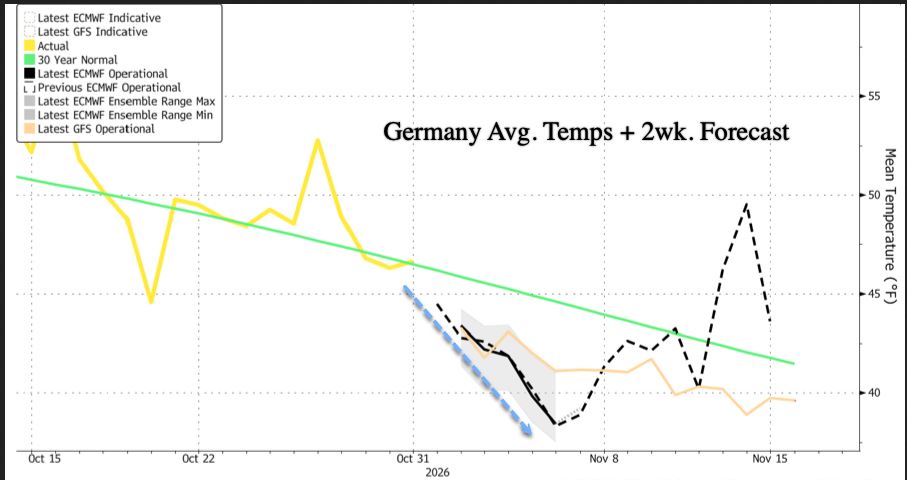
German storage fullness at 61.2% — Country misses target
According to AGSI data cited by the German news agency DPA, Germany's natural gas storage facilities were at approximately 61.2% fullness on Saturday, October 31, 2026. This percentage falls significantly short of the 70% target the country was required to reach by Sunday, November 1. The divergence records as Europe enters an early cold period. As previously reported, on October 28, European natural gas prices breached the psychological threshold of €100 per megawatt-hour due to anxieties surrounding winter supply adequacy, reshaping natural gas storage targets.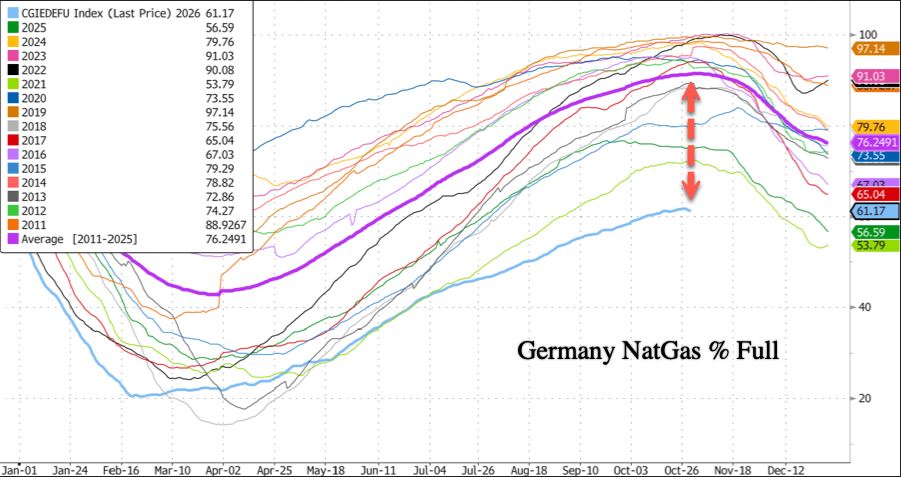
How the 70% storage target is calculated
The 70% target derives from combining two distinct requirements. According to the Federal Network Agency page, the storage level for November 1 is set at 80% for each facility, whereas a lower target of 45% applies to six specific storage locations. These encompass the Bad Lauchstädt, Frankenthal, Hähnlein, Rehden, Stockstadt, and Uelsen facilities. The resulting overall target for the country amounts to approximately 70%, according to energy website Clean Thinking, defining Federal Network Agency mandates.
German government reassures — "Supply security guaranteed"
Despite the inventory shortfall, the German government appears reassuring, maintaining that no natural gas adequacy problem exists for winter. An Economy Ministry spokesperson told DPA that "Germany's natural gas supply is secure for the upcoming winter, even at current storage levels." The Federal Network Agency struck a similar tone, asserting that "supply security is guaranteed," adding it continues to view the risk of the gas market confronting severe pressure conditions as low, influencing German government energy statements.
"Serious warning" from the storage sector
Sebastian Heinermann, managing director of natural gas storage association INES, characterized the failure to achieve the storage target as a "serious warning." As he stated, "Germany enters the heating season with smaller safety margins," warning of the country's vulnerability "in the event of extremely low temperatures." Anxiety is reinforced by the fact that average German storage fullness for the corresponding period over the last 15 years stands at roughly 91%. Consequently, the current level of 61.2% sits far below customary seasonal norms, highlighting European winter supply risks.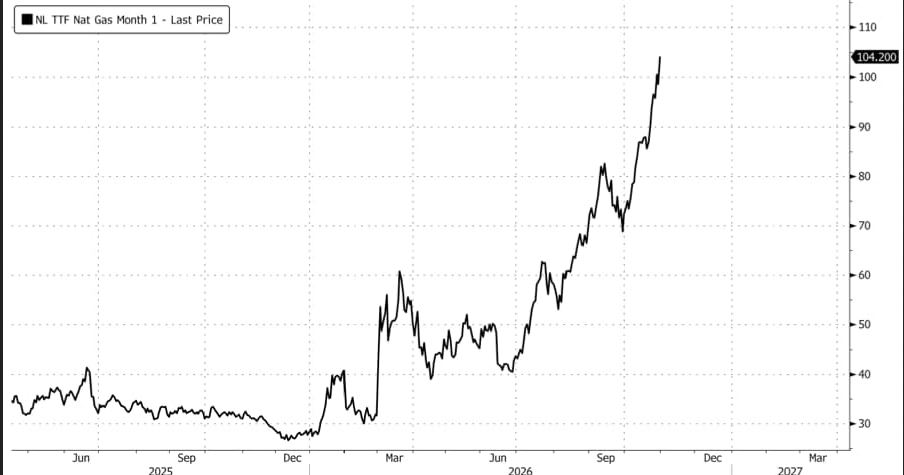
European gas at €104/MWh — New highs since 2022 energy crisis
Market pressure reflects directly in pricing. Last week, the European benchmark TTF natural gas contract closed at €104 per megawatt-hour for the first time since the 2022 energy crisis. Indeed, just weeks ago, Gas Infrastructure Europe data showed that natural gas reserves across the European Union declined for the first time this year. This development causes concern as the EU enters winter with constrained safety buffers, altering TTF gas price benchmarks.
Europe competes with Asia for LNG cargoes
Europe's energy dependence constitutes another critical issue, as the continent is called upon to compete against Asian buyers to secure LNG cargoes from the global market. As noted, Europe must seriously re-examine its energy dependence, given that heightened demand from Asia may intensify competition for available cargoes. Concurrently, ongoing unrest in the Strait of Hormuz generates additional uncertainty. Should the situation remain problematic, prices could continue their upward trajectory. Indicative of the vast market divergence is that European natural gas trades approximately 11 times higher than corresponding US prices, impacting global LNG competition.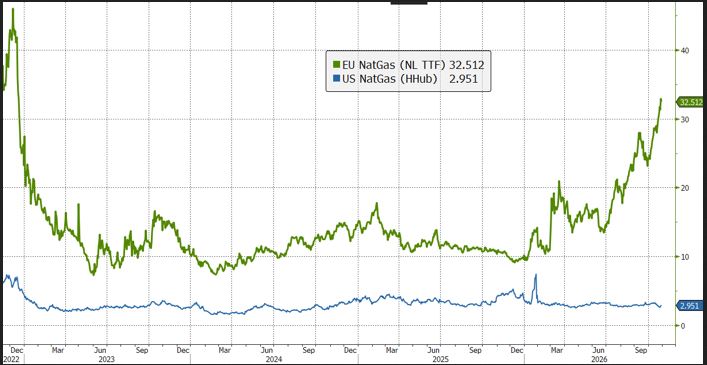
Meteorologists scrutinize polar vortex weakening
Weather developments present an additional factor of uncertainty. Meteorologists monitor an unprecedented sudden stratospheric warming event, which could weaken the polar vortex. Such a development may affect cold air mass circulation and elevate the probability of severe cold episodes. For Germany, the juncture proves particularly critical: the country enters winter with reserves noticeably below historical seasonal averages while natural gas prices already sit at elevated levels. The duration and intensity of the cold will constitute decisive factors for market direction and LNG procurement needs, defining polar vortex weather impacts.
www.bankingnews.gr







Readers’ Comments