

The next 24 hours are considered extremely critical regarding the Iranian issue, as a final effort is underway for diplomacy to speak before weapons take action once more. The scenery remains extremely blurred, forming a true geopolitical, diplomatic, and military thriller. Iran has set 7 terms to open the Strait of Hormuz and restart peace talks, with Iranian security chief Mohsen Rezaei claiming he read US Vice President JD Vance's letter but has not yet replied, while reports indicate that following negotiations in Qatar, a draft agreement proposal has been distributed to the involved parties. At the same time, US President Donald Trump moves between threats of a sweeping new attack and statements regarding the possibility of achieving peace. Both sides maintain they stand ready for talks as well as a harsh military confrontation.
Americans emphasize that they have locked in targets and require merely 96 hours from the relevant order to unleash hell on Iran, with prominent American journalist Tucker Carlson even asserting that the US is examining a nuclear strike on the underground complex at Mount Pickaxe in central Iran, where reports indicate uranium enrichment has resumed. For their part, Iranians point out that this time retaliation will expand beyond the Persian Gulf and Middle East region, stressing that no geographic limitations will exist. Amidst this explosive climate, everyone awaits the outcome tomorrow's US midterm elections, with analysts estimating that should Trump suffer a humiliating defeat, he will become far more reckless. In any case, the US military machine is already on alert, as 43 aerial refueling aircraft reside at Israeli bases, ready to take action, shaping US-Iran military escalation.
Shock from Tucker Carlson: US may launch nuclear strike
The United States may launch a nuclear strike against Iran within the coming days, pressured by Israeli Prime Minister Benjamin Netanyahu, reports prominent American conservative journalist Tucker Carlson in a post on the platform X. According to his assessment, a potential target could be the underground complex at Mount Pickaxe in central Iran, where, according to Israeli intelligence reports, the uranium enrichment process has resumed. The facility sits beneath 90 meters of granite and, as Carlson writes, is impossible to destroy with conventional weapons. Netanyahu exerts intense pressure for a nuclear strike. "Bibi calls Trump every day about this issue," reports the journalist, citing a well-informed source. Carlson connects Netanyahu's pressure to his internal political problems. Following recent elections, the Israeli Prime Minister cannot form a government without the US President's intervention. The loss of power could bring him face-to-face with investigations and potential imprisonment. According to the journalist, the resumption of large-scale military operations is supported by US Defense Secretary Pete Hegseth, US Central Command (CENTCOM) Commander Brad Cooper, Secretary of State Marco Rubio, and CIA Director John Ratcliffe. Conversely, Persian Gulf nations oppose a new escalation. Carlson claims that on September 27, Netanyahu conducted a secret visit to Abu Dhabi to secure United Arab Emirates support but received a negative response. The journalist warns that a nuclear strike could cause radioactive contamination in the Persian Gulf and set a precedent for using nuclear weapons by other nations, directly impacting Middle East nuclear risks.
Trump decisions on November 7
Specifically, according to his information, Russia has already warned at least two governments that an American nuclear strike against Iran would grant Moscow the freedom to use nuclear weapons against Ukraine. According to Carlson, Trump may reach his final decision by November 7. For now, the US President remains undecided and weighs views from Vice President JD Vance and special envoy Steve Witkoff, who advocate achieving a diplomatic agreement with Iran. "Following the first nuclear strike, World War III will become inevitable. This war will be short and final," the journalist warns, defining global conflict warnings.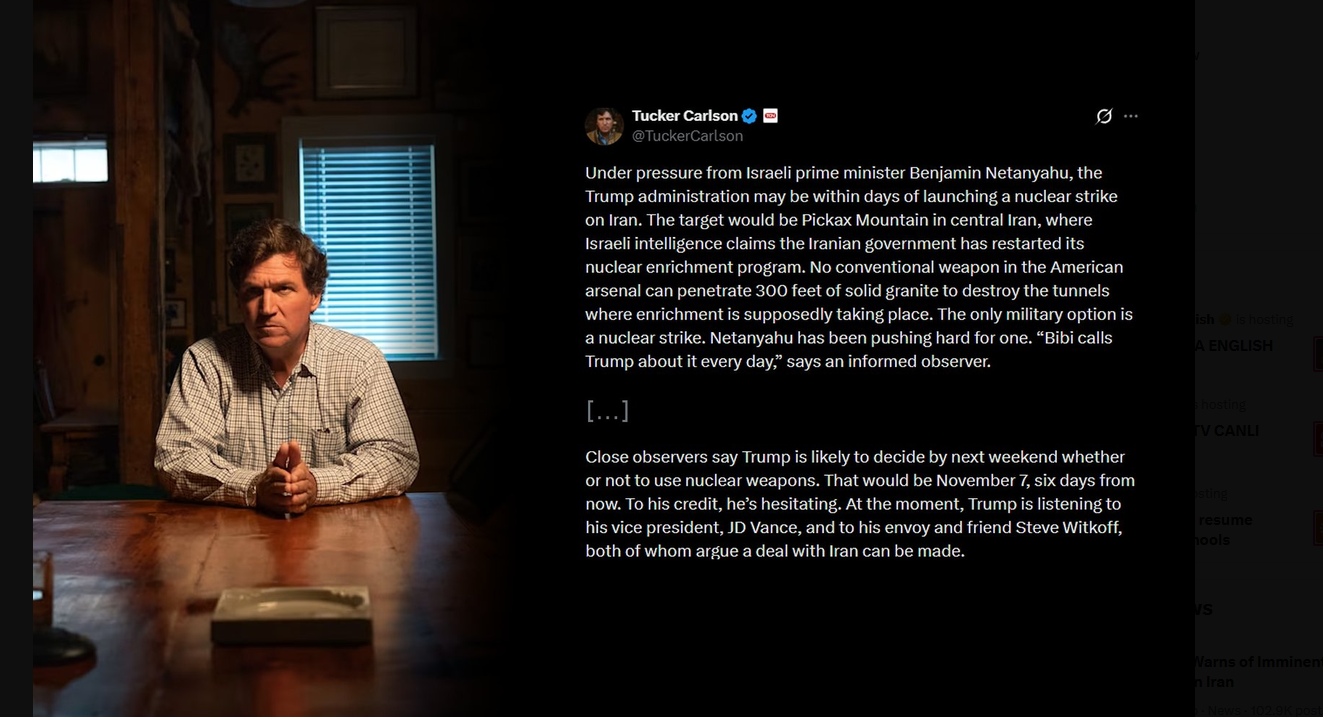
The Atlantic: Attacks of hours or weeks represent the scenarios Trump envisions
Trump received for consideration various scenarios for resuming military operations against Iran, according to The Atlantic. According to the report, US Defense Secretary Pete Hegseth and Chairman of the Joint Chiefs of Staff General Dan Caine presented Trump and Vice President JD Vance with various options for Washington's next moves. The discussion also included the commander of US Central Command (CENTCOM), Admiral Brad Cooper. Among potential options are launching a new wave of military strikes, maintaining the US naval blockade of the Strait of Hormuz under the threat of renewed hostilities, or completely abandoning the prospect of further military operations. Proponents of military action consider that economic pressure has already begun yielding results and that additional strikes will force Iran to come to the negotiating table. Proposed scenarios foresee military operations lasting from a few hours to several weeks. One option concerns a multi-day military campaign focusing exclusively on the Iranian nuclear program. As reported, Trump has discussed the possibility of new attacks for several weeks to compel Tehran to return to negotiations. Advisors to the US President had estimated the operation could begin shortly after the congressional midterm elections. However, the White House chief maintains doubts not only regarding the effectiveness of the new plans, but also about his advisors who had promised a swift end to the conflict. Specifically, Trump reportedly sought allies' opinions regarding the performance of Hegseth and Caine, shaping Pentagon military planning.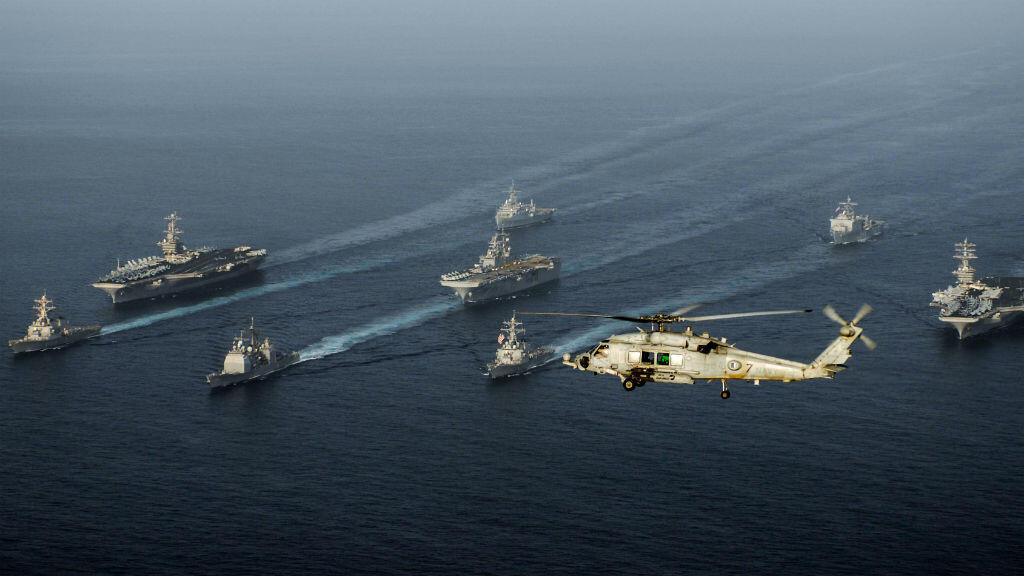
Americans ready
The US Air Force has concentrated at Israeli airbases at least 43 aerial refueling aircraft, which can be utilized to support strategic and tactical aircraft operations during strikes against Iran. This emerges from data provided by the British military aircraft tracking platform Military Air Tracking Alliance (MATA). According to satellite imagery, 25 American aerial refueling aircraft currently deploy at Ramon military airbase in the Negev desert, while another four reside at Ovda (Uvda) airbase in southern Israel. Furthermore, 18 aircraft reside at Ben Gurion international airport in Tel Aviv. Earlier, The Times of Israel reported that over the past week, more than 10 US Air Force military transport aircraft landed at airbases in Israel. Most of these flights originated from the Biggs US military airfield in El Paso, Texas. The US Army's 69th Air Defense Artillery Brigade headquarters is based there, possessing Patriot anti-aircraft missile systems and THAAD anti-ballistic missile systems. Destination for these specific aircraft were Nevatim and Ovda airbases in Israel. Over recent days, several additional flights transferring military equipment via US military aircraft also occurred toward US bases in Middle Eastern nations, including Jordan, Saudi Arabia, Qatar, and Kuwait. Cargo contents remain unknown; however, estimates indicate transfers connect to US measures reinforcing regional air defense ahead of a potential new confrontation round with Iran, altering regional air defense deployments.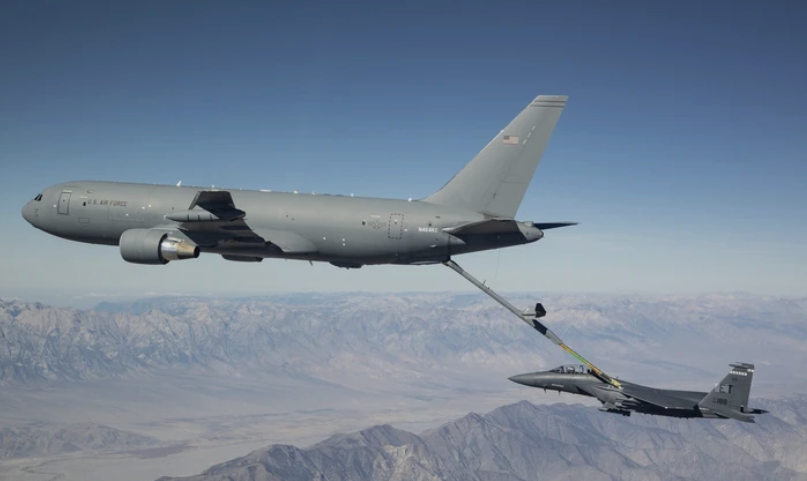
Trump: I will not reveal
The fact that Trump has not ruled out resuming attacks post-election constitutes one reason for ongoing anxiety. Trump also held a telephone conversation Saturday with Israeli Prime Minister Benjamin Netanyahu amid the prospect of new strikes against Iran. Conversation content remains unannounced, though Axios, which first broke the news, reported the discussion concerned Iran. Questioned Sunday regarding his conversation with Netanyahu, Trump provided no details, limiting statements to having "a very good conversation" with the Prime Minister, impacting US-Israel diplomatic coordination.
Draft agreement proposal
The Iranian delegation departed Sunday, November 1, from talks conducted in Qatar since Saturday, October 31, yet departure stemmed not from difficulties in negotiations aiming for a peace agreement to terminate the US and Israeli war against Iran. A draft agreement proposal has already been distributed to involved parties for observations, while the possibility of a new meeting remains open, Reuters reported, citing an official maintaining anonymity. Araghchi stated Saturday that an Iranian delegation, including one of his associates, traveled to Doha to meet Qatari mediators. Earlier, Qatari officials also visited Tehran for consultations. Latest talks in Doha focused on a plan foreseeing reopening the Strait of Hormuz within two days, alongside resuming peace talks with the US provided Washington satisfies a series of Tehran's demands. US Secretary of State Marco Rubio confirmed Qatar-sponsored talks continue but stated ignorance regarding a specific timeline. "Multiple talks occur. In reality, talks never stopped," Rubio stated. "If a diplomatic solution exists, we remain open to it," reshaping Doha diplomatic negotiations.
Optimism
US Ambassador to Turkey and special envoy for Syria and Iraq, Tom Barrack, told CNN he estimates "spectacular developments" could occur within the next two weeks. "We stand close. I think we stand very close to the point where we can finally say: Let us simply pause," he stated. He added, however, that this represents "an issue of trust and who takes the first step," driving diplomatic breakthrough expectations.
Baghaei (Iran): Hormuz opens in 2 days
The same 7-point plan proposed by Iran remains on the negotiation table; nevertheless, pursuing peace, the plan now "condensed and implementable within two days," stated Iranian Foreign Ministry spokesperson Esmaeil Baghaei. "This likewise indicates the goodwill approach Iran follows. We stated that provided Iran's demands are met, restoring security in the Strait of Hormuz and initiating the negotiation process within a short timeframe remain possible," Baghaei stated. "All these depend on how the American side wishes to proceed regarding this process's future," affecting Strait of Hormuz reopening timelines.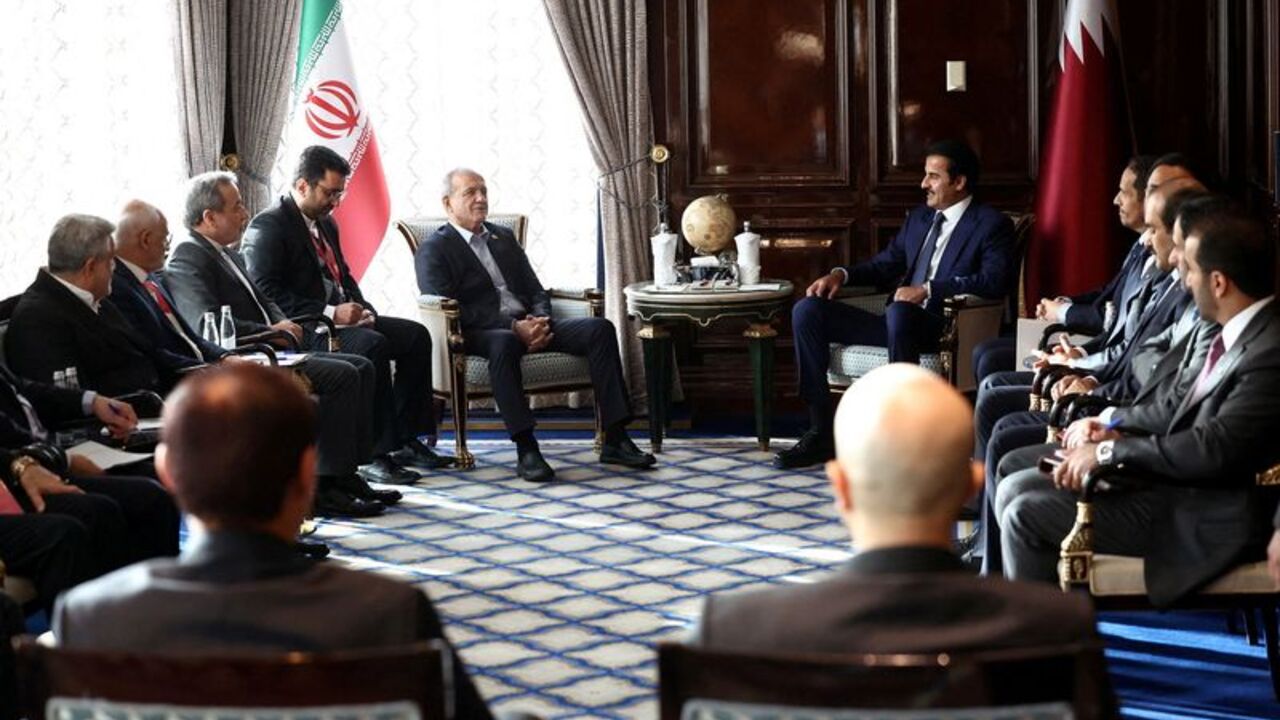
Iran's 7 terms
Iran insists the US must fulfill seven conditions before the Strait of Hormuz can reopen and peace talks begin. Iranian security chief Mohsen Rezaei stated Tehran set these terms in September, though he referenced only certain ones. Speaking to Al Jazeera on Saturday, Iranian Foreign Minister Abbas Araghchi provided further details, specifying the following terms:
-
Lifting US-imposed sanctions on Iran following the collapse of the Islamabad Memorandum of Understanding (MoU) in July.
-
Reducing the American military presence in the region.
-
Restoring oil sanction waivers granted in June under the MoU framework.
-
Unfreezing frozen Iranian funds, including those located in Qatar.
-
Officially recognizing the new transit maritime route in the Strait of Hormuz designated by Iran and Oman, and closing all remaining routes.
-
Terminating the war on all fronts, particularly Israeli strikes in Lebanon. Rezaei had also demanded in September the termination of the US naval blockade on Iranian ports, alongside halting US interventions in Iran's internal affairs, including US cooperation with "our revolution's opponents."
Red lines
Analysts argue that while mediation efforts continue, substantive diplomatic progress would require at least one side to transcend its own red lines. "Iran pursues a series of concessions, while the US insists progress on the Iranian nuclear program must precede concessions," stated Negar Mortazavi, senior researcher at the Center for International Policy. "Therefore, core difficulty lies in commitment sequencing and bargaining power. Each side wants the other to make the first move," defining diplomatic negotiation hurdles.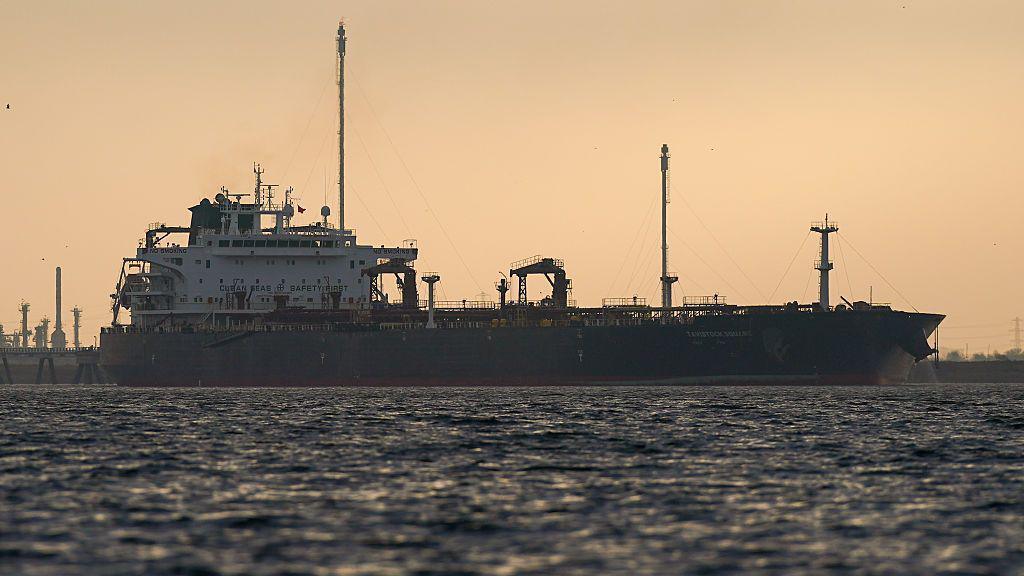
Shift in US "tone"
Renewed diplomatic activity follows US Vice President JD Vance sending a letter to Rezaei. According to reports, the letter aimed at exploring prospects for resuming negotiations and averting a new military escalation round. Rezaei confirmed Saturday he read the letter, noting its tone "changed completely" compared to Trump's previous correspondence. "American efforts to open the door wider to dialogue and mutual understanding represent a positive step," Araghchi stated. However, he warned: "Should Washington's goal in sending this letter involve sowing discord, it will constitute yet another mistake added to previous ones," reshaping US-Iran diplomatic messaging.
What Iran has stated
Iranian officials stated openness to new peace talks provided the US satisfies their terms, simultaneously remaining ready to react more dynamically in case of a new military confrontation. "I know our armed forces remain more prepared for war than any prior moment, and we stand ready for any eventuality," Araghchi stated. In case of any new military threat from the US or Israel, Iran's response will prove "immediate" and "without geographic limitations," per Supreme Leader Mojtaba Khamenei's statement. Rezaei stated Iran will utilize "new weapon systems" answering future attacks. He also mentioned the Iranian government examines altering its "nuclear doctrine," currently prohibiting nuclear weapons, driving Iranian military deterrence.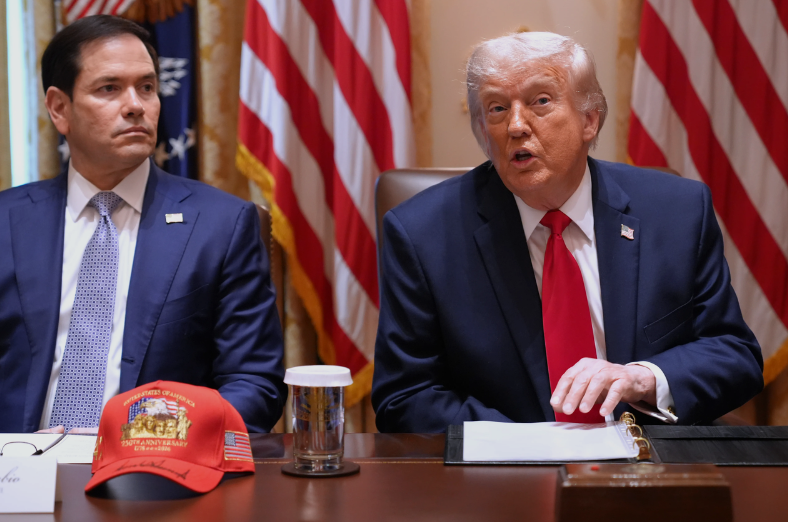
Trump statements
The US President sent contradictory messages regarding peace talks trajectory. Saturday he stated negotiations "progress smoothly" but added they "lack high reliability." He also noted the US military still needs "to deal with" several installations in Iran, specifically referencing a suspected underground nuclear complex known as Pickaxe Mountain. Trump added the US could achieve military goals "very quickly" and harbors no rush. Previously, he threatened renewed strikes finishing off Iran, while reports indicate the US warned Gulf allies to prepare for a short yet intense war operations round post-midterms. Rubio stated Trump has not yet decided regarding new strikes, warning however the US "can achieve military objectives if pursued," impacting US presidential statements.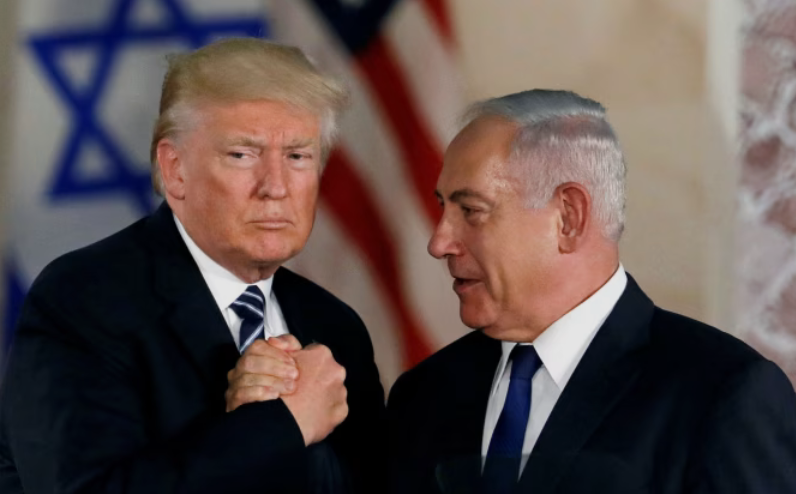
Israel's role
Israel, participating alongside the US in launching the war against Iran in February, prepares for a potential further conflict round immediately following US midterms, per a high-ranking Israeli official cited by Israeli news site Ynet News. Prime Minister Benjamin Netanyahu stated Israel possesses a "historic, unique opportunity [...] to eliminate the Iranian threat once and for all." Andreas Krieg, senior lecturer in security studies at King's College London, stated Netanyahu's threats complicate Iran's calculations because Tehran fears "even a nuclear agreement with Washington may not eliminate the threat of a new Israeli strike," reshaping Israeli strategic calculus.
Negotiations and threats
Hamidreza Azizi, senior Iran analyst at think tank Crisis Group, argued Tehran pursues the diplomatic path while simultaneously "attempting to redefine" potential new conflict military consequences. "For now, diplomacy and military preparations evolve parallelly," he wrote in a post on X. "The new Iranian position appears to be that an agreement remains feasible, but a new war will be fought under different rules and across a much broader operations field." "Whether Washington perceives these warnings as a credible deterrent threat or further escalation threats could significantly impact upcoming developments," said Krieg, estimating November 3 elections grant Iran incentive to delay concessions, depriving Trump of a diplomatic success. Nonetheless, this strategic assessment could alter post-election when Trump faces fewer domestic political constraints regarding military action. "We could therefore find ourselves in a situation where Iran becomes more willing to compromise precisely when Washington becomes more willing to launch an attack," Krieg concluded, cementing post-election strategic risks.
www.bankingnews.gr








Readers’ Comments