

Intense concern is triggered by statements from a former high-ranking official of Mossad, who reveals the planning of a new covert operation against the military leadership of Iran, modeled after the deadly pager explosions in Lebanon in 2024.
The reference to four specific individuals, the pursuit of inducing internal suspicion, and parallel discussions regarding strikes on the energy infrastructure of Tehran highlight a dangerous dimension of Israeli strategy: the threat of targeted assassinations and the expansion of the war beyond conventional battlefields.
New scenarios of covert operations against Tehran
The possibility of carrying out a new surprise operation against top military and security officials of Iran was publicly raised by the former deputy head of global operations of Mossad, Oded Ailam, in statements to the American newspaper New York Post on October 31, 2026.
According to the former Israeli intelligence official, Israel continues to possess operational capabilities that it has not revealed and could utilize if extensive hostilities with Iran resume.
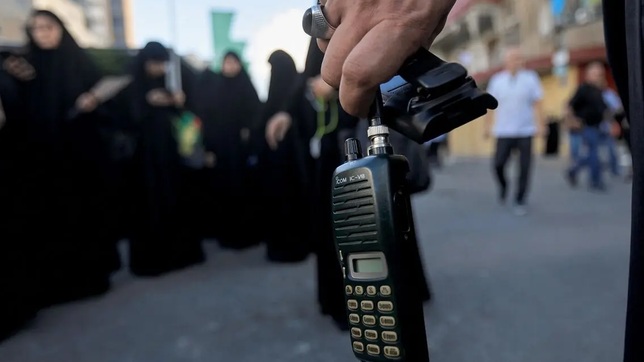
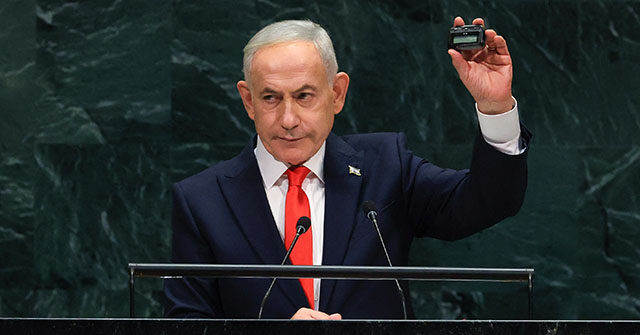
Ailam pointedly referred to the operation of September 2024 in Lebanon, when thousands of pagers and two-way radios used by Hezbollah exploded almost simultaneously.
This reference acquires particular gravity because that operation did not merely represent a blow against an armed organization.
It caused dozens of deaths, thousands of injuries, and widespread insecurity in populated areas.
Public invocation of such a precedent as a potential model for future action raises serious questions regarding the limits of covert operations, the protection of civilians, and the prospect of a new escalation in the Middle East.
The former official presented surprise as a decisive element of Israeli strategy, arguing that an operation with unpredictable characteristics could destabilize Iranian military command.
The Lebanon precedent and the heavy human toll
The attacks with the pagers took place on September 17 and September 18, 2024.
Thousands of communication devices exploded in Lebanon, causing mass casualties and very severe injuries.
According to data broadcast by Reuters, the two consecutive attacks caused a total of 39 deaths and more than 3,400 injuries.
Among the victims were civilians, including children, while many injured individuals suffered amputations and permanent disabilities.
In November 2024, a spokesperson for the office of Benjamin Netanyahu confirmed that the Israeli Prime Minister had approved the operation.
This fact makes the attack one of the most characteristic examples of the use of booby-trapped communication devices in covert military operations.
The critical issue concerns not only the effectiveness of the action against Hezbollah, but also the ability to distinguish between military targets and civilians.
When a device is converted into an explosive mechanism and can be activated in public spaces, homes, or shops, serious hazards are created for people not participating in hostilities.
The repetition of a corresponding operation in Iran would raise these issues anew, this time in a country with far greater geographical expanse, population, and military infrastructure.
BEEPER OPERATION: ADDITIONAL DETAILS - Hezbollah operatives were targeted through individually detonated pagers, with attackers knowing exactly who and where the targets were. - The pagers were designed to look normal, ensuring the person carrying them wouldn't suspect tampering. - The attack, conceived by a young female intelligence officer, injured thousands but was designed to avoid killing bystanders. - Hezbollah increased pager use after fearing phone communication vulnerabilities. - The attack aimed to pressure Lebanon’s health system and damage Hezbollah’s domestic support. - Channel 12: The pager detonation operation was not a strategic strike, and that Israel has far more powerful capabilities, developed over years for use against Hezbollah and Iran. - Eyal Hulata, former National Security Adviser, added that thousands of Israelis have been working to develop these security capabilities, and there are more advanced options yet to be used, particularly in Lebanon. @TimesofIsrael
— Open Source Intel (@Osint613) September 21, 2024
Four names at the center of Israeli debate
According to the report by the New York Post, Oded Ailam referred to four individuals whom he considers decisive for the functioning of the Iranian military and security apparatus.
These are Ahmad Vahidi, Hossein Taeb, Ali Abdollahi, and Mohsen Rezaei.
The former official of Mossad argued that real power in Iran is concentrated largely among the military and security mechanisms, questioning the narrative presented regarding the role of the political leadership.
The most significant element is that the public reference to specific individuals is accompanied by discussion of surprise decapitation operations.
Such rhetoric can function simultaneously as a warning, as a deterrent effort, and as a tool of psychological pressure.
The Israeli side has in the past used targeted operations against military figures and other persons it considers responsible for threats against its security.
However, the legitimacy of a specific attack does not derive solely from the title or military importance of the individual targeted.
Who the 4 targets are
Major General Ahmad Vahidi is the Commander of the Revolutionary Guards (IRGC), and Ali Abdollahi is the Chief of the General Staff of the Armed Forces of Iran.
Cleric and former intelligence agency chief Hossein Taeb is the commander of the paramilitary organization Basij.
Finally, Mohsen Rezaei is the top military commander and Secretary of the Supreme National Security Council, who is handling the delicate phase of indirect negotiations with the USA.
Rezaei is, moreover, the recipient of the letter from American Vice President JD Vance.
The targeting of Rezaei constitutes the clearest proof that Israel is planning by every means and method to torpedo any mediation effort toward peace in the Persian Gulf.
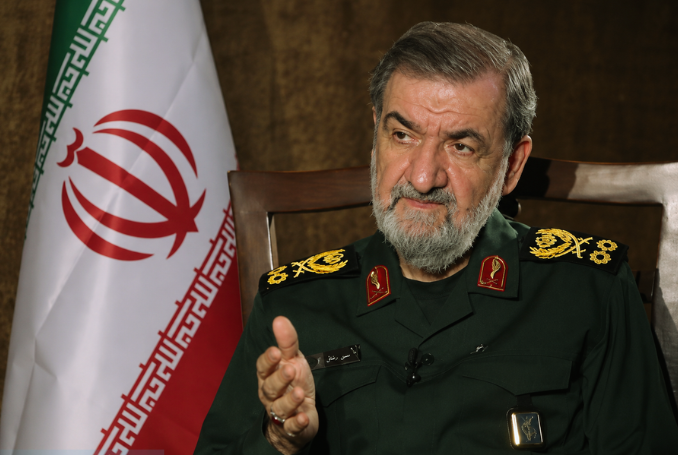
Mohsen Rezaei
Psychological warfare as a distinct front
Of particular interest is the assessment of Ailam that a covert operation could trigger suspicion and mistrust within the Iranian military command.
According to this reasoning, the intended outcome would not be limited to neutralizing specific figures.
It would also involve cultivating doubts regarding the reliability of associates, communication mechanisms, and security protocols.
Public articulation of such scenarios can in itself serve psychological warfare objectives, even without any subsequent operation.
Uncertainty over when, where, and in what manner an attack might occur constitutes part of the pressure exerted on the adversary.
There is, however, an opposite dimension.
Continuous invocation of covert operations and targeted assassinations can reinforce the sense of existential threat in Tehran, narrow the scope for compromise, and lead to increased military readiness.
Therefore, a strategy aimed at weakening the Iranian leadership may simultaneously empower forces within Iran that are most skeptical toward diplomacy.

Threats against energy infrastructure
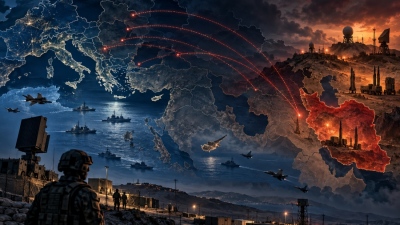
Another alarming dimension of the discussion concerns the energy installations of Iran.
Retired Israeli General Yaakov Amidror argued that potential Iranian strikes on energy facilities of Persian Gulf states could lead to an expansion of Israeli operations against Iranian energy infrastructure.
This possibility acquires particular significance due to the dependence of the Iranian economy on the energy sector.
Facilities for oil and gas production, processing, and export constitute critical economic infrastructure.
Extensive destruction could cause long-term impacts on the economy, employment, the environment, and daily life for the population.
Concurrently, destruction of energy facilities in the region could affect international markets and global energy security.
International humanitarian law does not permit attacks on civilian infrastructure simply because it has economic significance for an adversary state.
The potential military utility of a target must be evaluated based on specific criteria, including necessity, distinction, and proportionality.
For this reason, discussion regarding destruction of energy infrastructure with consequences that could last for decades does not represent solely a military issue.
It also constitutes a serious humanitarian and legal challenge.
The American dimension and the threat of generalized escalation
Israeli assessments are publicized during a particularly tense period, as discussions continue in the United States regarding the possibility of new military operations against Iran.
Retired American General Jack Keane has advocated for a broader framework of military targets, which includes the leadership, nuclear and missile facilities, and other strategic infrastructure.
This approach reflects the view that military pressure can limit the capabilities of Iran and influence the decisions of its leadership.
There is, however, significant risk that such a strategy could provoke retaliation, drawing more states and infrastructure into the confrontation.
Iran has repeatedly warned that it will respond to attacks against its sovereignty and military leadership.
In a region hosting major energy installations, American bases, and critical maritime trade routes, widening hostilities could carry consequences far beyond the borders of Iran and Israel.
???? Israeli intelligence initially planted explosives in pagers, which were then supplied to Hezbollah. According to Sky News Arabia, Israeli intelligence Mossad planted the chemical PETN in the batteries of the pagers, which caused them to detonate as a result of a sharp increase in the temperature of the batteries, triggered remotely by Israeli intelligence specialists. Only 10 members of the Lebanese militant group Hezbollah were Targetted today when their pagers went off but, at least 4,000 were reported injured. Operation to detonate pagers in Lebanon was approved during meetings between Netanyahu, his cabinet and security chiefs - Axios ??The US is not involved in the pager incidents in Lebanon, did not know about what happened in advance, the State Department claims. Last video: One Lebanese man's pager exploded in his chest of drawers. Source/?Subscribe @TheIslanderNews ——-— Isn’t that convenient timing? ⚡️! Three Americans dead in drone strike in the Middle East. They will blame Iran. [???%] WATCH PUTN. [??] Source/ Join: GhostEzra
— Andromeda11711 (@Andromeda11711) September 17, 2024
From demonstration of strength to the risk of uncontrolled war
The core takeaway from the statements of Oded Ailam is not that a confirmed plan exists for a new Israeli «pager» style operation.
It is that the possibility of such methods is being discussed publicly by individuals who have served in senior positions in the Israeli intelligence community.
The previous operation in Lebanon proves that such methods can cause catastrophic human consequences.
The reference to four Iranian officials, combined with scenarios targeting energy infrastructure, illustrates how easily military confrontation can shift into new domains.
The question is not only what capabilities Mossad possesses, but what limits are placed on their use and who assumes responsibility when covert operations cause mass casualties and regional destabilization.
For Iran, the threats reinforce the need to protect its national security and state infrastructure.
For Israel, the issue concerns the consequences of choosing covert and military operations over de-escalation.
For the international community, the priority remains averting a new confrontation, protecting civilians, and pursuing a political settlement.
Because security in the Middle East cannot rest upon a continuous sequence of surprise attacks, decapitation threats, and retaliations.
As long as this logic prevails, the risk grows that a regional confrontation will turn into an even more destructive war.
www.bankingnews.gr






Readers’ Comments