

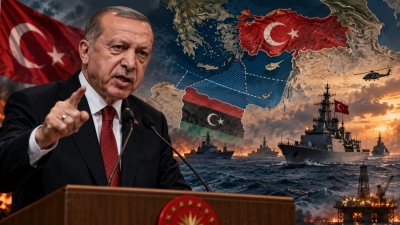
Turkey in the current period is attempting to transition its «Blue Homeland» (Mavi Vatan) strategy into a new phase of institutional and diplomatic consolidation, centered on the Aegean and the Eastern Mediterranean.
The preparation of a dedicated legislative framework for Turkish maritime zones, combined with rapprochement moves toward Egypt and the activation of the Turkish-Libyan memorandum, compose a broader effort by Ankara to strengthen its position as a major geopolitical actor in the region.
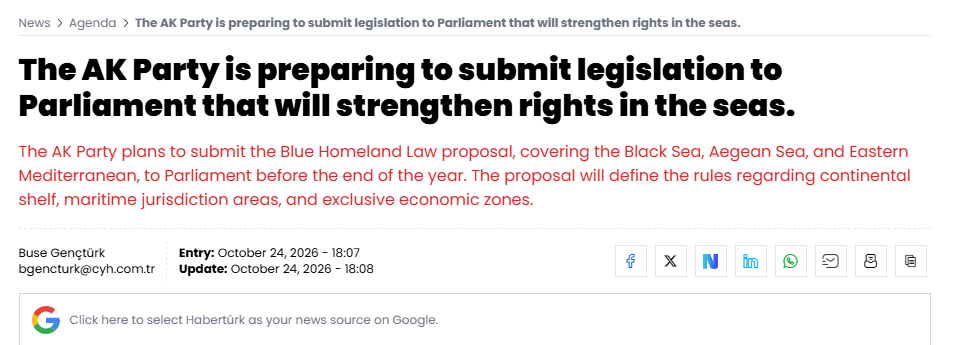
According to a report by Habertürk on October 24, 2026, the ruling AKP party is preparing a legislative initiative for the «Blue Homeland», aiming to start drafting the relevant text in November and submit it to the Turkish Grand National Assembly before the end of the year.
The draft reportedly concerns the definition of Turkish maritime zones, the continental shelf, the Exclusive Economic Zone (EEZ), as well as the licensing framework for economic, scientific, and environmental activities in areas that Ankara considers to fall under its jurisdiction.
Of particular significance is the reference to maintaining 6 nautical miles of territorial waters in the Aegean, in contrast to 12 nautical miles in the Black Sea and the Mediterranean.
In the framework under preparation, regulations for islets and maritime formations are also expected to be included, an issue directly linked to Greek-Turkish disputes.
However, up to November 1, the formal submission of the bill has not been confirmed.
Foreign Minister Hakan Fidan had also stated, according to a report by Sözcü, that there is no bill with that specific title, consequently, the preparation of the broader initiative must not be confused with the passage or entry into force of a law.
The new dimension of «Blue Homeland» and the role of Egypt
Of particular interest is the effort of Ankara to approach Cairo for the delimitation of maritime zones in the Eastern Mediterranean.
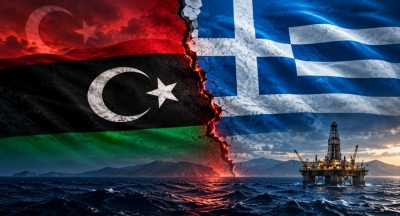
The Turkish initiative gains greater significance following the decision by the House of Representatives of eastern Libya, on October 20, 2026, to approve the 2019 Turkish-Libyan maritime delimitation memorandum.
The development provoked reactions in Egypt, which has voiced objections to the agreement, considering that it affects its sovereign rights in the Eastern Mediterranean.
On October 23, Fidan proposed creating a trilateral dialogue process among Turkey, Egypt, and Italy, in order to discuss the concerns of Cairo and Libya.
Ankara appeared willing to discuss the objections of the Egyptian side, aiming simultaneously to open the path for a direct maritime zone delimitation agreement with Egypt.
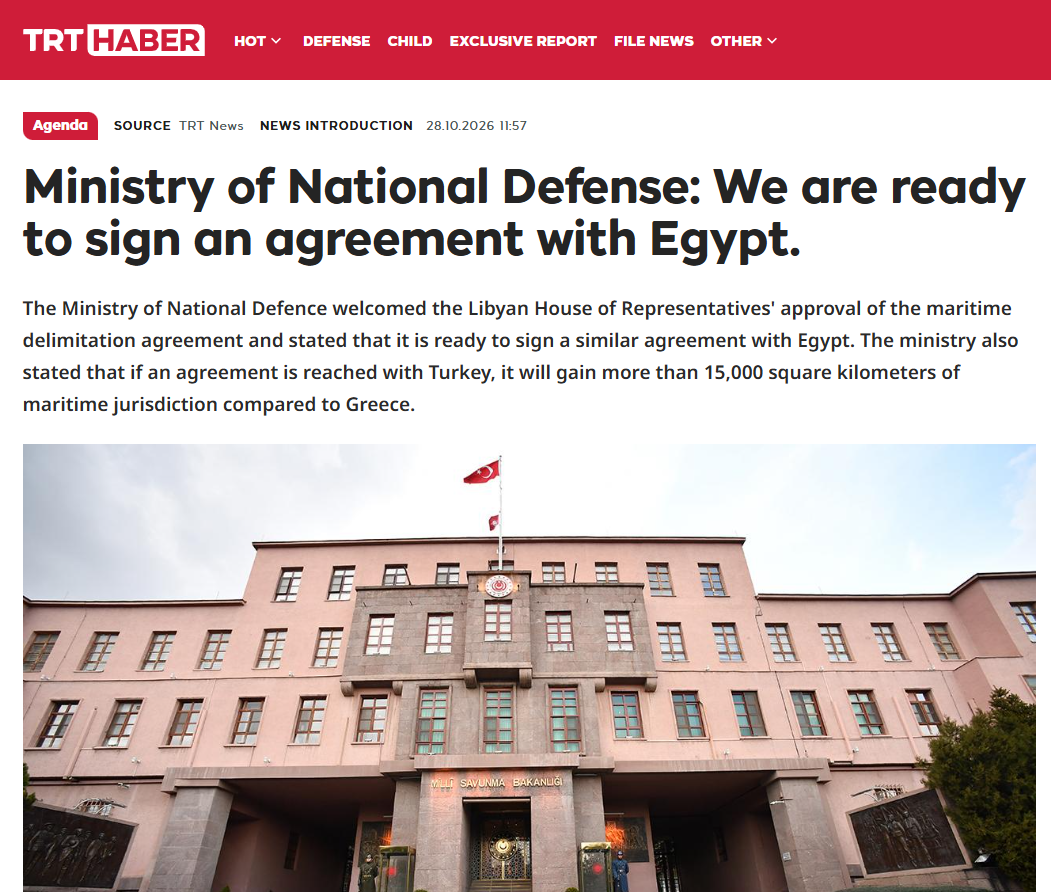
On October 28, the Turkish Ministry of Defense formally reiterated the proposal, stating that Turkey is ready to sign an agreement with Cairo.
Indeed, it argued that such an agreement could secure for Egypt more than 15,000 square kilometers of additional maritime area compared to a potential agreement with Greece.
This reflects the effort of Ankara to use the maritime zones issue as a diplomatic tool for rapprochement with Egypt.

From diplomacy to military cooperation
The rapprochement between Turkey and Egypt is also acquiring a military dimension.
According to an announcement by the Turkish Ministry of Defense on October 27, the joint naval exercise «Dostluk Denizi-2026» (Sea of Friendship) will take place from November 4 to November 9 in Alexandria, with the participation of units and personnel from both naval forces.
The exercise will include surface warfare activities, anti-submarine operations, air defense, and training of special underwater demolition units.
Furthermore, the Turkish warship TCG Burgazada, following its visit to Souda, Crete from October 25 to October 28, is scheduled to visit the port of Alexandria from November 1 to November 3.
This development records the strengthening of military cooperation between the two countries during a period in which issues of maritime delimitation and the Turkish-Libyan memorandum remain open.
Libya as a lever of pressure in the Eastern Mediterranean
The approval of the Turkish-Libyan memorandum by the eastern Libyan parliament on October 20 constitutes an important political development for Ankara.
Turkey seeks to present the decision as reinforcing the legal and political foundation of the 2019 agreement.
The memorandum, however, continues to be contested by Greece and other countries in the region.
The Greek position is that it ignores the rights of Greek islands, including Crete, while Egypt has also articulated objections.
Ankara is now attempting to combine its political and military presence in Libya with a new diplomatic initiative toward Egypt.
A potential agreement with Cairo would be of particular importance for balances in the Eastern Mediterranean, as it would affect the existing framework of cooperation between Greece and Egypt.

New Turkish strategy: Legislation, diplomacy, and naval power
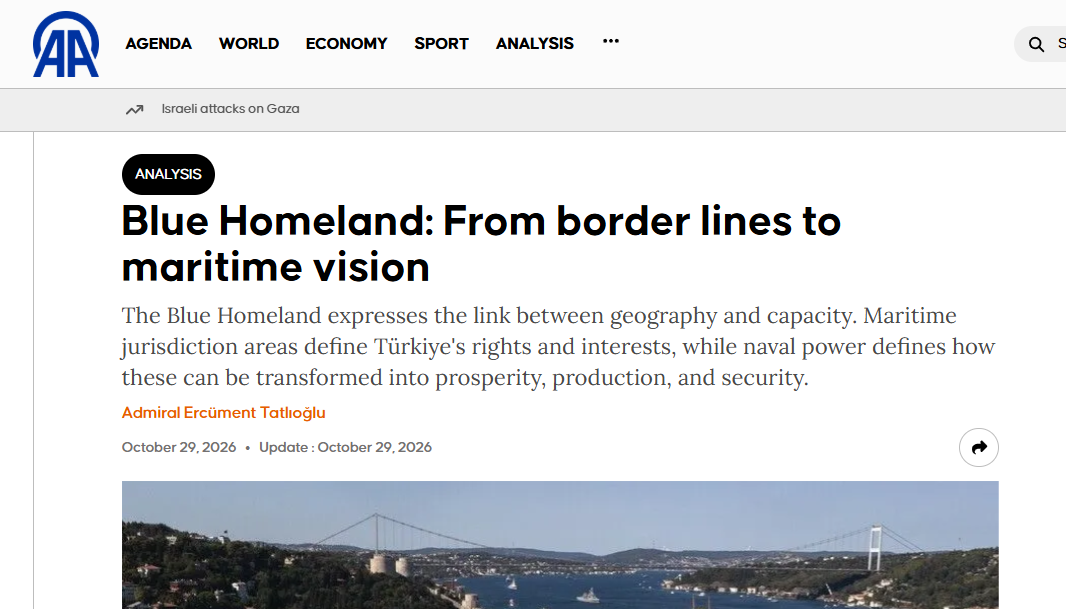
Of interest is also the intervention of the commander of the Turkish Naval Forces, Admiral Ercüment Tatlıoğlu, in an analysis published by Anadolu on October 29, entitled «Mavi Vatan: Sınır çizgisinden denizcilik vizyonuna» («Blue Homeland: From the border line to the vision of maritime power»).
The Turkish admiral describes «Blue Homeland» as a broader state vision not limited to maritime delimitations, but encompassing the law of the sea, energy, commerce, the shipbuilding industry, scientific research, the protection of maritime infrastructure, diplomacy, and military power.
This specific intervention carries particular weight, as it originates from the head of the Turkish Naval Forces and reflects the effort for institutional and operational integration of the «Blue Homeland» into the overall state strategy of Turkey.


The fronts opening for Greece
For Greece, developments create a complex environment on three levels:
Aegean: The potential legislative consolidation of Turkish positions regarding territorial waters, maritime zones, and islets.
Egypt: The effort of Ankara to attract Cairo into an EEZ agreement, using economic and geopolitical arguments.
Libya and Eastern Mediterranean: The political exploitation of the approval of the Turkish-Libyan memorandum and the effort to strengthen the Turkish position in the region.
The critical question is whether Turkey will manage to transform the legislative initiative for «Blue Homeland» into a concrete institutional framework and simultaneously secure new diplomatic footholds in the Eastern Mediterranean by approaching Egypt.
The joint naval exercise of November, the repeated Turkish proposal for an EEZ agreement, and the evolution of the Turkish-Libyan memorandum constitute elements that must be evaluated jointly.
Turkey appears to be seeking to combine the domestic legal framework, bilateral agreements, and its naval presence into a unified policy for the sea.
For Greece, monitoring this effort is particularly crucial, as it directly concerns the rights of islands, maritime delimitations, and balances in the Eastern Mediterranean.
www.bankingnews.gr





Readers’ Comments