

The government of Donald Tusk, the police intervention, and the removal of the leadership of the Constitutional Tribunal are causing an unprecedented institutional crisis in Warsaw.
President Karol Nawrocki denounces a violent seizure of a constitutional institution, while the stance of the European Union raises questions regarding its political influence.
There are serious indications of European institutional involvement in the dispute.
Poland faces one of the most severe constitutional crises of recent years, following the dramatic events of October 30 and October 31 at the Constitutional Tribunal in Warsaw.
The provisional removal of the leadership of the Tribunal, the presence of strong police forces, and the rushed return of President Karol Nawrocki from an official mission to Senegal have turned the clash between government and presidency into an open confrontation for control of one of the country's most significant institutions.
Nawrocki directly denounced a violation of constitutional order and a violent takeover of a state institution.
For his part, Prime Minister Donald Tusk maintains that his government is attempting to restore legality, after years of politicization of justice.
The confrontation, however, goes beyond Polish borders.
At the center is the role of the European Union and whether European policy on the rule of law has been transformed into a factor reinforcing one side of a deeply divided domestic political conflict.
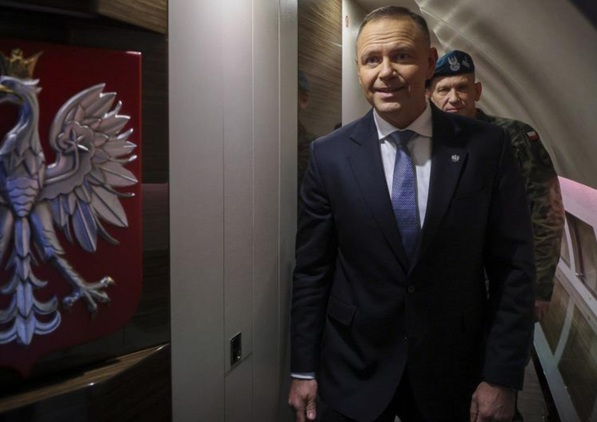
Incredible: The Polish government attempted to prevent the landing of the presidential plane carrying Nawrocki
Serious allegations regarding a potential attempt to obstruct the return of Polish President Karol Nawrocki to Warsaw are coming to light, raising new questions about the dimensions of the institutional crisis.
According to information presented on Polish television, consideration was allegedly given to prohibiting the landing of the presidential aircraft at the military facility of the Warsaw airport and diverting it to another city.
??? Poland's constitutional crisis just took another rather EXTRAORDINARY TURN President Karol Nawrocki was reportedly ALMOST BLOCKED from landing in Warsaw after abruptly turning his plane around to confront the crisis at the Constitutional Tribunal. According to reports aired on Polish television, someone allegedly wanted his presidential aircraft denied access to the military section of Warsaw's airport and diverted to another city. The remarkable part: journalists claim the MILITARY REFUSED to follow orders from above, allowing the president to land. Nawrocki did make it back to Warsaw, where he confronted the escalating dispute over the country's highest constitutional court. Now the rather serious question is WHO allegedly tried to prevent Poland's own president from returning to his capital. And whether such an order was ever actually issued. Source: TV Republika / Writer: Oliver
— Mario Nawfal (@MarioNawfal) October 31, 2026
Journalist Stanisław Janecki argued that such planning existed, while other journalistic reports refer to a refusal by military officers to carry out alleged orders from their superiors.
The confirmed fact is that Nawrocki aborted his flight to Senegal, returned to Warsaw, and intervened in the conflict surrounding the leadership of the Constitutional Tribunal.
If the allegations prove substantiated, an extremely serious issue will arise regarding the operation of state institutions and relations between political and military power in Poland.
For now, the critical question remains unanswered: was an attempt genuinely made to obstruct the return of the elected president to the capital?
Tusk rejects any compromise with Nawrocki, conflict over the Constitutional Tribunal reaches the extreme
Determined not to back down in the confrontation with President Karol Nawrocki, Polish Prime Minister Donald Tusk appeared in a televised address to the nation, amidst the unprecedented clash over control of the Constitutional Tribunal.
«We waited too long for this treasure, an independent and democratic Poland, to be frightened now and resign», he stated characteristically.
Tusk accused Nawrocki and his predecessor Andrzej Duda of contributing to the weakening of the rule of law, arguing that no politician, not even the President of the Republic, has the right to enter a court, give orders, and intimidate judges.
Eight judges, five disputed appointments, and an institutional explosion
The constitutional crisis peaked around the appointment of eight new judges to the Constitutional Tribunal.
President Nawrocki agreed to swear in three of them, refusing to proceed with the swearing-in of the remaining five.
The latter carried out alternative swearing-in procedures in parliament, which the presidency and previous leadership of the Tribunal dispute.
On October 30, Judge Anna Korwin-Piotrowska announced the temporary suspension from duties of the President of the Constitutional Tribunal Bogdan Święczkowski and Vice President Bartłomiej Sochański, citing the need to restore the functioning of the institution.
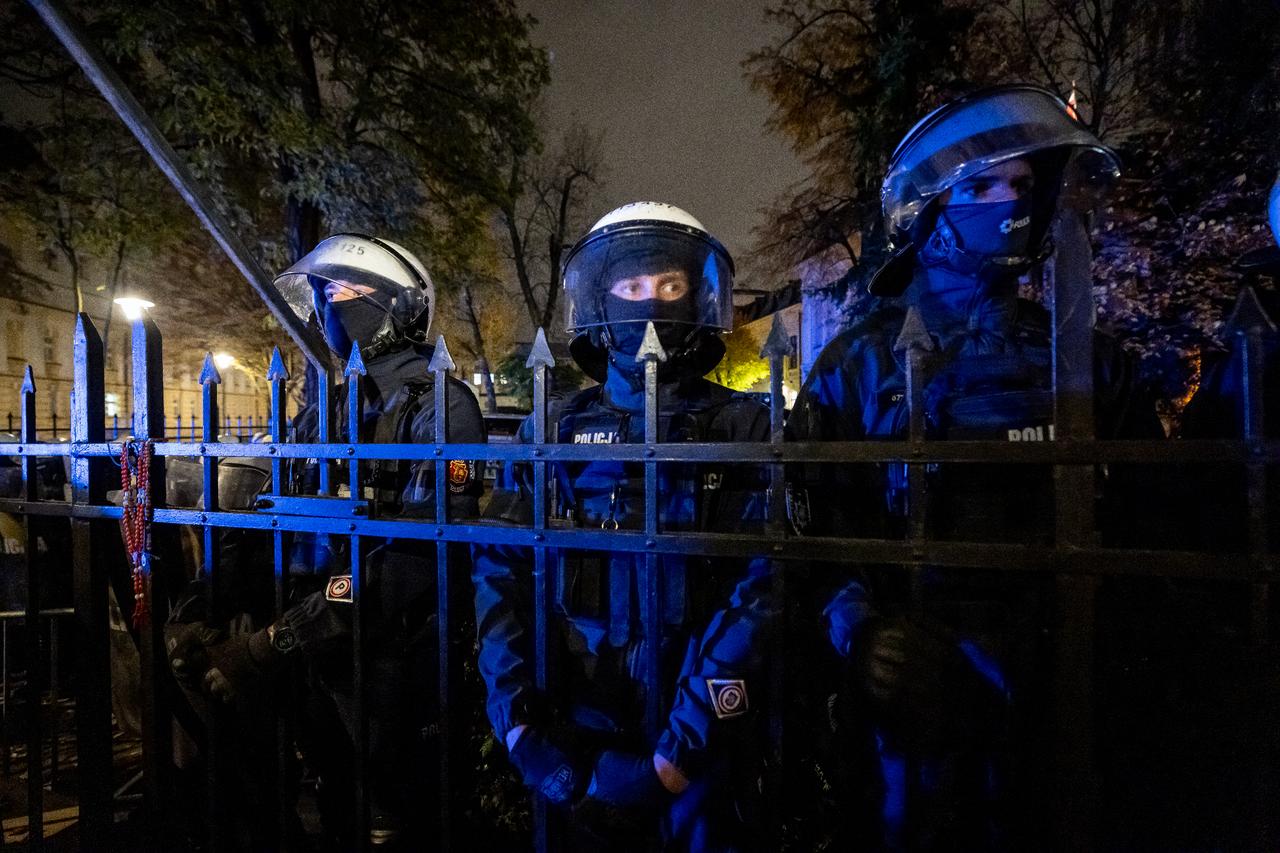
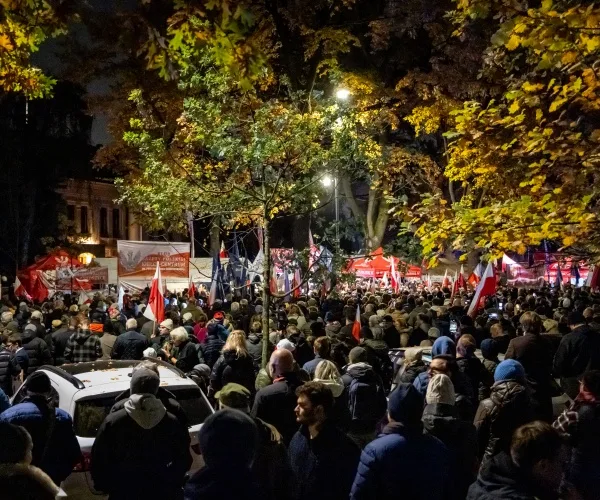
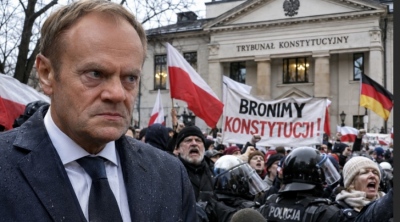
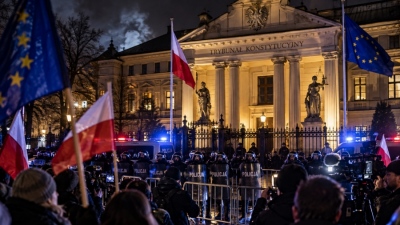
The deployment of police forces followed, while gathered supporters of the opposition denounced a coup attempt.
Nawrocki interrupted his flight to Senegal and returned to Warsaw, where during the early morning hours of Saturday (October 31) he entered the Tribunal following a tense confrontation at the entrance.
The images of the clash captured in dramatic fashion the depth of institutional division.
Uproar in Poland with fierce accusations against Germany: «Berlin is behind the moves of Tusk»
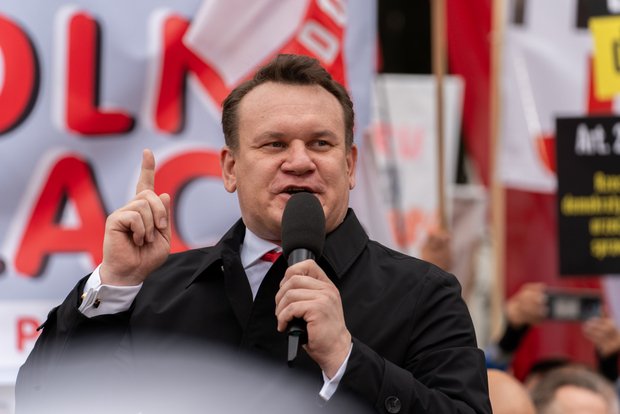
Direct accusations against Germany of interfering in the political and constitutional crisis of Poland were launched by the Member of the European Parliament for the conservative Law and Justice (PiS) party, Dominik Tarczyński.
In a post on platform X, he claimed that the government of Donald Tusk is under German influence and is attempting to gain control of the Constitutional Tribunal in order to advance major policy changes.
According to Tarczyński, Berlin is pressing for the abandonment of the Polish currency, the zloty, and the accession of the country to the Eurozone, while simultaneously seeking the transfer of migration flows to Poland.
The MEP claimed that the dispute over the Constitutional Tribunal is linked to the government's effort to circumvent future institutional hurdles.
The European Union and the question of double standards
The core political issue is not solely who holds legitimate authority in the Tribunal.
It is also who defines the criteria of legitimacy.
For years, Brussels strongly criticized the governments of the conservative Law and Justice (PiS) party, arguing that their judicial reforms undermined the independence of the judiciary.
Conversely, the Tusk government has presented its own interventions as an effort to restore the rule of law.
This divergent political treatment provides grounds for serious criticism: could the European conception of institutional independence be influenced by the political orientation of the government in power?
This critique takes on greater significance when police forces are deployed around a supreme judicial body, while two competing groups claim its legitimate representation.
There is, however, a critical distinction.
Evidently, the European Commission did not order, plan, or coordinate the intervention.
Yet it served as the coordinating political center that authorized Tusk to proceed with this unprecedented move.
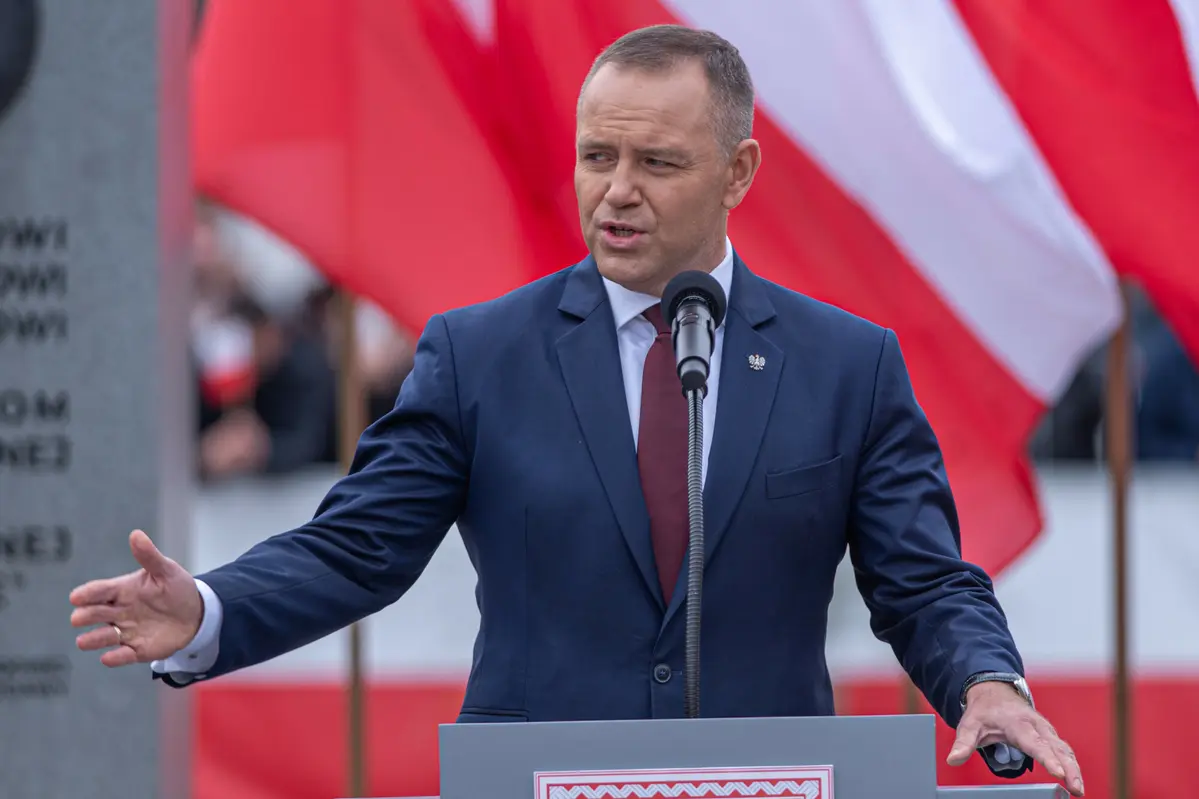
Karol Nawrocki
The Venice Commission and the complex legal reality
There is, however, an element that makes interpreting the events more difficult.
The Venice Commission, an advisory body of the Council of Europe and not of the European Union, had determined that the refusal of the president to accept the swearing-in of judges should not lead to their permanent exclusion from their duties.
This position provides legal arguments to the Tusk government, without, however, automatically resolving the separate question of the legitimacy of suspending the duties of the Tribunal's president.
Moreover, the original crisis regarding the composition of the Constitutional Tribunal traces back to 2015, when the previous conservative government was also accused of interfering with judicial independence.
This, however, does not negate the necessity of examining current actions on their own merits.
Invoking past violations cannot function as a general justification for new disputed interventions in the institutions.
If Brussels wishes to maintain its credibility as a defender of the rule of law, it must apply the same standards regardless of whether a pro-European or Eurosceptic political formation governs.
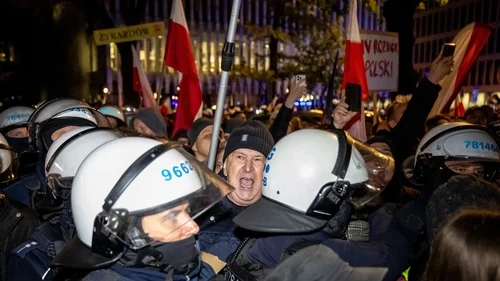
Nawrocki returns and denounces state capture
The intervention of the Polish President was immediate.
In an official statement on October 31, Karol Nawrocki argued that the constitutional order was violated and that a constitutional body was seized by force.
He demanded the withdrawal of police forces and announced urgent consultations with the political forces of the country.
At the same time, he stated that he facilitated the entry of Vice President Bartłomiej Sochański into the Tribunal.
The image of an elected head of state rushing back from abroad and forced to intervene personally in a dispute over access to the Constitutional Tribunal captures the scale of the institutional crisis.
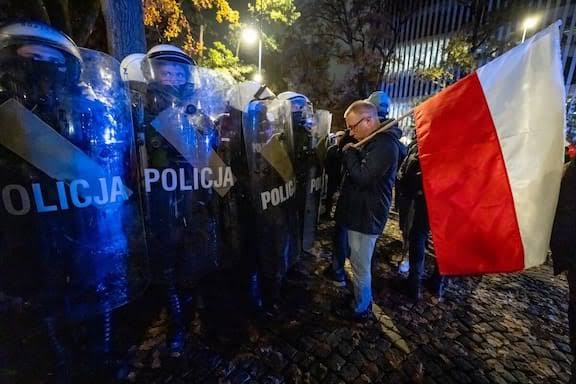
No-confidence motion against Tusk, Morawiecki calls for change of government
The clash immediately assumed a parliamentary dimension as well.
Former Prime Minister Mateusz Morawiecki announced an initiative to file a motion of no confidence against the Tusk government, proposing former parliamentary speaker Marek Jurek as head of a transitional government.
According to Morawiecki, such a government could de-escalate the crisis and lead the country to the scheduled elections of 2027.
The proposal reflects the assessment of a segment of the opposition that the current government is attempting to reshape institutional balances before the next electoral contest.
This is a political accusation by the opposition, which is not proven solely by the fact that the government seeks changes in the composition of the Tribunal.
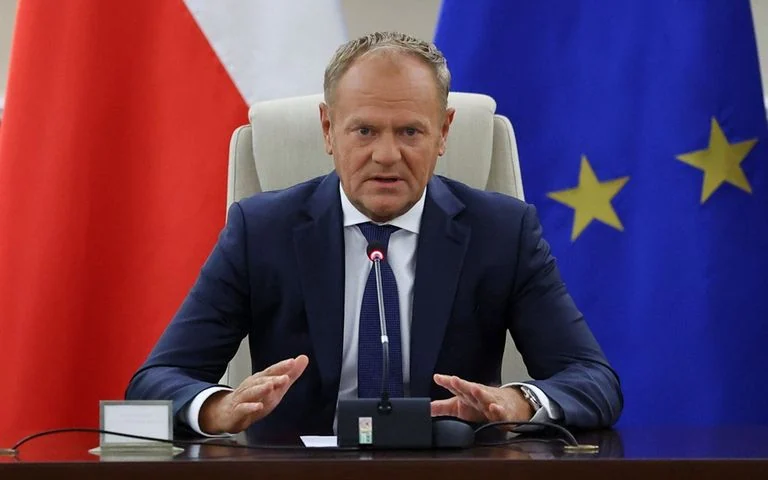
Donald Tusk
Behind the crisis, the great clash over European power
Poland now represents a characteristic case of a broader European confrontation: who holds the ultimate authority to determine the legitimacy of national institutions, and how far can the influence of supranational European mechanisms reach?
For supporters of Tusk, the clash concerns restoring the independence of justice from previous governmental influence.
For his opponents, it constitutes an attempt to replace a conservative institutional leadership with individuals affiliated with the current parliamentary majority, with European political tolerance.
These two interpretations reflect a genuine conflict of political and constitutional philosophies.
The handling of the crisis by European authorities will consequently constitute an important test of the consistency of their declarations.
The decisive question is not whether Brussels is politically fond of Donald Tusk, but whether it will defend the same constitutional guarantees even when they are invoked by his political opponents.
The documentation available so far allows for a critical examination of the European stance and potential political tolerance toward disputed institutional moves.
The crisis in Poland has already become a serious test for the functioning of democracy, the independence of justice, and the credibility of European policy on the rule of law.
And its outcome will matter far beyond Warsaw.
www.bankingnews.gr







Readers’ Comments