

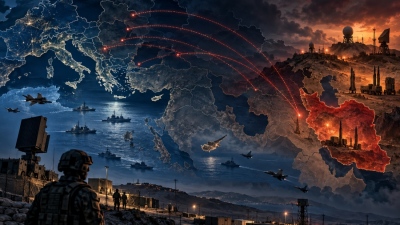
The possibility of transferring the military confrontation between Iran, the United States, and Israel to European soil is no longer exclusively a matter of theoretical geopolitical analysis.
According to revelations by the Financial Times, Tehran has examined operational scenarios involving attacks against American military installations in Southeastern Europe, provided that Washington proceeds with a new large-scale military escalation.
The publication, citing individuals with knowledge of the Iranian discussions, names Bulgaria and Cyprus as areas reportedly examined in the context of potential retaliation.
The information acquires particular significance following warnings from the Iranian leadership that a new attack against the country will not necessarily limit its response to the geographical borders of the Middle East.
The question is now extremely serious: could the next phase of the war turn European military installations into targets, dragging in countries that do not desire direct involvement in the conflict?
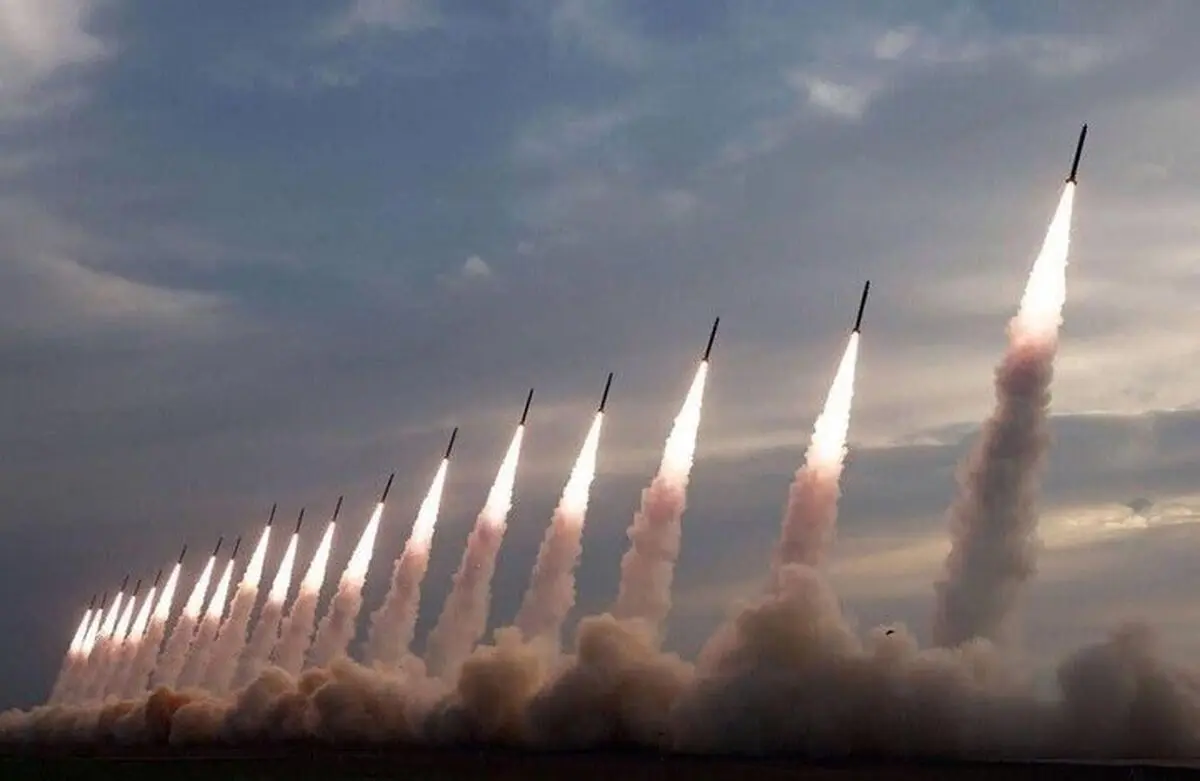
The new Iranian doctrine: Deterrence without geographical limits
At the center is the directive that, according to Iranian reports, Supreme Leader Mojtaba Khamenei gave to the leadership of the armed forces, demanding an immediate, effective, and geographically unlimited response to new attacks.
The wording signals an effort to broaden the deterrent strategy of Tehran.
Iran is attempting to warn that countries actively facilitating American military operations cannot take for granted that they will remain unaffected by the consequences of a conflict.
This rationale is based on the claim of the Iranian side that any military facility used for operations against the country may acquire military significance in the context of retaliation.
The strategic pursuit of Tehran is distinct: to increase the potential cost of an American attack and to make securing support from European governments more difficult.

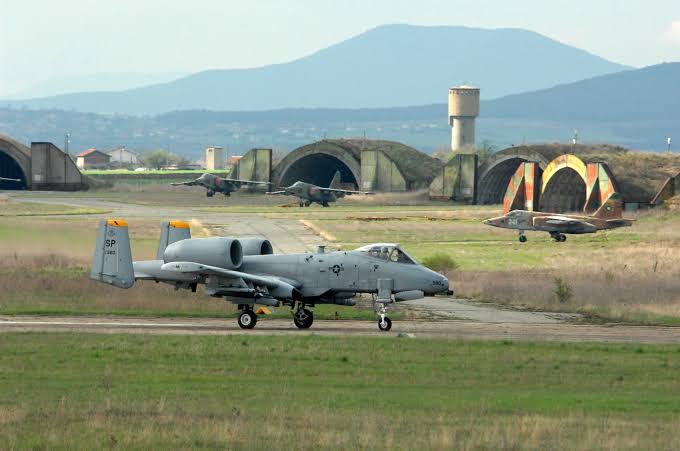
Bulgaria: The American military presence at the center
According to the Financial Times, particular attention has focused on the Bulgarian air base Bezmer, the use of which was approved for American refueling aircraft.
The basing of such assets acquires strategic significance because refueling aircraft allow the air force to conduct long-range operations.
The existence of relevant military facilities, however, does not prove that a specific base is being used in operations against Iran.
The interest lies in the fact that Bulgaria, although geographically distant from the Persian Gulf, now appears in analyses regarding the potential expansion of the conflict.
This possibility creates additional challenges for NATO, as an attack against the territory of a member state could lead to procedures of collective consultation and defense.
The Alliance possesses early warning and anti-ballistic missile protection systems, yet no defense system offers an absolute guarantee of intercepting every attack.
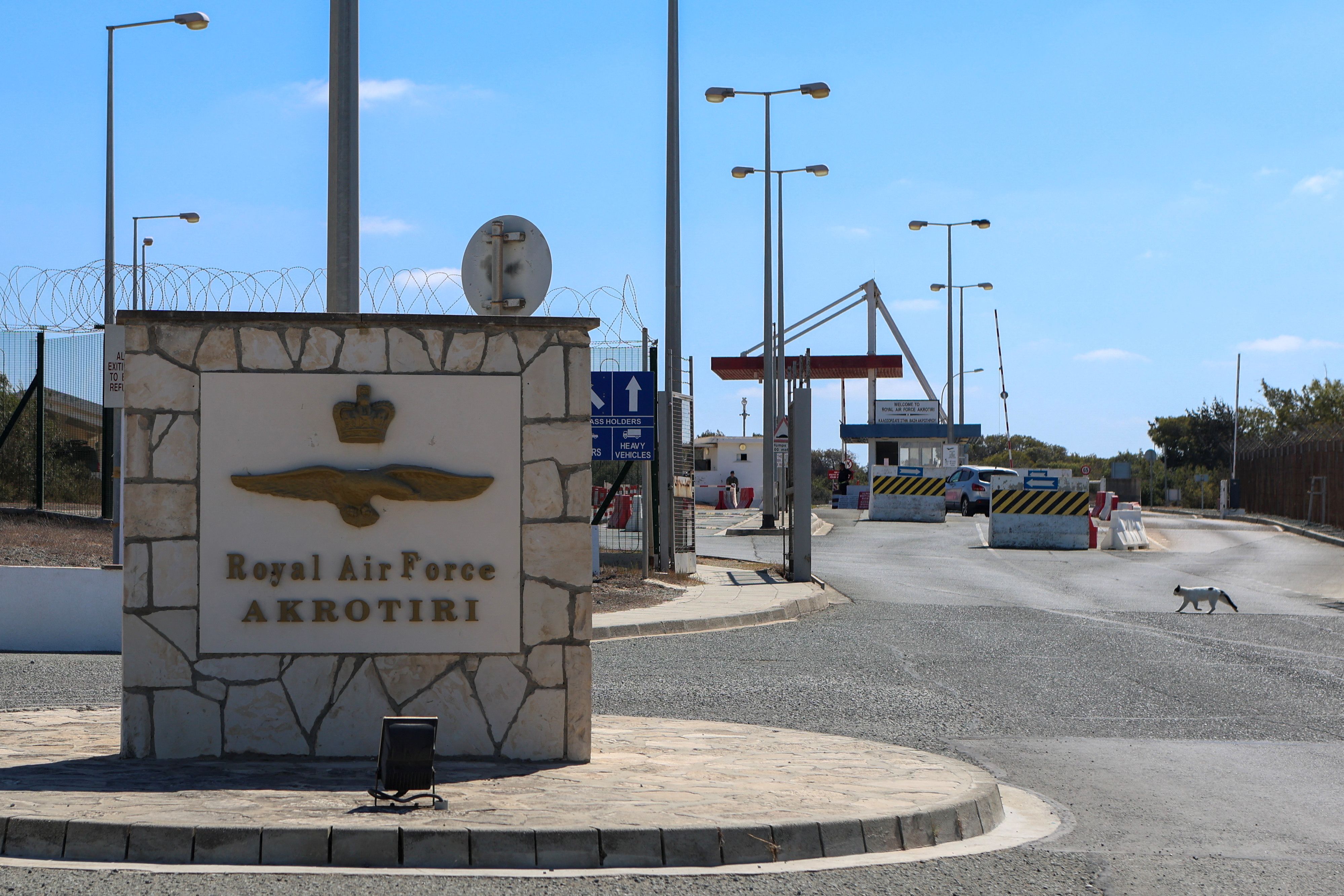
Cyprus: British bases and the risk of involvement
Even more sensitive is the case of Cyprus, due to the presence of British sovereign military bases in Akrotiri and Dhekelia.
The base at Akrotiri had come under attack by an unmanned aerial vehicle in March 2026, an event that highlighted the vulnerability of military installations in the Eastern Mediterranean.
The Financial Times included Cyprus in potential scenarios of Iranian retaliation.
However, subsequent Iranian diplomatic statements clarified that the Republic of Cyprus is not considered a target, provided that the British bases are not used for operations against Iran.
This distinction is extremely important.
Nicosia does not operationally control the British sovereign bases, yet the consequences of a potential military attack could affect the entire island.
The issue acquires particular significance for Greece, as any deterioration of security in Cyprus directly impacts the strategic balances in the Eastern Mediterranean.
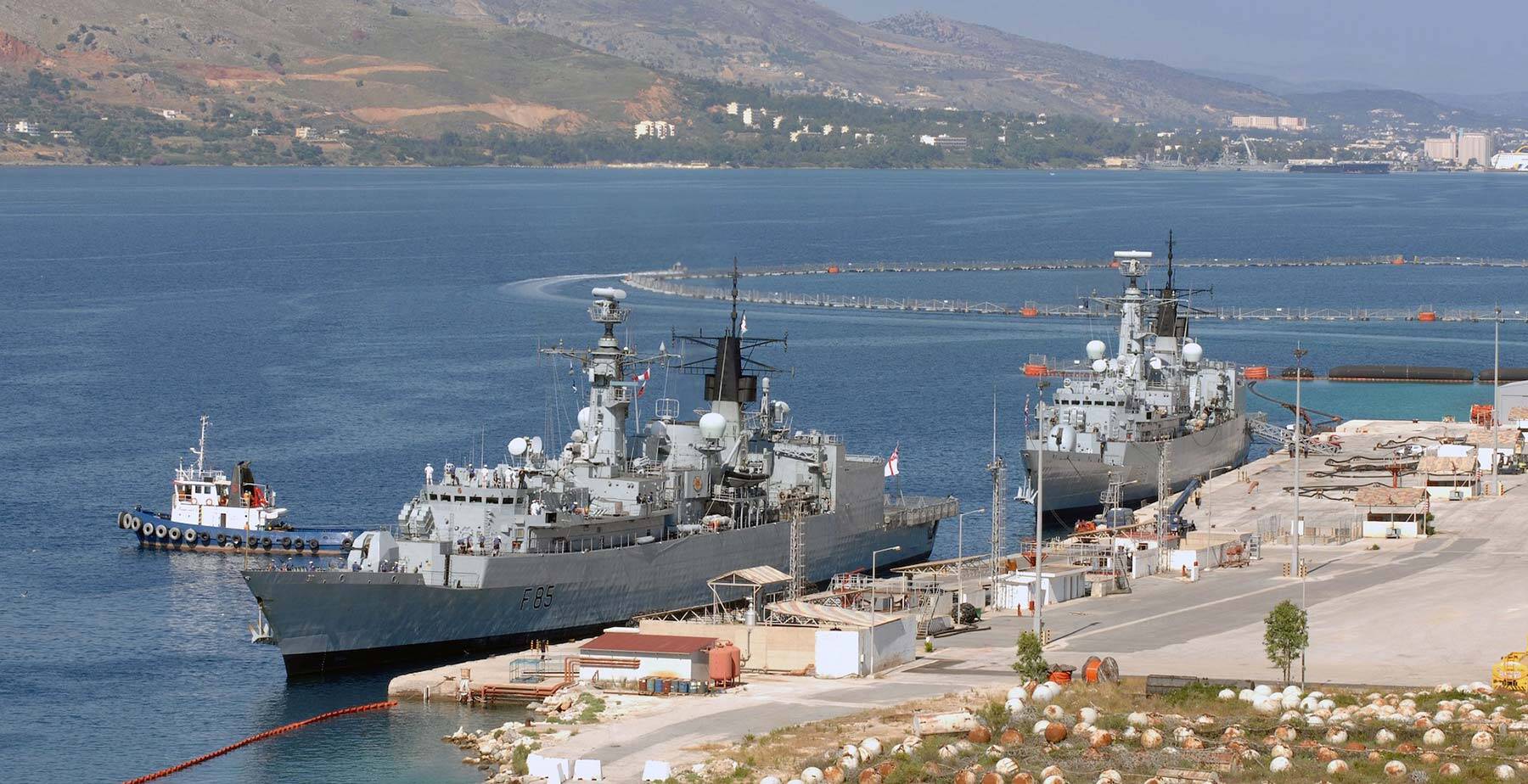
Greece: Could find itself in the crosshairs
Greek interest is not limited to Cyprus.
The presence of American military installations and the strategic importance of Souda integrate Greece into the broader planning of the United States for the Eastern Mediterranean.
However, it must be emphasized that the Financial Times does not name Greece as a confirmed target of Iranian planning.
The discussion primarily concerns whether a potential use of European infrastructure in offensive operations against Iran could alter the risk assessment of Tehran.
For Athens, therefore, a substantial political question arises: how can alliance obligations be reconciled with the need to avoid direct involvement in a broader armed confrontation?
The distinction between defense cooperation, the provision of general facilities, and active participation in military operations takes on particular weight.
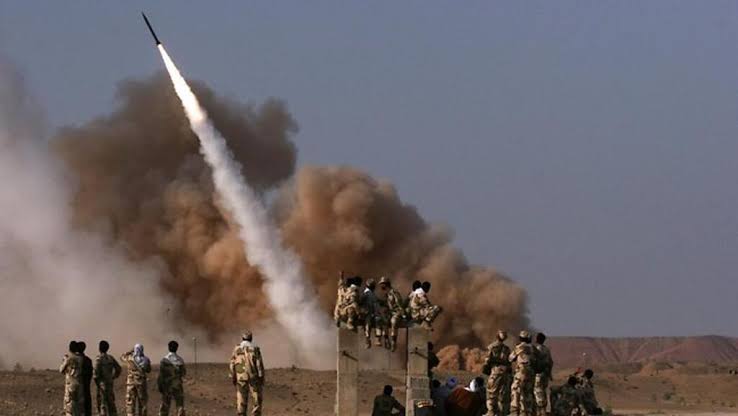
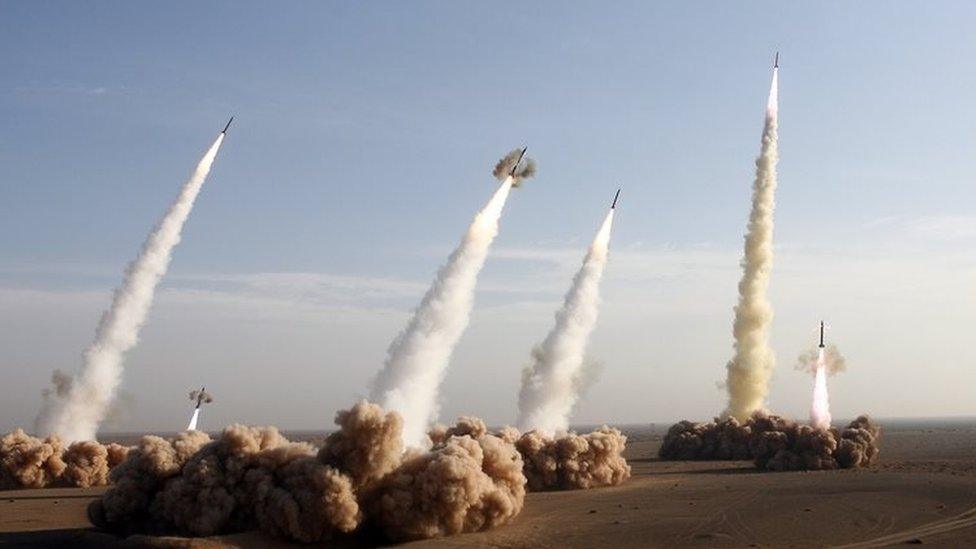
Iranian missiles and their true range
The most critical technical question concerns the capabilities of the Iranian missile arsenal.
For years, Iran relied primarily on ballistic missiles with a range of approximately 2,000 kilometers.
This capability was sufficient to cover major targets in the Middle East, but not to threaten the entirety of European territory.
Recent developments, however, have reinforced the discussion regarding longer-range weapons.
On March 21, 2026, Reuters broadcast statements by Israeli military officials according to which Iran launched two ballistic missiles toward the military base of Diego Garcia in the Indian Ocean, at a distance of approximately 4,000 kilometers.
Israeli military commander Eyal Zamir argued that this specific capability could place European capitals within potential range.
There is, however, a decisive difference between launching a long-range missile and possessing the demonstrated capability of reliably striking at such great distances.
Accuracy, payload, reliability, and the number of available missiles constitute equally critical parameters.
Analyst Sidharth Kaushal, of the British RUSI, characterized the Iranian missile threat to European targets as real but limited, pointing out that effectiveness decreases over greater distances.
Simorgh and long-range technology
Another parameter is the Iranian space program.
The Simorgh rocket, designed to place satellites into low orbit, uses technologies that could theoretically be utilized in the development of longer-range ballistic missiles.
The American research center CSIS points out that certain components of Simorgh have potential application in missile technology.
However, converting a space launch vehicle into a reliable military missile is not an automatic procedure.
It requires different technical specifications, operational adaptation, and testing.
The conclusion is that technological progress in Iran expands its future capabilities without automatically validating all assessments regarding its current operational strength.
NATO and the risk of uncontrolled escalation
The Alliance has already dealt with incidents linked to Iranian missile activity.
In March 2026, the Turkish Ministry of Defense announced the interception of ballistic munitions that had entered Turkish airspace, with the assistance of NATO air defense systems.
NATO confirmed that it reinforced its ballistic missile defense posture following the incidents.
This fact demonstrates that the confrontation is not geographically limited to the Persian Gulf.
At the same time, it highlights the danger of a chain escalation in which a strike on a military installation could trigger a response from multiple countries.
The true targeting of Tehran
The strategic significance of Iranian warnings does not reside exclusively in the probability of carrying out an attack.
It also lies in the ability of Tehran to influence the political calculations of governments considering support for American military operations.
The prospect of retaliation beyond the Middle East raises the potential cost of escalation and reinforces the need for careful assessment of each country's participation.
This does not mean that an Iranian attack on Europe is inevitable or strategically advantageous for Tehran.
Such a step could lead to a broader military confrontation with NATO, with extremely serious consequences for Iran itself.
The critical change is that Europe can no longer take for granted that a new major conflict in the Middle East will remain geographically contained.
For Greece and Cyprus, the objective is to prevent the transformation of the Eastern Mediterranean into an additional war front.
For the United States and Iran, the challenge is even greater: to prevent a sequence of military actions and retaliations that could drag in nations far beyond the initial conflict zone.
The final answer will depend more on political decisions and diplomacy than on the theoretical ranges of missiles.
www.bankingnews.gr








Readers’ Comments