

The limits of the welfare state, the failure of integration, and the crisis of the Western governance model
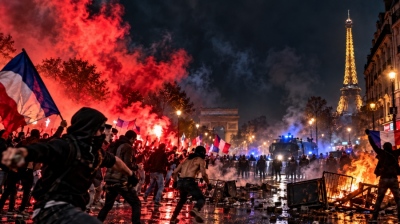
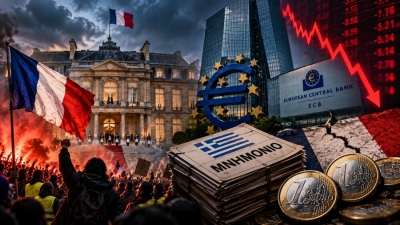
The intensity of violence, looting, and arson in France over the weekend of October 24–25 was lower compared to the previous week, without however ceasing to be particularly severe. Approximately 400,000 to 500,000 people participated in demonstrations held across the country. At the national level, approximately 1,000 arrests were made, with some estimates putting the figure as high as 1,300, while roughly 70,000 police officers were deployed on the streets. This represents a significantly reinforced police presence compared to the previous weekend. Organizers and activists have already issued a call for new mobilizations on October 31. The main conclusion is that social tension has not defused. Whether the next mobilization will assume larger dimensions remains to be seen, driving French civil unrest.
Two different readings of the causes
Two competing interpretations regarding the motives and true character of the riots have formed in public debate. The first, dominating much of traditional media, presents the mobilizations as a largely peaceful expression of French outrage over the degradation of public services. The initial protest by teachers and students regarding inadequate school funding reportedly evolved into a broader movement challenging austerity, economic policy, and the general state of the economy. The second interpretation describes a very different reality: a violent uprising with ethno-religious and political characteristics, in which anti-Western, far-left, and other radical forces coexist, sharing a common denominator of challenging French state authority and social order.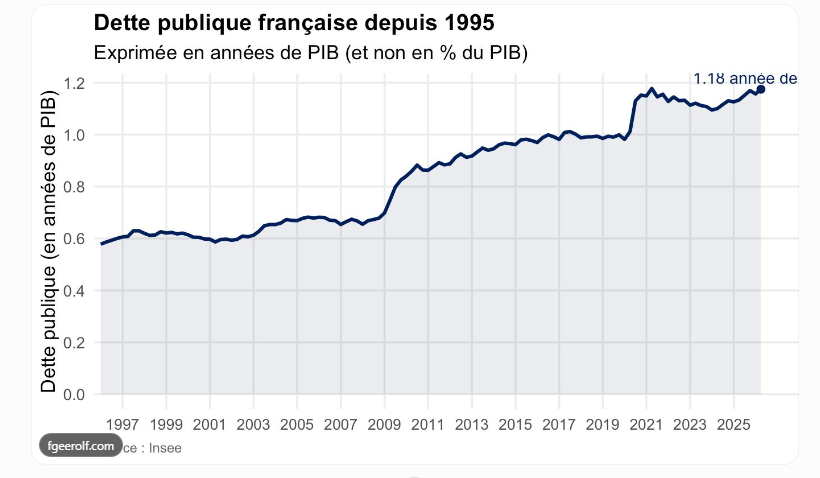 The image conveyed by traditional media through selected footage and journalistic descriptions reinforces primarily the first version. Conversely, browsing platforms such as X, Rumble, and YouTube leads several observers to different conclusions.
It is of particular interest that the French political leadership itself appears to recognize a dimension of organized political destabilization. Less than a week before the first outbreak of violence, Jean-Luc Mélenchon, head of La France Insoumise, had called for the establishment of a Sixth Republic built on so-called "popular power." On October 22, in a televised address to the French people, Emmanuel Macron spoke of "even insurrectionary acts by organized far-left groups aimed at overthrowing the Republic." For his part, Interior Minister Laurent Nuñez referred to "extremely high levels of violence" and the action of "militant elements of the radical left space." However, according to this second reading, public debate avoids examining certain even more sensitive parameters, such as religious slogans recorded in videos and the social or ethnic origin of some participants in the incidents. The relevant images circulating on social media do not constitute sufficient statistical documentation on their own, but they raise questions that can hardly be bypassed. The two interpretations, after all, are not necessarily mutually exclusive. A massive peaceful protest over the state of public services and a violent mobilization of different political and social groups—which, despite ideological differences, converge in challenging the existing system—can exist simultaneously. And herein lies the true political lesson of France for the rest of Europe, shaping political destabilization trends.

The lesson for the rest of Europe
The technocratic model of social democracy rests on a utopian premise: that a state with growing economic power, more benefits, and better administrative design can automatically secure social cohesion, prosperity, and political stability. If Europe truly wishes to preserve its social and cultural foundation, it must examine the limits of this model with greater seriousness, impacting European welfare models.
The French welfare state: Spends more, fails to secure social peace
The prevailing perception in Britain, most European Union countries, and more broadly across the Anglo-Saxon world—with certain exceptions—is based on a relatively simple premise: if the state gathers appropriate economic resources through taxation and redistributes them effectively into public services and social benefits under the guidance of experts and technocrats, a stable and prosperous society will gradually emerge. The system may not be perfect, but it is considered improvable. It simply requires another tax intervention, a better-designed budget, or a more effective administrative structure. Prosperity always lies slightly further on the horizon, but the direction is deemed definitively correct. In the same logic fits the expectation that importing human capital from different regions of the world will strengthen the economy and renew societies. Cultural and community differences are treated as factors that can be smoothed out through appropriate integration policy. This is a perception treating society almost as an economic and administrative system adjustable through proper resource allocation.
The problem is that French reality poses serious questions regarding the effectiveness of this approach. If social peace were truly a matter of proper public resource allocation, then France should stand much closer to this ideal than Britain. The numbers are revealing. France's public spending corresponds to approximately 57% of its GDP, according to data from the French statistical agency INSEE. Social spending alone—meaning cash benefits and services concerning health, pensions, family, unemployment, disability, and housing—accounts for roughly 30% of GDP. For comparison:
• France: Public spending 57% of GDP, social spending 30%.
• Germany: Public spending 49.4%, social spending 28%.
• Britain: Public spending 47%, social spending 23%.
• US: Public spending 37%, social spending 19.8%.
Even in China, where the state plays a central role in the economy, public spending is estimated at approximately 33% of GDP, with social benefits accounting for 10%–13%.
In the Soviet Union, in 1988, state spending was estimated at roughly 51% of economic activity, while social spending was calculated at 15%–20%.
The conclusion is clear: France constitutes one of the most characteristic examples of an expanded welfare state in the developed world. Yet the vast extent of public interventions has not prevented social tension, driving public spending comparisons.

Macron: Promised spending restraint, but the state remained enormous
Equally interesting is that Emmanuel Macron cannot be considered to have implemented a policy of drastic curtailment of public services and social benefits. When first elected in 2017, he had built part of his political identity around the promise of rationalizing public finances and taking difficult decisions his predecessors avoided. In practice, however, the picture differed. In 2017, he inherited public spending corresponding to approximately 57.5% of GDP. He initially managed to restrict it to 55.3% in 2019, but subsequently followed—like most developed economies—a period of massive fiscal expansion in 2020 due to the pandemic. Since then, public spending receded and then rose anew. The net result, according to cited data, was a reduction of merely 0.2 percentage points of GDP over seven years, while the French economy grew in real terms by roughly 10%–11%. With public debt at 119% of GDP (June 2026), high public spending, and persistent fiscal deficits, France confronts severe fiscal adjustment pressures. Therefore, it is difficult to argue that today's social unrest constitutes merely the result of a policy of drastic dismantling of the welfare state. If France spends more than Britain on its public services, and has done so for many years, then the explanation that social tension stems exclusively from underfunding is inadequate. The more important question, however, is different: if a state absorbing such a large share of national income cannot secure social stability, what exactly guarantees that further spending increases will lead to better results? France spends roughly 10 percentage points of GDP more than Britain and nevertheless confronts widespread social discontent, clashes, and challenges to institutions. Where is the proof that Britain, or any other European country, will be more prosperous and socially stable if it merely increases public spending further? The answer is not self-evident. On the contrary, the question remains unanswered, altering French fiscal deficits.

The second major problem: Immigration and the limits of social integration
The second issue concerns a different yet equally important premise of modern European policy: that people can move between different societies and cultures without necessarily generating cohesion problems, as integration is viewed as a matter of time and proper state policy. Television footage from major demonstrations does not necessarily capture the full picture. Videos circulate on social media from nighttime looting and incidents showing individuals who, based on visual indicators, appear to originate from North Africa, the Middle East, and sub-Saharan Africa. France, after all, does not systematically record ethnic data on its population, but rather indicators such as nationality and birthplace. What is known is that the country has faced for decades a severe problem of geographic and social concentration of migrant populations in the suburbs of major cities, the well-known banlieues. These areas served as epicenters of social tension and previous major riots, such as those of 2005 and 2023. During the 1970s, when workers primarily from Algeria and Tunisia began settling permanently in France and bringing their families, many settled in large housing complexes on city outskirts. Despite decades of implementing policies based on unified French civic identity and the principle of laïcité—strict separation of state and religion—social and geographic concentration did not disappear.
Thus, a portion of the youth appearing on the streets of French cities may stem from second, third, or even fourth generations of immigrant origin families. And here a critical question arises: if France has implemented an extensive system of public benefits, formal equality before the law, and social integration policies for decades, why do significant segments of the population continue to feel alienated from the broader society? The existence of public benefits and institutional equality do not automatically entail social integration, a shared identity, or a sense of participation in a unified national community. According to official data from the French statistical agency INSEE, since 2016—the first year of the Syrian migration crisis—net migration to France has added roughly 1.6–1.7 million people. This number is smaller compared to recent migration flows to Britain, for example. Nevertheless, the core question remains: how will new migrant generations be effectively integrated when previous ones continue facing problems of social and geographic isolation, shaping immigrant integration limits.
The absence of incidents does not mean successful integration
Britain faces similar challenges. In several areas of British cities, migrant communities have developed strong characteristics of cultural and geographic concentration, maintaining parallel social and cultural structures to a significant degree. The picture shares similarities with France, although housing conditions differ. In Britain, these concentrations manifest more frequently in traditional housing and urban neighborhoods rather than large social housing apartment blocks. It is also a fact that Britain has not experienced the same scale of urban violence as France. Even the riots of 2011 and 2024 lacked the geographic scope and intensity of recent events in French cities. This, however, does not prove that the integration model has succeeded. It merely proves that current social conditions have not led to the same results to date. Is the mere fact that British urban centers are not in a state of generalized unrest sufficient to consider social integration policy successful? The absence of widespread violence does not equate to the presence of social cohesion, defining social cohesion metrics.
Integration is not self-evident and time is not a solution
Much of political debate in both France and Britain revolves around the concept of integration. Prevailing is the perception that it constitutes a process simply requiring time. If migrant communities receive necessary support, proper opportunities, and adequate time to become part of society, sooner or later they will integrate. Frequently cited arguments include personal experiences and isolated examples: people having friends of different ethnic backgrounds or members of migrant communities fully integrated into economic and social life. Undoubtedly, such examples exist and matter. They do not, however, answer the broader question. Where is robust evidence demonstrating that long-term state support, equality before the law, and provision of social opportunities inevitably lead to massive and substantive social integration? Especially when migration flows continue on a large scale and geographic population concentration remains intense, the answer cannot rest on wishes or isolated successful cases. Historical experience does not provide such clear confirmation of this theory. Nor does contemporary French reality offer results expected from a model applied for decades, impacting assimilation timelines.
The West tries to solve 21st-century problems with 1945 tools
Behind the French crisis lies ultimately a much broader issue: the inability of Western societies to adapt their political and economic tools to 21st-century conditions. Modern science now permits the treatment and management of diseases that a century ago equated to a death sentence. This represents a massive advance, yet it generates new questions regarding healthcare system sustainability and treatment costs. The economy is far more complex than in the past. Markets, financial flows, and international production chains have acquired unprecedented complexity. The question is not only how they will be regulated, but whether state mechanisms genuinely possess the capacity to understand and manage them effectively. Simultaneously, millions of people can now move their lives across much greater distances and with far greater ease than previously. Mass migration and cultural diversity generate new demands for host societies, reshaping modern governance challenges.
How do we address these changes?
The response of Western governments continues relying heavily on political and institutional perceptions formed around 1945 in an entirely different historical, economic, and social reality. Even more concerning is that many of today's policies continue relying more on ideological certainties and political convictions rather than evaluating outcomes produced over recent decades. Why, then, continue assuming that the same recipes will work when reality shows results differing significantly from initial expectations? France will likely return to relative normality soon. Streets will be cleaned, demonstrations will potentially diminish, and daily life will resume standard rhythms. This, however, must not serve as an excuse for complacency. The real challenge is not merely restoring order on French streets. It is recognizing that the Western governance model, as constructed post-war, has reached its limits. The French case highlights a critical paradox: one of the most generous welfare states in the world fails to secure the social peace theoretically representing its primary achievement. Perhaps, then, Europe's problem is not merely possessing insufficient resources to fund its social model. Perhaps it is continuing to believe that increasing resources suffices to solve problems that are deeper, more complex, and primarily social and political. The French example should serve as an occasion for a substantive redefinition of European policy: the role of the state, limits of the welfare state, migration policy, social integration, and ultimately the very concept of social cohesion. Europe—and Greece—does not have the luxury to ignore messages from Paris and continue as if nothing happened, driving Western governance reforms.
www.bankingnews.gr







Readers’ Comments